The Possible Is Greater Than the Probable
History does not guarantee freedom. Nor does suffering necessarily produce it. The existence of the Kurdistan Region in Iraq challenges the assumption that what seemed politically impossible must remain impossible.
Khaled Salih
9 November 2026
History does not guarantee freedom. Nor does suffering necessarily produce it.
The existence of the Kurdistan Region in Iraq challenges the assumption that what seemed politically impossible must remain impossible.
But there is a second, more troubling question: Can a political achievement survive the mistakes of those who helped create it?
My new essay, Do Not Kill This Child of Improbability, explores the extraordinary emergence of Kurdish self-government—and the responsibility to preserve its capacity for an open future.
What exists is not all that is possible.
Do Not Kill This Child of Improbability
An appeal to the Kurdish political leaderships
There is something extraordinary about the existence of the Kurdistan Region in Iraq.
It should not have been possible.
Consider the forces assembled against the emergence of a Kurdish political entity over the past century: empires that disappeared but left their divisions behind; European powers, particularly Britain, that helped draw the boundaries of the modern Middle East; states that inherited those boundaries and declared them inviolable; armies that suppressed Kurdish rebellions; ideologies that denied Kurdish national identity; and an international order that recognized existing states while repeatedly failing to secure Kurdish political freedom.
The cumulative weight of that history should have made Kurdish self-government almost impossible.
Yet here it is.
Not an independent Kurdistan. Not the fulfillment of every Kurdish aspiration. Not even a fully constitutional political order. But a recognizable, functioning, internationally acknowledged Kurdistan Region, established through suffering, resistance, historical accidents, external interventions, political imagination, and decisions that could so easily have gone differently.
It exists.
That fact deserves more wonder than Kurdish politics ordinarily permits.
I was reminded of this while reading Maria Popova’s The Wildest Bet Is the Winning Bet, a meditation on the improbable emergence of life, consciousness, and everything human beings treasure.
Its underlying insight is simple and profound: what exists was not necessarily likely to exist. The possible exceeds the probable.
The same insight illuminates Kurdistan’s political history.
The Kurdistan Region is a child of improbability.
Its existence was not guaranteed by history. Its emergence was not the inevitable consequence of Kurdish suffering. Suffering does not automatically produce freedom. Nor was it a gift bestowed by benevolent powers. The Region emerged because possibilities repeatedly opened where prevailing political arrangements seemed to have closed them.
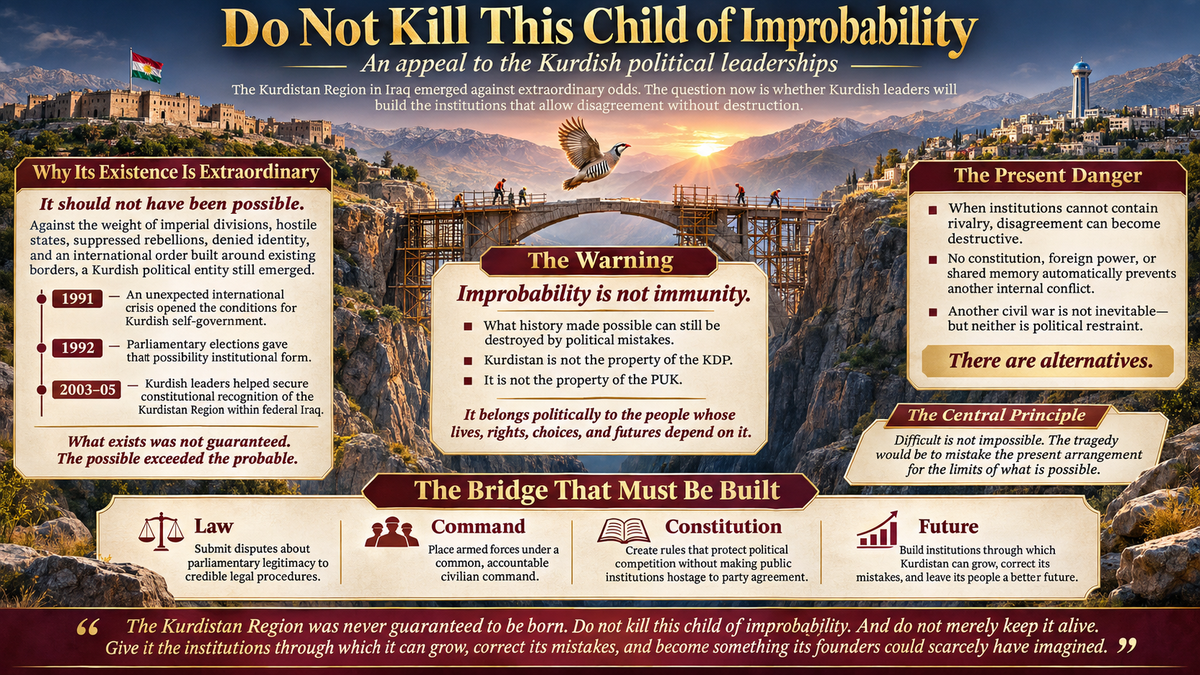
In 1991, an unexpected international crisis helped create the conditions for Kurdish self-government. In 1992, parliamentary elections gave that possibility an institutional form. In 2003–05, Kurdish political leaders helped shape the constitutional foundations of post-Saddam Iraq and secured recognition of the Kurdistan Region within a federal state.
These were remarkable achievements.
But improbability is not immunity.
Something can overcome immense historical obstacles and still be destroyed by mistakes made by those entrusted with its protection.
That is why the confrontation between the Kurdistan Democratic Party and the Patriotic Union of Kurdistan is so troubling.
The two parties helped make Kurdish self-government possible. Both can legitimately claim important contributions to its survival. Neither can claim ownership of the political entity that emerged.
Kurdistan is not the property of the KDP.
It is not the property of the PUK.
It does not belong to the descendants of its founders, the commanders of its armed forces, or the custodians of its martyrs’ memories.
It belongs politically to the people whose lives, rights, choices, and futures depend on it.
And those people must never be required to sacrifice the Region’s existence to preserve the authority of either party.
The civil war that began in 1994 should have established one lesson beyond dispute: Kurdish political disagreement can become destructive when institutions cannot contain the ambitions and fears of competing organizations.
The present crisis makes that lesson urgent again.
On 9 November 2026, as this article was being prepared for publication, Masoud Barzani called on the Patriotic Union of Kurdistan to meet with the Kurdistan Democratic Party, resolve their differences, and end the Region’s political crisis. He also urged the participation of other political parties in forming a broad-based government. That appeal addresses an immediate political impasse. The more demanding test is whether the parties can establish institutions that make such crises less dependent on the goodwill or agreement of their leaders. Reconciliation may resolve a confrontation; institutions must make it possible to disagree without returning to one.
No constitution, foreign power, historical achievement, or shared memory of suffering guarantees that Kurdistan cannot descend into another internal conflict.
But another civil war is not inevitable. Nor is political division an unavoidable consequence of disagreement.
There are alternatives.
The parties can accept that neither possesses a permanent veto over the Region’s institutions. They can submit disputes about parliamentary legitimacy to credible legal procedures. They can place armed forces under a common, accountable civilian command. They can establish constitutional rules that protect political competition without making the continued existence of public institutions dependent on party agreement.
These are difficult tasks. But difficult is not impossible.
The tragedy would be to mistake the present political arrangement for the limits of what is possible.
The leaders of Kurdistan have inherited something that generations before them were denied even the opportunity to attempt: a Kurdish political entity capable of developing its own institutions, correcting its own mistakes, and leaving its people a future not predetermined by their rulers.
That inheritance is not an achievement to be preserved in a museum. It is a possibility to be improved.
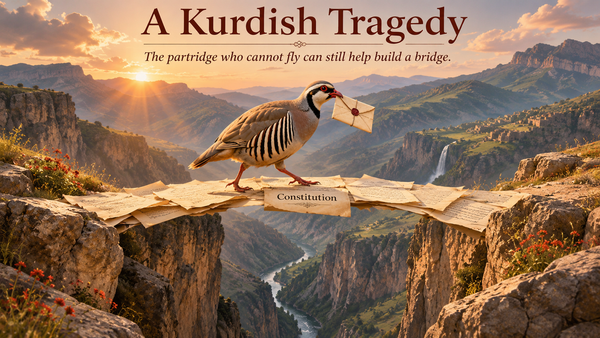
Here, the partridge returns.
The cherished Kurdish bird that carries the dream of freedom must now carry a more urgent message between Hewlêr and Suleimanî.
Not a message demanding that the parties love one another.
Not an appeal to forget their disagreements.
A warning that their disagreements must never again be permitted to destroy the political home that so many people struggled to establish.
The partridge cannot eliminate the ravine.
But a bridge can be built across it.
To the leaders of the KDP and PUK:
Look at what history made possible against extraordinary odds.
Look at the opportunity that exists today, where previous generations encountered prohibition, persecution, and defeat.
Look at the children who should inherit something better than another war between Kurdish parties.
You are not being asked to surrender your political convictions.
You are being asked to create and obey institutions that make it possible to disagree without destroying what both claim to defend.
The Kurdistan Region was never guaranteed to be born.
Do not kill this child of improbability.
And do not merely keep it alive.
Give it the institutions through which it can grow, correct its mistakes, and become something its founders could scarcely have imagined.
لا تقتلوا هذا الوليد الذي لم يكن ظهوره مرجّحاً
نداء إلى القيادات السياسية الكردية
بقلم خالد صالح
9 تشرين الثاني/نوفمبر 2026
ثمة أمر استثنائي في وجود إقليم كردستان في العراق كان ينبغي ألّا يكون ذلك ممكنا.
تأملوا القوى التي احتشدت ضد نشوء كيان سياسي كردي خلال القرن الماضي: إمبراطوريات زالت لكنها خلّفت وراءها تقسيماتها؛ وقوى أوروبية، ولا سيما بريطانيا، أسهمت في رسم حدود الشرق الأوسط الحديث؛ ودول ورثت تلك الحدود وأعلنت أنها لا تُمسّ؛ وجيوش قمعت الانتفاضات الكردية؛ وأيديولوجيات أنكرت الهوية القومية الكردية؛ ونظام دولي اعترف بالدول القائمة، بينما أخفق مراراً في ضمان الحرية السياسية للكرد.
كان يفترض بالثقل التراكمي لذلك التاريخ أن يجعل الحكم الذاتي الكردي شبه مستحيل.
ومع ذلك، ها هو قائم.
كردستان ليست مستقلة، وليست تحقيقاً لكل تطلع كردي. ولا حتى نظاماً سياسياً دستورياً مكتملاً. بل إقليم كردستان واضح المعالم، قائم وفاعل، ومعترف به دولياً؛ نشأ من المعاناة والمقاومة والمصادفات التاريخية والتدخلات الخارجية والخيال السياسي وقرارات كان من السهل جداً أن تسير في اتجاه آخر.
إنه موجود.
وهذه الحقيقة تستحق من الدهشة ما هو أكثر مما تتيحه لها السياسة الكردية عادة.
استعدت هذه الفكرة وأنا أقرأ مقالة ماريا بوبوفا «الرهان الأشد جموحاً هو الرهان الرابح»، وهي تأمل في النشوء المستبعد للحياة والوعي وكل ما يعتز به البشر.
الفكرة الكامنة وراءها بسيطة وعميقة: ليس كل ما وُجد كان من المرجّح أن يوجد. فحيّز الممكن أوسع من حيّز المرجّح.
وتضيء الفكرة نفسها التاريخ السياسي لكردستان.
إقليم كردستان وليدُ احتمالٍ بعيد لم يكن التاريخ يضمن وجوده، ولم يكن ظهوره نتيجة حتمية لمعاناة الكرد. فالمعاناة لا تفضي تلقائياً إلى الحرية. ولم يكن هبة من قوى خيّرة. لقد ظهر الإقليم لأن إمكانات انفتحت مراراً حيث بدا أن الترتيبات السياسية السائدة قد أغلقتها.
في عام 1991، ساعدت أزمة دولية غير متوقعة على تهيئة الظروف للحكم الذاتي الكردي. وفي عام 1992، منحت الانتخابات البرلمانية ذلك الاحتمال شكلاً مؤسسياً. وفي السنوات 2003–2005، ساعد القادة السياسيون الكرد في صياغة الأسس الدستورية لعراق ما بعد صدام حسين، وانتزعوا الاعتراف بإقليم كردستان ضمن دولة اتحادية.
كانت تلك إنجازات استثنائية.
لكن ندرة الاحتمال لا تمنح حصانة.
فقد يتغلب شيء على عقبات تاريخية هائلة، ثم تدمّره أخطاء يرتكبها الذين أُوكلت إليهم حمايته.
ولهذا تبعث المواجهة بين الحزب الديمقراطي الكردستاني والاتحاد الوطني الكردستاني على بالغ القلق.
لقد ساعد الحزبان على جعل الحكم الذاتي الكردي ممكناً. ولكليهما الحق في الإشارة إلى إسهامات مهمة في بقائه. لكن ليس لأحدهما أن يدّعي ملكية الكيان السياسي الذي نشأ.
كردستان ليست ملكاً للحزب الديمقراطي الكردستاني وليست ملكاً للاتحاد الوطني الكردستاني، ولا تعود ملكيتها إلى أحفاد مؤسسيها، أو قادة قواتها المسلحة، أو حرّاس ذكريات شهدائها.
إنها، من الناحية السياسية، ملك للشعب الذي تتوقف حياته وحقوقه وخياراته ومستقبله عليها.
ولا يجوز أن يُطلب من ذلك الشعب التضحية بوجود الإقليم من أجل الحفاظ على سلطة أيٍّ من الحزبين.
كان ينبغي للحرب الأهلية التي بدأت عام 1994 أن ترسّخ درساً لا خلاف عليه: يمكن للخلاف السياسي الكردي أن يصبح مدمّراً حين تعجز المؤسسات عن احتواء طموحات التنظيمات المتنافسة ومخاوفها، وتجعل الأزمة الراهنة ذلك الدرس أكثر إلحاحاً.
في 9 تشرين الثاني/نوفمبر 2026، وبينما كانت هذه المقالة تُعَدّ للنشر، دعا مسعود بارزاني الاتحاد الوطني الكردستاني إلى الجلوس مع الحزب الديمقراطي الكردستاني، وحل الخلافات، وإنهاء الأزمة السياسية في الإقليم. كما دعا إلى مشاركة الأطراف السياسية الأخرى في تشكيل حكومة واسعة القاعدة. تتعلق هذه الدعوة بالمأزق السياسي الراهن. أما الاختبار الأعمق فهو قدرة الأحزاب على إنشاء مؤسسات تجعل معالجة الأزمات أقل اعتماداً على حسن نيات القادة أو توافقهم. فقد تنهي المصالحة مواجهةً بعينها، لكن المؤسسات هي التي ينبغي أن تتيح استمرار الخلاف السياسي من دون العودة إلى مواجهة جديدة.
لا يضمن أي دستور، أو قوة أجنبية، أو إنجاز تاريخي، أو ذكرى مشتركة للمعاناة، ألّا تنزلق كردستان إلى صراع داخلي آخر.
لكن حرباً أهلية أخرى ليست حتمية. والانقسام السياسي ليس نتيجة لا مفر منها للاختلاف.
ثمة بدائل يمكن للحزبين أن يقبلا بأن أياً منهما لا يملك حق نقض دائماً على مؤسسات الإقليم. ويمكنهما إحالة النزاعات بشأن شرعية البرلمان إلى إجراءات قانونية موثوقة. ويمكنهما إخضاع القوات المسلحة لقيادة مدنية موحّدة وخاضعة للمساءلة. ويمكنهما إرساء قواعد دستورية تحمي التنافس السياسي، من دون جعل استمرار وجود المؤسسات العامة رهناً باتفاق الحزبين.
هذه مهام صعبة. لكن الصعب ليس مستحيلاً.
ستكون المأساة أن نخلط بين الترتيب السياسي الراهن وحدود ما هو ممكن.
لقد ورث قادة كردستان شيئاً حُرمت منه أجيال سبقتهم حتى فرصة المحاولة: كياناً سياسياً كردياً قادراً على تطوير مؤسساته، وتصحيح أخطائه، وترك مستقبل لشعبه لا يحدده حكامه مسبقاً. وهذا الإرث ليس إنجازاً ينبغي حفظه في متحف، بل إمكانية ينبغي تطويرها.
وهنا يعود الحَجَل.
فالطائر الكردي العزيز، الذي يحمل حلم الحرية، عليه الآن أن يحمل رسالة أشد إلحاحاً بين هەولێر والسليمانية.
ليست رسالة تطالب الحزبين بأن يحب أحدهما الآخر، وليست دعوة إلى نسيان خلافاتهما، بل تحذير من السماح لتلك الخلافات، مرة أخرى، بتدمير البيت السياسي الذي ناضل كثيرون من أجل إقامته.
لا يستطيع الحَجَل أن يزيل الهوّة. لكن يمكن بناء جسر فوقها.
إلى قادة الحزب الديمقراطي الكردستاني والاتحاد الوطني الكردستاني:
انظروا إلى ما جعله التاريخ ممكناً رغم الاحتمالات الضئيلة للغاية.
انظروا إلى الفرصة القائمة اليوم، حيث لم تعرف الأجيال السابقة سوى الحظر والاضطهاد والهزيمة.
انظروا إلى الأطفال الذين ينبغي أن يرثوا ما هو أفضل من حرب أخرى بين الأحزاب الكردية.
لا يُطلب منكم التخلّي عن قناعاتكم السياسية، بل يُطلب منكم إنشاء مؤسسات والامتثال لها، تتيح الاختلاف من دون تدمير ما يدّعي كلا الطرفين الدفاع عنه.
لم يكن مولد إقليم كردستان مضموناً قط، فلا تقتلوا هذا الوليد الذي لم يكن ظهوره مرجّحاً.
ولا تكتفوا بإبقائه على قيد الحياة، بل امنحوه المؤسسات التي تمكّنه من النمو، وتصحيح أخطائه، والتحوّل إلى شيء لم يكن مؤسسوه ليستطيعوا تخيّله إلا بصعوبة بالغة.