Before the Bridge Becomes a Battlefield
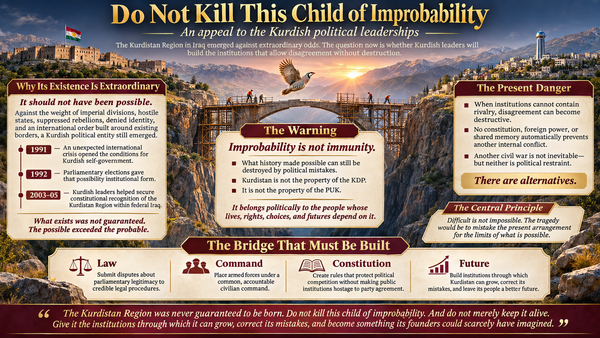
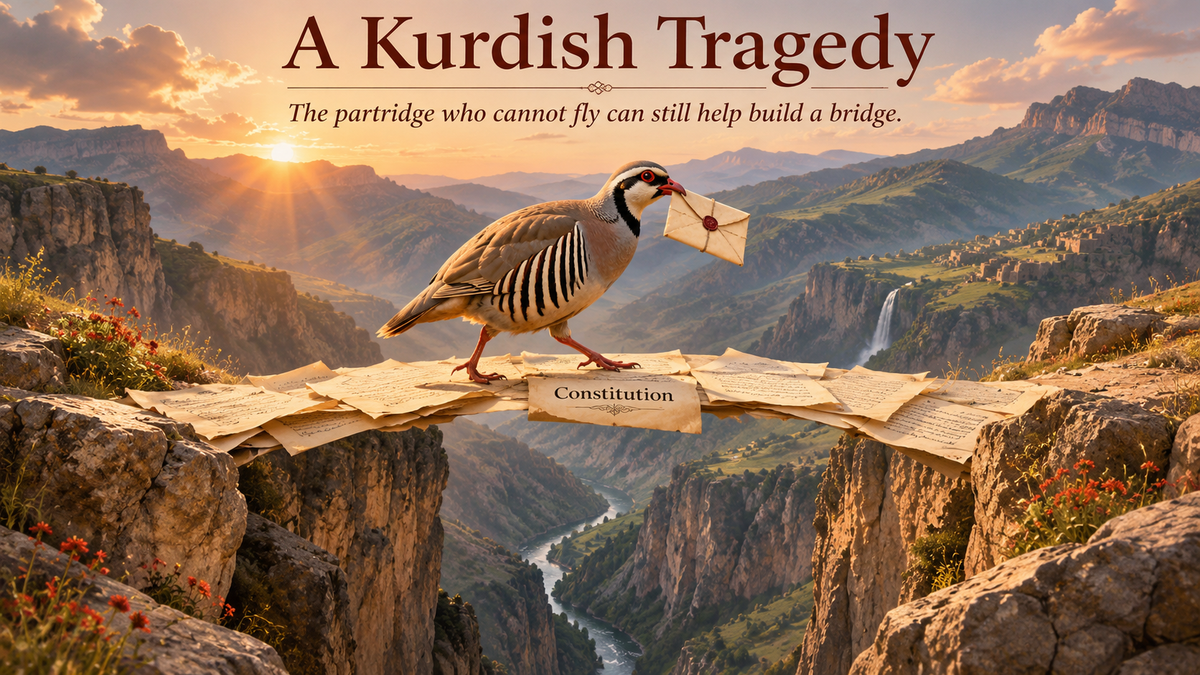
A Kurdish Tragedy: The Partridge and the Bridge examines that unfinished constitutional problem through history, firsthand experience, and the Kurdish partridge—a cherished symbol of freedom that now carries a warning between Hewlêr and Suleimanî.
Note
Khaled Salih
7 November 2026
Kurdistan has survived oppression, displacement, civil war, and the repeated denial of its political existence. Its leaders helped shape the constitutional foundations of post-Saddam Iraq and secured recognition of the Kurdistan Region within a federal state.
Yet more than three decades after its first parliamentary elections, the Region remains vulnerable to a danger that no external adversary needs to invent: political disagreement that its own institutions may be unable to contain.
A Kurdish Tragedy: The Partridge and the Bridge examines that unfinished constitutional problem through history, firsthand experience, and the Kurdish partridge—a cherished symbol of freedom that now carries a warning between Hewlêr and Suleimanî.
The danger of another internal conflict is not a prediction. It is a possibility that must be confronted before political rivalry makes it harder to prevent.
The tragedy is not inevitable. That is precisely why the warning matters.
A Kurdish Tragedy
The Partridge and the Bridge
The kingmakers who left their own constitutional settlement unfinished
In Kurdistanî Azad, a partridge appears near the beginning as a symbol of freedom. In Kurdistan—Let It Be, the bird returns on the cover. In A Kurdish Predicament, the mountains of Rewanduz present another image: a formidable landscape whose obstacles must be understood before they can be overcome.
Now the partridge has another journey to make.
It must travel between Hewlêr and Suleimanî, carrying a message that ought not to require a messenger: do not repeat the Kurdish civil war. Do not let the struggle to govern Kurdistan become a struggle over whether Kurdistan can remain governed as one Region.
The partridge is not an imperial bird. It does not command the sky. It lives close to the mountains, the paths, and the dangers at ground level. Its symbolic strength lies not in invulnerability but in alertness. It can hear what power may prefer not to hear: the first movement of stones before a landslide.
A partridge cannot carry a constitution in its beak. It can carry a warning. And perhaps the warning can help build the bridge that the parties have left unfinished.
Wake up.
Do not repeat the past.
Do not let another generation inherit a Kurdish civil war.
The Morning That Has Not Arrived
Imagine a morning in November 2026 when the Kurdistan Region of Iraq is formally divided into two. One authority sits in Hewlêr, another in Suleimanî. Each appoints a president, a cabinet, and ministers. Each claims to embody the rights and sacrifices of the same people. Neither has a ratified, operative constitution of its own.
That is an imagined scene, not a report of what has occurred. Iraq’s Constitution continues to recognize the Kurdistan Region. A declaration by a political party does not by itself create another lawful federal region. But the distinction between constitutional status and the actual exercise of power is precisely what makes the imagined scene disturbing.
What happens if two sets of ministers give incompatible instructions? Who pays the salaries? Whose orders reach the armed forces? Which court’s judgment binds both sides? What happens to a Kurdish citizen who refuses to declare loyalty to either party?
These questions cannot be answered by invoking the blood of martyrs. And the danger is not resolved by observing that division would be economically unwise or historically tragic. Political orders can break down even when their participants understand the costs.
On November 4, 2026, the Kurdistan Parliament reconvened amid a dispute over its procedure and legitimacy. On November 5, PUK leader Bafel Jalal Talabani announced the party’s withdrawal from the regional government and threatened parallel appointments if the KDP proceeded with its own. He also called for avoiding bloodshed. The parliamentary allegations demand independent examination; the threat of parallel offices must not be confused with their lawful creation.
But how did a Region that has enjoyed self-government for more than three decades reach the point where a return to parallel government can again be proposed as a political answer?
The story begins long before November 2026.
Three Openings Before the Kingmakers
The first modern breakthrough came with the Iraqi republic of 1958. Its provisional constitution recognized Arabs and Kurds as partners in the country and acknowledged Kurdish national rights within the Iraqi entity. The promise mattered. Its inability to secure a durable political settlement mattered just as much.
The second came on March 11, 1970, with the autonomy agreement between the Iraqi Ba‘th government and the Kurdish movement. It promised recognition and self-government. Disputes over its implementation culminated in renewed conflict in 1974 and a devastating Kurdish defeat after the 1975 Algiers Agreement. A political promise had failed to become an enforceable political arrangement.
The third opening followed Saddam Hussein’s invasion of Kuwait, the Gulf War, the Kurdish uprising, mass flight, and international protection in 1991. In May 1992, elections created the first Kurdistan Parliament and a regional government. The achievement was extraordinary. Yet the new institutions did not acquire sufficient authority over the parties that had created them.
The near-equal KDP–PUK result led to the division of government posts. Masoud Barzani and Jalal Talabani remained outside the formal machinery of the cabinet while retaining decisive influence through their respective political organizations. The parties possessed separate armed capabilities, territorial relationships, and sources of authority that could not easily be subordinated to the new parliament.
The civil war that began in 1994 cannot be reduced to that single defect. Revenues, territory, external interventions, and decisions by political leaders all contributed. But the institutions failed a decisive test: they could not keep disagreement between parties from becoming armed conflict between Kurds. Parallel administrations followed. The institutional unity sought through subsequent settlements remained unfinished in important respects.
That was the lesson Kurdistan carried into the next historical opening.
The Kurds Who Helped Constitute Iraq
By the second half of 2002, Washington was preparing for the removal of Saddam Hussein. The Kurdish parties, unlike many Iraqi opposition organizations, possessed territory inside Iraq, functioning administrations, political networks, and armed forces. Their role was not incidental to the unfolding transition.
The Iraqi opposition conference in London in December 2002 gave important endorsement to federal arrangements for post-Saddam Iraq. Kurdish advocacy of federalism was older than that conference; the London meeting helped place the proposal within a wider Iraqi opposition framework. In February 2003, the opposition gathered again in Kurdistan. Kurdish territory became a base for meetings and preparations that could not have occurred under the regime’s authority elsewhere in Iraq in the same way.
After Saddam’s overthrow, Kurdish political movements contributed logistics, security, organizational capacity, and political legitimacy to the transition. Kurdish pêșmerge assisted in protecting facilities and institutions. Kurdish leaders occupied central positions in negotiations among Iraq’s competing factions. The path from the Transitional Administrative Law of March 2004 to the permanent constitution of October 2005 was neither exclusively Kurdish nor free of profound disagreements. But the Kurdish contribution was decisive enough to justify the expression I once used: the Kurds had become kingmakers in Iraq.
There was an important correction along the way. The November 15, 2003 transition agreement, signed by Jalal Talabani in his capacity as rotating president of Iraq’s Governing Council, became associated with a governorate-based federal arrangement that threatened recognition of Kurdistan as one region. The approach encountered concerted Kurdish resistance. It was contested and revised; Article 53 of the March 2004 Transitional Administrative Law then recognized the Kurdistan Regional Government in the areas it administered on March 19, 2003.
The Kurdish political leadership had helped defend the unity of the Region within a new federal Iraq. In October 2005, Article 117 of Iraq’s permanent constitution recognized Kurdistan and its existing authorities as a federal region.
The constitutional achievement was real. So was the question it left unanswered: would Kurdish parties be willing to accept comparable constitutional limits upon themselves?
The Two Rooms in Baghdad
Three photographs from August 22, 2005 preserve an extraordinary detail of Iraq’s constitutional negotiations. In a modest back room, men work at computers and examine pages. Papers, laptops, a desktop screen, and a printer crowd the tables. In another photograph, the proposed constitutional text is being examined by political participants; another shows a larger parliamentary setting.
The process was more consequential than the furniture suggested.
Kurdish, Shi’a Arab, and Sunni Arab negotiators worked over disputed constitutional wording. Representatives of the United States, Britain, and the United Nations were present in the surrounding negotiations. Agreements or proposed changes moved from the negotiating room to the back room, where they were entered into the working draft, checked, printed, and returned for further consideration.
I was responsible for taking the wording from the negotiators to the back room and returning the printed revisions. I remember the distinction between what had been politically agreed and what had actually been typed. Those were not always the same thing until someone checked. The work proceeded through successive versions; August 22 was not the last occasion on which the constitutional language changed.
The photographs are not evidence that every proposed provision was wise, that the final constitution would be faithfully implemented, or that the negotiations were free of pressure. They establish a working scene; the movement between rooms and the roles of participants come from firsthand recollection.
Yet the scene is difficult to forget. A political agreement was being turned into text, and a text was being checked against the agreement. The wording could be questioned, corrected, and returned. What mattered was not whose laptop produced the document but whether the document accurately reflected a decision.
The people who helped write Iraq’s constitutional rules understood the importance of this distinction. A constitutional text was never simply a ceremonial piece of paper. It allocated powers, recognized authorities, and established procedures through which arguments about power would continue.
That insight should have applied with equal force to Kurdistan.
ARCHIVAL PHOTOGRAPHS | AUGUST 22, 2005
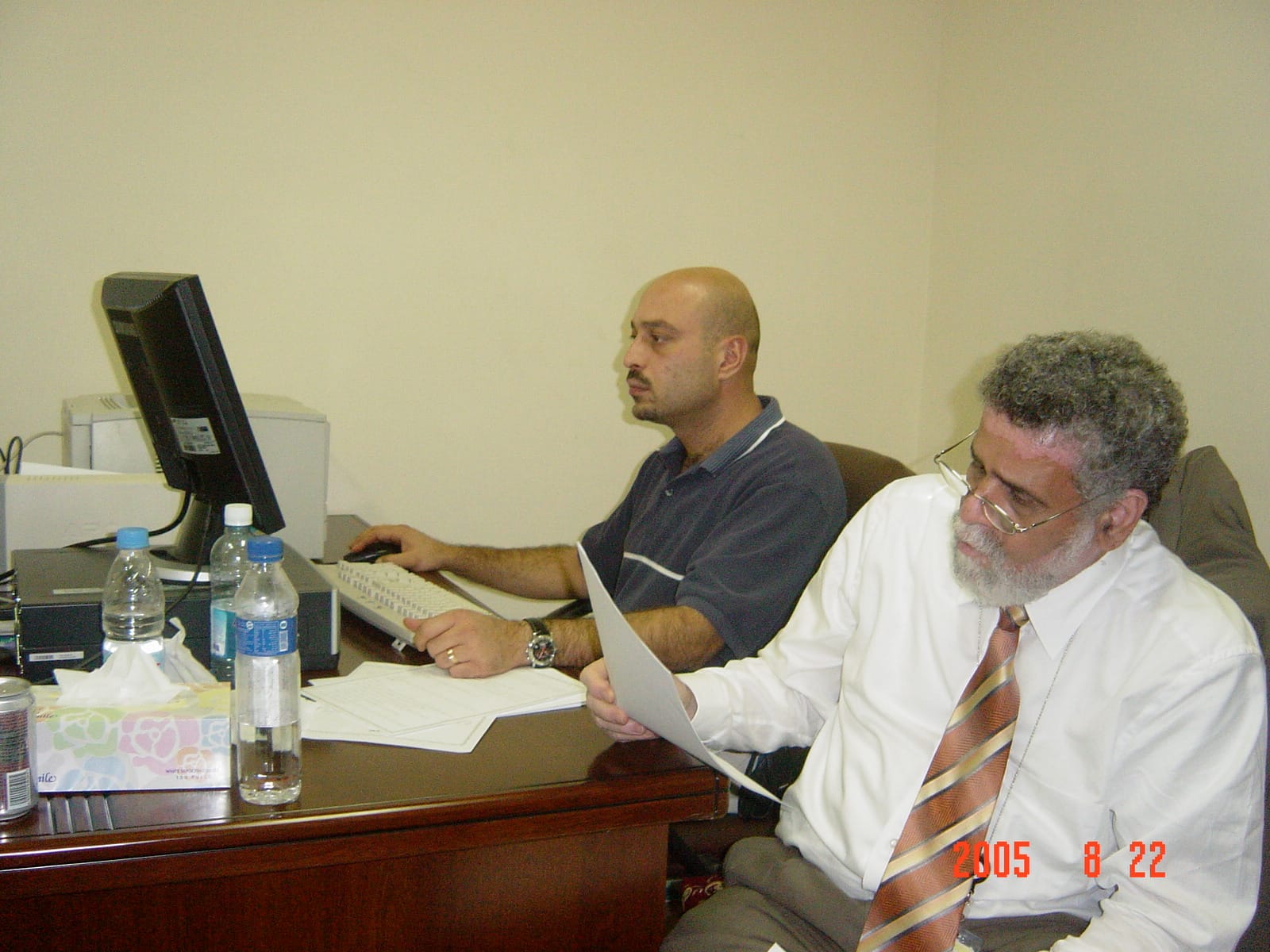
Back-room computer and document review.
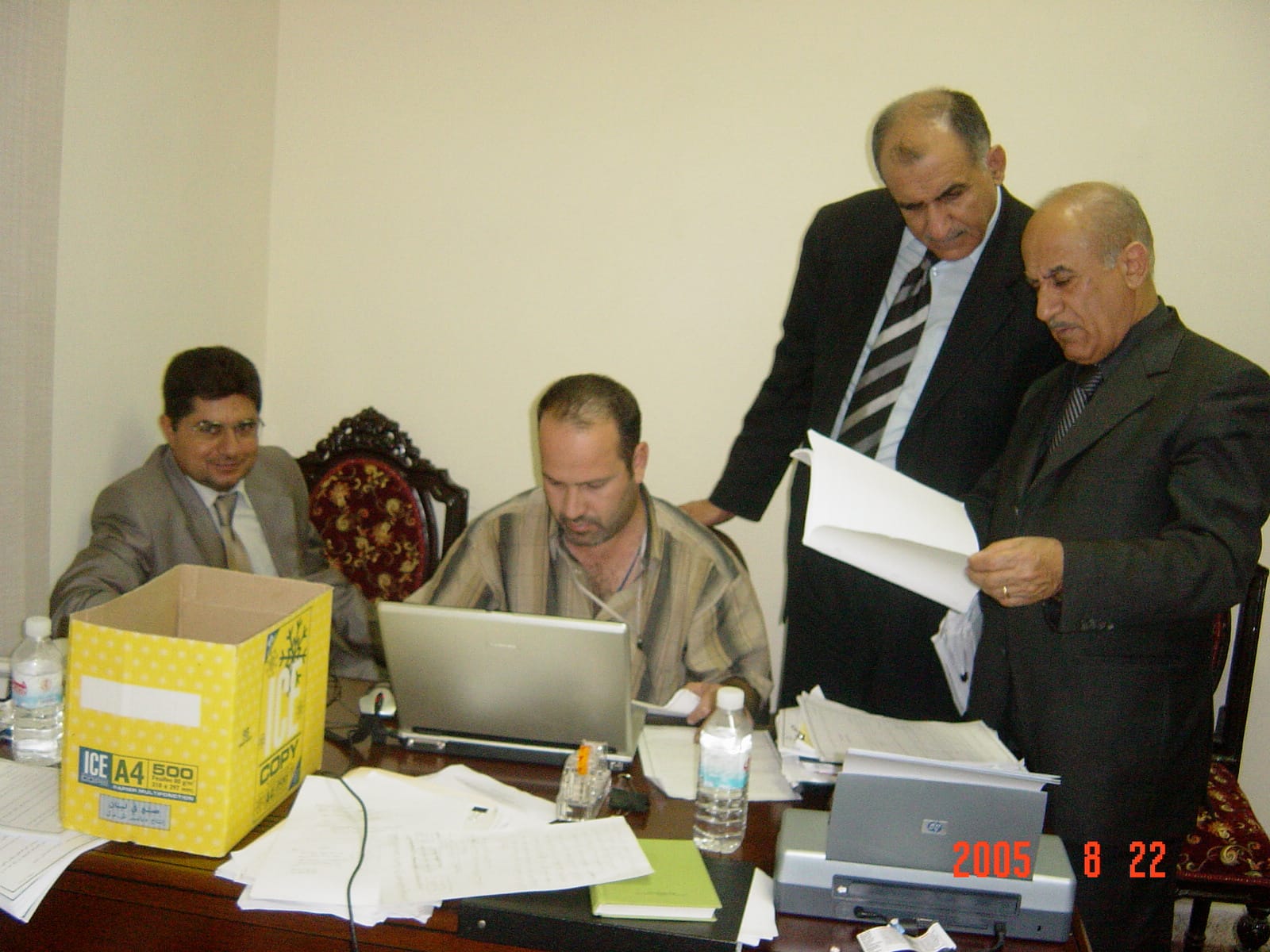
Back-room working group with draft pages, laptops, and printer.
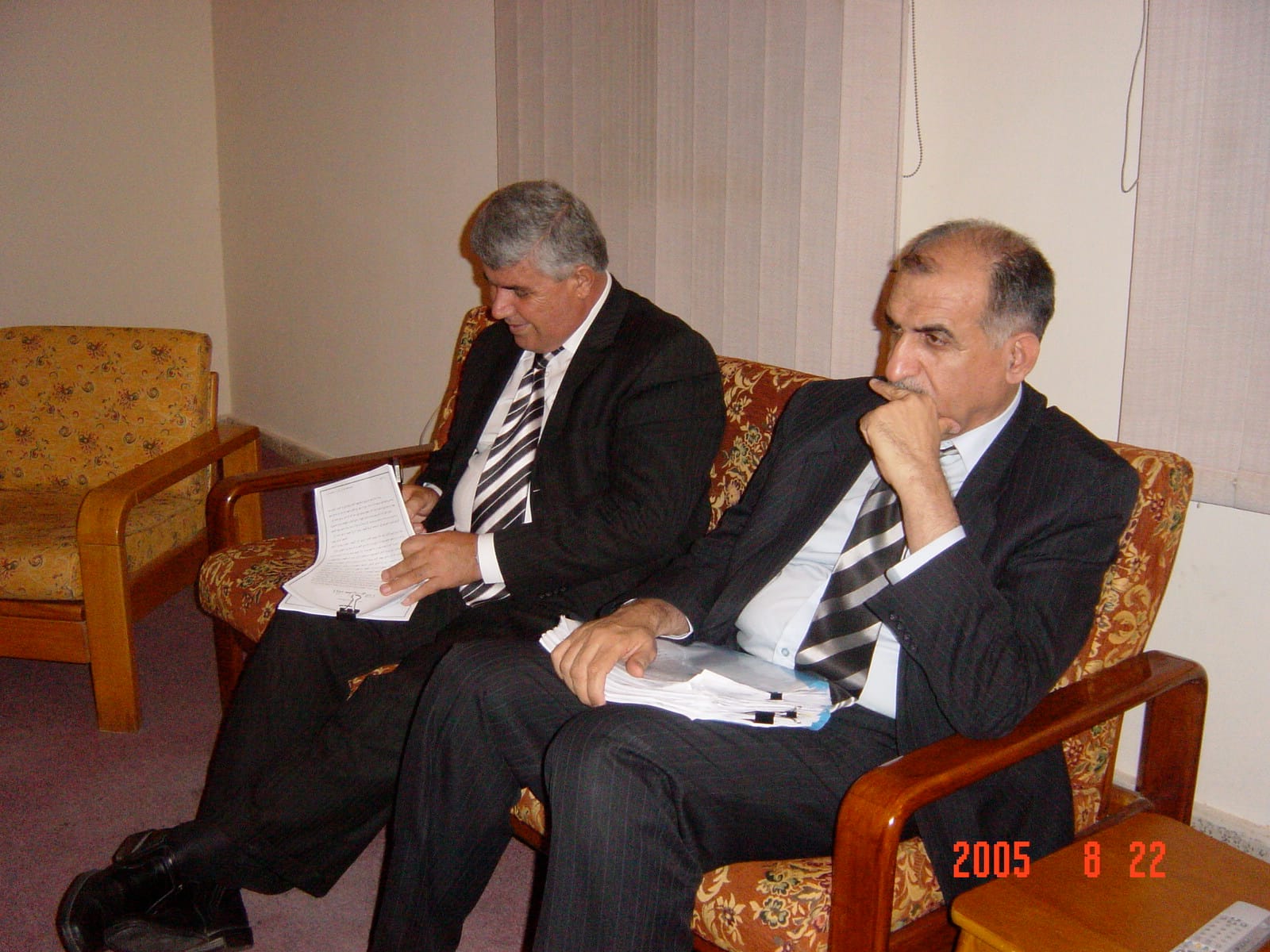
Discussion of draft pages in the parliamentary setting.
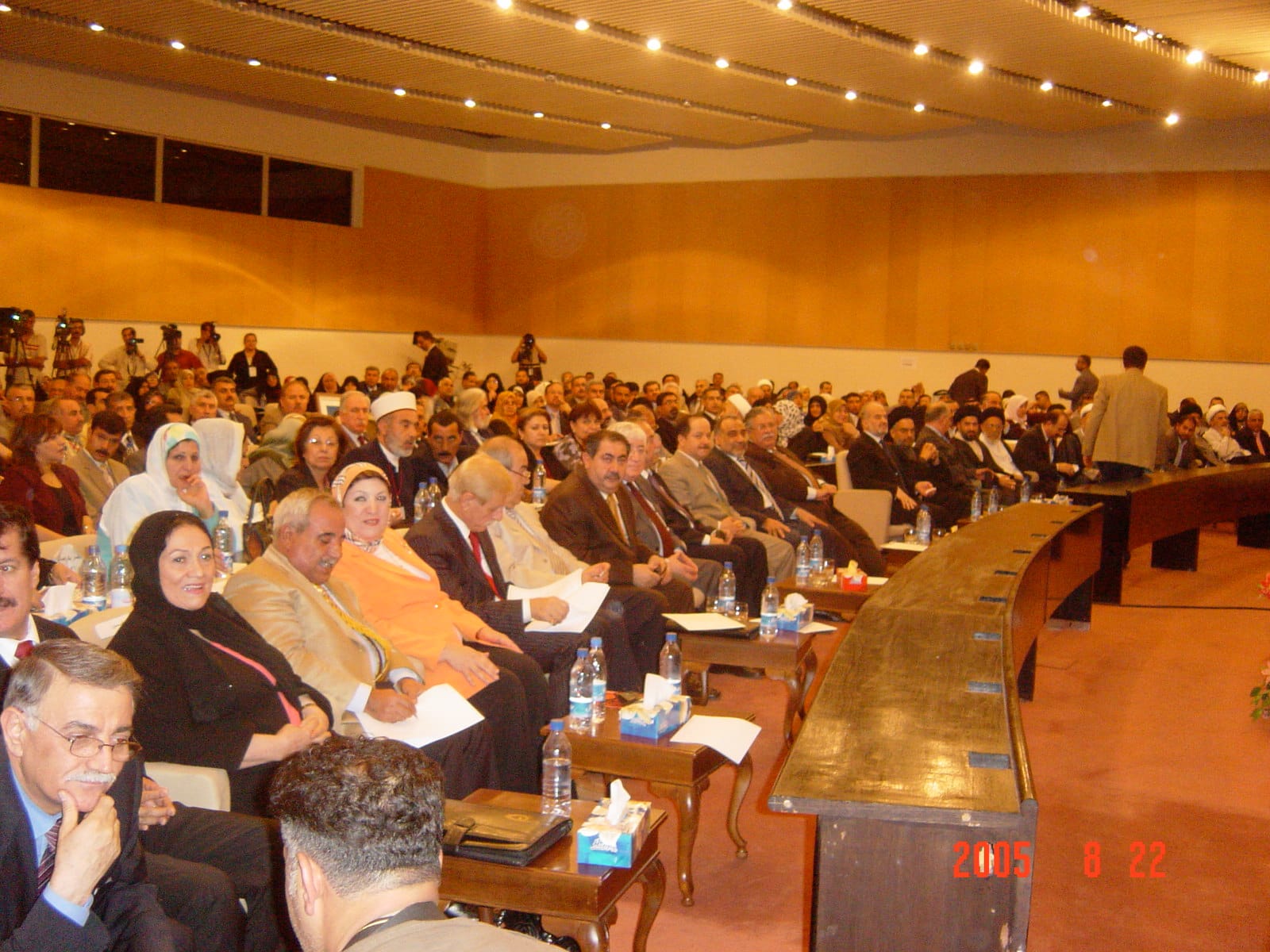
Parliamentary gathering, August 22, 2005 (camera date stamp).
The Constitution That Kurdistan Never Completed
Kurdistan had prepared constitutional drafts of its own before Iraq adopted its permanent constitution. An earlier draft had been considered in 2002, and the Kurdistan Parliament formally reviewed a draft in 2005. There was a serious argument for completing Kurdistan’s constitution before Kurdish representatives helped finalize Iraq’s: the Region needed rules governing its own institutions, not only recognition from the federal state.
That argument encountered political resistance. The record establishes the existence and review of a draft; the full explanation for its failure to be adopted still requires careful examination of parliamentary and party records. Another draft received parliamentary approval in 2009 but did not complete the referendum process.
In 2026, Kurdistan still has no ratified, operative regional constitution of its own. The irony is especially sharp because Article 120 of Iraq’s 2005 Constitution provides that each region shall adopt a constitution specifying its governmental structure, authorities, and mechanisms for exercising power.
A written constitution cannot, by itself, unify armed forces, make judges independent, or compel powerful political organizations to accept decisions they dislike. There is no magical connection between the presence of a document and the existence of constitutional government. An excellent constitution can be ignored; an imperfect constitutional framework can sometimes sustain practices of restraint.
The more difficult conjecture is that the Kurdish leaderships were able to agree on the constitutional recognition they required from Baghdad but not on enforceable restraints upon the power they retained within Kurdistan. Was their attention consumed by the urgent Iraqi negotiations? Were the parties unwilling to transfer authority to common institutions? Would the separate military and financial structures have frustrated any constitution even if adopted? These are rival explanations, not settled answers.
But the question can no longer be deferred merely because Kurdish self-government is threatened from outside. Kurdistan’s institutions must be able to govern competition from within.
The Partridge’s Message
Let the partridge carry two messages, neither of them flattering.
To the KDP: a parliamentary majority is not a substitute for lawful procedure. Reopening parliament may address prolonged paralysis, but that does not exempt the sitting from scrutiny, the allegations from investigation, or dissenting representatives from protection. A political success is not yet an institutional settlement if the public authority created by the decision cannot operate across the Region under accepted rules.
To the PUK: a serious objection to parliamentary procedure must be demonstrated through evidence and pursued through institutions capable of deciding it. Refusing recognition of an allegedly unlawful act is different from asserting authority to duplicate the Region’s presidency or cabinet in a party-controlled area. Neither historical sacrifice nor territorial influence gives a party ownership of Kurdistan.
To both: the martyrs deserve remembrance, not permanent proxies for their votes. The dead cannot be summoned to approve every position taken by the living. No party’s contribution to liberation can extinguish the public’s right to question and replace its leaders.
And to Kurdish citizens, especially those who refuse to turn political disagreement into factional identity: demanding a functioning parliament does not mean endorsing every procedure by which it was reopened. Demanding lawful procedure does not mean endorsing perpetual paralysis. A free political community must be able to insist upon both.
The partridge knows the mountain path. It does not deny that a ravine is dangerous. But the choice is not between pretending the ravine does not exist and surrendering to it. A bridge is an explanation made practical: a way of crossing what otherwise divides.
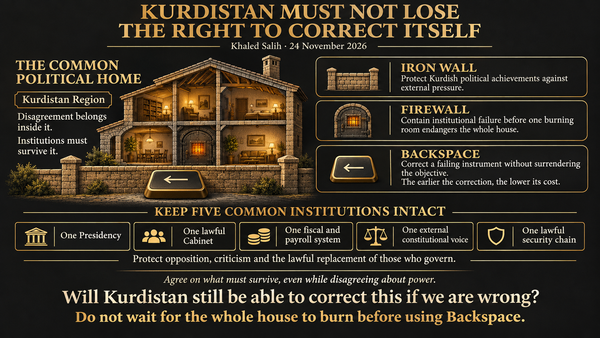
The bridge Kurdistan needs is not another agreement dividing offices between dominant parties. It is a set of institutions capable of deciding disputes even when those parties cannot agree: lawful parliamentary procedures, an independent judiciary, accountable public finance, a unified civilian chain of command over the peshmerga, and constitutional restraints that apply especially when inconvenient.
The Warning Before the War
A renewed Kurdish civil war is not inevitable. Neither the present threats nor the existence of divided political authority establishes that fighting will follow. But there is no automatic guarantee against it either—not in the memory of 1994, not in the exhaustion of the population, not in American or European diplomacy, not in the growing dangers of the wider Middle East, and not merely in the recognition of Kurdistan by Iraq’s Constitution.
The 1994 conflict showed that proximity, common language, shared history, and a recent achievement of self-government are not enough to prevent Kurds from taking up arms against Kurds. Institutions have to interrupt escalation before force becomes the method of resolving political disagreement.
This is the terrible possibility behind the imagined opening. Two administrations without effective restraints may not formally become two federal regions, yet they can still impose incompatible decisions, divide public services, threaten elected representatives, and make political allegiance a condition of everyday life. Constitutional illegality alone does not prevent practical fragmentation.
Kurdistan’s achievements deserve recognition. The Kurdish parties helped build an elected Region and helped secure its place in federal Iraq. Their political intelligence, endurance, and negotiating capacity are beyond doubt. But the ability to achieve political power is not the same as the institutional rationality required to criticize and correct its use.
It would be an error to describe the entire constitutional experiment as a failure. It would be a more dangerous error to treat its survival so far as proof that its weaknesses cannot become catastrophic.
The question is what will prevent the next error from becoming another war.
The partridge has crossed the pages of several books. In one, it stood for freedom. On another cover, it suggested the open possibility of a different future. Before the mountains of Rewanduz, it now confronts an obstacle that cannot be removed by eloquence alone.
It has no constitutional authority. It commands no peshmerga. It cannot compel a party leader to accept an adverse ruling. It carries no guarantee that its message will be heard.
But it can say what needs saying before the bridge collapses:
Do not build another history of Kurdish graves.
Do not make the next generation pay again for an error that can still be corrected.
The partridge cannot span the ravine by flying. It can still carry the first stone toward a bridge.
And the bridge must be built by the living.
References
This is an authorial essay, not a legal determination or a forecast of conflict. The imagined two-region opening is explicitly counterfactual. Allegations concerning the November 4 parliamentary session remain disputed; nothing here treats them as established findings.
The account of transporting, entering, checking, and printing constitutional revisions in Baghdad derives from the author’s eyewitness account. Four August 22, 2005 photographs document the physical setting; the pictures alone do not identify every participant or authenticate a particular constitutional draft.
Historical and documentary sources for final fact-checking: Iraq Constitution (2005), Arts. 117–120, https://investpromo.gov.iq/policies-and-laws/iraqi-constitution/.
International Crisis Group, Iraq’s Kurds: Toward an Historic Compromise? (2004), https://www.files.ethz.ch/isn/27429/026_iraq_kurds_toward_an_historic_compromise.pdf.
Historical records, 1958 and 1970: https://history.state.gov/historicaldocuments/frus1969-76ve04/d319.
PUK statement Nov. 5, 2026: https://www.pukmedia.org/EN/Details/83336.
Additional report: https://www.shafaq.com/en/Kurdistan/PUK-threatens-parallel-institutions-in-Kurdistan.