Books
Eight Books. Five Volumes. One Continuing Inquiry.
By Khaled Salih
What connects the Kurdish struggle for political freedom to the persistence of religious certainty, the failures of international institutions, and the extraordinary ability of intelligent societies to protect their own mistakes?
This question runs through my books.
Some begin with Kurdistan: its history, its contested existence, and the political futures that its people have struggled to imagine and create. Others examine the mechanisms through which ideas become protected against criticism, errors acquire authority, and societies lose the capacity to reconsider what they believe.
Taken together, these books investigate a larger problem: how human beings become prisoners of their own explanations—and how they might recover the freedom to create better ones.
They are not eight chapters of a predetermined philosophical system. Each book began with problems that demanded explanation. The conjectures developed in one sometimes opened unexpected questions for another.
Four of these books now belong to a single volume, Kurdistan—Let It Be, which brings the investigation back to the Kurdish question after examining the broader problems of knowledge, authority, institutional correction, and freedom.
The books are presented here as an evolving body of work, open to criticism, correction, and improvement.
What exists is not all that is possible.
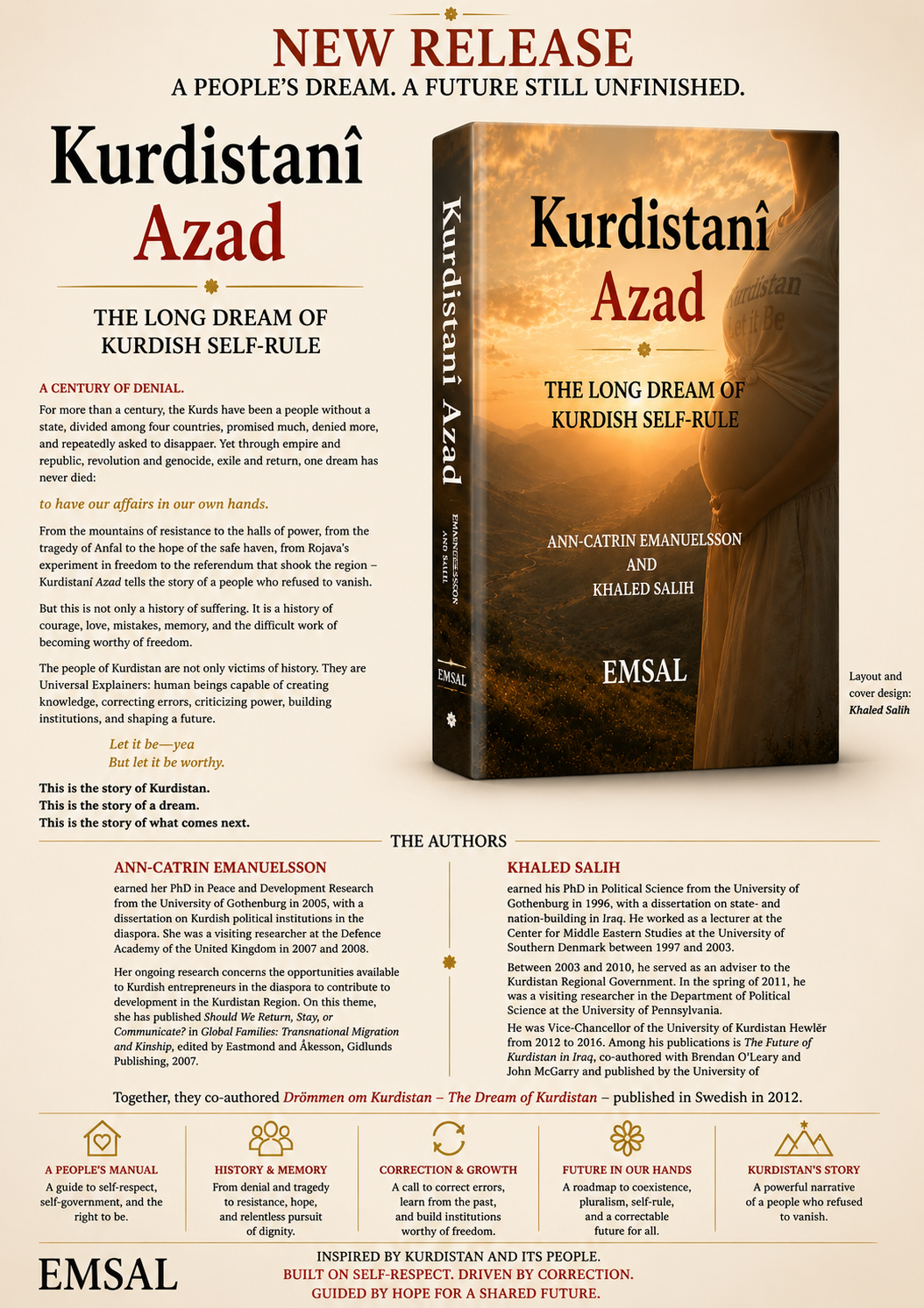
Kurdistanî Azad
The Long Dream of Kurdish Self-Rule
Ann-Catrin Emanuelsson and Khaled Salih
Published — August 2026
Kurdistanî Azad examines the historical struggle through which Kurdish self-rule became imaginable, politically contested, repeatedly attempted, defeated, reconstructed, and institutionalized.
Moving across generations of Kurdish political experience, the book investigates the relationship between national aspirations, political leadership, international power, institutional development, and the persistent difficulties of creating durable self-government.
It also raises a question that extends beyond Kurdistan: What does it take for a people to transform the aspiration for freedom into institutions capable of protecting it?
The book provides the historical and political foundation for the broader investigations developed in the other volumes.
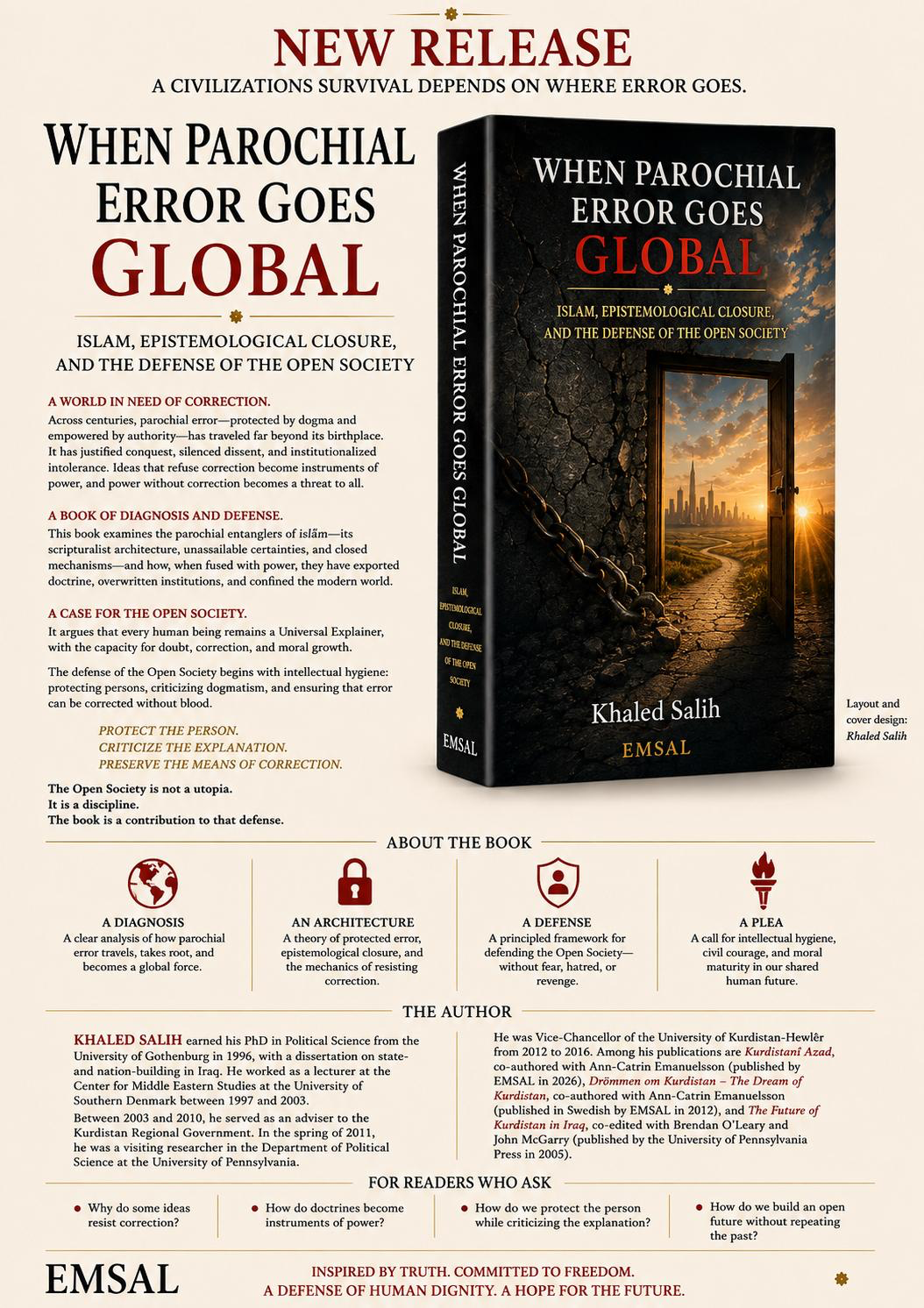
When Parochial Error Goes Global
Islam, Epistemological Closure, and the Defense of the Open Society
Khaled Salih
Published — September 2026
This book investigates how errors become protected against criticism and acquire mechanisms for transmission across generations.
Beginning with the problem of epistemological closure, it examines how religious and ideological systems can transform historically contingent explanations into supposedly unquestionable truths.
Its central concern extends beyond any single religion or civilization: how can societies recognize and correct inherited errors when their institutions reward the preservation of those errors?
The book develops an argument for the open society as an arrangement in which criticism remains possible, knowledge can grow, and no explanation is entitled to immunity from correction.
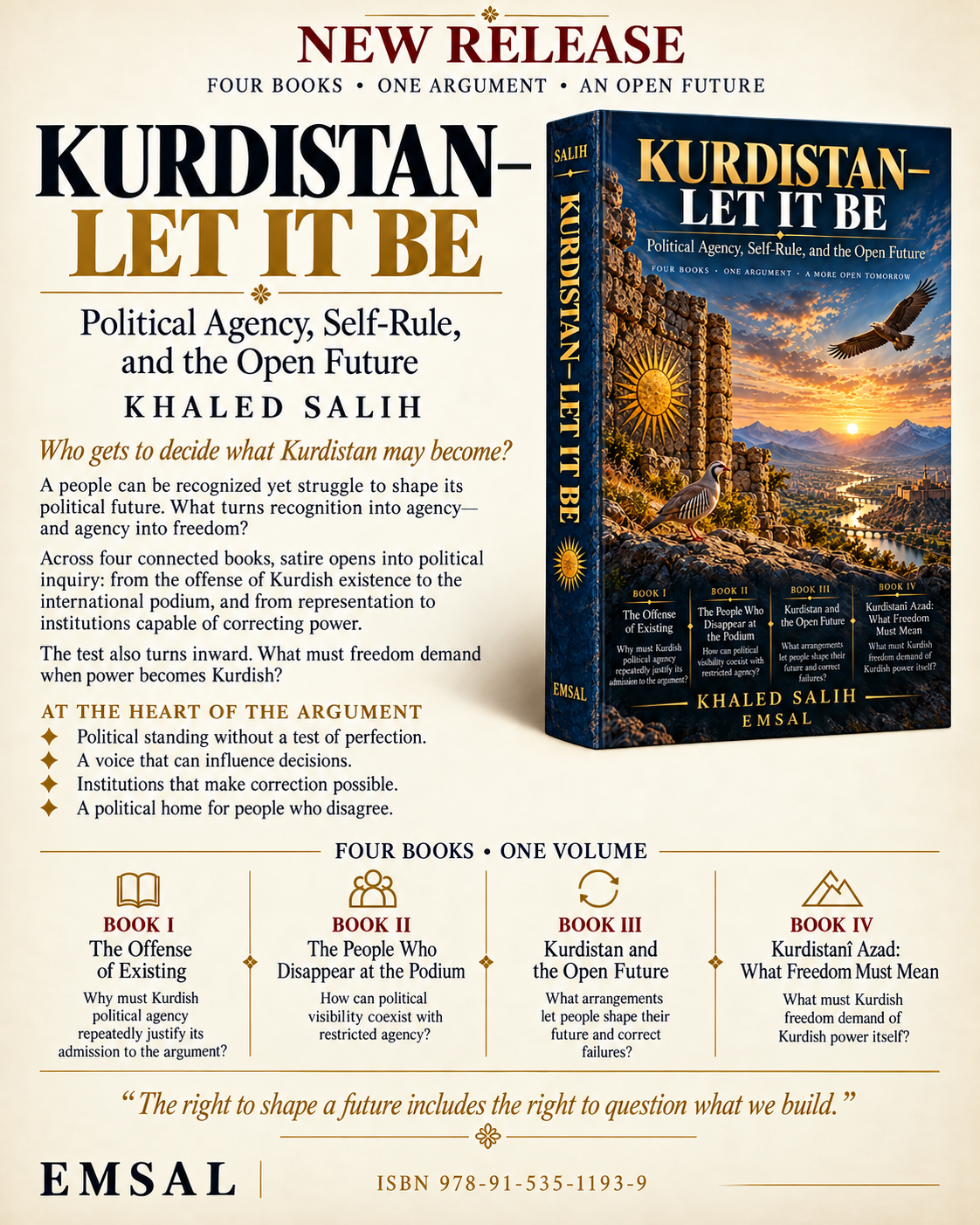
Kurdistan—Let It Be
Political Agency, Self-Rule, and the Open Future
Khaled Salih
Four Books. One Open Future.
Forthcoming
Kurdistan—Let It Be begins with a problem that extends far beyond Kurdistan: Why must some peoples continually justify their political existence to authorities whose own legitimacy is rarely subjected to the same examination?
Across four interconnected books, Khaled Salih investigates how political identities become contested, how international institutions make existing peoples disappear within their classifications, and how inherited political arrangements acquire the appearance of necessity.
The investigation moves from the offense of existing to the possibility of creating a future that no present authority can legitimately prescribe in advance.
At its center is a conjecture: political freedom cannot be reduced to gaining control over territory or replacing one set of rulers with another. It must also preserve the freedom to criticize institutions, correct collective mistakes, create new knowledge, and imagine possibilities that existing political arrangements exclude.
Kurdistan is the starting point and the continuing subject. But the underlying questions concern every people whose future is constrained by explanations and institutions treated as beyond criticism.
Inside the Volume
Book I — The Offense of Existing
Why must Kurdish political existence repeatedly be explained, justified, or defended?
Book II — The People Who Disappear at the Podium
How can international institutions recognize states while rendering the peoples within their borders politically invisible?
Book III — Kurdistan and the Open Future
What institutions would allow Kurds to create their own futures rather than inherit answers prescribed by others?
Book IV — What Freedom Must Mean
How can Kurdish self-rule preserve criticism, institutional correction, and the possibility of creating new knowledge?
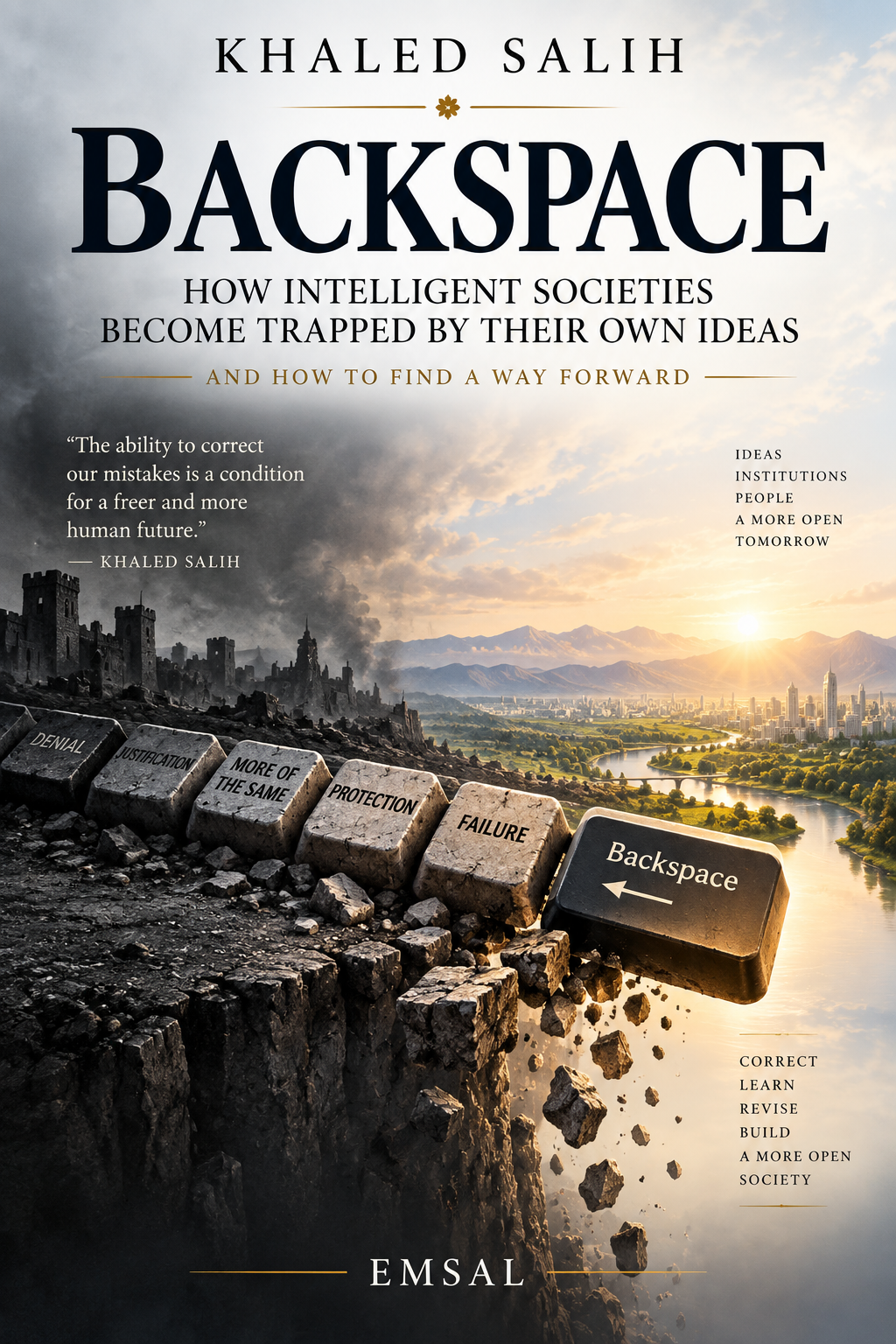
BACKSPACE
How Intelligent Societies Become Trapped by Their Own Ideas
Explores why intelligence does not guarantee rationality and how individuals and institutions can become highly sophisticated at defending their mistakes.
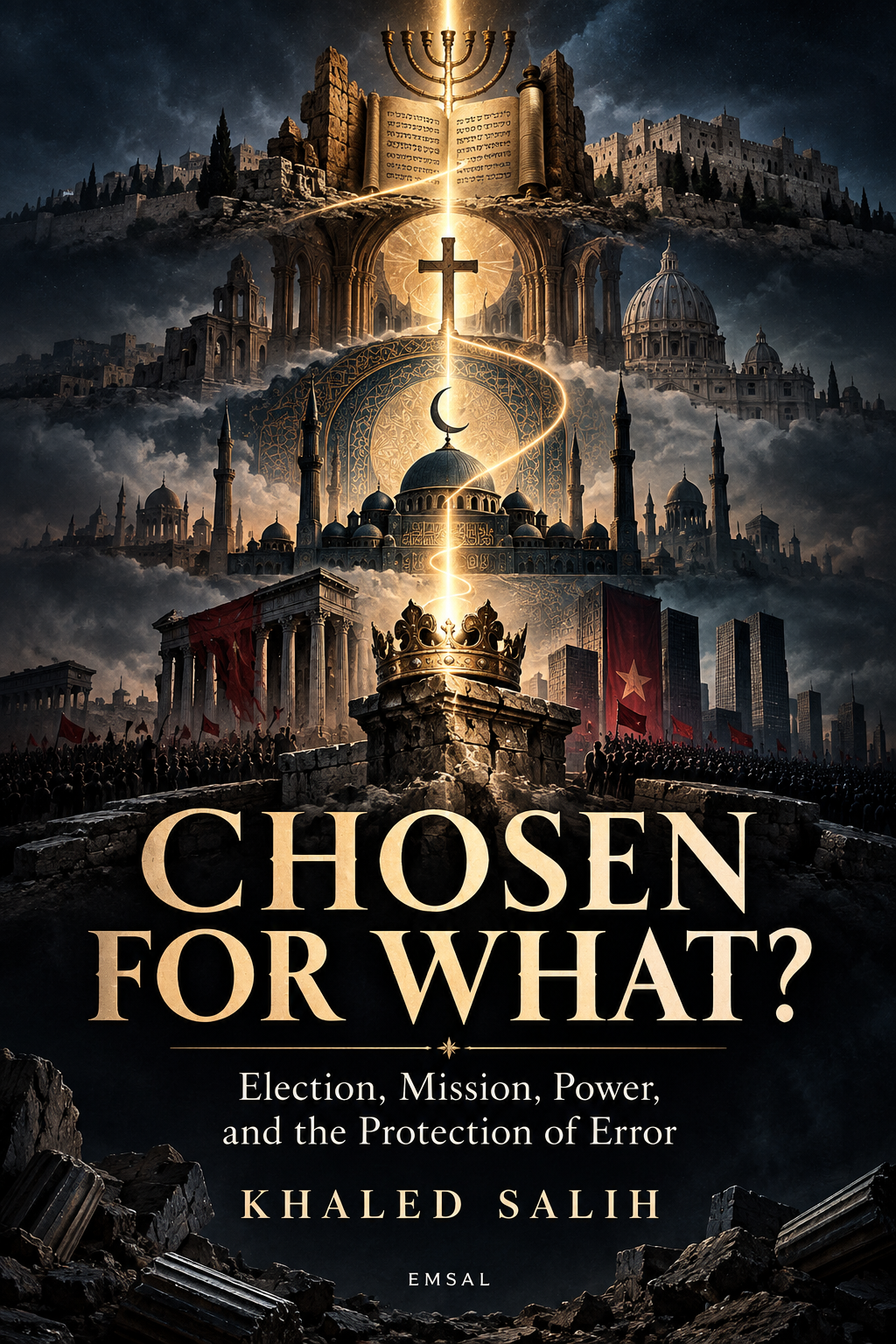
Chosen for What?
Election, Mission, Power, and the Protection of Error
extends the investigation into religious and secular traditions of chosenness, examining the relationship between claims of special authority, criticism, and human equality.
Together, these works form an evolving intellectual investigation rather than a finished philosophical system.