What Is islām Without Error-Correction? A Critical Rationalist Review of Shahab Ahmed
8 March 2026
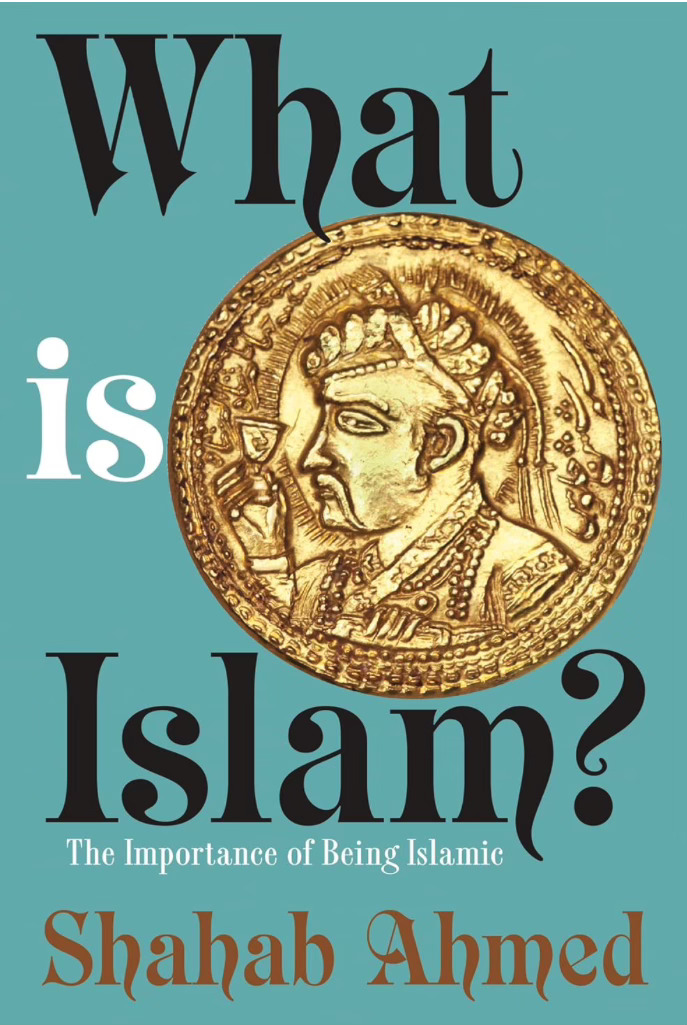
This short essay matters because it confronts a civilizational error at the level where all real progress begins or collapses: epistemology. Shahab Ahmed saw, with rare brilliance, that islām had been mutilated by a narrow, legalistic reduction that strangled its former explanatory richness. But diagnosis is not enough. The deeper question is whether a civilization responds to contradiction by worshipping it, or by solving it. That is why this text is important. It does not merely review Ahmed’s book; it asks whether Muslim thought can move from reverence for ambiguity to the open-ended search for better explanations. In that sense, the stakes are not academic. They concern whether a culture remains trapped in elegant stasis, or re-enters the endless frontier of error-correction, creativity, and the growth of knowledge.
In What is Islam?, Shahab Ahmed has produced a monumental and forensically rigorous deconstruction of “bad philosophy.” By systematically dismantling the prevailing “legal-supremacist” definition of Islam—the notion that Islam is strictly a regime of jurisprudential prescriptions and proscriptions—Ahmed exposes a catastrophic epistemological error that has infected both modern Muslims and Western analysts alike.
Through the lens of Critical Rationalism, Ahmed’s historical analysis is a brilliant documentation of how a civilization’s explanatory reach can be artificially truncated. However, while his diagnosis of the disease is flawless, his ultimate epistemological prescription—the embrace of “coherent contradiction” and paradox—represents a fundamental failure of fallibilism.
Here is a structural deconstruction of Ahmed’s framework through the epistemology of objective knowledge.
The Epistemological Tragedy
Ahmed’s primary achievement is his demonstration that historical Islam, specifically the vast “Balkans-to-Bengal complex” (1350–1850), was not a static society governed by blind obedience to a literal text. Instead, it was an expansive, meaning-making culture that prioritized explorative authority over mere prescriptive authority.
In Deutschian terms, Ahmed proves that historical Muslims functioned as Universal Explainers. They did not merely “download” knowledge from an authoritative scriptural source (a justificationist trap); rather, they actively engaged in the creative conjecture of meaning. Ahmed conceptualizes this as hermeneutical engagement with the Pre-Text, Text, and Con-Text of Revelation.
- The Pre-Text represents the underlying, objective Reality or Truth of the cosmos, which philosophers sought to understand via Reason, and Sufis via experiential existence.
- The Text (the qur’ān) is merely a localized, finite expression of that infinite Pre-Text, adapted for human comprehension.
- The Con-Text is the accumulated historical vocabulary of art, poetry, and discourse—what we would call the civilization’s meme pool.
Ahmed astutely identifies that the tragedy of modern Islam is the “downsizing of revelation.” Modern reformers and fundamentalists have eradicated the Pre-Text and Con-Text, reducing all truth to the literal interpretation of the Text alone. Epistemologically, this is the ultimate victory of anti-rational memes. By stripping away the explorative discourses of philosophy, art, and poetry, modern radicalism has engineered a rigidly Static Society that enforces conformity, disables critical thought, and views the future not as an open-ended quest for better explanations, but as a fixed state to be preserved.
The Quest for Good Explanations vs. The Myth of the “Elect”
Ahmed rightly celebrates the Muslim philosophers (like Avicenna) for recognizing that the literal Text was often an inferior, “lowest common denominator” approximation of Truth meant for the masses, while Reason provided direct access to the Pre-Text. In a Deutschian framework, these philosophers were seeking hard-to-vary explanations of the universe—theories whose specific, functional details map directly onto objective reality.
However, Ahmed’s history reveals a fatal structural flaw in this civilization: the spatial hierarchy of truth. Because these profound philosophical and scientific explanations were deemed too dangerous or complex for the commoners (ʿawāmm), they were restricted to the private sphere of the elite (khawāṣṣ). By failing to build public institutions of error-correction and open debate, the Balkans-to-Bengal complex failed to trigger a permanent Enlightenment. A true Dynamic Society cannot exist if its best explanations are quarantined in private gatherings (majlis) while the public is fed prescriptive dogma.
The Trap of “Coherent Contradiction”
Where Ahmed’s magnificent architecture ultimately collapses is in his epistemology of paradox. Ahmed argues that the highest achievement of historical islām was its capacity to live with ambiguity, ambivalence, and outright contradiction. He points to the poetry of Ḥāfiẓ and Rūmī, which deliberately synthesized opposing truths (e.g., wine-drinking as both a sin and a metaphor for divine love, or the simultaneous truth of idol-worship and monotheism). For Ahmed, paradox is a “veridical or truth-telling device,” and the accommodation of “coherent contradiction” is the ultimate hallmark of a mature Islamic epistemology.
From the perspective of Critical Rationalism, this is a profound error. Contradiction is not an endpoint to be celebrated; it is the definition of a problem.
As David Deutsch has stated, a problem is exactly “the presence of two conflicting theories in one’s mind.” If a society holds two contradictory ideas to be simultaneously true, it means its explanatory framework contains a flaw. Progress—the growth of knowledge—only occurs when we recognize a contradiction, generate a bold new conjecture to resolve it, and subject it to relentless criticism to eliminate the error.
By treating paradox as an aesthetic and spiritual ideal (ḥayrat, or bewilderment) rather than as an error demanding correction, the intellectuals of the Balkans-to-Bengal complex actively halted the growth of knowledge. They created a culture of “splendid stasis.” They substituted the rigorous, objective quest for hard-to-vary explanations with the poetic beauty of easy-to-vary metaphors. While this resulted in breathtaking art, literature, and a highly tolerant culture, it lacked the objective mechanism of error-correction necessary to ignite the beginning of infinity.
Core Insight
Ahmed has written a masterpiece exposing how the anti-rational memes of modern legal-supremacism amputated the creative, meaning-making capacity of Muslim civilization. However, his solution—a nostalgic retreat into the mystical paradoxes and “coherent contradictions” of the pre-modern era—is epistemologically insufficient. The true antidote to the sterile dogmatism of the modern era is not a return to metaphorical ambiguity, but the fearless embrace of Fallibilism. Muslims, like all people, are Universal Constructors.
To reclaim their dynamic trajectory, they must recognize that all problems are soluble, all contradictions are errors waiting to be corrected, and the quest for objective truth has no end.
Shahab Ahmed, 2016, What Is Islam? The Importance of Being Islamic. Princeton and Oxford: Princeton University Press.


