The Watermelon Degree: How a University Learned to Clap for Its Own Abdication
9 January 2026
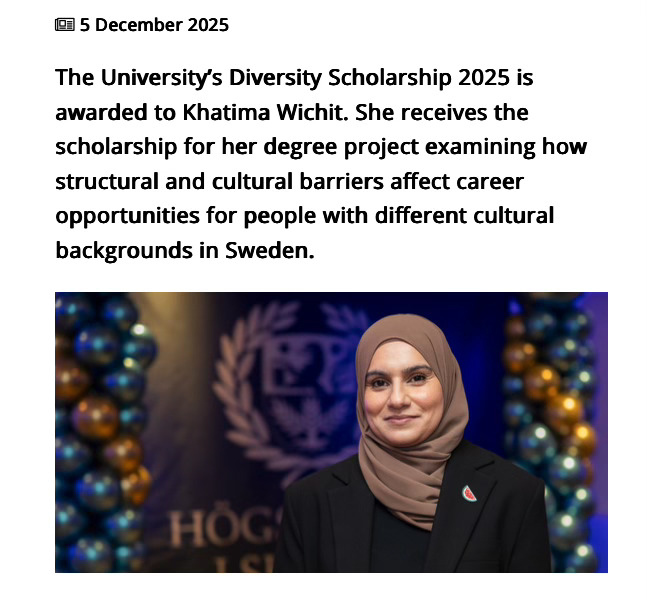
This is my third article on this journey (see here and here), and the pattern by now is too familiar to be accidental: higher education, once the training ground for argument, has begun to behave like a church that has mislaid its theology and compensated by inventing new sacraments. Where a university used to ask for theses, it now asks for tokens; where it once demanded proof, it now accepts posture; where it once taught students to risk being wrong, it now teaches administrators to fear being accused. And so a graduation ceremony—supposed to be the public seal of measured attainment—finds itself quietly rebranded as a moral catwalk, a place where one’s intellectual standing is decorated, without debate or consent, by a political emblem that arrives pre-loaded with accusation. It is here that Greta Thunberg becomes relevant—not as a person to be praised or blamed, but as a phenomenon: the consecration of youth as unchallengeable authority, the substitution of urgency for reasoning, the transformation of conscience into spectacle. One cannot help asking, as the university applauds its own surrender to symbolic politics: has higher education now awarded itself a sacred mandate to manufacture a future generation of Greta—graduates trained less to think than to perform the correct alarm, fluent in gesture, insured against contradiction, and credentialed not by knowledge but by the loud, safe ritual of belonging?
In my earlier published post-mortem on the university’s broader abdication of seriousness, I dealt with the larger scandal that surrounded this institution’s recent bout of self-congratulation. This follow-up concerns something smaller, subtler, and therefore more revealing: the watermelon.
Not the fruit, of course—though one should never underestimate how quickly a modern institution can be brought to its knees by a salad garnish. I mean the watermelon as talisman: the little badge of pre-packaged righteousness, the emoji turned into a sacrament, the cheap and bloodless “stance” worn as a substitute for speech, argument, or—allāh forbid—knowledge.
A university ceremony is supposed to be one of the few remaining civic rituals in which we agree, briefly, to suspend faction. We gather not to applaud a tribe, but to recognise a discipline: the idea that effort has been measured, standards applied, and some intellectual threshold crossed. It is not meant to be a march. It is not meant to be a protest. It is not meant to be a stage for importing whatever geopolitical fever currently enjoys the loudest online fan club.
And yet there it was: a watermelon symbol displayed at the ceremony, in the very moment of conferral—an attempt to smuggle a contested political banner into a rite that exists precisely to separate achievement from agitation. The question is not whether the student “had a right” to wear it. The question is why an institution that claims to cultivate reason behaved as if it had no right—no duty—to say: Not here. Not now. Not under our imprimatur.
The watermelon as moral contraband
The watermelon symbol has become popular precisely because it does two things at once. It signals allegiance while providing plausible deniability. It is political semaphore masquerading as innocent décor: “Oh, it’s just a fruit.” This is the charm of the thing, and also its intellectual squalor. One may advance a cause while dodging the burdens that normally come with advancing a cause—namely, clarity, responsibility, and the prospect of being contradicted.
In the online world, where speech is chopped into hashtags and punished by capricious algorithms, coded symbolism can be understandable—even ingenious. But the ceremony was not an algorithm. The graduation hall was not a content-moderation queue. There was no censor to evade, only fellow citizens to persuade. So the watermelon’s appearance here was not the defiance of repression. It was the performance of defiance in a space where the wearer is effectively unanswerable.
That is why it functions so well as a social weapon. The symbol arrives already armed with an accusation: any objection can be framed as cruelty, prejudice, or complicity. It is a badge that demands moral tribute before a word has been spoken. And universities—terrified of their own students, their own staff, their own reputations—have trained themselves to pay up.
“Neutrality” as the alibi of cowards
You will be told, with the weary confidence of the middle manager, that the university “must remain neutral.” This is the modern university’s favourite line, delivered with all the sanctimony of Pontius Pilate washing his hands. But neutrality is not the same as passivity. Neutrality does not mean surrendering the ceremonial floor to whoever arrives with the most emotive token.
If the university truly believed in neutrality, it would defend the ceremony as a shared civic space rather than a partisan runway. It would say: Your politics are yours. Our ceremony is ours. It would not confuse the right to hold an opinion with the right to annex every institutional occasion for its display.
Instead, we get the bureaucratic version of “anything goes”—which is never actually anything. Universities police dress codes, speech length, behaviour, choreography, photography, seating, applause, and the timing of one’s bodily functions with near-military fussiness. They can, when they wish, enforce standards down to the colour of a tassel. The claim that they are helpless before a politically charged emblem is not a principle. It is a choice.
And it is always the same choice: appease the activist, disappoint the silent majority, and then call it “inclusion.”
The degradation of the academic rite
The deeper problem is what this says about the institution’s conception of scholarship. An academic award ceremony is an explicit act of endorsement. It is the university saying, publicly: This person has met our standards; this work passes muster; this achievement is worthy of honour.
When that moment is decorated with a polarising symbol—one that functions, in practice, as a flag by other means—the institution is not merely “tolerating expression.” It is allowing its endorsement to be wrapped in a political message. It is letting the conferral of an academic credential be visually re-branded as a partisan event. That is not neutrality; it is complicity in the cheapening of the rite.
Worse still, the watermelon is not an argument. It cannot be examined, questioned, cross-referenced, or improved. It is pure assertion—and precisely the kind that universities once trained people to resist. When a university permits its most solemn ritual to be colonised by assertion-as-accessory, it teaches a disastrous lesson: that the point of higher education is not to clarify your thoughts, but to display your loyalties.
The university’s fear of being called “unsafe”
Why did the institution permit it? Because modern universities have created a new deity, and its name is Risk Management. The administrators have learned that it is easier to offend the quiet, to alienate the thoughtful, and to irritate the donors than it is to withstand a shriek on social media or a petition signed by people who can’t locate the campus on a map.
They are frightened of the accusation that they are “unsafe”—a term that has migrated from physical threat to emotional inconvenience. Under this theology, disagreement becomes “harm,” and a refusal to applaud becomes “violence.” So the university, desperate to avoid being cast as villain in someone else’s morality play, yields the stage. It decides that the ceremony is a small price to pay for tranquillity.
But tranquillity bought with principle is not tranquillity. It is habituation. Today it is a watermelon pin; tomorrow it is the demand that the university speak in the same symbolic language, issue statements, re-write curricula, purge dissenters, boycott exchange programmes and scientific cooperations with demonised adversaries, and “centre” the correct feelings. When an institution signals that its rituals are up for capture, it should not be surprised when capture becomes policy.
A note on the double standard
One can also ask a simple question: would this have been permitted if the symbol ran the other way?
Would the same university have serenely tolerated a conspicuous emblem associated with the opposing side of that conflict? Would it have called that “personal expression,” or would it suddenly discover the sanctity of the ceremony, the need for sensitivity, the danger of provocation? Anyone who has watched a contemporary campus for more than five minutes knows the answer.
This is why the university’s posture is so contemptible. It is not that it has no standards. It is that its standards are political. It enforces them selectively, then hides behind the vocabulary of rights and inclusion as if these were natural forces rather than administrative conveniences.
What a serious university would have done
A serious institution would have done something very simple and very boring: it would have protected the ceremony.
It would have published a clear rule—applied across the board—that the conferral of degrees and awards is not a venue for partisan symbols or campaigning messages. It would have offered abundant alternative spaces for political expression: debates, panels, student fora, published replies, organised protests outside the hall, letters, op-eds, even counter-events. It would have said: We will host your arguments. We will not convert our academic rites into your billboard.
This is not oppression. It is institutional self-respect.
And, crucially, it protects everyone—including the student. Because once political symbolism becomes normalised at ceremonies, it does not remain a private flourish. It becomes an expectation. Then pressure begins: wear the symbol or be suspected; display the badge or be judged; join the liturgy or be excluded. The university’s failure to draw a boundary does not create freedom. It creates coercion, by way of fashion.
The watermelon and the infantilisation of politics
There is also something uniquely pathetic about the watermelon itself: the way it reduces an appalling, complex, morally serious conflict into a piece of fruit—an item designed to be cute, shareable, and hard to criticise without seeming monstrous.
This is how contemporary politics works: it seeks not to persuade, but to shame; not to argue, but to signal; not to think, but to belong. And universities—institutions that should be inoculating young adults against this infantilisation—are now its eager distributors.
They are producing graduates fluent in symbolic consumption: knowing which emblems to wear, which slogans to repeat, which causes to perform, and which questions to avoid. That is not education. It is the training of courtiers.
The verdict
So let me state the matter plainly. The university that allowed the watermelon to be displayed at a ceremony of academic recognition did not merely “permit expression.” It permitted the conversion of an academic rite into an ideological showcase. It chose comfort over clarity, appeasement over authority, optics over standards. It acted, in short, like an institution that no longer believes it is entitled to defend its own purpose.
A university that cannot say, calmly and firmly, “This ceremony is not your protest,” is not being liberal. It is being spineless. It is advertising that it can be pushed, and that the pushing will be rewarded.
And there is a final irony worth savouring. The university will insist it is a place of “critical thinking.” Yet when presented with a symbol whose entire power lies in short-circuiting criticism—by turning objection into taboo—it responded not with thought, but with the administrative cringe. That is how institutions rot: not with a bang, but with a watermelon.
One can almost forgive the student—young, earnest, intoxicated by the applause of her peers and the narcotic certainty of a symbol—if she cannot imagine that someone in the audience might dissent, might resent having a hard-won academic rite commandeered into a political liturgy. Youth has always been prone to the romance of unanimity. What is unforgivable is that the adults in charge—the administrators and academics who posture as custodians of pluralism, inquiry, and intellectual courage—failed to entertain the heretical thought that a graduation ceremony is not their private stage for sectarian catechism. They did not merely “allow expression”; they curated a moment in which an institution spoke through a student, laundering an agenda through innocence and calling it community. So the question they must answer, plainly and without euphemism, is this: do you agree with the hijacking of an academic platform for political ends—and if you do, have the courage to say that this is now part of your mission? And if you do not, why did you reward it with official indulgence, teach it by example, and silence—by omission—those who came to celebrate scholarship rather than pledge allegiance? Because the ugliest possibility is the simplest: that you have discovered a subtler method of governance, not by argument but by atmosphere; not by persuasion but by moral choreography—using an emotionally engaged student as a human shield for politics you are too timid to defend openly, while flattering the student body into mistaking staged sentiment for education and enforced consensus for virtue.


