The Kurdish moment reassessed: Ofra Bengio’s “imaginative journey to Kurdistan”
By Khaled Salih
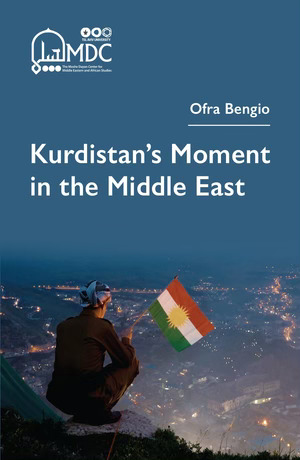
The Kurdish question, described by Ofra Bengio as a “geopolitical fault line” that has vexed the Middle East since World War I, remains a defining challenge for regional stability. In Kurdistan’s Moment in the Middle East, Bengio distills her decades of scholarship into a compelling analysis of Kurdish identity, resilience, and geopolitical significance. Published amid ongoing turmoil in Iraq and Syria, where state collapse has elevated Kurdish aspirations, the book is both a historical reckoning and a strategic roadmap. Bengio argues that the Kurds stand at a historic crossroads, poised to reshape the region’s future yet constrained by enduring vulnerabilities. This review employs a SWOT framework to evaluate her thesis, highlighting the Kurds’ trajectory and its implications for Middle East policy.
A scholar’s odyssey
Ofra Bengio’s Kurdistan’s Moment in the Middle East is the culmination of a 45-year intellectual journey. As a pioneer of Kurdish studies, Bengio founded the Kurdish Studies Program at Tel Aviv University’s Moshe Dayan Center, cementing her role as a leading voice on the subject. Her visits to Southern Kurdistan (Iraq), which she describes as “eye-opening,” infuse her work with a rare blend of scholarly rigour and lived experience. Rather than a linear history, the book compiles essays spanning three decades, offering a longitudinal perspective on the Kurds’ evolution from marginalised groups and rebels to pivotal regional actors.
This structure, far from disjointed, enriches the analysis by tracing the arc of Kurdish resilience. Bengio’s personal connection, she calls her research an “imaginative journey to Kurdistan”—grounds her argument that the Kurds possess the societal vitality to pursue statehood. For policymakers, her work underscores the value of sustained engagement with non-state actors whose influence now rivals that of traditional powers.
The Kurdish project: A SWOT analysis
Strengths: Resilience and institutional growth
Bengio identifies resilience as the bedrock of Kurdish progress. Despite a century of suppression, Kurdish nationalism has endured, forging a cohesive identity across fragmented communities. The Peshmerga’s transformation from guerrilla units to a disciplined force, instrumental in defeating the Islamic State, has earned the Kurds credibility as reliable Western partners. The Kurdistan Regional Government (KRG) further showcases this strength, with functioning institutions, a diversifying economy, and national symbols that signal statehood in all but name. The Kurds’ secular, pro-Western stance distinguishes them in a region often defined by ideological extremism, offering a strategic asset for global powers seeking reliable and stable allies.
Weaknesses: Division and dependency
Yet internal fractures undermine these gains. Bengio highlights the rivalry between the Kurdistan Democratic Party (KDP) and the Patriotic Union of Kurdistan (PUK), which has fuelled political gridlock and, in the 1990s, civil war. These divisions weaken collective bargaining power and erode public trust. Economically, the KRG’s landlocked geography and reliance on oil exports leave it vulnerable to blockades by Turkey, Iran, or Iraq. Strategically, the Kurds’ oscillation between autonomy and independence, as Bengio notes, reflects a hesitant, and mostly short of unified, vision, complicating their path to sovereignty.
Opportunities: Leveraging regional upheaval
The collapse of state authority in Iraq and Syria has created unprecedented openings for Kurdish self-rule. The fight against ISIS elevated the Kurds’ global profile, securing direct Western aid and military support. Bengio points to the evolving Erbil-Ankara relationship, driven by mutual economic interests, as a pragmatic shift from historic enmity. These dynamics position the Kurds as indispensable players in a fragmented region, offering policymakers a chance to bolster a stabilizing force through sustained diplomatic and economic engagement.
Threats: Encirclement and geopolitical betrayal
Kurdish aspirations face unrelenting opposition from Turkey, Iran, Iraq, and Syria, which, despite their rivalries, unite against Kurdish statehood. Bengio recalls the 1975 Algiers Agreement, when Iran’s abrupt withdrawal of support left Iraqi Kurds exposed, as a stark reminder of their vulnerability. Even Western allies, prioritising Iraq’s territorial integrity, offer only limited backing. This “glass ceiling,” as Bengio terms it, caps Kurdish ambitions short of sovereignty, underscoring the need for diversified alliances to mitigate reliance on fickle partners.
A unified narrative of dispossession and defiance
Bengio’s compilation of essays achieves thematic coherence by anchoring the Kurdish struggle in its historical roots: the denial of nationhood after World War I. The Sykes-Picot Agreement and Treaty of Lausanne, which carved up Kurdish lands, remain vivid touchstones throughout the text. Mas‘ud Barzani’s lament,
“Today marks the 100th anniversary of the Sykes-Picot agreement. This agreement led to the carving up of the region following the First World War, disregarding the opinion of the peoples of the region and of the geographical reality in the region. It was a great injustice on the peoples of the region, especially the Kurds.”
captures the moral and political weight of this dispossession. For Bengio, every KRG milestone, from parliamentary elections to the adoption of a national flag, is an act of restitution, signaling a people reclaiming their agency.
Bengio’s deeply engaging narrative resonates beyond academia, offering policymakers a lens to view Kurdish state-building as both a practical and moral imperative. Supporting Kurdish institutions, she implies, could stabilise a region plagued by sectarianism and authoritarianism.
A fragile but formidable force
Ofra Bengio’s Kurdistan’s Moment in the Middle East is a landmark study that doubles as a strategic guide for navigating the region’s complexities. Her balanced assessment avoids romanticising Kurdish aspirations or ignoring their precariousness. The Kurds’ moment, she argues, is real but fraught—sustained by resilience yet imperilled by division, encirclement, and unreliable allies.
For U.S. and European policymakers, Bengio’s work highlights the Kurds’ potential as a stabilising force in a volatile region. Strengthening KRG institutions, fostering intra-Kurdish unity, and diversifying economic partnerships could cement their role as a counterweight to extremism and autocracy. Yet caution is warranted: overreliance on Western support risks repeating past betrayals. The Kurds, as Bengio demonstrates, are no longer peripheral but central to the Middle East’s future: a reality that demands nuanced, forward-looking policy engagement.
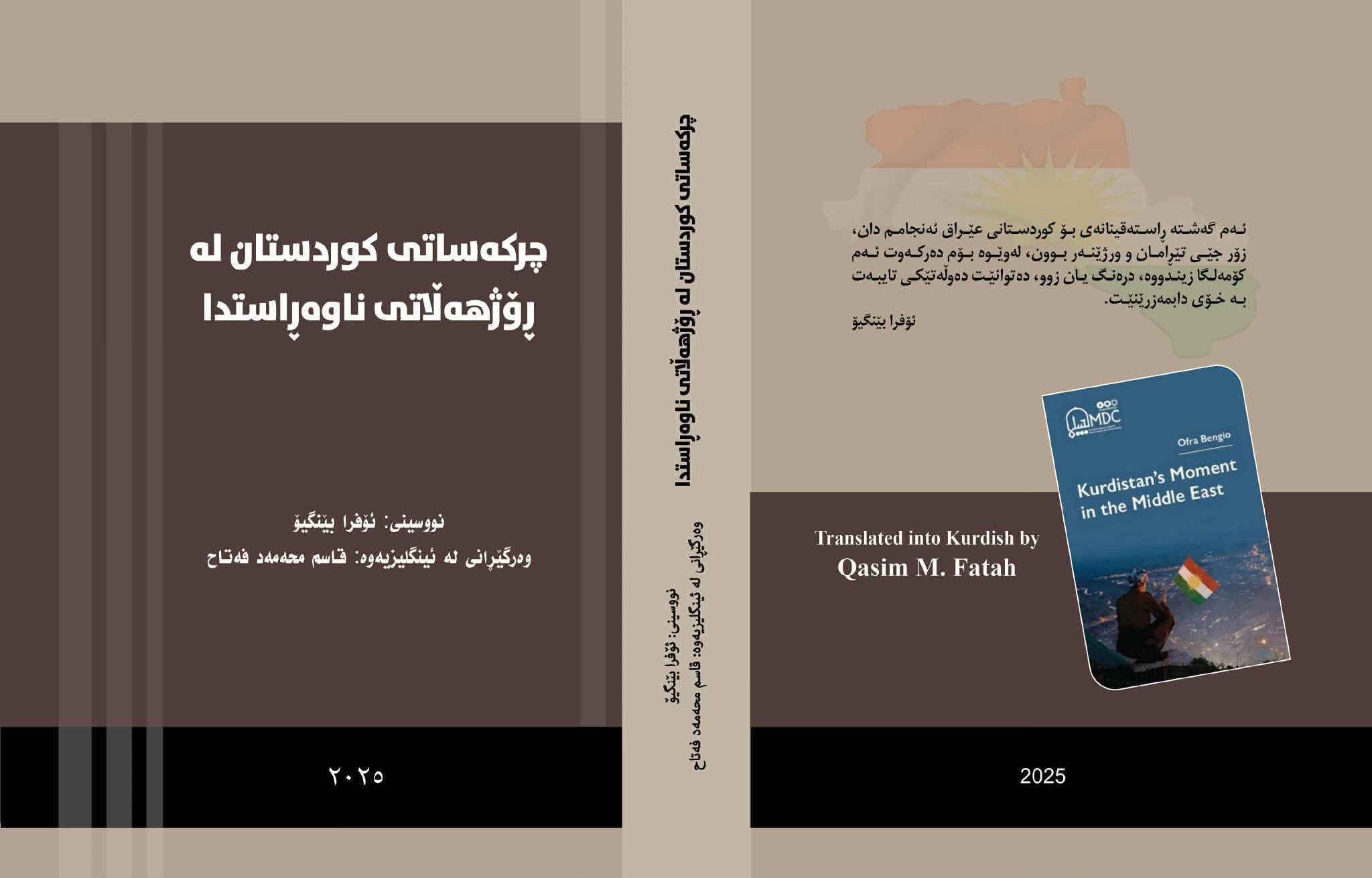
Luckily, Kurdish readers have now access to Bengio’s valuable content in a newly published Kurdish version.
Ofra Bengio, 2018, Kurdistan’s Moment in the Middle East. Tel Aviv, The Moshe Dayan Center, Tel Aviv University.