The Heretic’s Stand: Sakine Madon and the Courage to Offend
16 December 2025
A Necessary Voice in an Age of Cowardice
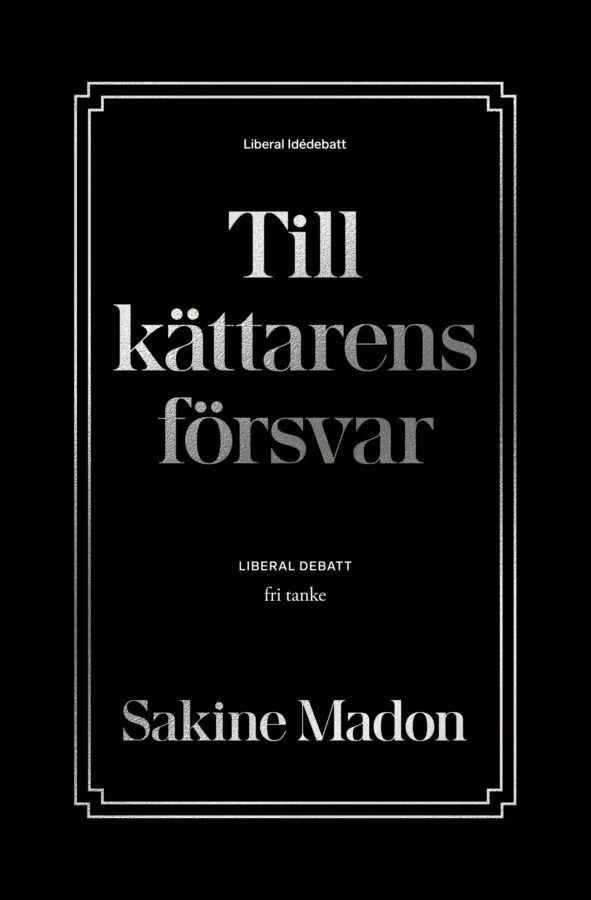
There are moments in the life of a society when the moral compass spins so wildly that clarity itself feels like an act of rebellion. The shaking spectacle surrounding the Swedish Koran burnings was precisely such a moment, a squalid exhibit of a European political class losing its nerve, fumbling its principles, and capitulating to theocratic blackmail. Into this morass of political vacillation and intellectual confusion, Sakine Madon’s book, Till kättarens försvar (In Defence of the Heretic), arrives not merely as a timely publication, but as an essential and desperately needed act of intellectual courage. It is, in the most literal sense, an antidote to the poison of illiberalism.
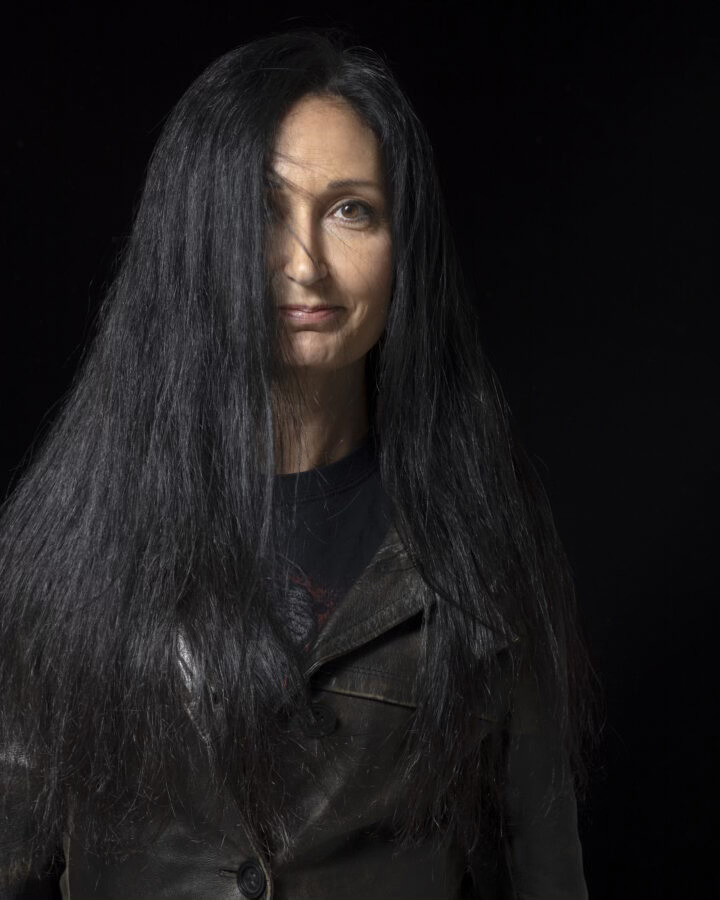
In an age that prizes the saccharine illusion of consensus over the hard and often uncomfortable truths of open debate, Madon stands as a vital champion of free expression. Her voice, is a beacon of light cutting through the fog of our confused times. This is no abstract intellectual exercise for her. Madon’s advocacy is forged in the crucible of personal history; her Kurdish and Turkish parents, targeted for being “union activists on the left” (fackligt aktiva på vänsterkanten), fled the authoritarianism of Turkey, a regime where dissent is a crime and the state’s grip is absolute. For her, the principles of free speech are not a debating-society luxury but the very oxygen of a decent society—a truth she understands not as an academic proposition, but as a biological necessity.
Source: Fri tanke
Let me share with you Madon’s unflinching case for heresy as a democratic necessity. I shall explore her argument that the West, in its eagerness to appease the implacable and comfort the offended, is sleepwalking toward the abandonment of its most foundational principles. Sakine Madon has chosen to stand guard over the liberal fire, and it is our duty to understand why that fire is in such grave danger of being extinguished.
The Unforgivable Sin
At the core of Madon’s formidable argument lies a thesis so contrary to the modern zeitgeist that it feels almost revolutionary: heresy and blasphemy are not unfortunate byproducts of liberty, but its very engine. She strategically reclaims these reviled concepts, arguing that the freedom of the modern secular state was won not by the pious and the accommodating, but by defiant heretics who dared to profane the sacred and question the absolute.
Madon grounds her claim in a sharp reading of history, drawing particularly on the long, arduous struggle to unshackle Sweden from the yoke of religious oppression. She reminds a forgetful nation of the obligatory catechismal hearings (husförhör), where the state church monitored the minds of the citizenry, and of the centuries-long battle to abolish blasphemy laws that, until 1864, could condemn a man to death for his thoughts. The freedom to think, to speak, and to live without clerical supervision was a victory purchased by those willing to commit what was then the ultimate sin.
It is this historical perspective that gives such power to her response to the ubiquitous modern creed that one “must not offend.” To this demand for emotional comfort over intellectual liberty, Madon’s argument delivers a retort as simple as it is profound: “jo, det är just det som är demokrati” (yes, that is precisely what democracy is). This uncompromising stance is a vital corrective to a society increasingly convinced that freedom of expression must yield to the right not to be upset. The urgency of her intervention is underscored by a chilling statistic from a Rättsfonden survey, which found that among final-year high school students—the next generation of first-time voters—a staggering 40 percent either believe that offending religion is illegal or are actively in favour of making it so.
Madon’s work is a necessary and bracing reminder that the discomfort of being offended is the non-negotiable price of a free society. To demand protection from ideas we find repugnant is to demand the dismantling of the very mechanism that protects us all. For once the state is empowered to silence the blasphemer, it is empowered to silence anyone.
Viewed through the lens of the philosopher David Deutsch, Madon’s defence of the heretic transcends mere political advocacy; it touches upon the fundamental mechanism of human progress. Deutsch posits that all knowledge growth—and therefore all problem-solving—relies on a continuous cycle of conjecture and criticism. In this framework, the heretic is not a troublemaker, but the essential agent of error correction. A society that prioritises the feeling of not being offended over the freedom to criticise is attempting to engineer what Deutsch calls a static society—a fragile culture that survives only by suppressing the new ideas necessary to solve its mounting problems,. By demanding that no one be upset, the modern censor is effectively demanding that we halt the growth of knowledge, leaving us vulnerable to the inevitable dangers of the future.
A Hierarchy of Outrage
Perhaps the most potent weapon in Madon’s intellectual arsenal is her insistence on an “unbreakable ethical hierarchy.” This principle is not a mere philosophical subtlety; it is the essential firewall that protects a secular, liberal society from the manipulative logic of theocratic intimidation. It is the bright line that must never be blurred, the one distinction that, if lost, signals a catastrophic moral collapse.
She articulates this hierarchy with devastating simplicity, a maxim that ought to be carved above the door of every parliament in the free world: “Det är värre att utöva våld mot människor än att utöva våld mot en skrift” (It is worse to commit violence against people than to commit violence against a text).
The moral failure that ensues when this hierarchy is inverted is not theoretical. Madon points to the grim aftermath of the murder of Samuel Paty, the French teacher beheaded for the “crime” of showing Muhammed caricatures in a lesson on free expression. In the days that followed, a chorus of commentators began to shift the blame, insidiously questioning the “necessity” of his actions. This line of reasoning represents a complete surrender to the assassin’s veto. As Madon forcefully argues, the individual exercising their legal rights is never culpable for the violence enacted upon them by the intolerant. To suggest otherwise is to make the victim an accomplice to their own murder.
This pattern of recasting the victim of violence as the true provocateur—the skurk (villain)—is a recurring theme, one she notes is not a new phenomenon but a rhetorical tactic she has observed for years: “I have seen how the heretic time and again is painted as the guilty one.” The names form a grim litany of our age: Salman Rushdie, hounded for decades for writing a novel; Lars Vilks, living under a death sentence for a drawing; the murdered journalists of Charlie Hebdo. In each case, the focus of “respectable” opinion too often drifted from the perpetrators of violence to the supposed irresponsibility of those who dared to give offence. Madon’s moral clarity slices through this fog of appeasement. It exposes the grotesque fallacy of equating a symbolic act, however offensive, with actual physical harm, and re-establishes the absolute primacy of human life over the sanctity of any text or dogma.
The Anatomy of Appeasement
The Swedish government’s reaction to the Koran burnings provides a perfect case study in the rapid decay of liberal principles under pressure, an anatomy of appeasement that Madon’s book meticulously documents. She levels the charge that the political establishment’s response was nothing short of “cowardly and inconsistent,” a bipartisan failure of nerve that exposed a profound weakness at the heart of the Swedish state.
Madon’s critique spares neither side of the political spectrum, revealing a shared willingness to sacrifice foundational freedoms on the altar of expediency:
- The Appeasing Right: The conservative government, desperate to secure its NATO membership, buckled under the cynical pressure of authoritarian leaders like Turkey’s Erdogan. Their proposal to amend the Public Order Act—allowing police to deny demonstrations based on a threat to “national security”—was a craven attempt to legislate away an inconvenience. It was a pragmatic surrender dressed up as statecraft, effectively allowing foreign despots to dictate the terms of public expression on Swedish soil.
- The Confused Left: The Social Democrats, meanwhile, attempted their own sleight of hand by arguing that the act of burning a Koran should be prosecuted under the law against hets mot folkgrupp (hate speech). This, as Madon rightly insists, is a dangerous and deliberate confusion of categories. More than just a legal error, it represents a direct inversion of her ethical hierarchy. By attempting to grant a set of ideas (a religion) the legal protections meant for people (a folkgrupp), they philosophically paved the way to equate an attack on a book with an attack on a body.
This political fumbling played out against a backdrop of orchestrated violence. The provocations of agitators like Rasmus Paludan and Salwan Momika were met with the predictable fury of the mob, culminating in the Easter Riots. The scale of this violence, as a court ruling cited by Madon later described it, turned the Navestad district into “almost a war zone” (närmast var en krigszon). Yet, the political and media narrative often fixated less on the rioters setting fire to police cars and more on the exorbitant cost and inconvenience of protecting the rights of the provocateurs. This, in itself, is a form of capitulation. By framing the protection of a fundamental right as a costly burden, the state signals that the right itself is negotiable.
Madon’s ultimate warning is stark. These political manoeuvres, regardless of their differing justifications, lead down a sluttande plan (slippery slope). Appeasing the intolerant does not satisfy them; it emboldens them. Each concession is treated not as a final settlement but as a down payment on the next demand, until the space for free expression has shrunk to nothing.
This slippery slope is perfectly predicted by Deutsch’s theory of cultural evolution. He identifies the ideologies Madon confronts as anti-rational memes—ideas that replicate not by being useful or true, but by disabling the critical faculties of their hosts. These memes survive specifically by enforcing taboos and punishing dissenters to prevent the criticism that would destroy them. When Swedish politicians treat theocratic demands as legitimate grievances to be accommodated, they are not engaging in diplomacy; they are feeding the replication strategy of an anti-rational memeplex. As Deutsch warns, such ideologies cannot be appeased; they can only be dismantled by the very thing the government sought to suppress: the cleansing fire of open, rational criticism.
In Defence of the Defender
Sakine Madon has written more than an important book; she has elevated herself to the position of an essential public intellectual for our cowardly and confused times. Till kättarens försvar is not merely a post-mortem of a political crisis. It is a field manual for anyone committed to what is rightly called the “eternal battle against illiberalism,” a battle that demands not just conviction, but courage.
In this indispensable work, Madon reiterates the foundational truths we seem so eager to forget: that heresy is the engine of progress, that a non-negotiable ethical hierarchy must always place a human body above a sacred book, and that political appeasement is the surest road to servitude. She has taken on the vital role of a “guardian of the liberal fire,” tending to the embers of Enlightenment reason while others pour water on them for fear of the heat.
The ultimate contribution of Sakine Madon is to remind us of the profound, non-negotiable value of the heretic. A society’s strength is not measured by its harmony, its placid consensus, or the absence of offence. It is measured by its resilient, unwavering, and courageous tolerance for the constant, uncomfortable, and often infuriating presence of heresy. Her work is a blistering reminder that a society that trades the heretic’s courage for the zealot’s comfort has already paid for its security with its soul.
Sakine Madon, 2025, Till kättarens försvar. Stockholm: Fri Tanke.
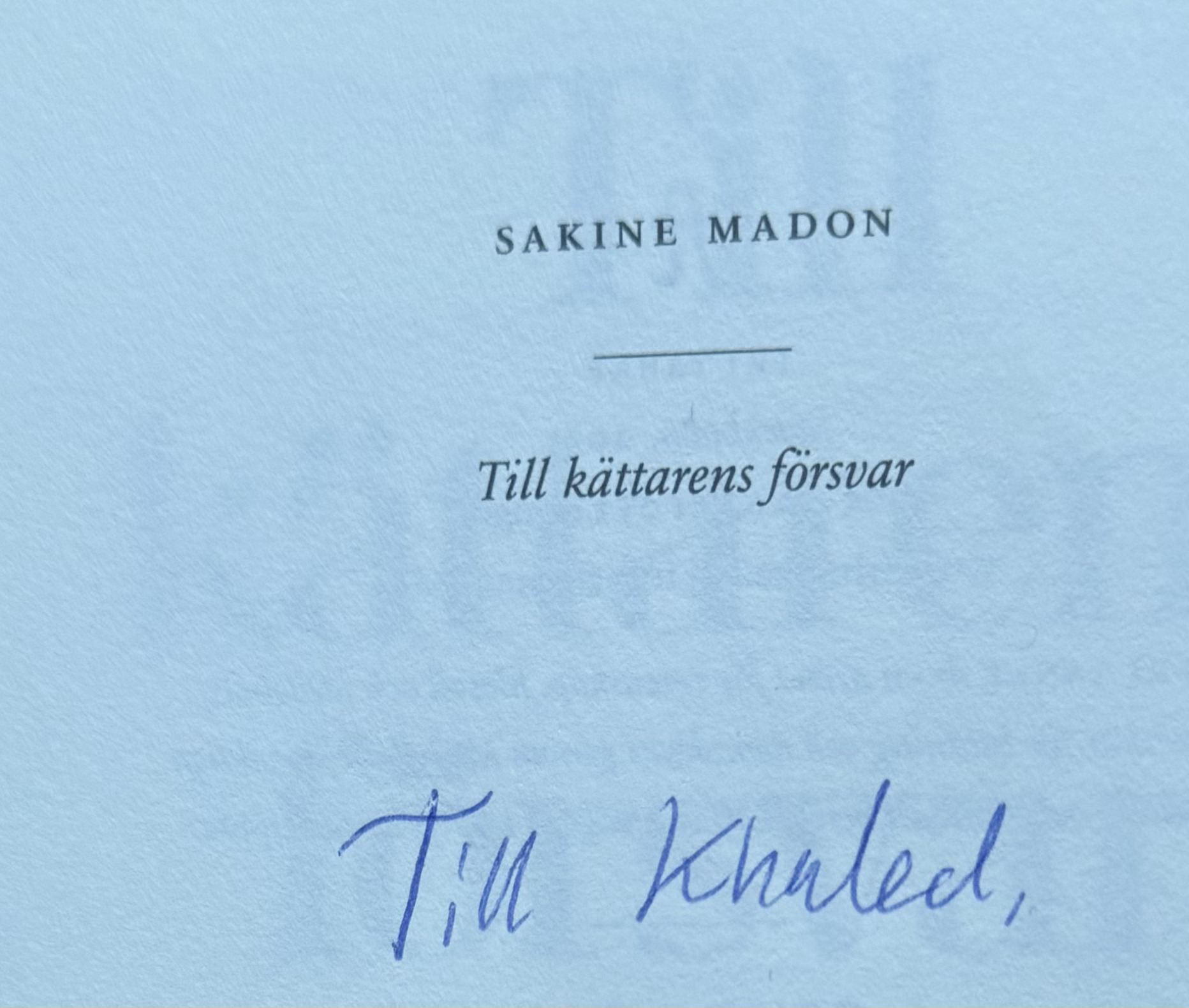
Thank you Sakine for your writing this book. Thank you for your courage. Thank you for your dedication.


