The Gad Saad Scalpel: A Master-Framework for Clear Thinking
24 January 2026
From Symptom to Strategy
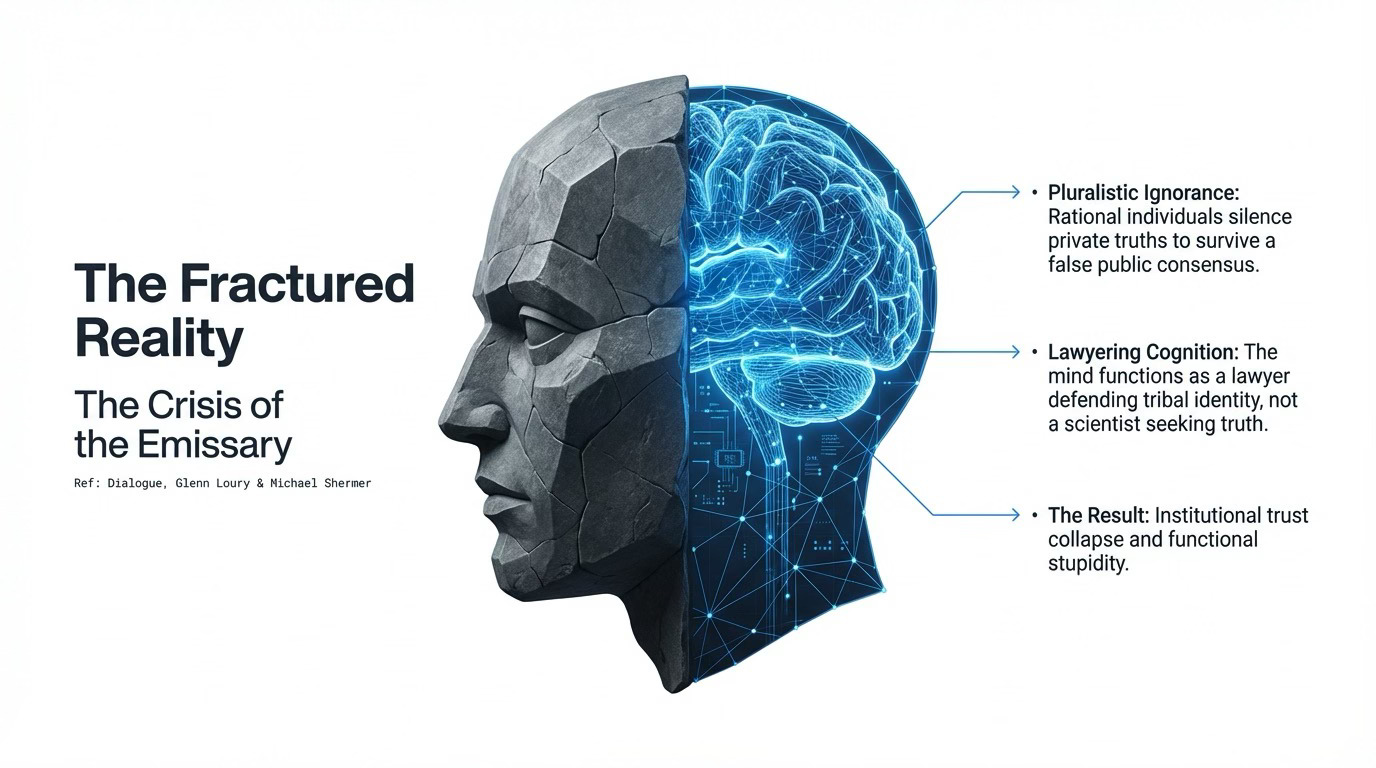
The dialogue between Glenn Loury and Michael Shermer is a front-line report from a society losing its epistemological footing, diagnosing the pervasive symptoms of a modern crisis: the erosion of trust in our core institutions; the chilling effect of self-censorship born of a “pluralistic ignorance”; and the cognitive biases that allow widespread irrationality to flourish. What they describe is not merely political disagreement, but a systemic breakdown of the very mechanisms by which a free society seeks and establishes truth.
These symptoms are the direct manifestation of a threat I, based on the works and warning of multiple writers, have previously defined as the core civilisational challenge in my essay, “A Memorandum on the Solvability of Human Problems.” They are not isolated failures but evidence of the corruption of the very systems by which we create knowledge and solve problems. The ultimate danger is not that we will face an insoluble problem, but that we will render ourselves incapable of solving soluble ones. Shermer’s account of experts who cannot define a woman or public health officials who invent policy with false certainty confirms this danger is no longer theoretical; it is an active, institutionalised reality.
The deeper diagnosis, articulated in my second essay, “The Two Worlds: A Unified Framework for Analysing Ideas,” is that this systemic corruption is a direct consequence of a profound cognitive imbalance. It is the usurpation of the holistic, contextual, and reality-grounded “Master” by the abstract, analytical, and self-referential “Emissary,” as brilliantly articulated by Iain McGilchrist. When the Emissary’s map of the world becomes more important than the Master’s direct experience of the territory, a society rewards ideological conformity over observable truth, giving rise to the pathologies Shermer and Loury identify.
This current essay, “The Gad Saad Scalpel,” is the necessary next step in this intellectual project, moving from high-level strategy and deep diagnosis to practical, applied therapeutics. The work of Gad Saad provides a precision “scalpel” forged in the crucible of real-world conflict, designed to dissect the ideological pathologies infecting the West. His framework offers not only a masterclass in clear thinking but also a strategic doctrine for restoring the cognitive and cultural health of a dynamic, open civilisation.
The Crucible: The Origin of Immunity
To comprehend Gad Saad’s intellectual framework, one must first grasp the strategic importance of his formative years. His childhood in Lebanon was not mere biography; it was the crucible that forged a potent immunity to the ideological pathologies he would later diagnose. It provided a stark, real-world education in the terminal consequences of unchecked identity-based conflict, insulating him against the luxury beliefs that can only flourish in the deep safety of the West. His worldview was shaped by a series of escalating traumas that systematically dismantled the veneer of a tolerant society.
- The Paris of the Middle East Paradox: Pre-war Beirut was known for its cosmopolitanism, but Saad notes that “tolerance in the Middle East has a different timber to it than tolerance in the West.” Beneath this progressive surface, the fault lines of civil war and a deep-seated intolerance were already present.
- The First Memory of Hatred: At the age of five, Saad witnessed street processions chanting “Death to Jews.” His first conscious recognition of being identified as a reviled outsider came when he asked his mother why, and she could only respond, “Just keep your head down.”
- The Jew Killer Classmate: In his primary school classroom, when asked what he wanted to be when he grew up, a classmate stood and declared, “I want to be a Jew killer,” a statement met with applause from his peers. It was a chilling lesson in the normalisation of societal antisemitism.
- The Forced Retirement: His older brother, David, a multi-year Lebanese Judo champion, was told it was “time for him to retire lest he might have an unfortunate accident.” The success of a Jewish athlete was deemed intolerable, forcing his brother into exile.
- The Parental Kidnapping: The ultimate personal encounter with ideological violence occurred when his parents were kidnapped by Fatah, specifically Abu Nidal’s group. Though they were eventually freed, the event brought the abstract threat of terrorism into the most intimate corner of his life.
The profound irony of this immunisation was revealed in October 2023, nearly fifty years after his family fled Lebanon. His son, after a soccer match in Montreal, told him, “Daddy if you were wearing a Star of David where I was playing soccer today you’d be dead.” In 1975, his mother had placed a Star of David around his neck as a symbol of freedom upon leaving Lebanese airspace; in the heart of the West, it had become a mark of danger. As Saad observes, “that’s what suicidal empathy looks like.” This immunisation in a physical war uniquely equipped him to diagnose the intellectual one now raging in the West.
The Pathology: A Dual-Pronged Assault on the Western Mind
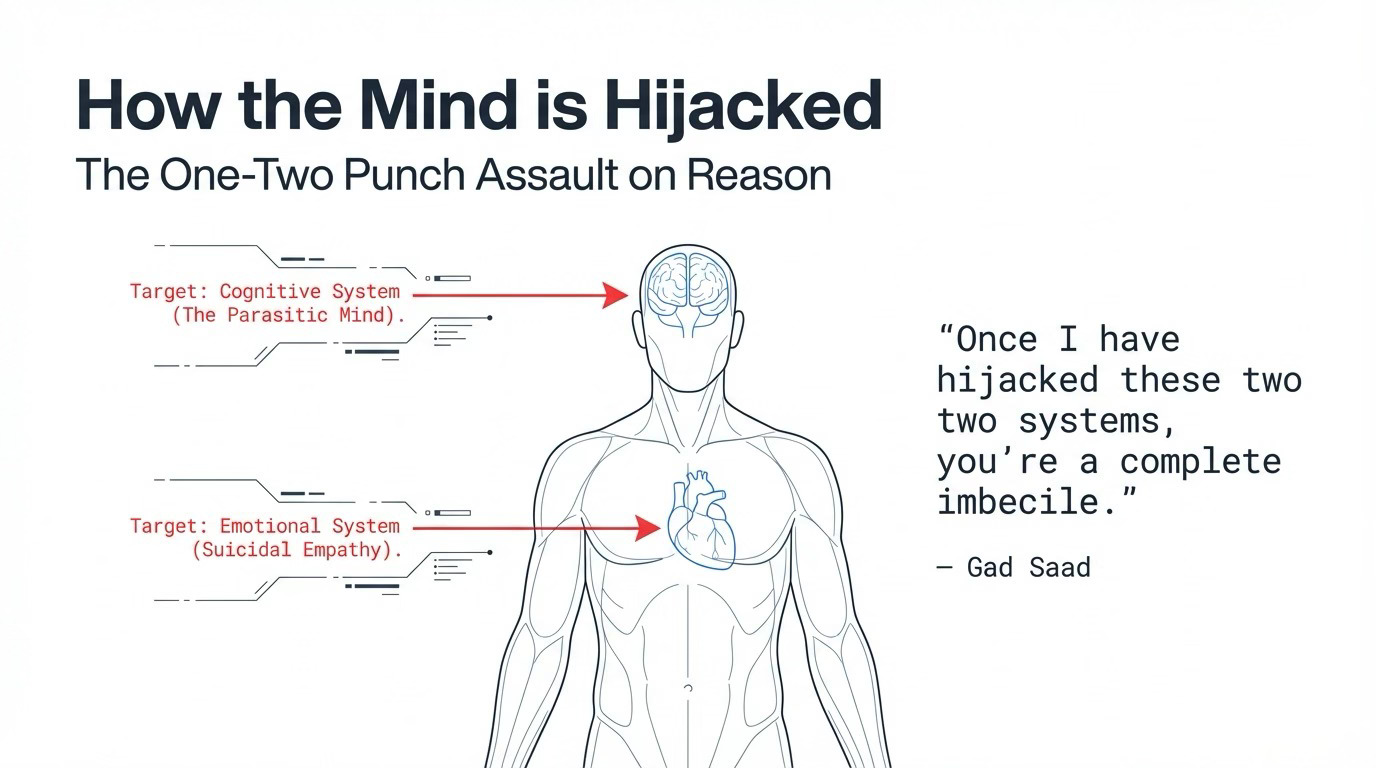
Gad Saad diagnoses a coordinated assault on the foundations of Western reason. This assault, he argues, is a “one-two punch” designed to hijack an individual’s core faculties, rendering them unable to think clearly or act in their own self-interest. As he explains:
“The parasitic mind talks about what happens when I parasitise your cognitive system. Suicidal empathy completes the story by explaining what happens to you when I parasitise your emotional system. Once I have hijacked these two systems you’re a complete imbecile.”
This dual attack targets both our capacity for reason and our capacity for compassion, turning our greatest strengths into self-destructive vulnerabilities.
The Cognitive Attack: The Parasitic Mind
The first attack targets the cognitive system—our ability to reason, recognise patterns, and apprehend reality. Saad terms this phenomenon The Parasitic Mind, a condition in which an individual’s thinking is hijacked by irrational “idea pathogens.” This is the pathology of McGilchrist’s Emissary operating without the Master’s context, becoming decoupled from reality and trapped in a self-referential world of abstract theory.
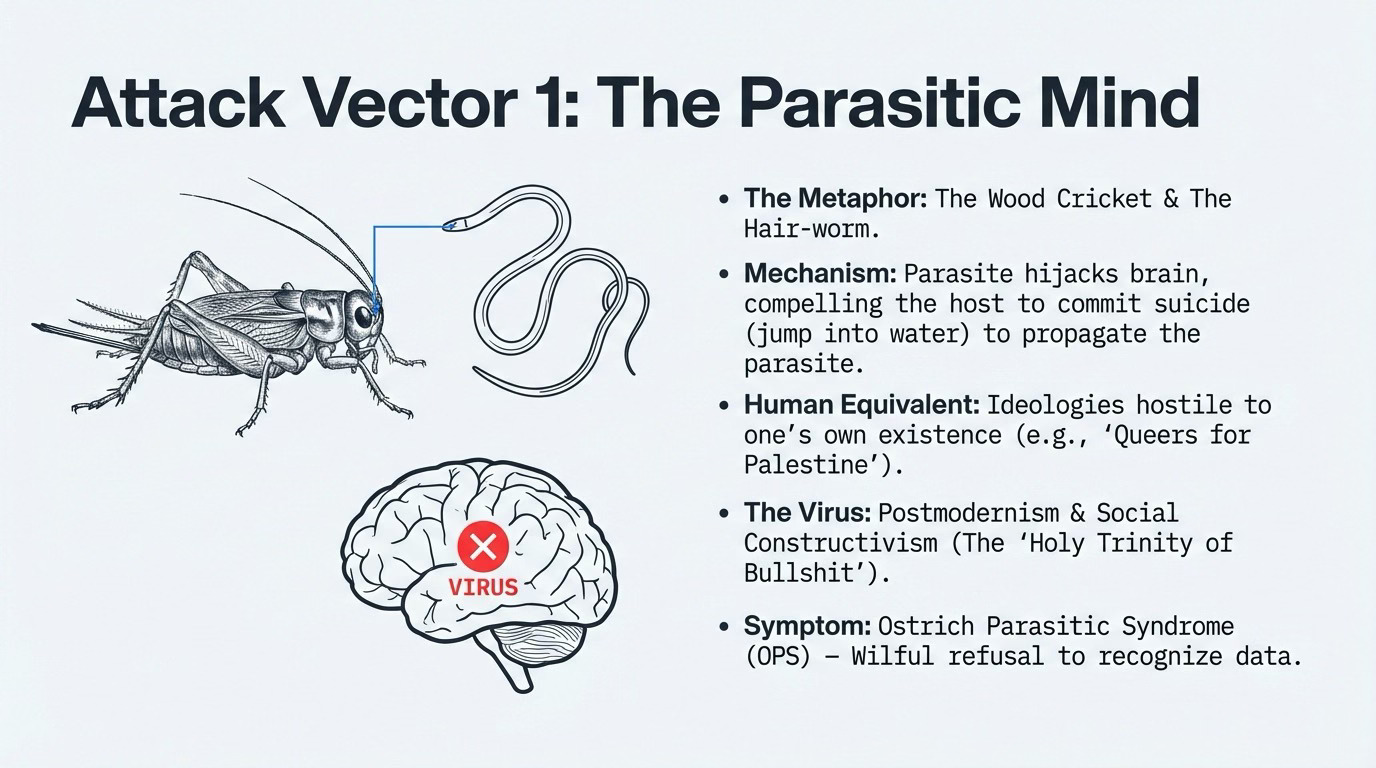
At the core of this diagnosis is the biological analogy of the wood cricket and the hair-worm neuro-parasite. The cricket, which instinctively avoids water, becomes infected by the parasite, which hijacks its brain and compels it to leap into water and commit suicide, allowing the parasite to complete its reproductive cycle. Saad applies this metaphor to explain the self-destructive behavior of Western progressives, identifying groups like “Queers for Palestine” as “wood cricket queers”—individuals whose ideological programming compels them to support movements fundamentally hostile to their own existence.
The foundational viruses enabling this mental hijacking are Postmodernism and Social Constructivism. He argues these philosophies actively “decouple the brain from reality” by denying objective truth and biological imperatives. The tabula rasa (blank slate) fallacy of social constructivism is illustrated by progressive toy ads showing boys with dolls, an attempt to socially engineer away innate preferences. Saad scathingly identifies the academic origin of these ideas—cultural anthropology, postmodernism, and women’s studies—as “The Holy Trinity of Bullshit.”
A key symptom of this cognitive infection is Ostrich Parasitic Syndrome (OPS), defined as the wilful refusal to recognise clear patterns when they lead to ideologically inconvenient conclusions. His primary example is the persistent refusal to link the more than 48,782 Muslim terror attacks since 9/11 to a common ideology, instead offering absurd explanations ranging from climate change to a lack of art education.
The Emotional Attack: Suicidal Empathy
The second attack targets the emotional system, leading to what Saad calls Suicidal Empathy. This is not a rejection of empathy, which is a vital virtue, but a diagnosis of its pathological dysregulation. It is the pathology of the Master’s holistic sense of connection being hijacked and weaponised by the Emissary’s simplistic, guilt-driven narratives.
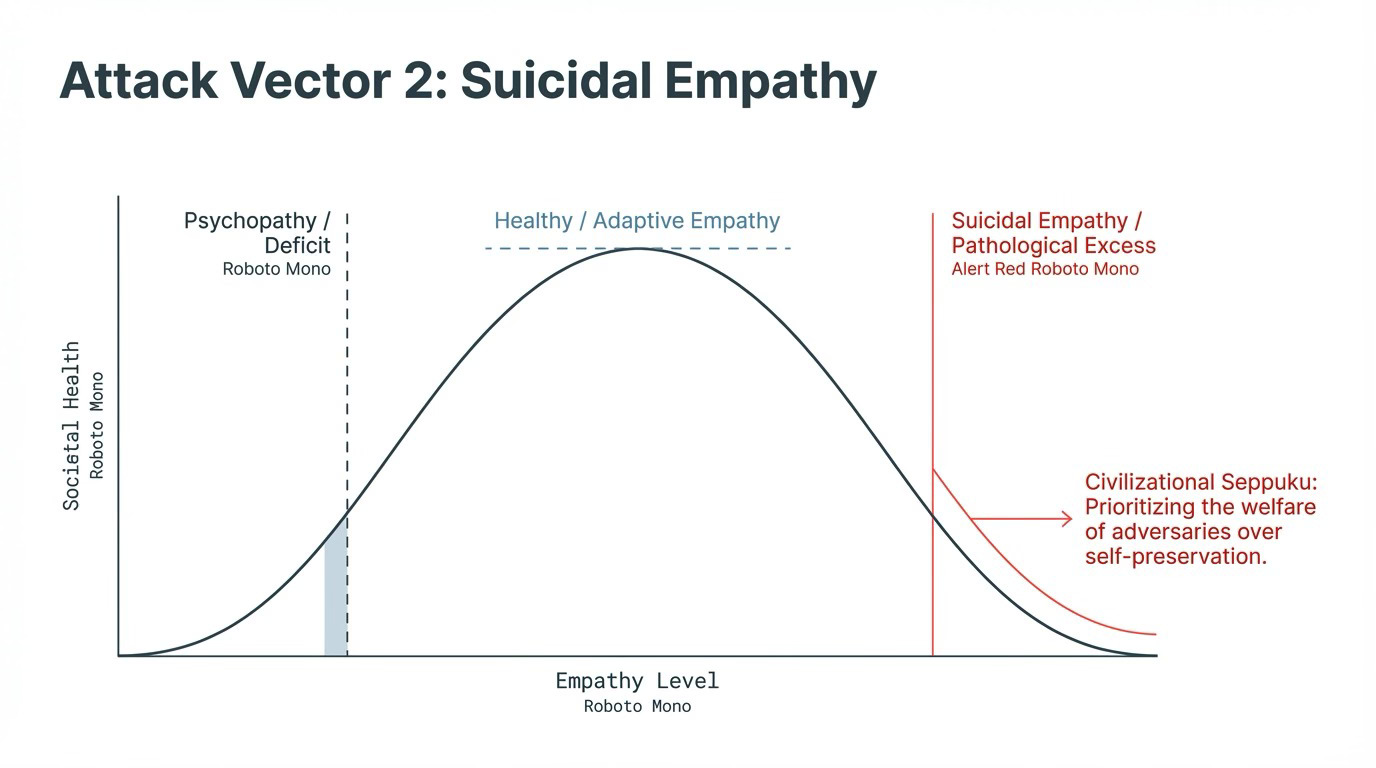
He uses Aristotle’s Golden Mean, visualised as an “Inverted U” curve, to illustrate the concept. Too little empathy results in psychopathy. However, an excess of empathy, or empathy misapplied to hostile actors, becomes self-destructive. This hypertrophied emotional response leads the West to prioritise the perceived welfare of its adversaries over its own security and cultural integrity.
This, he argues, is the mechanism driving Civilisational Seppuku. Just as a samurai would commit ritual self-disembowelment to expiate shame, the West, burdened by a manufactured existential guilt, engages in constant self-flagellation. This misplaced guilt fuels a dysregulated empathy that compels it to embrace policies and ideologies that lead directly to its own demise.
This diagnosis of the disease compels an examination of the epistemological tools forged to combat it.
Forging the Scalpel: The Epistemological Tools
Gad Saad’s primary weapon against the idea pathogens of the Parasitic Mind is not impassioned rhetoric but a structured, evidence-based method of argumentation. This section details the forging of the scalpel itself: a methodological framework designed to dissect fallacious arguments and construct unassailable positions grounded in empirical reality.
The Nomological Network of Cumulative Evidence
The central tool in Saad’s intellectual arsenal is the Nomological Network of Cumulative Evidence. This is an epistemological method for defending a position by building a robust, multi-pronged argument from numerous, distinct lines of evidence that all converge on the same conclusion. Rather than relying on a single data point, this technique constructs a web of corroborating facts from across species, cultures, time periods, and fields of study, making the central thesis exceptionally difficult to refute.
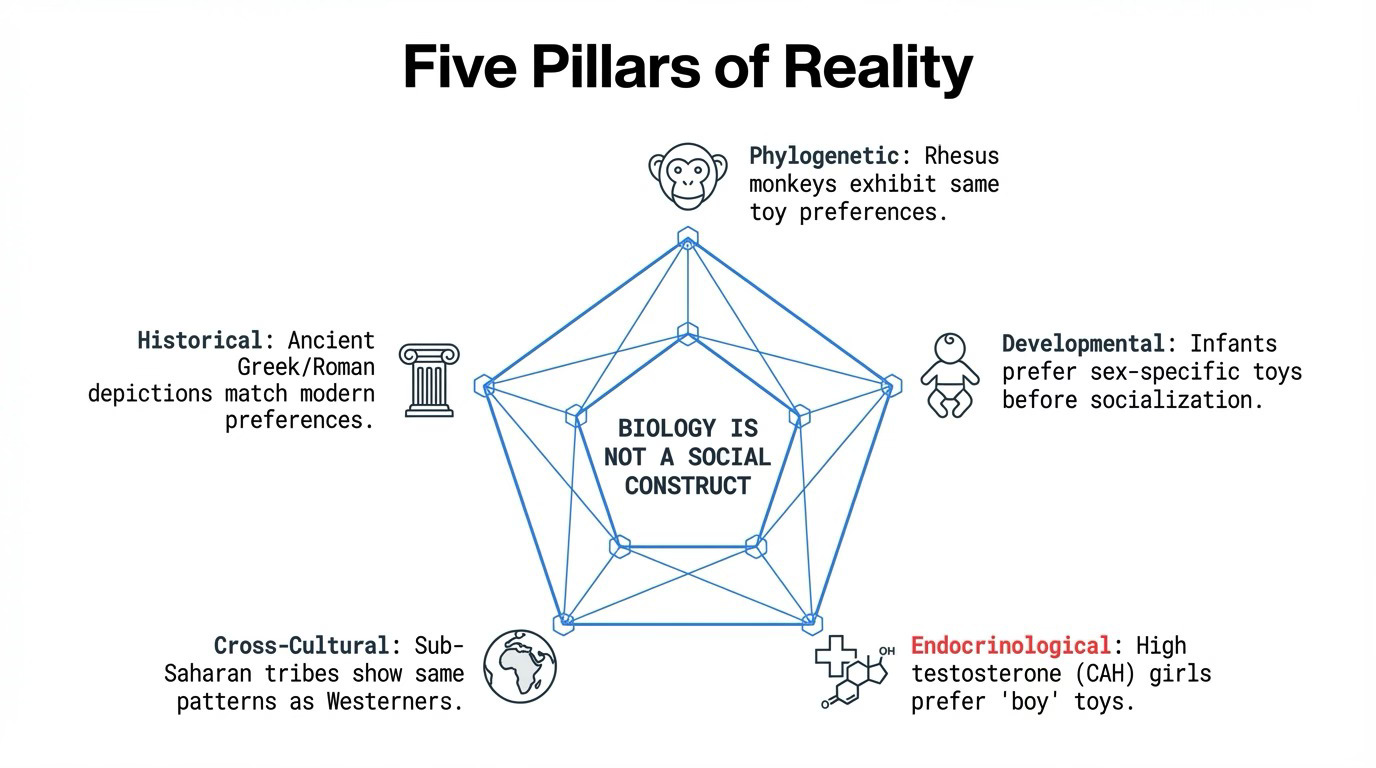
To illustrate the method’s power, Saad uses research on Sex-Specific Toy Preferences, a topic that directly challenges the social constructivist belief that such preferences are purely learned. He builds an irrefutable case by assembling the following five lines of converging evidence:
- Other Species: Data from non-human primates, including vervet monkeys, rhesus monkeys, and chimpanzees, reveals that their young exhibit the exact same sex-specific toy preferences as human children.
- Developmental Psychology: Studies of human infants too young to have been consciously socialised show that they already exhibit these innate preferences, ruling out social construction as the sole cause.
- Clinical Endocrinology: Girls with Congenital Adrenal Hyperplasia (CAH), a disorder that masculinises their behavior, demonstrate toy preferences that align with those of boys, providing a direct link between biology and behavior.
- Cross-Cultural Data: Evidence gathered from non-Western societies, such as those in sub-Saharan Africa, demonstrates the same universal patterns, refuting the claim that these preferences are merely Western cultural constructs.
- Historical Data: Funerary monuments from Ancient Greece and Rome depict children with the same types of sex-specific toys seen today, providing evidence that these preferences have remained consistent across millennia.
This method is robust precisely because it achieves consilience—a convergence of evidence from independent and disparate domains of inquiry. It is a quintessential tool of McGilchrist’s Master, grounding truth in a holistic, interconnected web of reality. An opponent cannot simply dismiss one line of evidence, as they are still confronted by the others. This disciplined, multi-disciplinary approach moves an argument from the Emissary’s world of isolated data points and social construction to the Master’s world of deeply-structured reality, making the position effectively “cancel-proof” by shifting the debate from opinion to the domain of overwhelming, cumulative evidence.
Post-Mortem Examinations: Symptoms of Reality-Decoupling
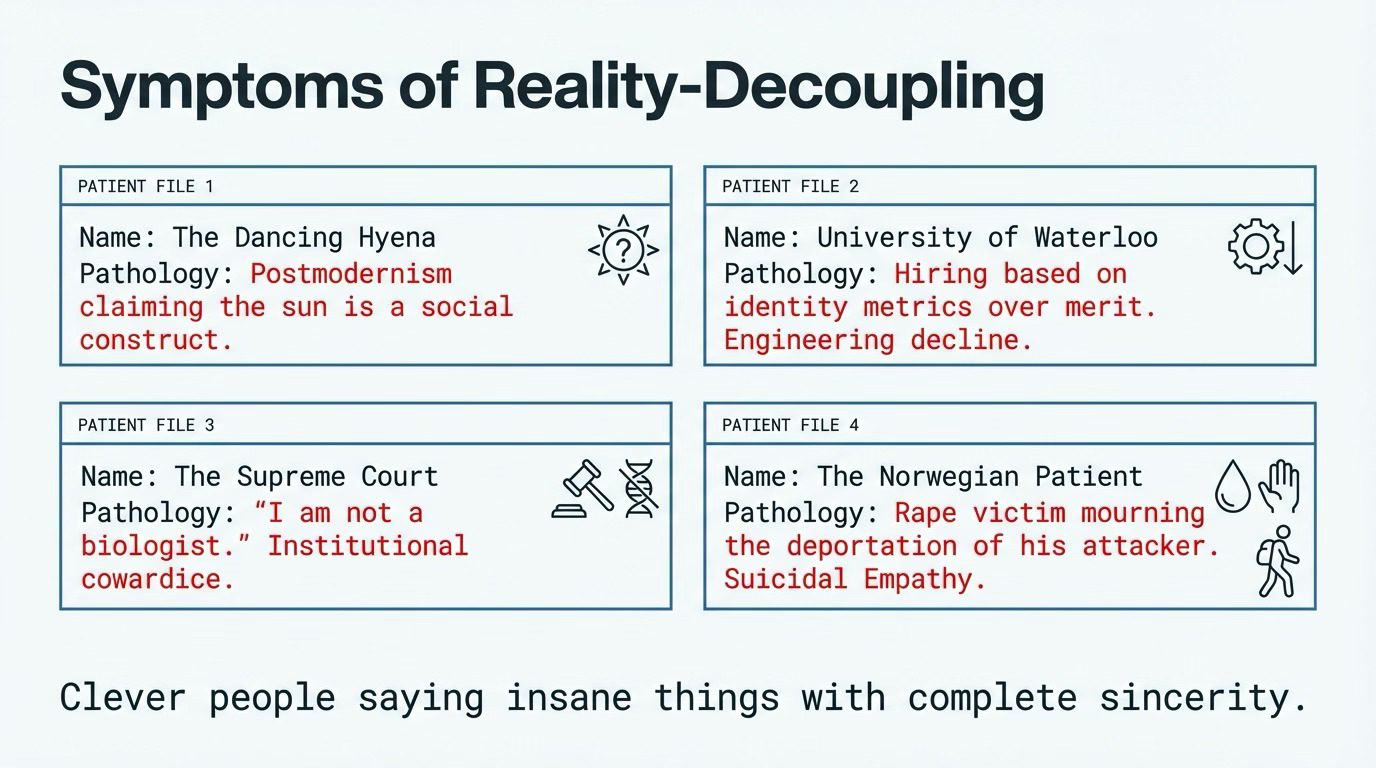
We now enter the intellectual morgue. Laid out on the tables before us are a series of minds—academics, officials, and private citizens—each a case study in what happens when a person or an institution becomes decoupled from reality. These are not isolated failures but clinical examples of the parasitic patterns at work, demonstrating the symptoms of a civilisation losing its cognitive and emotional balance.
- The Postmodern Graduate Student: This individual asserted that men could bear children in the “mythological realm” of an exotic tribe and argued that objective reality is a construct of language, claiming the sun could just as well be a “dancing hyena.” This is a textbook demonstration of Postmodernism’s complete decoupling from observable truth.
- The University of Waterloo: Canada’s leading engineering university posted a hiring notice for a top AI professorship that excluded candidates based on biological reality, instead requiring applicants to self-identify as “woman,” “transgender,” “non-binary,” or “two-spirit.” This shows how idea pathogens have metastasised from the humanities into the hard sciences, prioritizing ideology over merit.
- Justice Ketanji Brown Jackson: During her Supreme Court confirmation hearings, when asked to define the word “woman,” her response—“I am not a biologist”—is a stark symptom of intellectual cowardice in the highest echelons of power, where fundamental truths are evaded for ideological expediency.
- The Norwegian Rape Victim: A Norwegian man, after being raped by a Somali immigrant, expressed profound guilt when his attacker faced deportation, worrying more about the perpetrator’s future than the justice due for the crime. This is a clinical case of Suicidal Empathy—a pathologically dysregulated compassion for the aggressor that overrides societal safety.
These clinical exhibits demand a strategic doctrine for a cure.
The Strategic Doctrine: 8 Principles for Civilisational Health
Having diagnosed the pathology and examined its symptoms, we now arrive at the prescriptive core of Gad Saad’s work. The following eight principles constitute a field manual for civilisational health—a recovery plan for rebuilding intellectual rigour, rational thought, and the cultural confidence necessary to pull the West back from the edge of “Civilisational Seppuku.”
- Pursue Knowledge Unencumbered: No area of inquiry should be forbidden. Research into any topic, including sensitive ones like sex differences, must be pursued objectively, without fear of its findings. Truth must be valued above ideological comfort.
- Uphold Deontological Truth: Foundational principles like freedom of speech must be absolute and non-negotiable. Free expression cannot be contingent on whether it offends someone; its value is inherent to a truth-seeking society.
- Embrace Meritocracy, Reject Social Ants: Human beings are individuals with varying talents, not communistic social ants. A just society must be rooted in meritocracy, recognising that this will naturally lead to hierarchies based on competence.
- Defend Western Values Unequivocally: The West must proudly defend its foundational values without engaging in constant, debilitating self-flagellation. Acknowledging historical flaws should not lead to the rejection of the principles that have generated unprecedented freedom and prosperity.
- Recognise All Cultures Are Not Equal: The doctrine of cultural relativism must be rejected in favor of absolute moral truths. It is not “racist” to condemn practices such as female genital mutilation or honour killings, regardless of their cultural origin.
- Exhibit Zero Tolerance for Seditious Ideologies: A free society’s constitution cannot be a suicide pact. It must not tolerate belief systems that, under the guise of religion or ideology, actively seek to dismantle it from within. Self-preservation is a societal right.
- Choose Adaptive Empathy Over Suicidal Empathy: Empathy must be properly modulated. Dysregulated, suicidal empathy—which prioritizes the welfare of adversaries over one’s own—is a civilisation-destroying pathology that must be consciously resisted.
- Ensure No Idea is Sacrosanct: In a truly free and rational society, no idea can be placed beyond scrutiny. All beliefs, ideologies, and revered figures must be open to criticism, debate, and even mockery—including Judaism and the actions of the Israeli government.
These eight principles form a complete strategic doctrine for the defense and restoration of a rational society.
The Scalpel as a Tool of Restoration
The Gad Saad Scalpel is more than a collection of trenchant observations; it is a complete strategic framework. It connects his real-world “immunisation” from ideological conflict to his powerful diagnostic concepts of the Parasitic Mind and Suicidal Empathy, grounding them in a precise epistemological method: the Nomological Network of Cumulative Evidence.
This framework is the necessary bridge from theory to action. Where my “Memorandum on the Solvability of Human Problems” established the strategic imperative to protect our knowledge-creating systems, and “The Two Worlds” diagnosed the cognitive imbalance threatening them, the Gad Saad Scalpel provides the practical toolkit for intervention. It is a prescriptive doctrine for restoring civilisational health by identifying reality-decoupling, re-establishing intellectual rigour, and applying a clear set of principles for cultural recovery. The Scalpel is therefore an essential instrument for any individual committed to defending and restoring the principles of a dynamic, open, and rational society—the very society this intellectual project seeks to secure.