The Friend Who Asked the Right Question
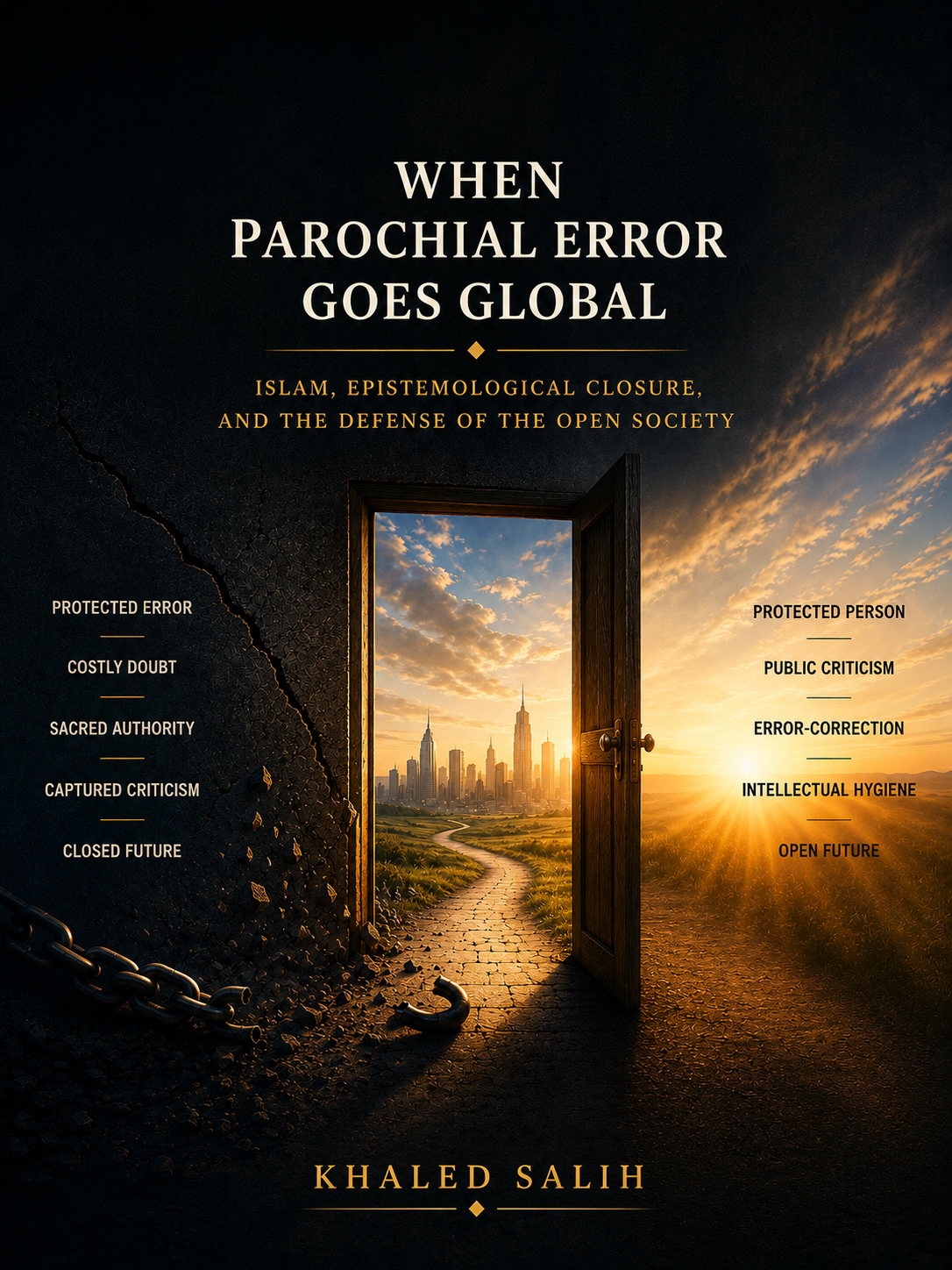
A personal reflection after my first interview on When Parochial Error Goes Global and Kurdistanî Azad
23 June 2026
Note:
A good friend does not only praise you.
A good friend listens carefully enough to find the pressure point in your argument — the place where the claim must become sharper, more honest, more criticizable.
After my first interview on When Parochial Error Goes Global and Kurdistanî Azad, a friend and colleague I deeply value wrote to me. He saw something many miss: that I am not simply writing about terrorism, Islamism, Kurdistan, or October 7. I am trying to understand how a human being disappears behind a category — kāfir, apostate, Jew, Zionist, separatist, traitor, enemy of allāh — and how such labels can make violence appear as obedience.
But then he asked the harder question.
Is this mechanism unique? Or does it also appear in other traditions of supremacy, conquest, sacred land, chosen peoples, master races, and national myths?
That question stayed with me.
Not because it weakened my argument, but because it forced me to correct and strengthen it.
This reflection is about friendship as criticism, comparison without equivalence, and the real test of any civilization:
Where is the Backspace Key?
Can dangerous myths be criticized before they demand human sacrifice again?
A rational civilization is not one that has never carried dangerous ideas.
A rational civilization is one that lets theories die instead of people.
Watch the interview
After my first interview about my two books, a friend and colleague I deeply value wrote to me.
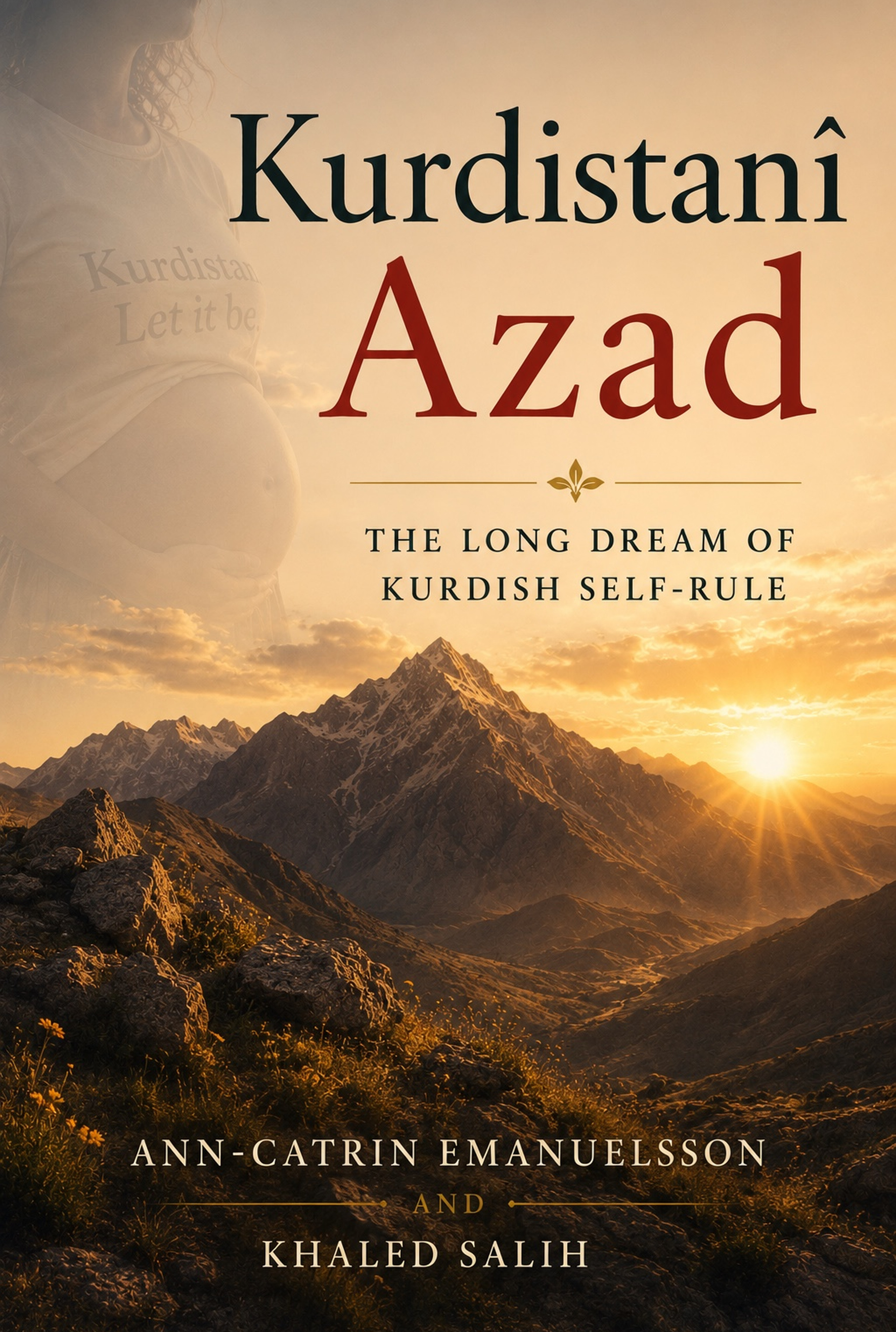
In Kurdistanî Azad: The Long Dream of Kurdish Self-Rule, which I co-authored with my wife, Ann-Catrin Emanuelsson, we ask what it would mean for Kurdistan not only to survive, but to become a home capable of correcting its own errors.
I will call him XY.
He had just returned from an off-grid holiday and had begun watching the interview. His message was warm, sharp, and serious — the kind of message one hopes to receive from someone who is not merely applauding, but listening.
He said that I was working through a terrible basic idea: something like a long-term global project of violence, even genocide. He then asked about Sayyid Qutb, Khomeini, and Qaradawi. How did they relate to the structure I was describing? Was the mechanism clear in Qutb’s Qur’anic commentary, especially in his thinking about kufr and kafir? Was Qaradawi more orthodox than many Western academics have been willing to admit?
I replied quickly, perhaps too quickly, that every person he mentioned saw himself as an actor in a cosmic plan.
Then he asked the better question.
Was this really the foundation stone — the “grundbulten”? And if so, how should it be compared with other traditions of supremacy: ethno-nationalist master-race ideas, China, Japan, German National Socialism, Hindu hierarchies and racism, and even the Jewish national myth of land, enemies, and divine right?
That question stayed with me.
Not because it weakened my argument, but because it forced me to state it more carefully.
A friend who asks such a question is not an enemy of the argument. He is part of its Backspace Key.
The danger of being understood too quickly
When someone understands your argument too quickly, it can feel like relief. At last, one thinks, someone sees the pattern.
But there is a danger here.
If the pattern is named too broadly, it can become less precise. If I say “global genocidal project” without care, the claim can become both morally powerful and analytically vulnerable. Islam, as a historical civilization, did not always operate as genocide in the modern Nazi sense. Often the structure was broader and more varied: conquest, subordination, conversion, tribute, jizya, enslavement, legal hierarchy, sexual captivity, humiliation, pragmatic tolerance under domination, and sometimes extermination.
That distinction matters.
A bad explanation forces all evidence into one word.
A better explanation asks what mechanism is doing the work.
The mechanism I am trying to understand is not always genocide. It is classification under sacred authority. It is the power of a label to make a person killable, lootable, enslaveable, taxable, subordinable, dishonorable, or removable. It is the movement from person to category.
kāfir.
Apostate.
Infidel.
Enemy of allāh.
Jew.
Zionist.
Separatist.
Traitor.
Backward.
Disease.
Security threat.
Once a human being is captured by such a category, violence no longer appears as violence. It appears as obedience, purification, necessity, liberation, justice, or divine command.
That is what I saw first in Anfal. A secular Baathist regime used Qur’anic language to name a genocidal operation against the Kurds. The name did not merely describe the operation. It helped license it. It changed the moral atmosphere around Kurdish life.
Later I saw the same operating structure in ISIS against Yazidis and Christians. Then, after October 7, I recognized another version of the same grammar in the notes, slogans, and justifications used by Hamas terrorists and their defenders.
But if this mechanism exists in islām as a protected memeplex, does something similar exist elsewhere?
XY’s question was exactly right.
Comparison is necessary, but equivalence is not
There is violent material in many traditions.
There are conquest myths in many peoples.
There are sacred geographies in many religions.
There are national myths that justify domination.
There are memories of chosen peoples, master races, imperial missions, civilizing projects, revolutionary purifications, class enemies, racial enemies, religious enemies, and enemies of the people.
So the real question cannot be: does a tradition contain dangerous material?
Many do.
The better question is:
What happens to that material when it is criticized?
Can it be historicized?
Can it be morally revised?
Can it be subordinated to equal citizenship?
Can it be treated as past error?
Can dissenters survive?
Can the sacred claim lose in court?
Can the founding myth be mocked, questioned, limited, or rejected without fear?
Where is the Backspace Key?
That is the test.
Comparison is necessary because a theory that cannot survive comparison is only a slogan. But comparison must not become flattening. The fact that several traditions contain violent or supremacist material does not mean they operate in the same way, at the same scale, under the same authority, with the same legal consequences, or with the same ability to correct themselves.
The purpose of comparison is not to say “everyone is equally guilty.”
The purpose of comparison is to find the structure.
Content is not enough
A sacred text may contain violence. A national myth may contain conquest. A historical memory may contain humiliation of others. But content alone does not explain political danger.
The more important question is the correction status of the content.
Is the dangerous material dead, symbolic, allegorical, historicized, morally repudiated, legally neutralized, or still available as living instruction?
Is it protected by divine authority?
Is it taught as legal precedent?
Is it enforced by state power?
Is it defended by social intimidation?
Does criticism of it become blasphemy, treason, racism, heresy, or betrayal?
Does the believer have permission to say: this was wrong?
That is the difference between a dangerous inheritance and a protected error.
A tradition becomes most dangerous not when it once contained bad ideas, but when it cannot let those ideas die.
A rational civilization lets theories die instead of people.
An anti-rational civilization protects theories by sacrificing people.
Why Islam cannot be reduced to ethnic nationalism
XY mentioned ethno-nationalist master-race traditions. This comparison is useful but limited.
German National Socialism was organized around race, blood, destiny, purification, territory, and extermination. It was a modern political religion of biology and state power. Its victims could not escape by conversion. The Jew was made into a biological fate.
The Islamic supremacy structure is different.
Its primary division is not race but submission: Muslim and kafir, believer and unbeliever, submitter and rebel, protected subordinate and enemy, orthodox and heretic, Muslim and apostate.
This makes it more portable.
A racist ideology says: blood determines destiny.
A religious-political supremacy system says: submission determines rank, law, legitimacy, and sometimes survival.
That does not make it less dangerous. It makes it differently dangerous.
It can absorb people through conversion. It can subordinate others through law. It can mark some as protected but inferior. It can declare others outside protection. It can turn women, captives, unbelievers, apostates, Jews, Christians, Yazidis, Hindus, secularists, or dissenting Muslims into different categories under sacred authority.
That is why the mechanism must be studied carefully.
It is not enough to say “violence exists everywhere.”
The question is: what kind of violence, under what classification system, with what authority, and with what correction mechanism?
Qutb, Khomeini, Qaradawi
XY asked about Qutb, Khomeini, and Qaradawi because he understood that modern actors matter.
They are not identical figures. They belong to different contexts, traditions, and political projects. But each, in his own way, participates in the modern reactivation of a sacred political grammar.
Sayyid Qutb radicalized the distinction between true Islam and jāhiliyya — the condition of ignorance or rebellion against divine sovereignty. The danger in Qutb is not merely that he criticized the West. Many people criticize the West. The danger is that he redescribed existing societies, including Muslim societies, as living under illegitimate human sovereignty rather than God’s rule. Once that explanation captures the mind, ordinary political disagreement becomes cosmic rebellion.
Khomeini did something different but related. He transformed Shi‘i political theology into a revolutionary state doctrine. He did not merely preach piety. He built a theory of clerical guardianship and revolutionary authority in which dissent could become opposition to allāh’s order. The Islamic Republic then institutionalized that claim through courts, prisons, morality enforcement, export of revolution, proxy warfare, and martyrdom culture.
Qaradawi is more subtle, and therefore perhaps more important for Western misunderstanding. He was often presented as moderate because he spoke in institutional, juristic, and media-friendly language. But “moderate” often means little more than “less crude than the jihadist.” The question is not tone. The question is what legal and moral architecture remains in place. What does he say about jihad, apostasy, homosexuality, women, Jews, Israel, shari‘a, and the political community? What is open to correction, and what remains protected?
Western academics have often mistaken sophistication for moderation.
But a sophisticated defense of protected error is still protected error.
The Jewish comparison
XY also raised the Jewish national myth: land, divine right, enemies, victory. This question is delicate but necessary.
Yes, Jewish tradition contains sacred land, chosenness, conquest memory, and violent biblical material. No serious person should deny that.
But the Popperian question is not whether such material exists. It does.
The question is what happens to it now.
Modern Israel is not governed by the Book of Joshua as direct constitutional law. Israel is full of argument: religious, secular, liberal, nationalist, socialist, conservative, revisionist, diasporic, Mizrahi, Ashkenazi, Arab, Jewish, anti-Zionist, post-Zionist, military, judicial, journalistic, academic, and theological. Israeli historians have revised national myths. Israeli courts have challenged governments. Israeli journalists criticize the army. Israeli citizens protest prime ministers. Religious Zionism is fiercely contested inside Jewish life itself.
None of this makes Israel innocent.
No state is innocent.
The point is not innocence. The point is corrigibility.
Can the myth be criticized?
Can the state lose an argument?
Can the court correct power?
Can the journalist investigate?
Can the citizen protest?
Can the secular Jew reject religious authority?
Can the Arab citizen speak against the state?
Can the historian revise the founding story?
Can the government fall?
These are Backspace Key questions.
By contrast, where divine law, prophetic precedent, blasphemy norms, apostasy law, jihād doctrine, and sacred supremacy are protected from criticism by social, legal, or physical danger, the correction problem is structurally different.
The comparison is legitimate.
Equivalence is not.
The Kurdish comparison
My other book, Kurdistanî Azad, must be held to the same standard.
Kurdish suffering is real. Kurdish denial is real. Anfal is real. Halabja is real. Arabization, village destruction, deportation, and erased language are real. The international betrayal of Kurdish self-rule is real.
But Kurdish suffering does not create Kurdish innocence.
The party is not Kurdistan.
The leader is not Kurdistan.
The armed movement is not Kurdistan.
The martyr memory is not Kurdistan.
The flag is not Kurdistan.
If a Kurdish party treats criticism as betrayal, it repeats the structure of protected error. If a Kurdish security service silences journalists, it has not escaped domination; it has localized it. If Kurdish nationalism turns suffering into immunity, it becomes one more sacred system protecting itself from correction.
That is why Kurdistanî Azad is not a hymn.
It is a love letter disciplined by criticism.
The dream of Kurdistan becomes worthy only when it becomes a home capable of correction.
Can the child learn the language?
Can the citizen criticize the party?
Can the journalist expose corruption?
Can the woman refuse inherited authority?
Can the court correct power?
Can minorities live without fear?
Can the people revise the institutions built in their name?
If not, Kurdistan may have symbols of freedom without the structure of freedom.
The real test
XY’s question therefore helped me state the real test more clearly.
Not: which tradition contains violence?
Many do.
Not: which people has committed atrocities?
Many have.
Not: which sacred story includes enemies?
Many do.
The real test is:
Which systems make dangerous material living, authoritative, portable, and protected from criticism?
Which systems allow bad ideas to be corrected before they become institutions?
Which systems make the person disappear behind the category?
Which systems let error reach the top?
Which systems allow the Backspace Key to work?
That is the point.
A bad idea can exist in a text and remain largely inert because institutions, moral revolutions, law, criticism, satire, historical scholarship, and lived pluralism have weakened its authority.
Another idea can remain dangerous because it is treated as sacred precedent, legally actionable truth, or identity-defining obligation.
The question is never only: what does the archive contain?
The question is: what can still be activated from the archive, by whom, under what conditions, and at what cost to the critic?
The friend as Backspace Key
I am grateful to XY because he did what a serious friend should do.
He did not merely praise. He saw the argument and pushed it toward a harder test.
That is friendship in the Popperian sense.
A real friend does not protect your theory from criticism. He helps you expose it to better criticism before weaker critics misrepresent it.
His questions reminded me that my argument must not become a mirror image of the systems I criticize. If I criticize anti-rational closure, I must not close my own thesis against comparison. If I criticize sacred immunity, I must not make my own vocabulary immune. If I criticize protected error, I must not protect my formulations from correction.
So I correct myself.
I should be more precise than “global genocidal project.”
I should speak of a universalist supremacy system with recurring eliminationist, subordinating, enslaving, conversionary, and absorptive potentials, activated under certain conditions and protected by sacred authority.
That is less dramatic.
It is also more accurate.
And accuracy is morally stronger than drama.
What I now think
Here is my corrected formulation.
The problem is not that islām alone contains violent material. Many traditions contain violent material.
The problem is that, within islām as an anti-rational memeplex, certain foundational categories — believer and unbeliever, Muslim and kāfir, dar al-islām and dar al-ḥarb, jihād, apostasy, blasphemy, dhimma, jizya, prophetic precedent, shari‘a supremacy — have repeatedly remained available for legal, political, military, and social reactivation because they are protected by sacred authority and often insulated from correction.
That does not make every Muslim dangerous.
It does not make Muslims reducible to doctrine.
It does not erase Muslim reformers, dissidents, secular people, mystics, liberals, ex-Muslims, ordinary believers, or people who morally exceed the system that claims them.
On the contrary, the distinction protects them.
A Muslim is a person.
A doctrine is not.
The person must be protected.
The doctrine must be criticizable.
That is the moral center.
The final lesson
The exchange with XY helped me see that public work must proceed by disciplined comparison.
Compare Islam with Nazism, but do not equate them.
Compare Islam with Jewish sacred memory, but test correction rather than content alone.
Compare Islam with Hindu hierarchy, Chinese civilizational supremacy, Japanese imperial myth, Kemalism, Marxism, wokeism, and Kurdish nationalism, but ask the same question each time:
Where is the Backspace Key?
Can the system criticize itself?
Can the victim speak?
Can the dissenter survive?
Can the sacred claim lose authority?
Can the founding myth be revised?
Can the person remain larger than the label?
That is the standard.
A rational civilization is not one that has never carried dangerous myths. No civilization qualifies.
A rational civilization is one that lets dangerous myths be criticized, weakened, historicized, morally revised, legally subordinated, or abandoned before they demand human sacrifice again.
A rational civilization lets theories die instead of people.
That is what I am trying to defend.
And for that reason, I am grateful to the friend who asked the right question.


