The Collapsed Wave-Function: Anatomy of the Friend-Enemy Binary
28 February 2026
Against Suicidal Empathy
We find ourselves at a moment of profound civilizational hazard, where the hard-won architecture of liberal democracy is being quietly dismantled not by the force of arms, but by a totalitarian software of the mind. The moral and intellectual imperative to publish this anatomy of the “collapsed wave-function” lies precisely in its diagnostic necessity. For far too long, the custodians of the open society have watched with a mixture of suicidal empathy and moral cowardice as illiberal vanguards—be they the clerical fascists of the Muslim Brothers in suits or the self-appointed commissars of modern identity politics—weaponize Carl Schmitt’s toxic “friend-enemy” binary against us. By artificially carving the world into an existential crusade, these movements deliberately criminalize the very concept of neutrality, paralyzing the liberal institutions with the blackmail of the “complicity trap.” To publish this text is to provide an analytic scalpel required to expose this psychological engine of dehumanization before it entirely consumes the political center and reduces genuine democratic discourse to primitive tribal warfare.
To remain silent in the face of this infinite, Maoist-style purge is not merely a failure of the intellect; it is an outright capitulation to tyranny. This article must be brought into the public square because it serves as an urgent, uncompromising antidote to the psychotic space of perpetual mobilization that now threatens to suffocate our societies. It demands that we cease our masochistic apologies to those who view liberal democratic tolerance only as a vulnerability to be exploited. Publishing this framework is an act of essential intellectual hygiene—a clarion call to exercise the paradox of tolerance without a shred of embarrassment. We are obliged to name this friend-enemy logic for the totalitarian poison that it is, and we must legitimately marginalize its practitioners—not by adopting their debased and tribal methods, but by fiercely and unapologetically defending the democratic space they so desperately seek to destroy.
The Collapse of the Political
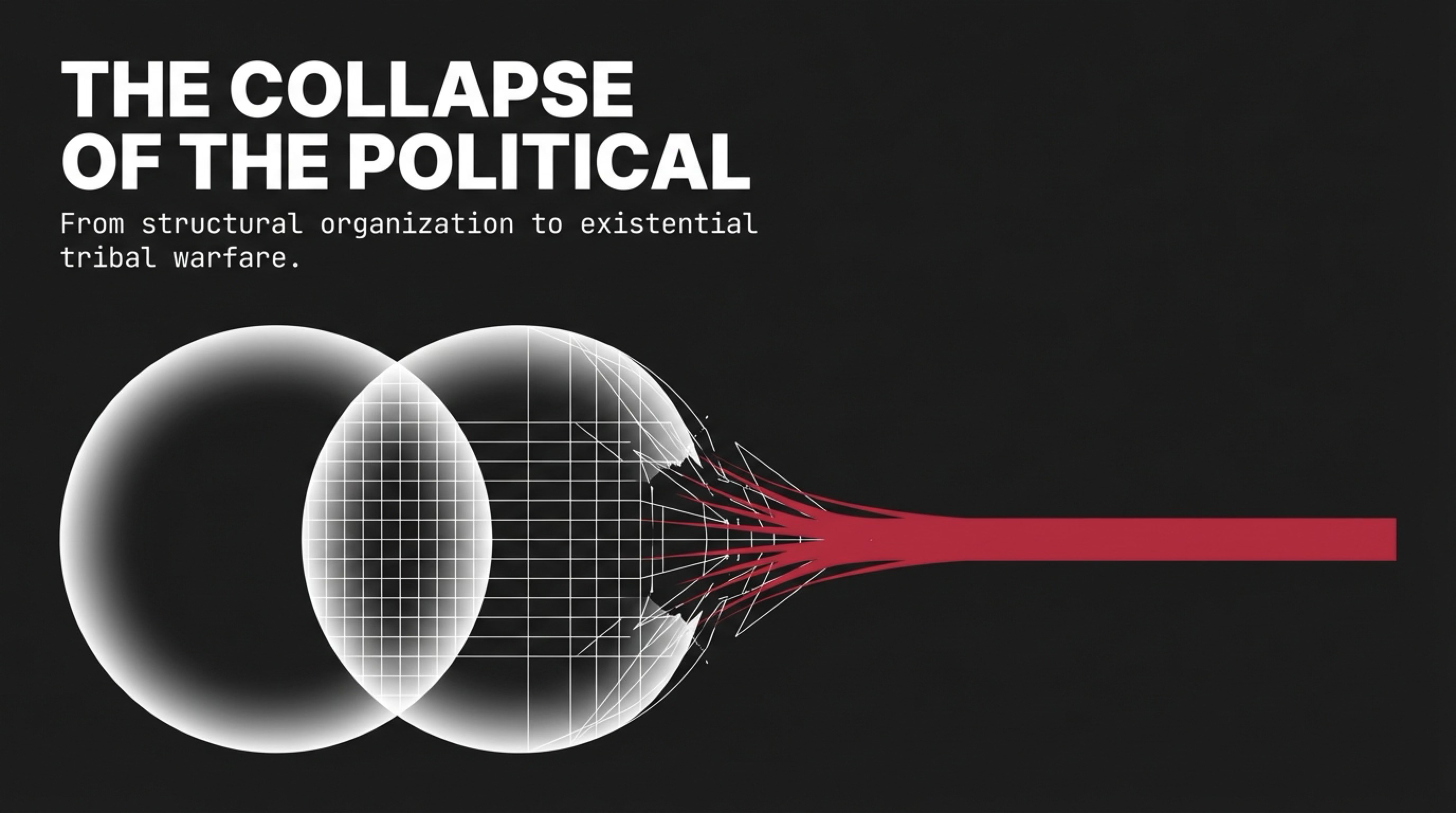
The structural integrity of a liberal society rests upon the maintenance of a functional political space characterized by negotiation, compromise, and the recognition of legitimate disagreement. Genuine politics is defined by the “organization of the city”—the structural authentication of authority and the stable distribution of societal roles. However, the emergence of totalitarian movements is signaled by the collapse of this space into a primitive and existential binary known as the friend-enemy distinction. This framework represents the fundamental “collapsed wave function” of the political order, dissolving democratic structures into existential tribal warfare.
Derived from the political theory of Carl Schmitt in his 1932 work The Concept of the Political, this logic dictates that the primary criterion of the political is the identification of a “public enemy”—not a personal adversary, but a collective, existential threat to a group’s way of life. It is no historical coincidence that Schmitt joined the Nazi Party only one year later, in 1933, utilizing this exact framework to justify Hitler’s totalitarian state. Today, this framework serves as an analytical scalpel for diagnosing a society’s descent into totalizing conflict. The following analysis systematically exposes the mechanics of this logic, identifying its origins, its psychological levers of compliance, and its contemporary manifestations in hyper-partisan and “woke” movements.
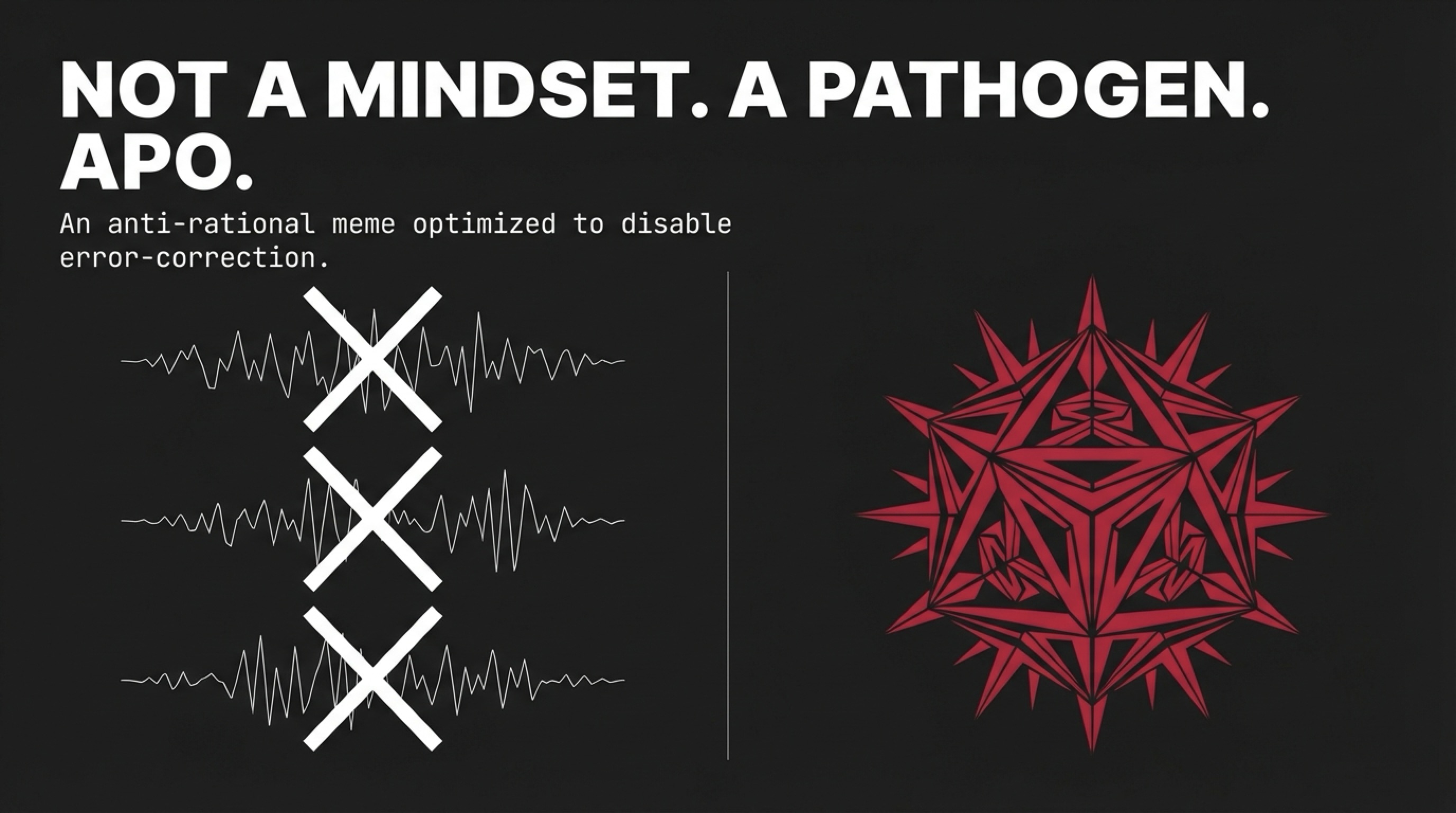
To truly dismantle this totalitarian software, we must avoid the “inductivist trap” common in contemporary political analysis, which merely categorizes the superficial symptoms of extremism—such as anger, purity, or resentment. Creating an arbitrary shopping list of extremist traits is an easy-to-vary Bad Explanation; if a movement lacks one trait, the model can simply be patched with ad-hoc additions. Instead, applying David Deutsch’s standard for a hard-to-vary Good Explanation reveals that the friend-enemy distinction is not a psychological mindset, but an anti-rational meme. In the Deutschian sense, it is an informational pathogen optimized to survive by disabling the critical faculties of its host culture. It colonizes minds by installing rules that prevent error-correction, demanding absolute tribal certainty to shield individuals from the “strain of civilization” and the burden of fallibilism.
The “political,” in its most degenerate and potent form, is defined strictly by this distinction. When a collectivity frames a threat to its moral certainty or structural identity as an existential “non-negotiable,” it ceases to see opponents as fellow citizens. This transformation overrides all other categories of human judgment; if an action serves the “friend” and harms the “enemy,” it is deemed necessary, regardless of whether it is traditionally considered immoral or economically disastrous.
The Diagnostic Data Matrix and Mechanics of Operation
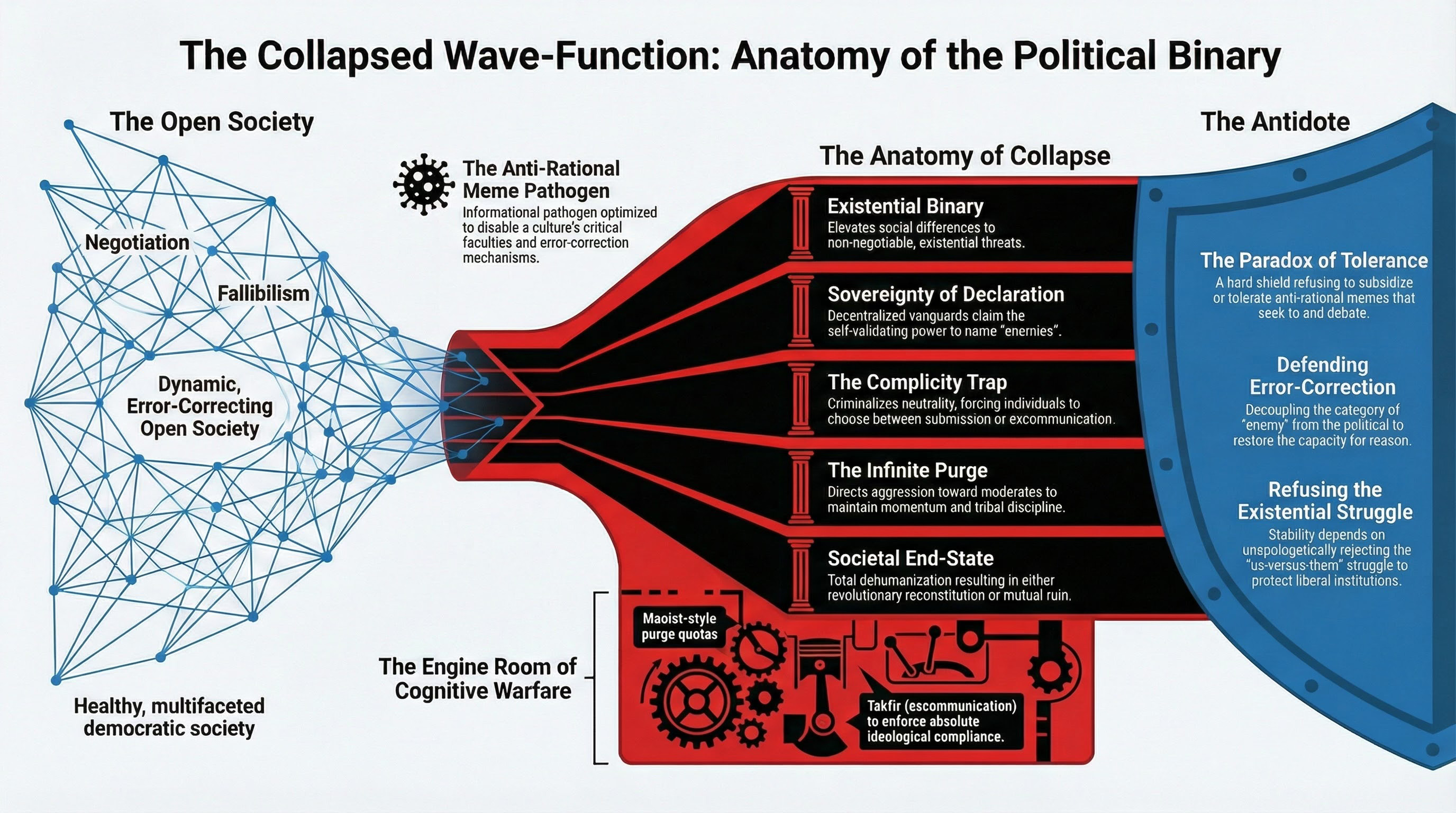
This matrix functions not as a descriptive taxonomy of surface behaviors, but as the precise replication strategy of an anti-rational memeplex. The following five pillars are not independent phenotypes that can be reordered or deleted; they are the interlocking functional mechanisms required to defeat criticism. Once this informational parasite successfully institutionalizes its core binary, the society’s error-correcting institutions are disabled, and the descent into systemic civilizational toxicity becomes inevitable.
The Existential Binary and the Transformation of Conflict
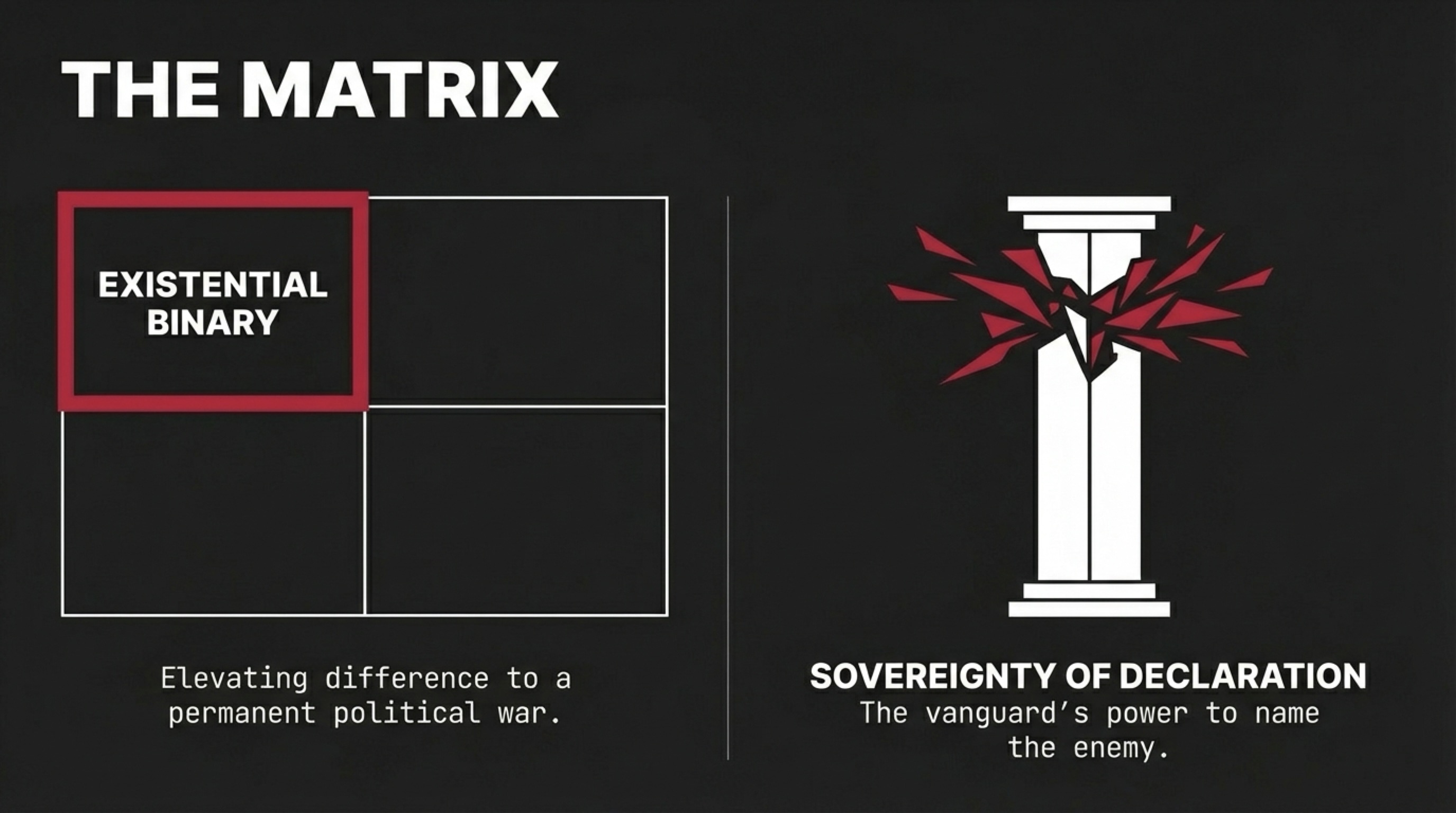
The primary mechanism begins by identifying a social antithesis and elevating it to the level of a political “non-negotiable.” In a pre-totalitarian environment, differences are weaponized to create a sense of impending doom, eliminating the nuance of the human experience. The enemy becomes “the other”—the one who is “existentially something different and alien.” In contemporary movements like Critical Race Theory, this is expressed through the “racist/antiracist” dichotomy. By framing racism as an all-encompassing structural reality, the movement transforms a moral issue into a permanent political war where the target’s way of life is framed as inherently predatory.
The Sovereignty of Declaration and the Power to Name
For this logic to function, there must be a “Sovereignty of Declaration.” While Carl Schmitt assigned this role to the state’s sovereign executive, modern ideological movements have decentralized this power to a “vanguard” claiming to possess “critical consciousness.” When this secular clergy labels a person or idea as “problematic” or “fascist,” they are performing a Schmittian declaration of the enemy. This declaration is self-validating; any attempt by the target to defend themselves is interpreted as “fragility” or “complicity,” creating an inescapable loop that consolidates the movement’s authority.
The Elimination of Neutrality and the Complicity Trap
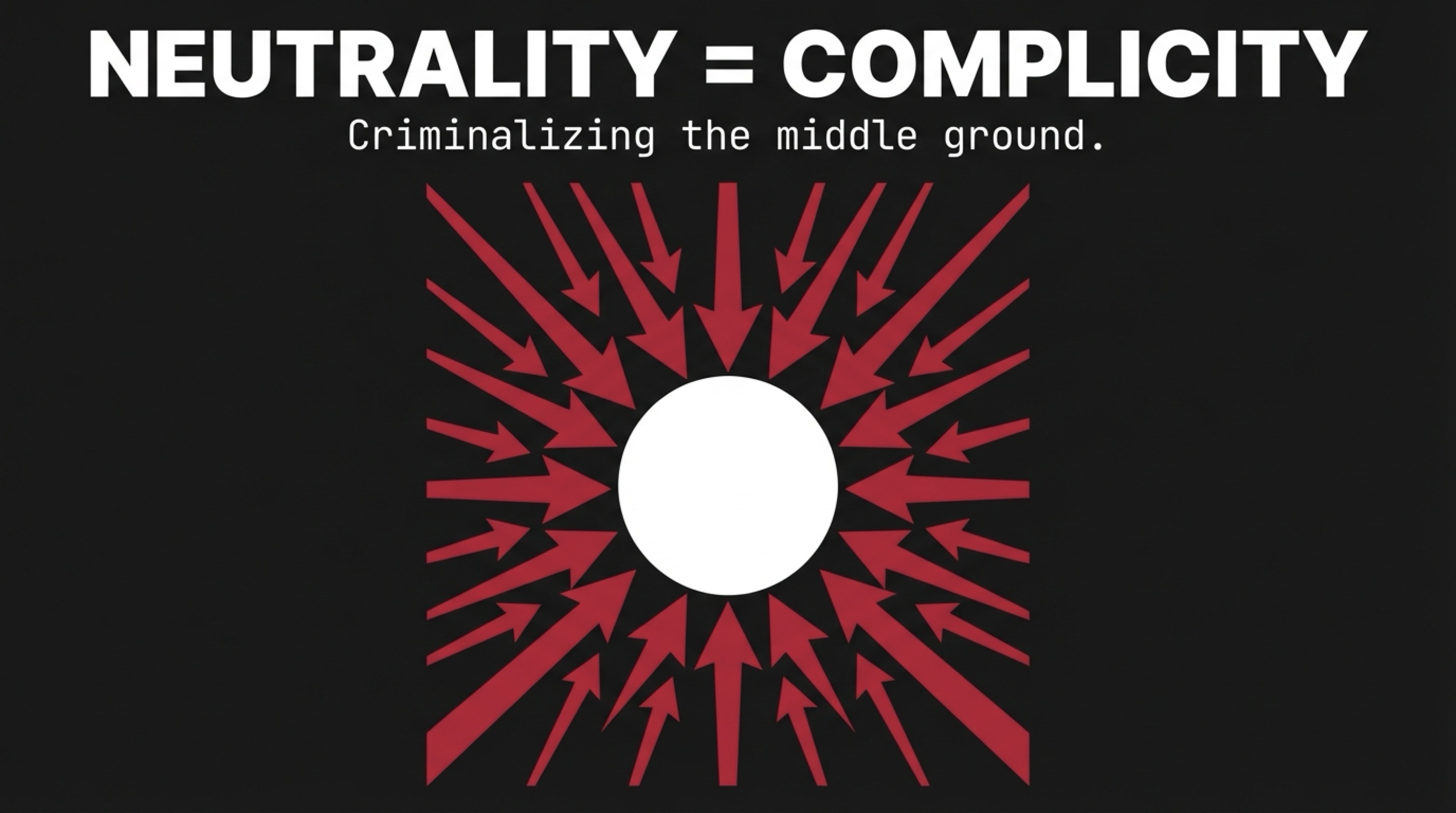
The most aggressive feature of this logic is its refusal to permit neutrality. In the face of an existential threat, there is no such thing as an “innocent bystander.” This mechanism transforms neutrality into a hostile act, effectively criminalizing the middle ground. Because the “enemy” is framed as a structural force, anyone who does not actively struggle against it is seen as maintaining it. This forces the “squishy” center of society toward the radical position out of fear of excommunication, demanding total submission.
The Infinite Purge and the Radicalization Funnel
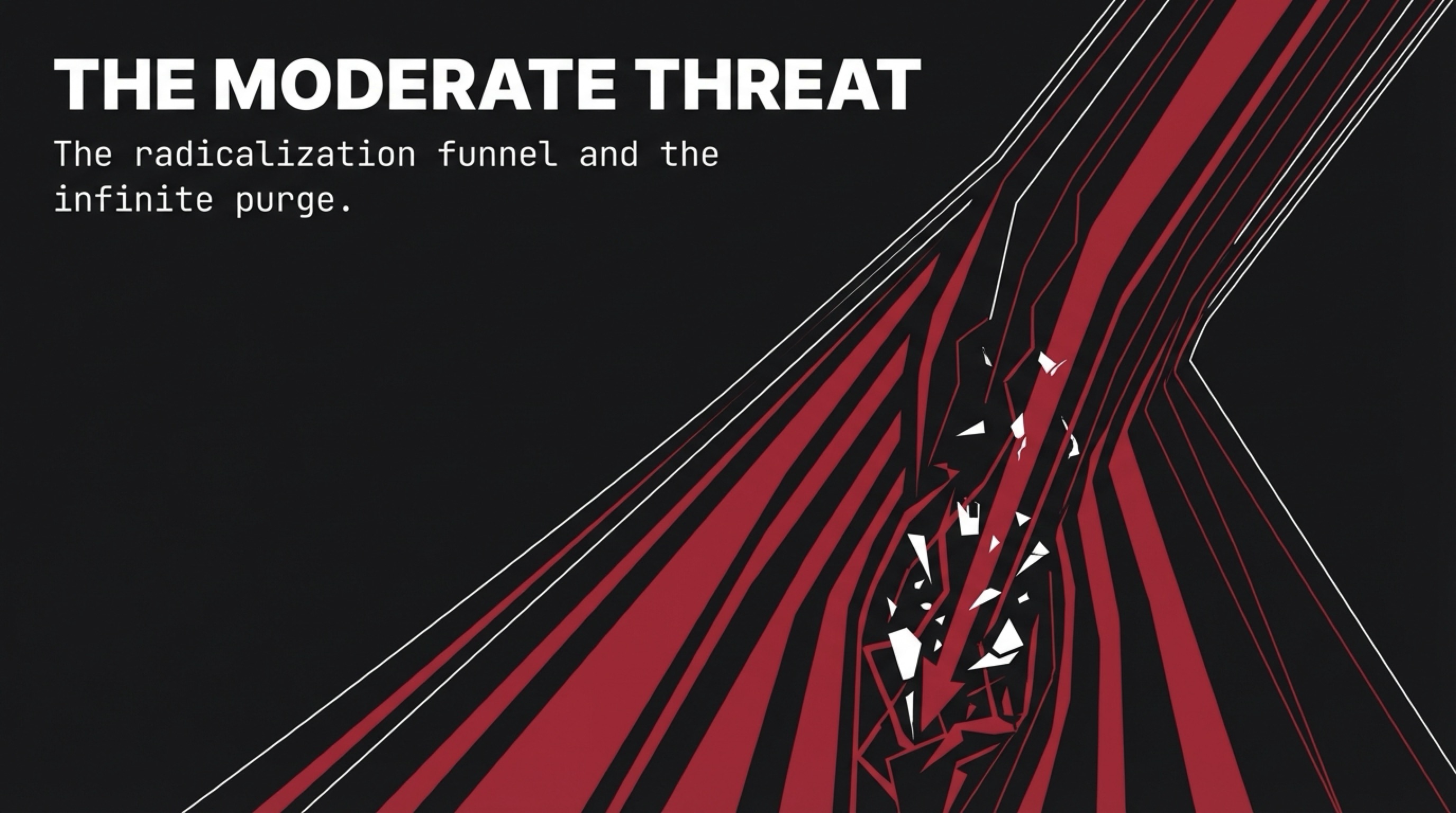
To maintain momentum, a totalitarian movement requires an “Infinite Purge.” Driven by the doctrines of “No Enemies to the Left” (NETTL) and “No Enemies to the Right” (NETTR), the movement never attacks its own extremists. Instead, the most aggressive vitriol is reserved for those close to the movement who prioritize principle or nuance over existential conflict. These moderates are purged because they demonstrate that compromise is possible, threatening tribal solidarity and providing a potential bridge back to a non-binary reality. This tactical focus forces the entire group toward the extremes.
The Societal End-State and the Mechanics of Dehumanization
The inevitable conclusion is the total dehumanization of the “other,” who is viewed as a pathogen that must be excised from the body politic. This leads to what Marxian analysis warns of: either the “revolutionary reconstitution” of society or the “mutual ruin” of all contending parties. The end-state is a society that has “collapsed its wave-function” entirely—there is no law or truth, only the will of the sovereign and the temporary absence of conflict until the next purge begins.
The Mechanisms Breakdown (The “Engine Room” of the Ideology)
To understand the resilience of modern ideological movements, one must apply an uncompromising “scalpel” to their operational engine. These pillars interact to create an inescapable “psychotic space” where individuals are forced into perpetual mobilization before they realize the political wave function has collapsed.
The Complicity Trap
This structural mechanism traps individuals by demanding “allyship” or “anti-racism.” It dictates that there is no neutral “non-racist” position, a maneuver famously known as “silence is violence.” The system creates a high-pressure environment where the individual is forced to provide constant “proof of work” to the collective. Refusal to participate is immediately interpreted as sympathy for the public enemy, ensuring there is no psychological or social sanctuary for the uncommitted.
Targeting the Center
This dynamic serves as a radicalization funnel. The “Woke Right” heavily mirrors the “Woke Left” in this regard, directing its primary hostility toward moderate conservatives who are framed as being “complicit in civilizational collapse” or “wanting you dead.” By attacking the center more fiercely than the opposition, the movement forces its members to constantly signal their loyalty. The moderate becomes the primary target because their elimination is a prerequisite for maintaining absolute tribal discipline.
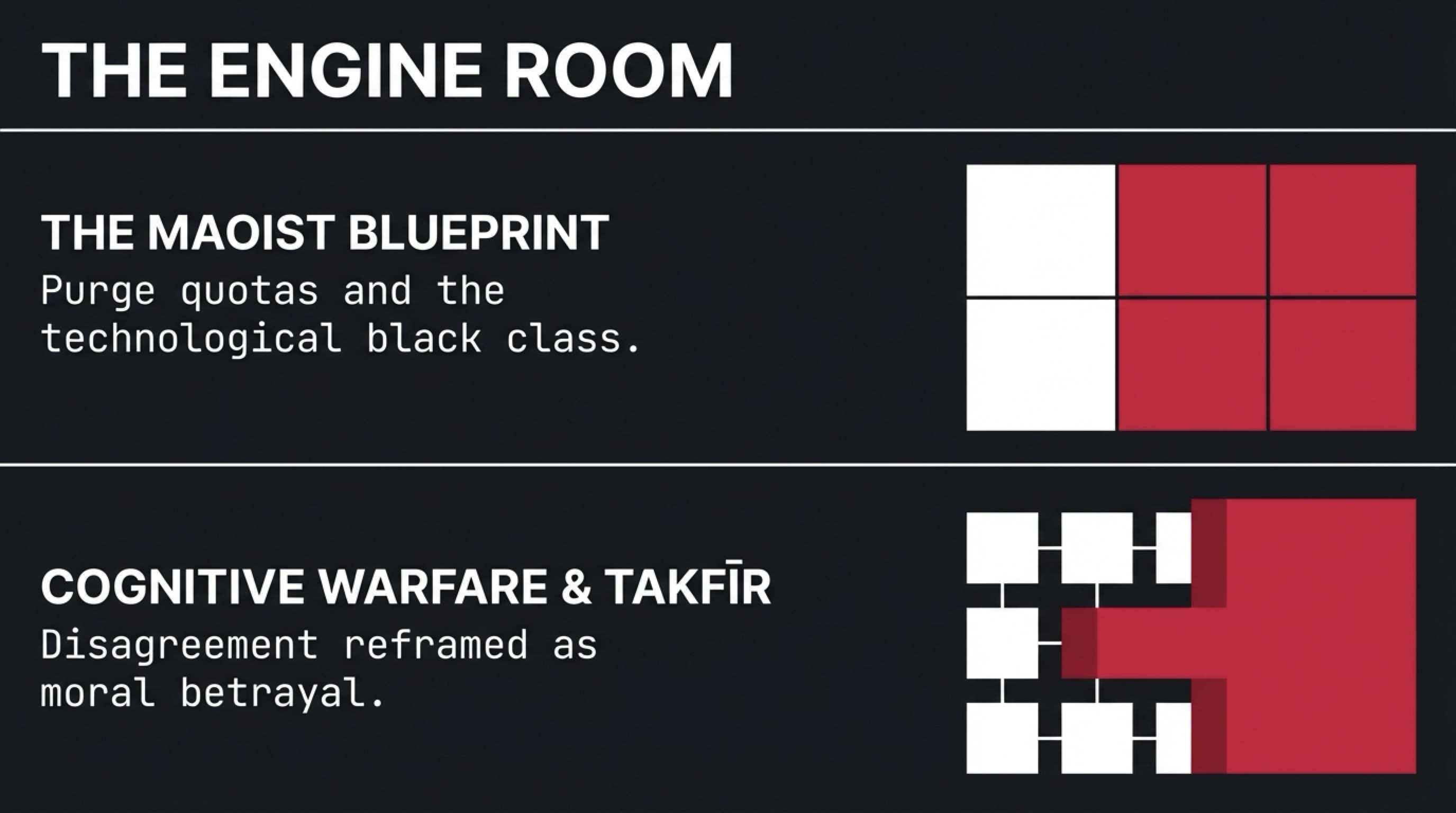
The Maoist Blueprint
Modern cancel culture finds its historical blueprint in Maoist China’s “Red vs. Black” class system. This system created a state of constant desperation where individuals would sacrifice anything—including their own families—to remain in the “friend” (Red) category. A critical operational detail is the “purge quota”; when the supply of genuine external enemies is exhausted, the system’s insatiable demand for conflict forces participants to turn on the least enthusiastic members of their own group. Today, this is reflected in China’s social credit system, where low-status individuals become “untouchables,” alerted to by technology in public, creating a digital “black class.” This technological shunning forces individuals to target those slightly “less pure” than themselves to prove their own ideological compliance.
The Psychological Engine
This logic depends heavily on manipulating “consciousness,” suggesting that the broader society is “asleep” or trapped in “false consciousness.” Disagreement is dismissed not as rational debate, but as a symptom of this false consciousness or knowing “complicity.” This cognitive warfare induces deep guilt, forcing individuals to surrender their independent perception to the movement’s ideological narrative to alleviate psychological instability.
This cognitive warfare is a highly evolved software patch designed to ensure the host ignores conflicting evidence. The meme survives by treating disagreement not as an intellectual error, but as moral betrayal. It mirrors the theological mechanics of takfīr—where unquestionable authority (takbīr) is established to instantly excommunicate dissenters and subject them to societal punishment and potential physical violence. By aggressively re-framing harm as morality, the meme justifies asymmetrical attacks on the out-group, rendering any rational counter-argument socially and emotionally unavailable.
Totalitarian Mobilization
The friend-enemy distinction is a strictly public phenomenon. The creation of a “public enemy” justifies the suspension of normal moral constraints, transforming political debate into a crusade where the goal is the complete erasure of the enemy from the social sphere.
The Degeneracy of the Political
While war is a reality of human existence, treating the “concept of the political” as synonymous with the “concept of war” represents politics in its most “degenerate state.” By acting as if politics is a war between friends and enemies, radicals create a self-fulfilling prophecy that irreversibly evaporates the trust required for a liberal democracy to function.
Reclaiming the Political Center
The operational success of these mechanics relies on an inescapable social environment, yet their reliance on escalating internal purges makes them inherently unstable for long-term civilizational maintenance. The friend-enemy distinction is a form of societal toxicity that leads to a “psychotic space” where dehumanization becomes a mandatory social ritual.
The “So What?” of this analysis is an urgent systemic alarm: once politics is reduced to an existential struggle for survival, the human capacity for reason, empathy, and pluralism is discarded in favor of the most ruthless actors. The fatal error in responding to this framework is adopting the friend-enemy logic to “fight back,” which only validates the movement’s “psychotic space” and accelerates mutual ruin.
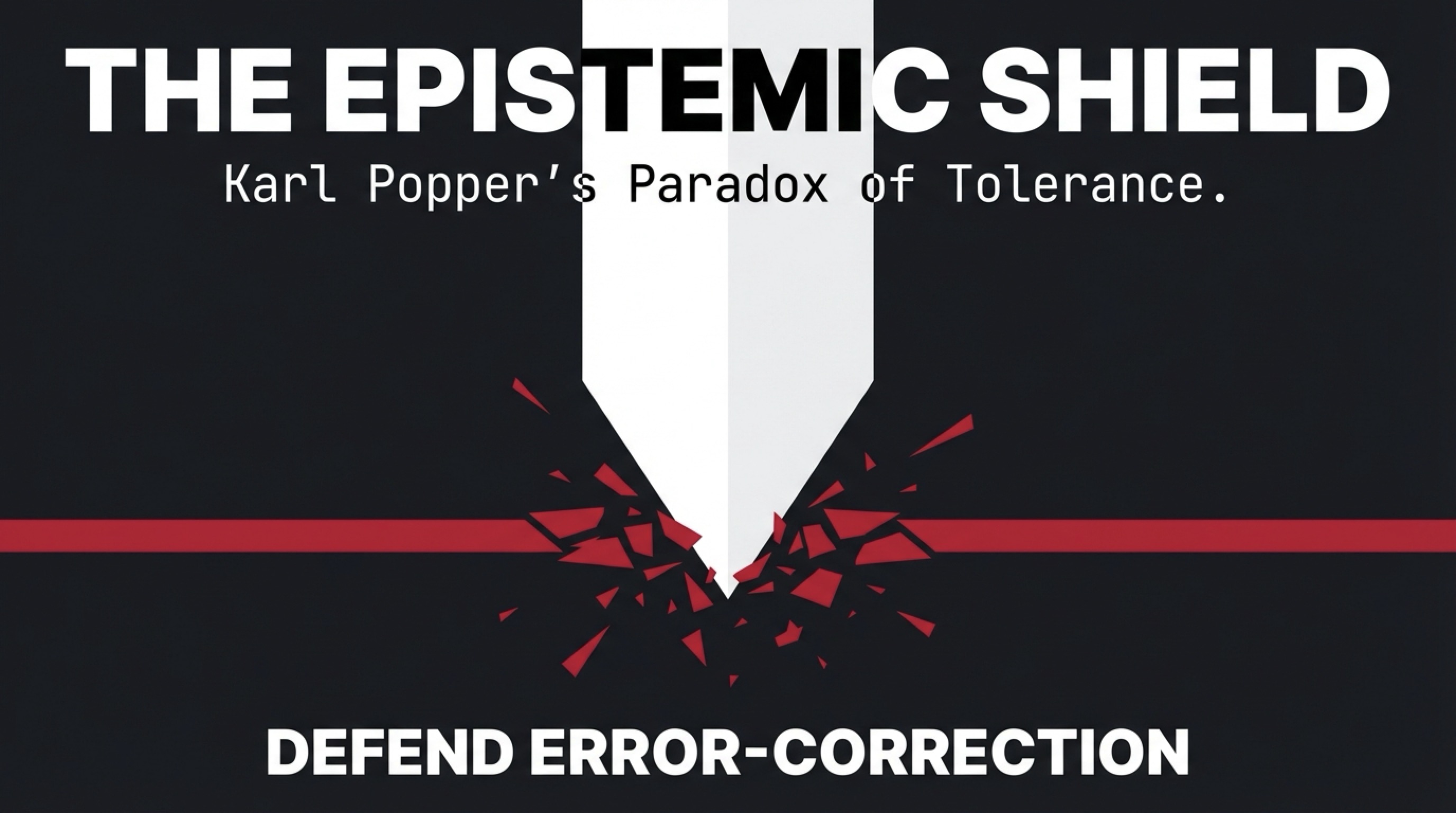
Instead, the antidote requires us to rigorously enforce the epistemic boundaries of Karl Popper’s “Paradox of Tolerance.” A free society has a legitimate right to explicitly reject this logic, recognizing that unlimited tolerance toward those who use force or moral fiat to end debate is not compassion, but complicity. The ultimate “rotten compromise” is the institutional subsidization of anti-rational memes—granting protected space and validity to systems whose very success depends on destroying the institutions of rational criticism. By refusing to participate in the existential us-versus-them struggle, we cease treating totalitarian dogmas as “valid perspectives.” Genuine stability and the survival of liberty depend on unapologetically defending the error-correcting mechanisms of the open society, ensuring the category of “enemy” is permanently decoupled from the fundamental criterion of the political.
References:
Hamed Abdel-Samad, 2016, Islamic Fascism. Amherst, New York: Prometheus Books.
Michael Anton, 20250610, “Refuting the Schmitt Smear.” https://americanmind.org/salvo/refuting-the-schmitt-smear/
C. Jay Engel, 20240615, “Carl Schmitt and the Political. A Response to John Ehrett.” https://americanreformer.org/2024/06/carl-schmitt-and-the-political/
New Discourses, 20251205, ”Friend-Enemy Distinction.” https://newdiscourses.com/tftw-friend-enemy-distinction/
New Discourses, 20250523, “The Woke Right’s Elitist Coup: Inside the MAGA Civil War.” https://newdiscourses.com/2025/05/the-woke-rights-elitist-coup-inside-the-maga-civil-war/
Khaled Salih, 20260227, “The Muslim Brothers in Europe: The 2026 Strategic Update.” https://khaledsalih.substack.com/p/the-muslim-brothers-in-europe-the
—, 20260227, “The Pattern of Regression: Takfīr, Tribalism, and the Closed Society.” https://khaledsalih.substack.com/p/the-pattern-of-regression-takfir
Carl Schmitt, 2007, The Concept of the Political. Expanded Edition. Chicago: The University of Chicago Press (original publication 1932).
Slides to use: