The Bread and the Salt: How the 1936 Arab Revolt Forged an Irreconcilable Conflict
By Khaled Salih
The Crucible of an Unyielding Conflict
In the turbulent history of the Holy Land, few periods are as consequential, yet as frequently overlooked, as the Arab revolt of 1936-1939. This seminal, three-year uprising was far more than a prelude to the 1948 war; it was the crucible in which the unyielding contours of the modern Arab-Israeli conflict were forged. It was the moment when two burgeoning national movements, forced into proximity by a waning imperial power, engaged in their first total war, a conflict that revealed a chasm between their foundational aspirations that remains unbridged to this day.
The core of this chasm is captured in a simple yet profound metaphor, recounted by public intellectual Einat Wilf, who cites an anecdote from Oren Kessler’s book, Palestine 1936. In a conversation during the Mandate era, Faidi al-Alami, a former mayor of Jerusalem, explained his view of the Jewish presence to a Zionist activist: Jews, he said, are “like salt in bread—a small amount is vital, but a large amount is even worse than none at all.” As Wilf recounts, the Zionist activist’s reply laid bare the essence of the impending conflict: “But we are done being the salt. We want to be the bread.” This exchange encapsulates the central, irreconcilable clash of visions: the Zionist goal to become “the bread”—a sovereign, self-determining people in their historic homeland—and the prevailing Arab view of Jews as a minority “salt,” whose presence was acceptable only in limited quantities and without political sovereignty.
Let us re-examine the historical narrative of the 1936 revolt through the lens of this fundamental conflict and will argue that the revolt was the first major manifestation of a total war not merely against British policy or Jewish immigration, but against the very concept of Jewish sovereignty. This political ideology, which prioritises the negation of the other over the construction of the self, is what Einat Wilf terms Palestinianism. The revolt was its violent debut on the world stage. To understand this eruption, one must first examine the political and ideological seeds sown in the decades prior.
The Seeds of an Irreconcilable Conflict
The British Mandate period was not merely a prelude to violence but the political environment where two fundamentally incompatible national aspirations were forced into direct and unavoidable competition. Britain’s attempts to manage this clash through ambiguous policy only ensured that what began as a political problem would inevitably become a military one.
The Mandate’s “Dual Obligation”
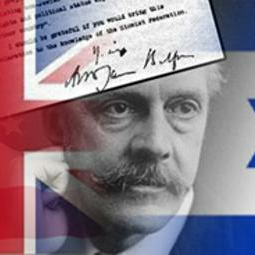
At the heart of the Mandate lay the fatal contradiction of the 1917 Balfour Declaration, which promised to facilitate a “national home for the Jewish people” while simultaneously pledging not to “prejudice the civil and religious rights” of non-Jewish communities. This “dual obligation” was a failed attempt to manage what was, in the words of a later British Foreign Secretary, Ernst Bevin, an “irreconcilable” conflict. From its inception, the policy ignored the core Arab priority, which Bevin would later articulate with stark clarity: to “resist to the last the establishment of Jewish sovereignty in any part of the land.” British policy was thus built on a foundation of wishful thinking, assuming a middle ground that one side had already declared nonexistent.
The Protagonists and Their Core Philosophies
This era was defined by leaders whose worldviews embodied this irreconcilable clash. On the Arab side, Hajj Amin al-Husseini, elevated by the Jewish British High Commissioner Herbert Samuel to the lifetime position of Grand Mufti, became the de facto political and spiritual leader. His primary objective was to enforce the “salt” paradigm, ensuring that Palestine’s Arabs would never accept Jewish political equality, let alone sovereignty. The Zionist movement was led by a duumvirate. In the halls of European power, Chaim Weizmann was the charismatic diplomat. In Palestine, David Ben-Gurion was the pragmatic nation-builder, methodically constructing the institutions of a state-in-waiting. Their collective goal was to transform the Jewish people from a scattered minority into “the bread”—a sovereign nation.
An early recognition of this stark reality came from Vladimir Jabotinsky, whose 1923 essay, The Iron Wall, argued that Palestine’s Arabs would never be persuaded by dialogue or economic incentives. He correctly identified that their position was a total rejection of Jewish sovereignty that could only be overcome by establishing a Jewish military force they could not defeat.
The Failure of Dialogue
Attempts at political dialogue only served to confirm the unbridgeable gap. A series of secret meetings in 1934 between Ben-Gurion and Musa Alami, a Cambridge-educated Arab administrator, proved fruitless. Alami’s conclusion—that the Zionists sought not just a “national home” but “a Jewish state”—was not a surprising revelation but a confirmation of the core conflict. As Einat Wilf argues, such dialogue was doomed from the start because the Arab side had never accepted the legitimacy of the other’s basic aspiration for sovereignty. The Zionists wanted to be the bread, and the Arab leadership was committed to ensuring they remained the salt. This fundamental disagreement left no room for compromise, making widespread, organised violence the only remaining avenue for resolution.
The Eruption
The initial phase of the 1936 revolt was a pivotal moment of unified Arab action, channeling decades of frustration into a countrywide insurgency. However, an analysis of the revolt’s stated aims reveals that they transcended typical anti-colonial goals, constituting instead a comprehensive program for the complete negation of the Jewish national project.
The Spark and the Unified Front
The revolt was ignited by a series of violent acts culminating in the “Bloody Day in Jaffa” on April 19, 1936, when an Arab mob murdered nine Jews in the streets. Amid the brutality, however, there were also instances of profound humanity, such as Arab stevedores who carried their Jewish coworkers to safety by boat—poignant but ultimately insufficient acts to stem the tide of nationalist violence. In the aftermath, local “National Committees” sprang up, soon coalescing into the Arab Higher Committee (AHC) under the chairmanship of Hajj Amin al-Husseini. Uniting rival clans for the first time, the AHC declared a general strike and issued three non-negotiable demands:
- An immediate end to all Jewish immigration.
- A legal prohibition on the sale of Arab land to Jews.
- The establishment of a representative national government based on the country’s Arab majority.
Viewed through Einat Wilf’s framework, these demands were not a starting point for negotiation but a comprehensive program for the complete termination of the Jewish “national home.” They were a clear, early platform of what Wilf terms Palestinianism—an ideology organised not around the constructive goal of building its own state, but around the negation and dismantlement of the other’s. As the six-month strike crippled the Arab economy, the AHC sought a face-saving exit by appealing to the monarchs of Iraq, Saudi Arabia, and Transjordan, who publicly called for an end to the strike. This move marked the first regionalisation of the problem, transforming it from a local dispute into a pan-Arab cause and setting a precedent for regional involvement that continues to this day.
Divergent Responses
The two communities responded to the crisis in ways that reflected their core philosophies. The Zionist leadership adopted a policy of havlagah (restraint), a pragmatic calculation to maintain British goodwill. More importantly, the Yishuv used the crisis as an opportunity for state-building. When the Arab strike paralysed Jaffa Port, the Jews constructed their own port in Tel Aviv within weeks, achieving vital economic independence. Concurrently, the British authorised the creation of the notrim (Jewish Supernumerary Police), an armed force effectively run by the Haganah that provided thousands of Jews with legal weapons and military training. This was the practical work of “baking the bread.” The AHC’s strategy, by contrast, was purely rejectionist, seeking to halt and reverse the Zionist project through force. As the general strike ended, the conflict was about to be tested not just on the battlefield but on the world stage by the Peel Commission.
The Partition Interlude
The Peel Commission of 1937 was not simply a diplomatic initiative; it was the first formal, high-stakes test of the conflict’s core nature. Its proposal for partition forced both sides to reveal their ultimate priorities: a compromise of two states or a continuation of a zero-sum war.
The Commission’s Verdict
After months of hearings, the Peel Commission delivered a stunning verdict. It concluded that the conflict between the two nationalisms was “irrepressible” and that the Mandate had failed. “The only hope of a cure,” the report stated, “lies in a surgical operation.” That operation was partition. The commission proposed dividing the land into a Jewish state in the Galilee and coastal plain and an Arab state in the hill country, to be merged with Transjordan. Crucially, the report also recommended a “population transfer” to untangle the two communities.
A Spectrum of Reactions
The reactions to this first two-state solution laid bare the conflict’s irreconcilable foundations. Publicly cautious, the Zionist leadership accepted the principle of partition. Privately, David Ben-Gurion was elated. His diary reveals his excitement at the tangible hope of finally becoming “the bread”: “It is a Jewish army... a Jewish state... It is the beginning of redemption.” Upon a second reading, he grew fixated on the proposal for population transfer. Ben-Gurion thrilled at the prospect, seeing it as an opportunity to achieve something “we never had, even when we were sovereign.” For the Zionists, sovereignty, even in a small state, was the paramount goal.
The Mufti and the Arab Higher Committee rejected the plan absolutely. This was not a negotiation over borders or the percentage of land. As Einat Wilf argues, this rejection was a clear demonstration of their “top priority,” as articulated by Ernst Bevin: “to resist to the last the establishment of Jewish sovereignty in any part of the land.” This moment validated the central thesis of the conflict. One side accepted the principle of division to gain sovereignty for itself. The other side rejected sovereignty for itself in order to deny it to its opponent. The absolute rejection of the first two-state solution made a return to even greater violence inevitable.
Climax and Collapse
The second phase of the revolt (1937–1939) was defined by extreme brutality from all sides. It witnessed not only a massive British counter-insurgency but, crucially, a descent into internecine Arab violence that fatally weakened their society for the larger conflict that was to come a decade later.
Britain’s Iron Fist and the Jewish Offensive
Following the assassination of a key British official, Lewis Andrews, Britain launched a massive crackdown. The AHC was outlawed, and Hajj Amin al-Husseini fled into exile. Simultaneously, the escalating violence prompted a decisive shift in Zionist military strategy. The nationalist Irgun group broke from the official policy of havlagah, launching deadly reprisal attacks on Arab civilians. More significantly, the official Haganah developed its own offensive capability with British sanction. Captain Orde Wingate, a pro-Zionist British intelligence officer, established the Special Night Squads, which transformed the Haganah from a defensive militia into a mobile, offensive force, laying what he called “the foundation for the army of Zion.”
The Self-Inflicted Defeat
Even as the rebellion reached its military peak in 1938, it began to consume itself. With the leadership in exile, the revolt descended into a brutal campaign of score-settling, extortion, and assassination that pitted Arab against Arab. Rival clans formed their own “peace bands” to fight the Mufti’s rebels, shredding the fabric of Arab society. This internal violence was the tragic but logical outcome of what Wolf defines as an ideology of pure negation. Without a constructive, state-building vision, the movement’s destructive force ultimately turned inward, decimating its own leadership and social cohesion. By 1939, the combination of Britain’s military campaign and the rebellion’s internal collapse had crushed the insurgency, setting the stage for a final political outcome determined by the looming shadow of a world war.
The White Paper
The MacDonald White Paper of 1939 was not a moral judgment by the British but a purely strategic concession. On the eve of World War II, Britain desperately needed to secure the loyalty of the Arab world and its vital oil reserves. The price was the near-total abandonment of the Zionist project—the culmination of the Arab revolt’s primary goal, achieved at a catastrophic cost.
Policy Reversal and Final Rejections
The White Paper represented a stunning reversal of British policy. Its core tenets were a near-total capitulation to the revolt’s demands:
- It explicitly rejected the creation of a Jewish state.
- It imposed a strict five-year cap of 75,000 Jewish immigrants, after which further immigration would require an Arab veto.
- It promised the establishment of an independent, Arab-majority Palestinian state within ten years.
The Jewish Agency condemned the policy as a craven “surrender to Arab terrorism” that slammed shut the gates of Palestine to European Jewry in their darkest hour. Remarkably, however, the Mufti and the Arab Higher Committee also rejected it. Despite granting nearly all their demands, the policy was denounced. This seemingly paradoxical decision is perfectly explained by Wilf’s thesis: for an ideology of total negation, any policy that did not guarantee the immediate and permanent termination of the Zionist project was unacceptable. A delayed victory was no victory at all. While the White Paper succeeded in ending the revolt, it left the Arab community politically decapitated and economically shattered, while the Zionist community emerged hardened and utterly convinced of the necessity for military and political self-reliance.
The Harvest of 1936 and the Unchanging Core of the Conflict
The Arab revolt of 1936–1939 was a defining catastrophe for the Arabs in Palestine. As historian Rashid Khalidi argues, the decisive Arab defeat in 1948 was a “tragic epilogue to the shattering defeat of 1936–39.” It cost at least 5,000 Arab lives—many at the hands of other Arabs—and left their society leaderless and economically crippled. In stark contrast, the revolt paradoxically strengthened the Yishuv, which emerged with a self-sufficient economy, a battle-hardened military, and a resolute political will—all the key attributes of a state.
This outcome was not an accident of history but the inevitable result of a flawed political vision. Viewed through Wilf’s framework, the “shattering defeat” of the Arabs was self-inflicted, the harvest of Palestinianism—a political identity organised around the destruction of the Jewish aspiration to be “the bread,” rather than the construction of their own sovereign future. By prioritising the negation of their rival over the affirmation of themselves, they ensured their own political failure while inadvertently accelerating their opponent’s success.
The patterns established during that “forgotten uprising” echo to this day: economic boycotts, the naming of armed wings for martyrs, the rejection of partition plans, and the intervention of regional powers. The revolt of 1936 is not merely history but a foundational lesson. It reveals that the conflict’s tragic intractability stems not from disputes over borders or resources, but from the same irreconcilable struggle witnessed eighty years ago—the fundamental clash between a people’s demand to exist as “the bread” and an enduring ideology that insists they must forever remain “the salt.”
Reflecting on these events after more than thirty-five years of studying and teaching the politics of the Middle East, I am struck by how enduring the patterns forged in the crucible of 1936 remain. What I have long called The Palestinian Syndrome—the cycle of rejecting and losing, and rejecting and losing again without a mechanism for self-correction—was already fully visible in the revolt’s logic and outcome. It is the political pathology of defining one’s identity primarily in opposition to the other, rather than through the arduous work of building a future of one’s own. Einat Wilf’s term Palestinianism captures this with unsettling precision: an ideology anchored not in the pursuit of sovereignty for oneself, but in the unyielding refusal to accept sovereignty for the other. The tragedy of 1936 is that it inaugurated a political stance that has, for nearly a century, produced the same unaltered result—strategic defeats, social fragmentation, and missed opportunities for self-determination. Until this pattern is confronted and transcended, the conflict will remain trapped in the very dynamic that the revolt first revealed: one side striving to become the bread, and the other insisting that it must remain forever the salt.
References:
Oren Kessler, 2023, Palestine 1936: The Great Revolt and the Roots of the Middle East Conflict. Lanham: Rowman & Littlefield.
Unpacking Israeli History, 20251118, “The One Thing That Could End the Conflict…But Never Does.” [Interview with Einat Wilf] www.youtube.com/watch?v=h50Q7qlKb98&t=687s
Khaled Salih, 20250910, “Palestinianism: An Ideology of Annihilation.”
—, 20250927, “The insanity of revolutionary utopianism: ‘We will never surrender.’” https://khaledsalih.substack.com/p/the-insanity-of-revolutionary-utopianism
—, 20250724, “Lost in the Left: How Hamas Ruined Gaza and the Palestinian Cause.” https://khaledsalih.substack.com/p/lost-in-the-left-how-hamas-ruined
—, 20250626, Forget Palestine, stupid! The weaponisation of Palestinianism as a global crusade against Jewish sovereignty.” https://khaledsalih.substack.com/p/forget-palestine-stupid


