The Art of Survival
How Jordan’s King Abdullah II Masters the Impossible in a Turbulent Middle East
By Khaled Salih
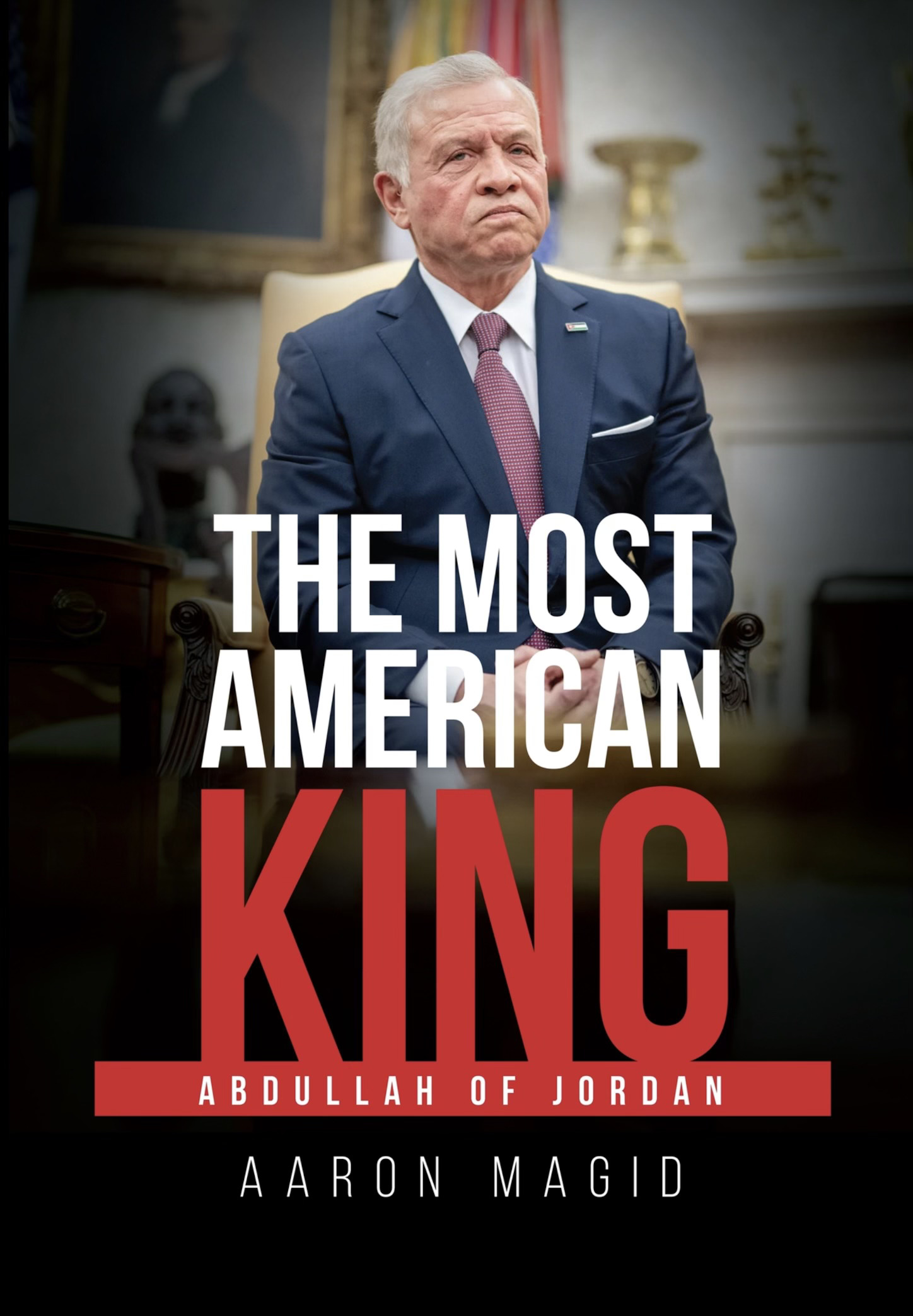
In an era defined by the collapse of states, the rise of extremism, and the constant reshaping of geopolitical landscapes, the enduring stability of Jordan remains a profound anomaly. How does a country, resource-poor and perpetually caught between tectonic plates of geography and demography, regional alliances and internal rivalries, legitimacy and autocracy, not just survive but seemingly thrive? Aaron Magid’s The Most American King: Abdullah of Jordan offers a profoundly insightful and analytically rich answer, presenting a compelling portrait of King Abdullah II as a master practitioner of the art of ruling in the most challenging of circumstances. This biography is not merely a chronicle of a monarch’s reign; it is an essential guide for understanding the delicate balance required to preserve power and statehood when faced with daunting internal fragilities, in a notoriously problematic region, and a complex web of identity challenges.
Magid’s central thesis lays bare a paradox: King Abdullah II’s uniquely Western—and especially American—upbringing has been instrumental in fortifying his Hashemite monarchy. The book’s title, The Most American King, was chosen for two main reasons: King Abdullah’s very strong personal ties with the United States and the significant political relationship between Jordan and the U.S.
King Abdullah II’s Deep American Connections
His personal journey began in the West, attending middle and high school in Massachusetts, where he was on the wrestling team at Deerfield Academy and was known as “Ab.” He would even hide to avoid Arabic language lessons. He further trained with the US military in Kentucky and attended Georgetown University in Washington, D.C., an experience he enjoyed so much that he sent his own children to the same prestigious Jesuit university. By the time he became king in 1999, he spoke better English than Arabic due to his extensive time in the West. Even today, he maintains luxury properties in California and Washington, D.C., underscoring his significant personal ties. This unprecedented familiarity with American culture is evident in his ability to appear on shows like Star Trek and understand American media and political figures, unlike other Arab leaders.
Beyond the personal, the political relationship with the United States is presented as the linchpin of Jordan’s survival strategy. King Abdullah was the first Arab leader to meet with American Presidents Trump, Biden, and Obama in the White House. Jordan has hosted thousands of US troops under both Democratic and Republican administrations, and security cooperation between Jordan’s intelligence agency and the CIA is exceptionally strong, having worked together to thwart al-Qaeda terror attacks. This strategic partnership has translated into nearly $1.5 billion annually in US aid in recent years, including advanced military equipment, military training, and intelligence sector support. This aid, making Jordan one of the largest recipients among Arab countries, serves as a geopolitical insurance policy for a country perpetually teetering on the edge of collapse.
Magid highlights that what makes Jordan unique is the bipartisan, strong relationship with US presidents across decades, distinguishing it from other Arab leaders whose ties might fluctuate with different administrations. This unwavering external support, meticulously cultivated by the King, emerges as a fundamental pillar of his art of ruling, providing a crucial buffer against the volatility that consumed many of his regional counterparts. For instance, during the Arab Spring, while President Obama called for Hosni Mubarak to step down in Egypt, he did not take that step with King Abdullah, despite Jordan also being led by an authoritarian ruler with corruption issues. This demonstrates the differential treatment Jordan receives due to its critical US relationship.
However, embracing such strong ties with Washington has provoked considerable criticism within the Hashemite kingdom, revealing a significant divide between how beloved King Abdullah is in Western capitals and how he is viewed domestically. This is a core challenge in his art of ruling.
The 2003 Iraq War: Unlike his father, King Hussein, who criticized the US attack on Saddam Hussein in 1990-1991 (leading to a decline in US aid), King Abdullah, while not supporting the invasion, chose to cooperate. He allowed US troops to be present, granted overflight rights into Iraq, permitted intelligence gathering missions, and enabled the US to train Iraqi security forces in Jordan. This ensured a productive relationship vital for Jordan's reliance on US support, but it sparked protests and criticisms from the Jordanian Muslim Brotherhood and other groups.
The 2014 Gas Deal with Israel: Pushed by the Obama administration, this accord faced strong opposition from many Jordanians who felt billions of dollars should not be given to Israel while it ruled Palestinian territories. Despite this, King Abdullah moved forward, viewing it as vital for national interest, both to maintain US relations and for Jordan's significant energy needs.
Joining the US Alliance Against ISIS (2014): This was controversial among some Jordanians, especially after a Jordanian pilot was burned alive. Critics questioned involvement in a “Western-led, imperialistic war” against another Islamic group across their borders, arguing Jordan should focus internally.
These instances illustrate that King Abdullah’s decisions to deepen relations with the United States often come at the expense of his popularity in Jordan. This highlights a key balancing act of his rule: managing the need for external support against internal dissent and anti-American sentiment, which has notably declined since October 7th due to US support for Israel.
Navigating Regional Complexities
The art of ruling in a problematic region extends far beyond alliances with distant superpowers; it demands a complex and often contradictory engagement with immediate neighbors, particularly Israel. Magid masterfully unveils the covert but critical relationship that exists between Jordan and Israel. Despite frequent public opposition and periodic diplomatic spats, often fueled by strong domestic Jordanian sentiment, the two countries maintain exceptionally close security cooperation. This is where Abdullah’s “duality” comes to the fore, a crucial aspect of his leadership: publicly championing Palestinian rights and condemning Israel, while secretly facilitating Israeli drone overflights and collaborating through the General Intelligence Department (GID) and Mossad.
Recent events since October 7th have severely tested this delicate balance. Jordan has taken strong public stances by recalling its ambassador from Tel Aviv and instructing the Israeli ambassador in Amman not to return until the war ends. Freezing a water-for-energy deal with the UAE involving Israel. Supporting South Africa's “genocide case” against Israel at the ICJ. Issuing strong criticism by the Foreign Minister, Queen Rania, and the King himself regarding Israel’s conduct in the war against Hamas. This is particularly important given that Jordan has the largest number of Palestinians outside the West Bank and Gaza, roughly 50% of its population.
However, on the other hand, Jordan under King Abdullah’s rule has refused to adopt demands from protesters to cancel the 1994 peace treaty with Israel or freeze the multi-billion-dollar gas deal. Most significantly, during three rounds of fighting between Israel and Iran in 2024 and 2025, Jordan used its military to shoot down Iranian missiles and drones fired towards Israel. Jordan publicly justified these actions by stating they were protecting their sovereignty and did not want to become involved in regional conflicts or turn into another Iraq. This decision, while saving Israeli lives, allowed King Abdullah to maintain a cautious approach, demonstrating his need to avoid going too far to either extreme. Going too far pro-Israel would mean losing the backing of his people, while going too far against Israel would risk his vital relationship with the United States and its aid.
Israel is an important country for Jordan, though not as significant as America. While it doesn’t provide as much foreign assistance as the US, Israel has supplied Jordan with significant amounts of water, and the energy deal is crucial for Jordan, which suffers from severe energy shortages. Both countries also engage in significant security cooperation against threats like ISIS, Hezbollah, and weapon/drug smuggling from the Syrian border. However, since 7th October, this cooperation has declined due to widespread discontent in Jordan regarding Israel’s Gaza policy.
Beyond Israel, the book sheds light on Abdullah’s adaptable regional diplomacy concerning other major players, notably Iran and Syria. King Abdullah has a long history of significant tensions with the Iranian regime, warning about a Shia crescent of Iran’s influence in Iraq, Lebanon, and Syria as early as 2004. He even blamed an Iran-backed Shia political group for a 2004 bombing of a Jordanian embassy in Baghdad. More recently, before October 7th, the Jordanian government accused Iran-backed militias of smuggling weapons and drugs from Syria into Jordan, causing instability. The recent shooting down of Iranian missiles and drones over Jordanian airspace further underscores this tension. While direct military conflict with Iran is unlikely due to Jordan's cautious approach to military force, King Abdullah has no patience for Iran intervening in domestic Jordanian affairs, or smuggling weapons into Jordan, or using Jordan as a corridor into the West Bank, or even firing drones or missiles into the Hashemite Kingdom.
Regarding Syria, Jordan’s stance evolved pragmatically from diplomatic outreach to public opposition, and then to pragmatic re-engagement, always driven by the overarching goal of shielding Jordan from regional fallout. This includes managing the immense burden of over a million Syrian refugees. While there were initial concerns in 2011 that Syrian refugees could represent a potential fifth column threatening King Abdullah's rule, these concerns have diminished. Over a decade later, his rule has remained stable, and the number of Syrian refugees in Jordan has declined by over 100,000 since Assad was toppled in December, with further declines expected as Syria might stabilize. This dynamic adaptation to shifting regional realities, always with Jordan’s immediate security and stability as the paramount concern, exemplifies Abdullah’s nimble and often quiet diplomacy.
The Internal Art of Ruling
Balancing fragility and legitimacy, the true test of the art of ruling lies within the country itself, especially one fraught with profound internal challenges. Magid does not shy away from exposing Jordan’s domestic vulnerabilities, which King Abdullah must continuously manage.
Economic Fragility. Jordan grapples with chronic unemployment, staggering debt, rising poverty, and a lack of natural resources. The unemployment rate is consistently over 20%, a figure comparable to the Great Depression in the United States (25%). This creates very little hope for many Jordanians, especially university graduates, leading many to seek opportunities abroad in the Gulf or even attempting to immigrate to the US. The high-tech sector is minimal, and job scarcity is a significant issue. This economic despair represents the most significant long-term threat to the stability of the monarchy, particularly for Crown Prince Hussein.
Social Fissures and Perceived Corruption. These economic woes are compounded by deep social fissures, particularly between East Bank Jordanians and those of Palestinian origin, further aggravated by a pervasive perception of corruption and dynastic favoritism. A damning section in the book reveals how revelations of the King’s immense personal wealth—hundreds of millions hidden in Swiss accounts and luxury real estate—have critically tarnished the monarchy’s image during a time of economic despair. While the Jordanian media downplayed the Pandora Papers and Swiss bank leaks, some Jordanians are displeased by the disparity, though a quantitative view of public opinion on this is unavailable as there is no public polling on the King's approval ratings. These factors contribute significantly to widespread political disengagement among the populace.
In response to these profound internal challenges, Abdullah’s regime employs a nuanced form of authoritarianism, meticulously detailed by Magid. Rather than resorting to the mass repression witnessed in neighboring Syria or Egypt, Jordan relies on sophisticated forms of control. These include:
Frequent cabinet reshuffles, used to diffuse public anger, though increasingly perceived as hollow. Suppression of unions. Implementation of restrictive cybercrime laws.
Marginalization of political parties in a country where 98.9% of citizens do not belong to a political party.
This blend of soft and hard authoritarianism is presented as a deliberate strategy to keep protests in check without provoking the full-scale upheaval that has devastated other parts of the Arab world. King Abdullah avoids acting like Saddam Hussein or Bashar al-Assad, who bombed hospitals and used chemical weapons against their people. Instead, he uses a more careful squashing of dissent to prevent anger from building up against the regime and himself, thereby reducing protests and the need for additional violence. This delicate balancing act on democracy issues and political reform has also ensured his long reign of over two decades.
Perhaps the most captivating aspect of the book delves into the tension between Abdullah’s polished international image and his contested domestic legitimacy. While the King is revered in Western capitals, Magid starkly reveals that many Jordanians—especially the youth—are disillusioned due to high unemployment, lack of reform, and growing inequality, fueling perceptions that Abdullah governs for the elite.
However, Magid argues persuasively that the Hashemite monarchy possesses deep reservoirs of legitimacy that transcend current grievances. This legitimacy is rooted in its lineage from the prophet Muhammad, its custodianship over Jerusalem’s holy sites, and its intricate network of tribal alliances. The monarchy is presented not merely as an institution, but as an intrinsic part of Jordan’s national DNA. In this context, Abdullah’s success is not simply about his policies; it lies in his ability to embody continuity in an unpredictable environment, tapping into these deep historical and spiritual wellsprings of loyalty. This inherent, almost spiritual, legitimacy provides a fundamental resilience that enables the King to weather domestic storms that might otherwise topple a less ingrained regime.
The Role of Security Forces and Succession
A crucial element of King Abdullah’s prolonged rule is the unwavering support from the Jordanian security forces. Having served in the military for over 15 years himself, King Abdullah possesses credibility within the security sector. A key lesson learned from the 1970 Black September revolt, which saw thousands killed and military defections to the PLO, was the importance of regime loyalty. To ensure this, senior members of Jordan’s security forces are staffed with individuals of East Bank background, not of Palestinian descent. This strategy has proven successful; after the October 2023 war, over 1,500 individuals were arrested at protests criticizing King Abdullah’s policies towards Gaza, the peace treaty, and the gas deal. The security forces’ active participation in these arrests demonstrates their loyalty and their role in maintaining his power. Furthermore, unlike Syria, where autonomous zones existed, Jordan’s security forces maintain complete control over all territory, as seen in their united crackdown against the Muslim Brotherhood, accused of smuggling rockets and drones. The security forces comprise individuals from various age groups, from 18-20-year-olds to senior ranks in their 30s, 40s, and 50s, indicating broad support.
Looking to the future, the monarchy has been actively preparing for succession. The current Crown Prince, Crown Prince Hussein, has been publicly groomed by the King, attending White House meetings with Presidents Biden and Trump, UN sessions, and meeting with other Arab leaders. Demographically, Crown Prince Hussein is half Palestinian (his mother was born in Kuwait to Palestinian parents, while his father is half British, half Jordanian). The Jordanian monarch hopes this mixed lineage will help him connect with individuals across the Jordanian population, potentially mitigating demographic challenges. However, as previously noted, the economic challenge of high unemployment and lack of opportunities remains the most significant long-term threat to the Crown Prince’s rule when he eventually becomes king. Any transition of power, especially if due to an unforeseen event like an assassination attempt (which security forces work tirelessly to prevent), could be a very destabilizing moment. The monarch’s priority would be a smooth succession unifying around the Crown Prince, relying on the strong security forces to manage any discontent.
The Most American King is, therefore, an indispensable read for anyone seeking a window into the complexities of modern Jordan, Middle Eastern monarchies, or grasp the intricate interface between personal leadership and state survival. Magid’s writing is crisp, his research exhaustive, and his conclusions measured, making the book both a compelling biography and a rigorous political analysis. It is a study of a man and of a monarchy, navigating peril while preserving power.
In a region perpetually littered with the ruins of failed states and overthrown governments, Jordan’s remarkable endurance stands as a profound anomaly. Magid’s compelling narrative directly attributes much of this resilience to the figure of King Abdullah II—a monarch whose American upbringing has, paradoxically, fortified an ancient monarchy. As the Hashemite Kingdom confronts an uncertain future, this biography offers a timely and penetrating examination of its most critical asset: the shrewd, dual-natured man on the throne, who has, through a blend of shrewd diplomacy, covert security cooperation, nuanced authoritarianism, and the unwavering loyalty of his security forces, truly mastered the art of ruling in the most fragile of states.
Aaron Magid, 2015, The Most American King: Abdullah of Jordan. Irvine: Boca Raton: Universal-Publishers.


