Thank You, Mr. Abbasi: You Made Our Case for Us
An Existential Threat Israel Couldn’t Ignore
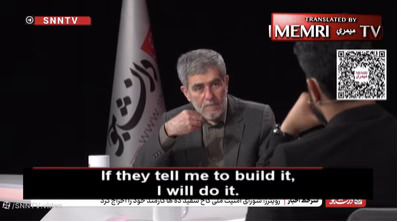
Abbasi: “If they tell me to build it, I will do it.”
Abbasi’s Nuclear Boasts and Open Threats
In late May 2025, Fereydoon Abbasi, Iran’s former nuclear chief, delivered a chilling interview that laid bare Tehran’s nuclear ambitions. With striking candor, he boasted of Iran’s ability to build a nuclear weapon, stating: “We reached the capability to build a [nuclear] weapon 15–20 years ago… If they tell me to build it, I will do it.” He detailed how Iran’s scientists could swiftly enrich uranium to 90%—weapons-grade—using various methods (laser, electromagnetic, or centrifuge) and dismissed attacks on nuclear facilities as “inconsequential” to Iran’s timeline. This was a stark admission: once the order is given, Iran could achieve a nuclear breakout rapidly, and conventional airstrikes might not stop it.
Abbasi didn’t stop at technical boasts. He issued direct threats to Israel, warning that if the “Resistance Front” (Iran and its proxies) faced harm from the “Zionist regime,” no part of Israel—civilian or military—would be safe. He urged Israelis to flee, ominously declaring those who remain “complicit” and calling for their elimination by the Islamic world. His rhetoric echoed Iran’s longstanding goal of Israel’s destruction. More disturbingly, he hinted at “advancements in technology” enabling smaller, tactical nuclear devices—ones that “may not fall under the definition of WMDs” like Hiroshima’s bombs but could destroy a military base. He even suggested attacks might come “from within,” raising the specter of covert nuclear terrorism. These statements revealed not just capability but intent: Iran was prepared to wield nuclear weapons aggressively, not merely as a deterrent.
Abbasi’s words obliterated Iran’s decades-long claim of a peaceful nuclear program. Here was a regime insider confirming Israel’s gravest fears—Tehran could build a bomb and was ideologically committed to using it. As a U.S. commentator observed, “His words reflect what the regime believes and intends if armed with nuclear weapons.” For Israel, this was the smoking gun, justifying urgent action.
An Existential Threat Israel Couldn’t Ignore
For Israel, Abbasi’s interview transformed a theoretical danger into an immediate crisis. Prime Minister Benjamin Netanyahu had long framed Iran’s nuclear program as an existential threat—a mortal risk to Israel’s survival. Now, a senior Iranian official was on record touting the means and motive to make that threat real. Israeli intelligence already indicated Iran’s weaponization research had advanced, enabling a faster breakout. Plans for a new, deeply buried enrichment site—resistant even to U.S. bunker-busting bombs—further tightened the timeline. Abbasi’s confirmation of “nuclear readiness” and hidden, resilient facilities signaled that delay could be fatal.
His mention of “less powerful” nukes added a chilling twist. Tactical nuclear weapons, usable against military targets without apocalyptic fallout, suggested Iran might see such an attack as justifiable—or deniable. For Israel, this was untenable: a nuclear-capable Iran, even without city-destroying ICBMs, posed an imminent danger and threat. Abbasi’s own admissions left no room for doubt—Israel faced a closing window to act.
Netanyahu’s Push and Trump’s Resolve
Netanyahu seized this moment to rally U.S. support. Re-elected in January 2025, President Donald Trump initially favored negotiations with Iran, urging Israel to avoid unilateral strikes. But behind closed doors, Netanyahu pressed the case, armed with Abbasi’s damning quotes and fresh intelligence on Iran’s breakout capacity. The interview became his trump card—proof that diplomacy was futile against a regime bent on Israel’s annihilation. By early June, he secured Trump’s tacit approval for preemptive action, leveraging their shared doctrine of “peace through strength.”
On June 12–13, 2025, Israel launched Operation Rising Lion, striking Iran’s nuclear and missile sites with unprecedented force. Jets, drones, and commandos targeted Natanz, Fordow, and key figures—including Abbasi himself, killed in the raids. Yet, some fortified sites, like Fordow, required heavier firepower. Netanyahu turned to Trump, who deployed B-2 stealth bombers armed with 30,000-pound bunker-busters. On June 22, in Operation Midnight Hammer, U.S. and Israeli forces attacked Iran’s key nuclear facilities, showcasing American might and Israeli resolve.
A Pivot in History
Trump hailed the strikes as a triumph, declaring Iran’s nuclear ambitions “completely obliterated.” Netanyahu praised Trump’s “bold decision,” crediting him with altering history by denying Iran the bomb. While Iran’s retaliation raged, the joint operation bought time—perhaps years—averting a nuclear nightmare. Abbasi’s hubris had backfired, galvanizing action that left Iran reeling. His threats, meant to intimidate, instead forged an alliance that struck with devastating precision, proving that when a regime vows genocide and pursues the means to achieve it, the world must respond with unrelenting strength.


