Salman Rushdie and the wounded imagination
From Britain’s cosmopolitan rise to Its fractured decline
Note: This is my third article on British Imagination. The first one was published as “The Tragedy of the British Imagination,” here. The second one called “Beyond Kings and Queens,” here. For Iain McGilchrist’s hemisphere hypotheses. Check here, here, here, and here.
By Khaled Salih
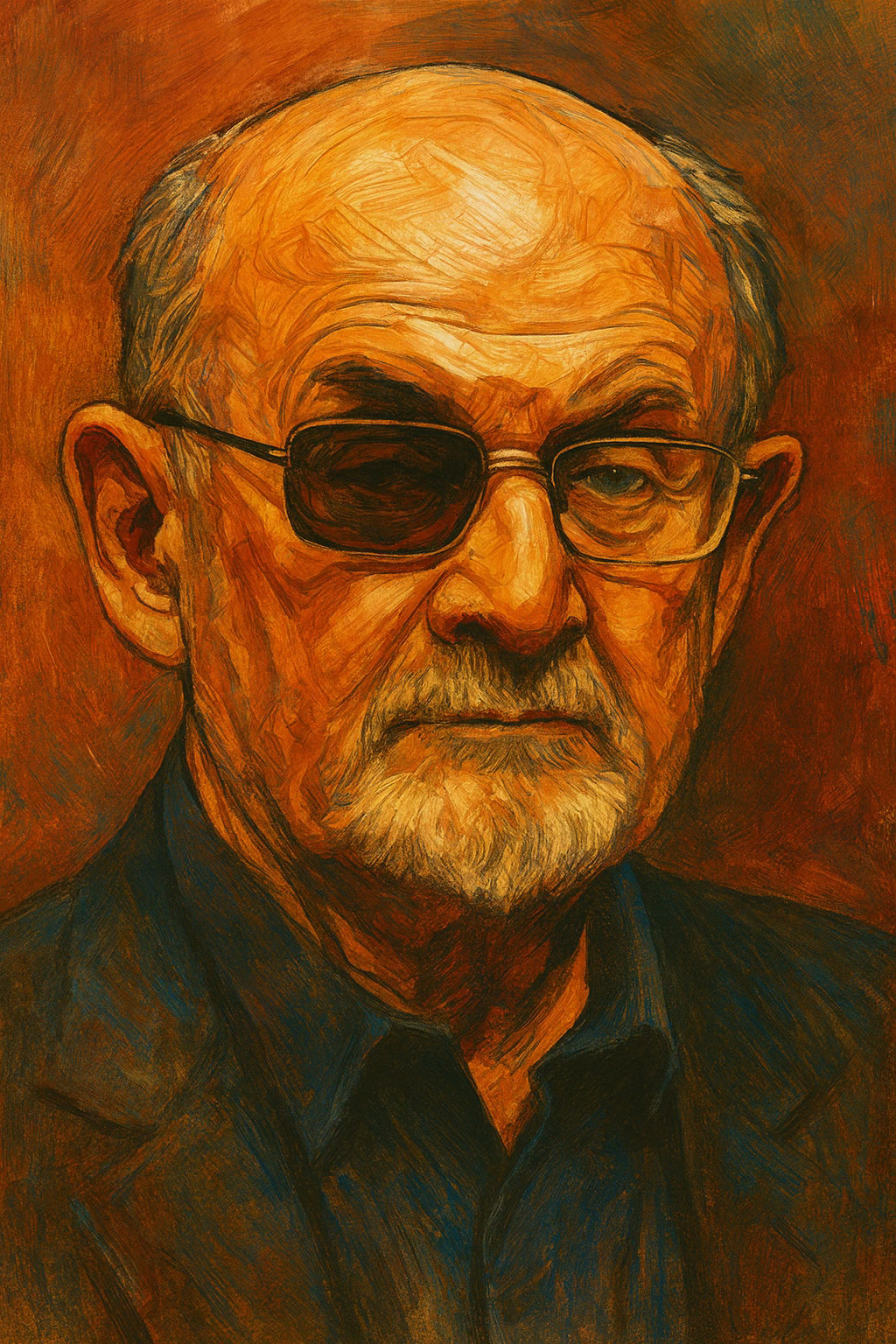
Salman Rushdie, the master of metaphor and complex narrative
Blood pooled on the stage, the audience frozen in shock, and yet Ralph Henry Reese lunged forward, grabbing the attacker’s legs as fellow supervisor Patrick Haskin hurled himself across the assailant’s body. In those frantic seconds during a 2022 lecture in New York, the two men helped stop the stabbing of novelist Salman Rushdie, an act of instinctive courage that has now earned them the Carnegie Hero Medal.
Peter Watson’s The British Imagination: A History of Ideas from Elizabeth I to Elizabeth IIimmediately establishes a monumental scope, arguing that the history of Britain is “arguably the most important ‘national’ history precisely because it has been the most intertwined with, and influential upon, other histories worldwide” across political, economic, social, and cultural dimensions. Drawing heavily on external reports, the book posits that British history offers the “best single avenue of inquiry” into the large processes of “globalisation.” He emphasises the unique position the British occupy in human history as the originators of industrialism and the creators of the first “world market” and “world system.” This narrative extends beyond local affairs, moving onto nothing less than a “planetary scale” that “extends itself into Oceanic, American and global dimensions.” By setting the historical parameters from Elizabeth I to Elizabeth II, Watson prepares the reader for a comprehensive intellectual journey charting the country’s ascent from a territory once conquered by the French in 1066 and mired in turbulent wars, to an influential global power, exploring how ideas forged within its borders came to profoundly shape the modern world.


