Rojava’s Warhead Metamorphosis: Long Story Short
20 February 2026
Yesterday I published the full, long-form version of “Rojava’s Warhead Metamorphosis.” A few friendly readers wrote to say: give us the argument without the scaffolding—shorter, sharper, more poignant. So here it is: the same thesis, condensed to its nerve. Long story short. Argument distilled.
The Neuro-Strategy of Survival
In the clinical reality of geopolitical upheaval, history does not grade on intentions. This autopsy analyses the Democratic Autonomous Administration of North and East Syria (DAANES), or Rojava, through a neuro-strategic lens. Survival in the Levant is a function of cognitive agility, specifically the management of the Warhead—the internal cognitive framework used to interpret reality—and the resolution of Prediction Error—the systemic failure of that model when faced with lethal environmental data.
Rojava’s persistence through the collapse of 2024–2026 was not a result of revolutionary fervour, but of its leadership’s ability to “kill its own sacred illusions.” By executing a rapid metacognitive update, the movement transitioned from a utopian revolutionary warhead to a pragmatic model of entering a process of integration, prioritising biological continuity over ideological purity.
The Utopian Warhead
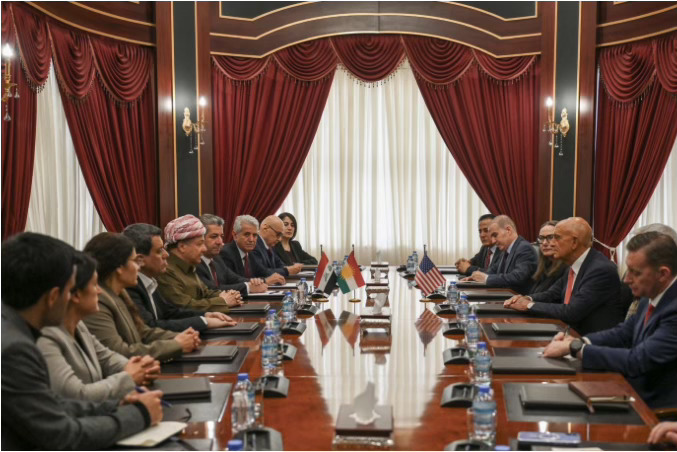
Prior to the systemic shocks of 2024, Rojava operated as a Specialist (Left Hemisphere) cognitive machine. This Utopian Warhead was a rigid model that prioritised internal stability and ideological consistency over fluid manoeuvring. It functioned as a “Controlled Model of Perception,” predicated on the “Third Way” prediction: the belief that the Syrian state would remain in terminal decay, allowing permanent autonomy, while excluding other Kurdish forces and alternative nationalist parties and movements.
The ideological framework of the Utopian Warhead is constructed upon four core pillars, each pairing a conceptual objective with a specific neuro-strategic function. The primary pillar, Democratic Confederalism, serves to bypass rigid Westphalian constraints through the promotion of post-state governance. This is closely integrated with the second pillar, Grassroots Democracy, which is designed to effectively decentralise risk and responsibility through communal nodes. Furthermore, the movement places a strong emphasis on Jineology (the science of women), which functions to actively deconstruct traditional power maps to ensure social agency and total gender equality. Finally, the pillar of Social Ecology seeks to establish a sustainable economic warhead, providing the necessary resource resilience and balance with nature for the movement to endure.
This era was defined by the “Theory of the Rose”: the belief that the revolution (the flower) required the YPJ (the thorns) only for defense. This was an Infinite Game focused on the perpetual maintenance of a revolutionary community outside the state at the expense of other alternatives of pragmatic politics.
The 2024 Prediction Error
In December 2024, the “Third Way” prediction suffered a catastrophic failure. The rapid collapse of the Ba‘thist order and the fall of Damascus to Hay’at Tahrīr al-Sham (HTS) invalidated the revolutionary model. The rise of Ahmed al-Sharaa (formerly al-Julani) presented a jihādi-inflected Arab revanchism that viewed the secular, feminist Kurdish project as a heretical target.
The Ritual of Erasure (January 2026). The existential crisis was punctuated by a “Sensory Overload” in Aleppo’s Sheikh Maqsoud district. The desecration of the Kurdish fighter Denîz Chiya and the ritualistic cutting of fallen fighters’ braids served as an “ideological ritual of absolute subjugation.” Notably, the perpetrator was identified as an Egyptian Arab-Islamist extremist, signaling that the threat was a manifestation of a foreign Arab Imperium rather than a local civil dispute. The message was clear: “the red blood of the Kurd is cheap, like pomegranate juice.” This event shattered the previous predictive model, proving the “thorns” were being shorn by a state apparatus with the fervour of a jihādi resurgence.
The Metacognitive Pivot
Faced with the “Lethal Compliance Trap,” General Mazloum Abdi and Ilham Ahmed demonstrated high-level metacognition by updating their Bayesian priors. They recognised the environment had shifted from a low-intensity struggle to a Lethal Finite Game.
The leadership executed a transition from the “Politics of Revolution” (autonomy outside the state) to the “Politics of Presence” (survival inside the state).
The overarching ideological framework underwent a crucial neuro-strategic reframing, providing the necessary sanction for a radical pivot. By redefining integration with the central government as a “Peace Offensive,” the new strategic directive posited that the genuine “liberation of society” was fundamentally impossible without bringing an end to the conflict. This profound cognitive update allowed the Rojava leadership to dismantle autonomous military structures in exchange for constitutional guarantees, empowering them to prioritise “Biological Continuity”—the physical survival of the Kurdish people—over the unsustainable maintenance of an unrecognised statelet
The Corridor of Survival
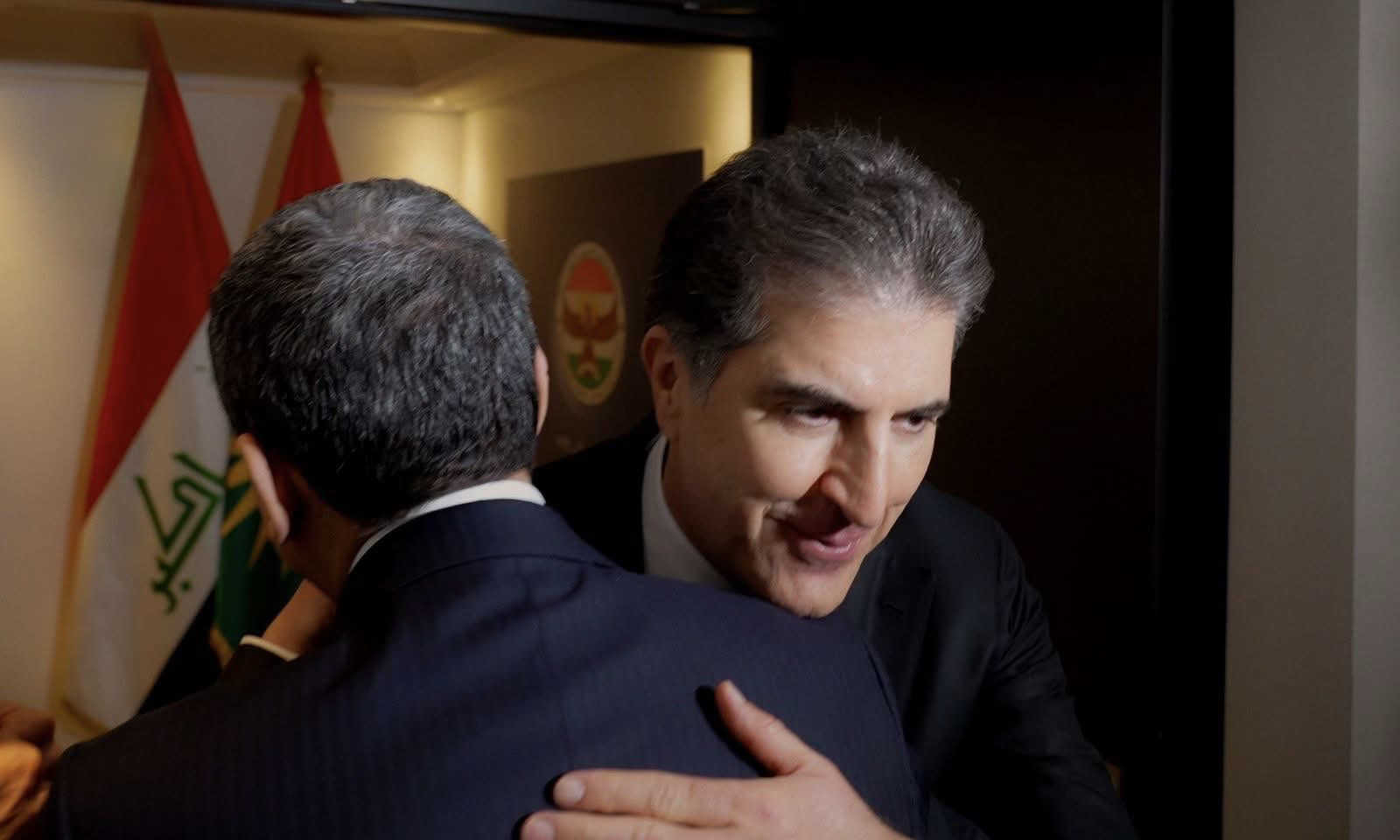
Rojava’s “managed retreat” was underpinned by a strategic alignment of the Kurdish world. The Kurdistan Region (KR) in Iraq functioned as a vital Corridor of Survival.
- Diplomatic Protection: KDP President Masoud Barzani, KR President Nechirvan Barzani, and KR PM Masrour Barzani served as indispensable intermediaries, protecting Rojava from total annihilation during negotiations.
- The Creed of Bedyal: This cross-border unity was reinforced by indigenous solidarity with the Druze of Suwayda. Catalysed by Osama Attar’s cinematic anthem Rojava, the two groups resurrected the “creed of Bedyal”—a pact of “shared death over a divided life,” refusing to betray one another to HTS.
Embracing the change; embracing the support
Adaptive Metamorphosis vs. Ideological Rigidity
Rojava’s success stands in stark contrast to the failure of Hamas in Gaza. Hamas operated on anti-rational memes—ideological constructs immune to corrective feedback. They ignored the “Iron Cage of necessity”—the Hypothalamus’s biological drive for food and safety—in favor of rigid Left-Hemisphere abstractions of martyrdom.
The strategic contrast between Rojava’s adaptive approach and Hamas’s rigid methodology is stark across four key attributes. First, their learning rates (α) are diametrically opposed: Rojava exhibits a high learning rate characterised by rapid strategy updates, whereas Hamas demonstrates zero learning, remaining paralysed by ideological stagnation. This difference directly influences their primary utility; Rojava prioritises “bio-mass survival” by focusing on the physical preservation of its people, while Hamas prioritises “ideological-mass survival,” sacrificing its population to preserve an abstract idea. Furthermore, their cognitive maps diverge significantly. Rojava navigates its geopolitical environment with a multi-polar, fluid, and pragmatic mindset, which stands in sharp contrast to Hamas’s binary, static, and resistance-focused worldview. Ultimately, these fundamental cognitive differences dictate their game theory trajectories: Rojava has successfully negotiated a transition into a pragmatic finite game to ensure its survival, while Hamas remains hopelessly trapped in a self-destructive finite game.
Hamas’s failure resulted in a “poker-player’s ruin,” sacrificing infrastructure and biological host for a static ideology, whereas Rojava recognised that the host must survive for the ideology to eventually endure.
The München Moment
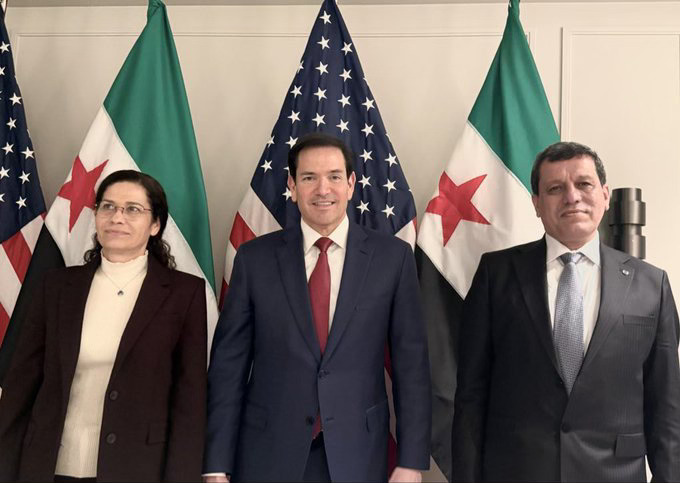
The metamorphosis was finalised at the 2026 München Security Conference. Kurdish leaders leveraged Ahmed al-Shara’s “Suit and Tie Fallacy”—his tactical attempt to secure Western legitimacy—to execute the “Saladin Gambit.” Negotiating as part of a Syrian delegation alongside Foreign Minister Asaad al-Shaibani and figures like Marco Rubio and Emmanuel Macron, the Kurds secured their future as a sovereign political entity.
Implementation Metrics (January 29th Agreement):
- SDF Integration (3+1 Brigades): The SDF to be integrated as a division within the national army, including a specific brigade from Kobani linked to Aleppo province, preserving military bio-mass.
- Decree 13: May secure legal permanence by recognising Kurdish as an official language.
- Administrative Handover: Transferring border and oil control to Damascus re-established state sovereignty while shedding the “burden of sovereignty” (e.g., managing ISIS camps).
- YPJ Protections: Put specific anchored mechanisms to ensure the gender equality gains of Jineology were not erased by the new patriarchal state apparatus.
The Wisdom of Abandoned Illusions
The Rojava metamorphosis confirms that strategic wisdom begins with the abandonment of sacred illusions. By identifying their prediction error and navigating the “Lethal Compliance Trap,” the leadership transformed a fragile utopian dream into a potentially durable reality. They traded ideological purity for the continued physical, linguistic, and cultural existence of the Kurdish people. The Dawn of Rojava is no longer a revolutionary brochure; it is a prophecy of survival authored by those with the courage to update their map when the world turned cold. They only safely net left to save them from an irreversible calamity was Kurdish solidarity to the east.


