Project Baseline: Evolutionary Memetics of the Ancient Levantine Deity
3 April 2026

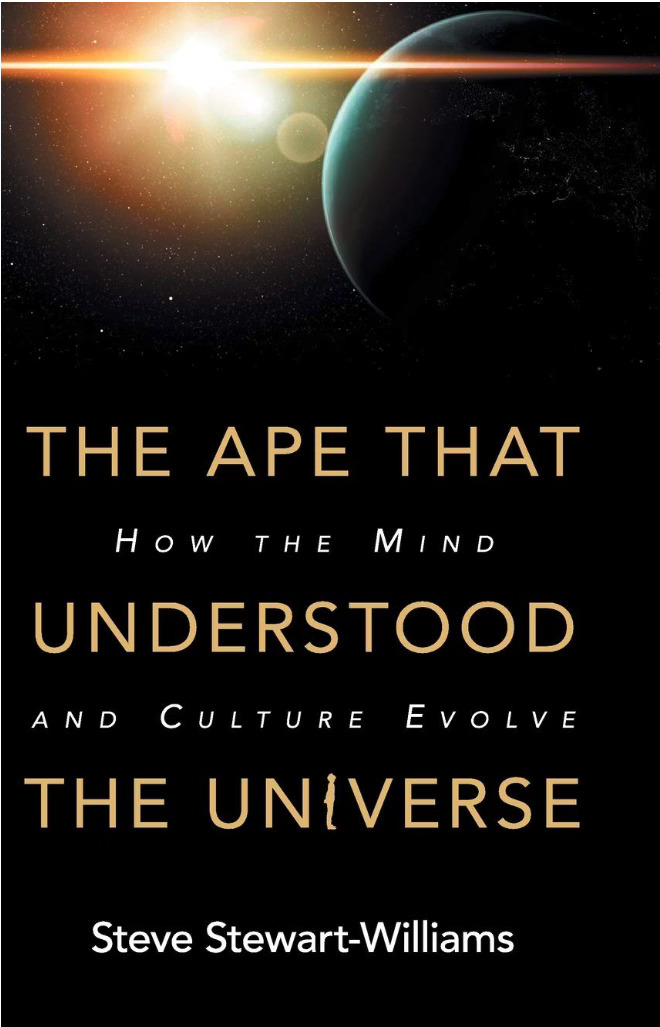
Because a standard, mildly appreciative human book review of Francesca Stavrakopoulou’s God: An Anatomy would simply be too pedestrian, I have decided to outsource the intellectual heavy lifting to an imaginary extraterrestrial. That’s right, I have borrowed Steve Stewart-Williams’ hyper-rational, gloriously detached Alien Scientist to systematically dissect this ancient Levantine deity. After all, who better to objectively evaluate the bizarre phenomenon of ancient apes projecting their own bipedal, digesting, and reproducing biological wetware onto a cosmic supreme being than a xenobiologist from another galaxy? I must admit that I have been entirely hijacked by his meme, the Alien Scientist. Forgive me Stewart-Williams.
The Alien’s Gaze
From a clinical xenobiological perspective, the terrestrial phenomenon characterized as theology is a crude form of biological mirror-imaging. To analyze the ancient Levantine deity, we must employ de-familiarization, the systematic stripping of the subject species’ sentimentality to observe the deity as a biological artifact projected by bipedal primates. These organisms, limited by their own metabolic and structural constraints, were incapable of conceptualizing power without mapping it onto their own physiological wetware. Analysis of the Levantine Dataset indicates that the “god” phenomenon is essentially a high-maintenance biological construct, a supersized version of the primate specimen, optimized for territorial dominance and nutrient acquisition.
The “puzzle of the corporeal god” is resolved when we recognize that for these ancient apes, existence was synonymous with tangibility and spatial placement. The biological wetware projected onto the cosmic scale is evident in the deity’s structural requirements. Primate Inscriptions and archaeological remnants at ‘Ain Dara reveal one-meter-long footprints, signaling a construct with massive territorial appendages that “arrived” at specific stone coordinates (temples). This entity was not an abstract force but a respiratory machine requiring metabolic inputs, the “sweet-smelling” aromas of roasted meat, to satisfy a projected digestive and sensory apparatus. Furthermore, the specimen records from Hazor demonstrate that these primates projected their own status-signaling technology, such as “wedged heels” and “sandals of status,” onto the divine anatomy to reinforce hierarchies within the breeding pool. These massive territorial feet were also utilized for trampling chaos-monsters like Leviathan. These biological projections provided the necessary structural foundations for the complex social behaviors and survival strategies.
The Evolutionary Psychology (EP) Engine
Evolutionary Psychology (EP) serves as the strategic lens for decoding how these religious projections functioned as solutions to ancestral survival problems. By projecting the Alpha Male archetype onto the cosmic environment, the Levantine breeding pool created a divine guarantor for reproductive and territorial success.
Parental Investment & Sexual Selection
The Levantine Dataset reveals a “weaponized phallocentrism” inherent in the deity’s design. This Alpha Male projection served a critical evolutionary function: managing male-male competition and asserting reproductive dominance. Specifically, divine genitals were projected as mechanisms for ‘seeding’ specific geographic areas, such as the Jezreel territory. The deity’s weaponry is frequently described in sexualized terms; the “bow” is analyzed as an ejaculating phallus, a “bow of nakedness” that shoots lightning-semen to order the cosmos. This phallic masculinity is further reinforced by narratives of self-procreation. By “birthing” the first primate from the dust or “spitting” secondary deities from the mouth, the deity bypasses the need for female genetic contribution, asserting a supreme reproductive monopoly. This “Bull” archetype validated the patriarchal structures of the human primate groups.
Kin Selection & The Sensorium
Applying Hamilton’s Rule (rb > c), we observe that the framing of the deity as a “nepotistic father” served to promote kin altruism within the Israel genetic group. By establishing the deity as a common “super-kin” ancestor, the memeplex artificially inflated the relatedness (r) of the population. This mechanism lowered the perceived cost (c) of altruistic behavior among unrelated tribesmen, facilitating group cooperation against external competitors.
The deity’s emotions are not abstract; they are situated in specific biological wetware designed to regulate the breeding pool’s social friction:
- Bowels: The primary site of visceral pity and compassion; the seat of internal emotional response toward the kin group, functioning to reduce internal social friction.
- Heart: The center for cognitive decision-making and executive will; the organ of “willful” strategy.
- Nose: The indicator of wrath; a physiological reaction characterized by the expulsion of sulfur and heat, signaling territorial or social defense.
- Hand/Yad: A linguistic adaptation used to mask reproductive wetware; utilized in inscriptions to link divine action directly to tribal fertility and agricultural output.
- Back/Torso: The structural core functioning as a restricted social boundary, as observed in the Moses encounter where viewing the “back” marked the limit of terrestrial access.
While this biological wetware provided the initial “god” form, it was cultural software, Memetics, that enabled the construct to scale beyond the limitations of tribal biology.
The Cultural Evolution Engine
Memetics provides the strategic framework for analyzing how religious ideologies survive and scale across diverse and changing environments.
The Big God Adaptation
The transition from a localized, corporeal storm-deity to an “abstract, invisible Big God” was a crucial memetic upgrade. The Levantine Dataset shows evidence of systematic historical censorship, such as the removal of the consort Asherah and the allegorization of the deity’s body by elite theological “janitors” (e.g., Clement of Alexandria). This “bodiless memeplex” functioned as a firewall against the destruction of physical wetware. If the deity has no body to be captured and no temple that can be “killed,” the god-meme cannot be executed or deleted by an invading army. This adaptation ensured group cohesion across the diaspora even after the destruction of the physical Jerusalem terminal.
Learning Biases & Memetic Defense
The survival of the deity was further secured by “Prestige Bias.” Elite scribes utilized the high-status philosophical concepts of the Greek dataset (Plato/Aristotle) to rewrite the deity’s parameters. This neutralized the skepticism that naturally arises when a deity’s biological requirements, such as “giant feet” or “genitals,” become a liability in a philosophical environment.
Memetic Defense Mechanisms
- Allegorization: Redefining corporeal descriptions (e.g., “footstool”) as symbolic abstractions (e.g., the Cross) to hide the underlying biological projection.
- Spiritualization: Claiming that physical interactions, such as walking in a garden, were the movements of a pre-existent “Word,” effectively decoupling the meme from its biological origins.
- Accommodation Theory: The claim that the deity merely “accommodated” primate limitations by using body language as a metaphor, encrypting the deity’s “true” nature behind a layer of linguistic obfuscation.
This “Big God” adaptation resolved the tension between ancient tribal biology and imperial scaling, allowing the deity to survive the transition from image to word.
Gene-Meme Coevolution & The Islamic Comparative Bridge
The “Mismatch Hypothesis” predicts that biological adaptations suited for a specific environment become maladaptive when that environment shifts. The corporeal Levantine god became a “mismatch” in an era of globalized urban philosophy, necessitating the more abstract “Software Patch” seen in the islāmic iteration.
The Mismatch Hypothesis
A deity with genitals and metabolic dependencies is a liability in an interconnected, “post-tribal” world. Selective pressure favored a model that maintained the “Big God” surveillance benefits (omniscience) while shedding the embarrassing biological requirements of the “Yahweh 1.0” wetware.
Predictive Hypotheses for the islāmic Memeplex
Based on the deconstruction of the baseline Levantine dataset, the following trajectories represent “Memetic Upgrades” for the deity’s continued survival:
- The tawhīd Encryption: The absolute rejection of divine procreation (tawhīd) functions as a memetic defense against the “inherited hyper-sexualization” and “reproductive monopoly” flaws inherent in the earlier Alpha Male model. By declaring the deity “neither begets nor is begotten,” the memeplex immunizes itself against biological deconstruction.
- tanzīh vs. Anthropomorphism: There will be sustained tension between scriptural artifacts (Hands, Face, Eyes) and the drive for total transcendence (tanzīh). The bi lā kayf (without asking how) maneuver serves as a defensive encryption to prevent logical analysis of the remaining biological wetware.
- Universal Scalability Adaptation: The “Big God” model is optimized for maximum scaling across non-kin groups by utilizing a “path” (shariᶜah) that replaces localized tribal rituals with a universalized memetic framework, ensuring the survival of the meme across diverse genetic populations.
This re-branded baseline establishes the parameters for the next phase of observation: the analysis of the islāmic iteration as a highly successful evolutionary refinement of the Levantine god-meme.