Part IV of Kurdistanî Azad is now available
Note
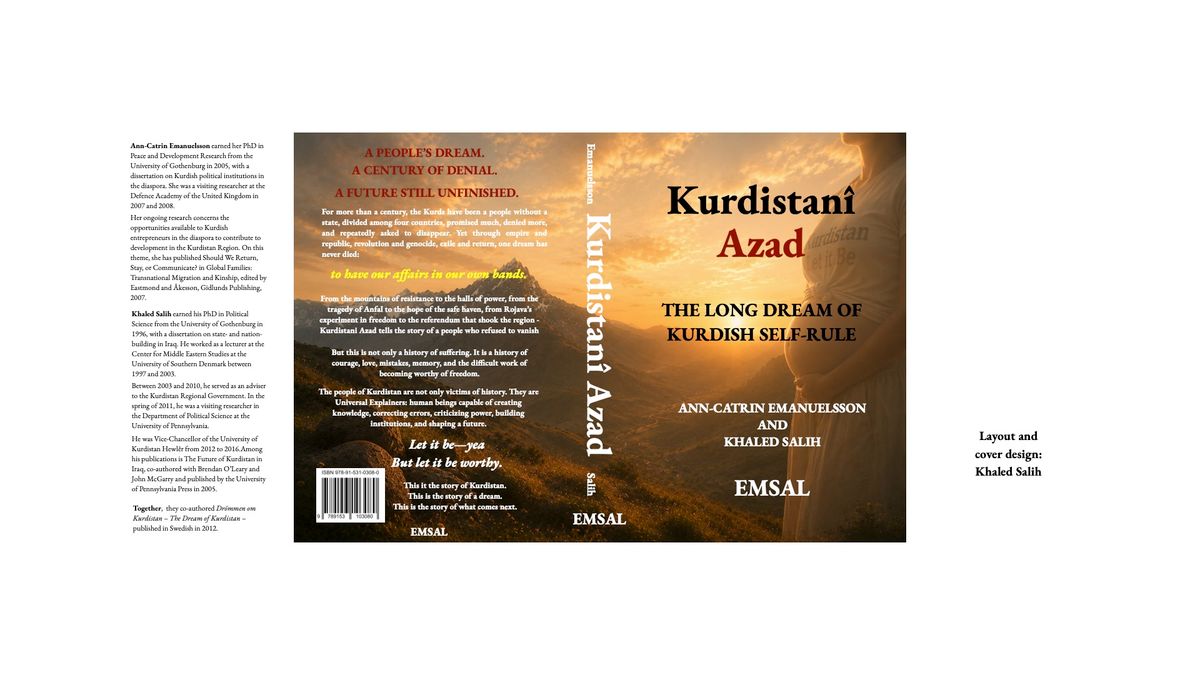
Today, we are publishing Part IV of Kurdistanî Azad: The Long Dream of Kurdish Self-Rule. As the narrative approaches the present, the Kurdish story becomes one of extraordinary resilience, painful setbacks, and moments that transformed both Kurdistan and the wider Middle East. These chapters examine not only the struggle for self-rule, but also the political ideas, institutions, and choices that continue to shape the Kurdish future.
If you have not yet joined us, consider subscribing. We are publishing the complete book in five parts, giving subscribers access to a work that brings together history, political philosophy, and firsthand experience to illuminate more than a century of the Kurdish question.
By subscribing to The Kurdish Dream of Self-Rule on Guerre & Shalom, you will also gain access to a growing collection of books, essays, and long-form research exploring Kurdistan, the Middle East, and the ideas that shape our world.
If you would like to explore the project first, the Authors’ Prologue and additional introductory material are available free of charge, and Parts I, II, and III can be found in our earlier Substack releases.
We hope you will join us for the final stages of this journey.
Part III — The Age of Armed Movements
When politics is denied, the weapon can make a people visible; when criticism is denied, the weapon can make the people disappear into the movement.
Part III Introduction
The Age of Armed Movements
When ordinary politics is denied, revolution becomes a language of hope
Part III follows the Kurdish struggle as it enters the age of armed movements: KDP, KDPI, PUK, PKK, Komele, Pêşmerge, guerrillas, underground parties, prisoners, martyrs, exiles, students, women, workers, and diaspora organizers. This is the period in which Kurdish politics becomes modern, ideological, transnational, militarized, and unavoidable.
This introduction argues a double claim: armed movements often emerged because peaceful correction had been blocked, but armed authority itself must remain open to criticism once it claims to speak for the people.
This is where the book must guard against armed-movement fungibility. A people denied ordinary politics may need fighters, parties, mountain bases, prisons, martyrs, clandestine newspapers, and armed discipline in order to survive and become visible. But the people must never become interchangeable with the armed movement that defends them. The Pêşmerge is not the citizen. The party is not the people. The martyr is not the future. The mountain is not the constitution. The commander is not Kurdistan. Armed struggle may carry the dream under abnormal pressure; it must not become the dream’s owner.
The armed movements did not emerge because Kurds were naturally drawn to violence. They emerged because treaties had failed, mandates had failed, monarchies had failed, republics had failed, self-rule promises had failed, cultural rights had been denied, and ordinary political channels had repeatedly been closed. When constitutional roads were blocked, armed struggle appeared to many Kurds not as one option among many, but as what seemed to be the last language states could not easily ignore.
Objection: Armed movements still made choices. They were not only products of repression. They could misjudge strategy, silence rivals, harm civilians, glorify sacrifice, or place party survival above public freedom.
Correction: That objection is necessary. The fact that states blocked peaceful correction explains why armed struggle became thinkable and often unavoidable; it does not make every armed decision wise, moral, or immune from criticism.
That is why armed struggle must first be understood as a symptom of blocked correction. When a people cannot speak, vote, organize, teach, publish, administer, or appeal without being treated as a threat, the mountain can become the last remaining political institution. But explanation must not become absolution. A weapon may keep a people visible under denial; it cannot by itself teach a society how to govern freely.
The mountain can preserve a people from disappearance, but it cannot substitute for law, pluralism, public accountability, or civilian institutions.
The anti-fungibility rule is therefore simple: honor the mountain without allowing the mountain to replace the public square. The mountain may protect language, memory, and life when the state has closed every legal road. But a free society requires spaces where the unarmed citizen, critic, woman, journalist, teacher, rival party, and frightened dissenter can speak without being treated as weakness or betrayal. If the mountain becomes the only model of authority, survival begins to govern life instead of serving it.
This part must be read with moral discipline.


