Part III of Kurdistanî Azad: The Age of Armed Movements
9 July 2026
Note:
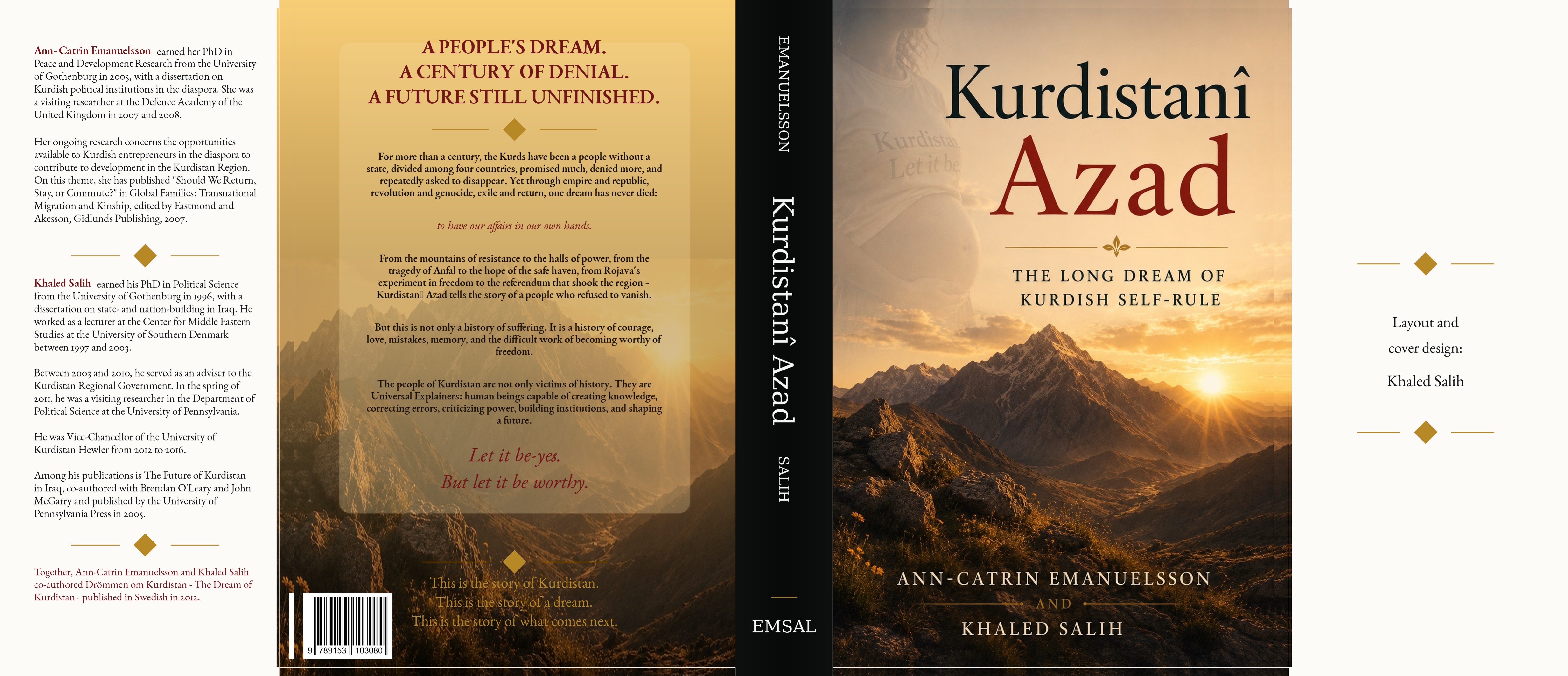
Today we publish Part III of Kurdistanî Azad: The Age of Armed Movements.
The book has so far followed the Kurdish dream before and after the modern states enclosed it. Part I traced the dream before the states: before borders hardened, before sovereignty became a cage, before Kurdish life was forced to appear through the official categories of others. Part II then followed the states against the dream: Turkey, Iraq, Iran, and Syria each tried, in different ways, to turn Kurdish existence into a problem to be managed, assimilated, denied, or crushed.
Part III begins where politics has been blocked for too long.
When a people is denied ordinary political recognition, revolution can become more than strategy. It becomes language. It gives the silenced a grammar of hope. It tells the unseen: you are still here. You can still act. You can still refuse disappearance.
But this part of the book does not romanticize armed struggle. It asks the harder question: what happens when the weapon that makes a people visible also begins to speak in the people’s name? What happens when sacrifice becomes authority, when suffering becomes legitimacy, and when criticism is treated as betrayal of the struggle?
Chapter 8, “Revolution as a Language of Hope,” begins with the dignity of resistance. It shows why revolution can become necessary in a world where ordinary politics is closed. For many Kurds, armed movements were not born from impatience but from accumulated denial. They emerged because states had made peaceful correction nearly impossible.
Chapter 9, “My Allâh, Your Punishment,” moves into the moral and psychological terrain of power, humiliation, fear, and revenge. It asks what kind of world is created when domination is not only military or administrative, but also existential: when punishment enters memory, faith, family, and the inner language of survival.
Chapter 10, “The Nightmare,” brings the reader to the darkest consequences of this history. The Kurdish dream was not only opposed by state policy. It was pursued by systems willing to destroy villages, bodies, names, landscapes, and futures. The nightmare is what happens when a state stops seeing a people as citizens to be governed and begins treating them as an obstacle to be removed.
Part III is therefore about both necessity and danger.
It understands why Kurdish armed movements emerged. But it also insists that no movement, however heroic its origins, can be allowed to become larger than the people. The Kurdish dream cannot end in the sanctification of the weapon, the party, the commander, or the martyr. A free Kurdistan must remember the courage of resistance without losing the right to criticize those who resist in its name.
This is the central tension of Part III:
When politics is denied, the weapon can make a people visible; when criticism is denied, the weapon can make the people disappear into the movement.
Kurdistanî Azad is not a book against resistance. It is a book against protected error. It asks how a people can survive oppression without making oppression’s logic its own. It asks how Kurds can honor sacrifice without surrendering judgment. It asks how the dream of freedom can pass through revolution, punishment, and nightmare — and still remain a dream of human dignity, not merely victory.
Today’s chapters enter that difficult terrain.
Part III — The Age of Armed Movements
When politics is denied, the weapon can make a people visible; when criticism is denied, the weapon can make the people disappear into the movement.Part III Introduction
The Age of Armed Movements
When ordinary politics is denied, revolution becomes a language of hope
Part III follows the Kurdish struggle as it enters the age of armed movements: KDP, KDPI, PUK, PKK, Komele, Pêşmerge, guerrillas, underground parties, prisoners, martyrs, exiles, students, women, workers, and diaspora organizers. This is the period in which Kurdish politics becomes modern, ideological, transnational, militarized, and unavoidable.
This introduction argues a double claim: armed movements often emerged because peaceful correction had been blocked, but armed authority itself must remain open to criticism once it claims to speak for the people.
This is where the book must guard against armed-movement fungibility. A people denied ordinary politics may need fighters, parties, mountain bases, prisons, martyrs, clandestine newspapers, and armed discipline in order to survive and become visible. But the people must never become interchangeable with the armed movement that defends them. The Pêşmerge is not the citizen. The party is not the people. The martyr is not the future. The mountain is not the constitution. The commander is not Kurdistan. Armed struggle may carry the dream under abnormal pressure; it must not become the dream’s owner.
The armed movements did not emerge because Kurds were naturally drawn to violence. They emerged because treaties had failed, mandates had failed, monarchies had failed, republics had failed, self-rule promises had failed, cultural rights had been denied, and ordinary political channels had repeatedly been closed. When constitutional roads were blocked, armed struggle appeared to many Kurds not as one option among many, but as what seemed to be the last language states could not easily ignore.
Objection: Armed movements still made choices. They were not only products of repression. They could misjudge strategy, silence rivals, harm civilians, glorify sacrifice, or place party survival above public freedom.
Correction: That objection is necessary. The fact that states blocked peaceful correction explains why armed struggle became thinkable and often unavoidable; it does not make every armed decision wise, moral, or immune from criticism.
That is why armed struggle must first be understood as a symptom of blocked correction. When a people cannot speak, vote, organize, teach, publish, administer, or appeal without being treated as a threat, the mountain can become the last remaining political institution. But explanation must not become absolution. A weapon may keep a people visible under denial; it cannot by itself teach a society how to govern freely.
The mountain can preserve a people from disappearance, but it cannot substitute for law, pluralism, public accountability, or civilian institutions.
The anti-fungibility rule is therefore simple: honor the mountain without allowing the mountain to replace the public square. The mountain may protect language, memory, and life when the state has closed every legal road. But a free society requires spaces where the unarmed citizen, critic, woman, journalist, teacher, rival party, and frightened dissenter can speak without being treated as weakness or betrayal. If the mountain becomes the only model of authority, survival begins to govern life instead of serving it.
This part must be read with moral discipline.


