Part II — The States Against the Dream of Kurdistanî Azad
By Ann-Catrin Emanuelsson & Khaled Salih
23 June 2026
Today we release Part II — The States Against the Dream of Kurdistanî Azad.
Part I followed the Kurdish dream before the modern states: a lived world of mountains, villages, languages, memories, religious networks, principalities, and imperfect forms of self-rule. It ended with the irreversible passage from empire to state, when Sèvres briefly opened a door, Lausanne closed it, and Kurdish life was divided among recognized sovereignties.
Part II asks what happened next. The dream did not disappear. It was enclosed. Turkey answered it in the name of civilization and national homogenization. Iraq answered it through mandates, monarchy, broken promises, and later Arab nationalism. Iran answered it through openings that became traps when the center recovered. Syria answered it through silence, statelessness, Arabization, and administrative invisibility.
The chapters in this part are: Part II Introduction: The States Against the Dream; In the Name of Civilization; Kings, Mandates, and Broken Promises; Republics, Revolutions, and Traps; and Syria: Silence, Denial, and Survival.
The methods differed. The structure repeated: Kurdish self-rule was renamed as rebellion, backwardness, separatism, disorder, or danger. Part II follows that state vocabulary, not to flatten four histories into one, but to show how different states protected different maps by making Kurdish correction appear as a threat.
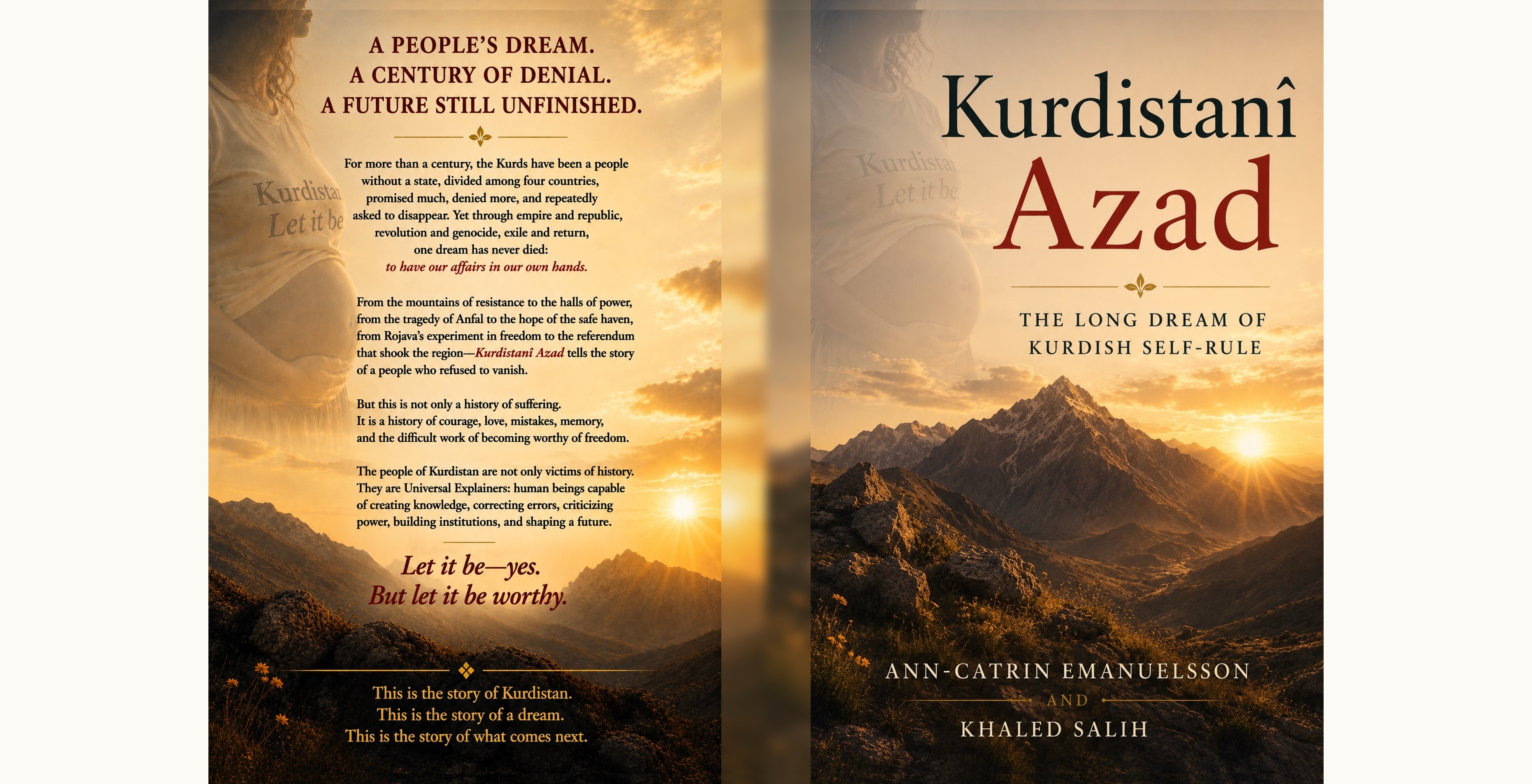
Part II — The States Against the Dream
The modern state did not only divide Kurdistan; it taught Kurdish life to appear through the categories of others.
Part II Introduction
The States Against the Dream
This introduction has one task: to state the comparative claim of Part II without flattening four different states into one identical story.
Once the modern Middle East had been drawn into states, the Kurdish dream did not disappear. It was enclosed inside states that claimed the right to define its limits.
Part II follows that enclosure.
The given is the postwar state system established in Part I: Kurdish life was now divided among recognized states whose sovereignty converted Kurdish self-rule from a frontier question into an internal problem.
The same Kurdish demand — to live with dignity, language, memory, security, and some form of self-rule — was forced through four different state systems, each with its own ideology, fears, institutions, and methods of control. Turkey answered through homogenizing nationalism and the language of civilization. Iraq answered through mandate construction, Arab monarchy — later socialist Arab nationalism — and the unresolved contradiction of a state built over Kurdish land without Kurdish consent. Iran answered through recurring openings and traps: negotiate when the center is weak, punish when the center returns. Syria answered more quietly, through administrative erasure, statelessness, Arabization, silence, and the slow violence of non-recognition.
These are not four illustrations of the same regime. They are four tests of one comparative proposition: different states can protect different maps through the same move of treating Kurdish demands for error-correction as disorder.
This is the state-vocabulary form of false fungibility. Each state made Kurds appear through the category most useful to its own map. In Turkey, Kurdishness could be redescribed as backwardness, rebellion, or a defect in civilization. In Iraq, Kurdish self-rule could become a minority problem inside a state-building project. In Iran, Kurdish openings could become temporary disturbances to be contained once the center recovered. In Syria, Kurdish existence could be made administratively faint: counted, denied, silenced, or left without public standing. The methods differed, but the reduction was similar: the Kurdish person was made legible through the state’s need before being heard as a political subject.
Each state also developed its own continuity error. Turkey could point to the republic, its schools, maps, laws, and official history. Iraq could point to mandate inheritance, territorial unity, monarchy, republic, Ba‘thism, and later federal ambiguity. Iran could point to older state continuity, monarchy, revolution, and indivisible authority. Syria could point to administrative practice, census, Arabization, and long silence. In each case, the state treated the continuity of its own rule as evidence that Kurdish correction was disruption. The Kurdish reality did not disappear; it was made to appear late, secondary, or unlawful because the state’s story had acquired institutional continuity.
The methods differed, and the comparison must not erase those differences. The structure was similar. The scale, timing, ideology, and violence varied, and the Kurdish experience in each country developed under different constraints. Each state claimed the right to define the limits of Kurdish existence. The common structure was not simply repression, but the narrowing of what Kurds were allowed to do politically. In each state, Kurdish language, memory, local authority, self-rule, and public organization were made conditional, suspicious, illegal, or dependent on the permission of the very power being challenged. This is the proof burden of Part II: to show the mechanisms by which each state turned Kurdish correction into a problem of order. Each treated Kurdish self-rule as an internal problem rather than a legitimate political demand. Each used a different vocabulary to do so: civilization, national unity, monarchy, mandate administration, security, socialist Arab nationalism, Persian centralization, revolutionary Islam, territorial integrity, or administrative necessity. But beneath the vocabulary lay the same question: would Kurds be allowed to exist as a political people, or only as populations to be absorbed, managed, renamed, or disciplined?
Nothing in this comparison is a judgment on Turkish, Arab, or Persian people as peoples. It is an analysis of state projects and the institutions, vocabularies, and coercive methods through which those projects governed Kurdish life.
The same anti-fungibility rule applies in both directions. Turkish, Arab, and Persian persons must not be made fungible with the states that ruled in their names. Kurdish persons must not be made fungible with the categories those states assigned to them. The target of the analysis is not peoples as moral wholes, but the political machinery by which states turn living plurality into administrable categories and then punish what exceeds the category.
This part begins with Turkey because, in the sequence of this book, the Turkish republic became the first major systematic and ideologically explicit example of the modern state against the Kurdish dream. In the name of civilization, the republic tried to produce “one nation” through language control, memory control, elite destruction, demographic engineering, legalized militarization, and violence. Koçgiri, Sheikh Said, Ararat, Dersim, settlement laws, deportations, and language bans were not isolated episodes. They were part of a state project that treated Kurdish difference as something to be corrected or erased.
Iraq created another version of the same approach. Britain acknowledged the Kurds when useful, then subordinated them to the construction of Iraq. Sheikh Mahmud’s kingdom, Mosul, RAF bombings, and the first Kurdish self-rule demands revealed the anatomy of the broken promise: recognition, postponement, containment, criminalization.
The Iraq chapter therefore tests a different proposition: recognition can become anti-correction when it gives Kurdish claims a name but no enforceable protection.
The Iranian case teaches the danger of openings without protection. Simko, Mehabad, Qazi Muhammad, and later Kurdish movements after the Iranian Islamist Revolution all encountered the same trap: the state weakens, Kurds organize, negotiation begins, external protection vanishes, and the center returns with force.
The proof here is not that Iranian regimes were identical, but that different Iranian state forms repeatedly converted Kurdish openings into vulnerability once the center recovered.
Syria shows that repression does not always announce itself through spectacular violence. Sometimes it works through a census, a schoolbook, a banned name, an absent passport, a forbidden festival, or a language forced indoors.
The Syrian chapter therefore tests the administrative form of denial: the way a state can govern people while weakening the public categories through which they can appear as full political persons.
Part II therefore shows the Kurdish dream being forced into four different cages. By cage, this book does not mean an identical prison in each country. It means a state structure that allowed some forms of Kurdish life while blocking Kurdish self-rule from becoming normal, protected, and correctable. By the end of this part, the reader should understand why Kurdish politics could not remain only a politics of petition, memory, or local authority. This was not because Kurds were naturally drawn to confrontation, but because peaceful correction was repeatedly renamed rebellion, separatism, foreign interference, or disorder.
When states repeatedly closed peaceful paths, the mountains would again become political space.
A cage also teaches a category.


