On the Fall of Deniz and the Dawn of Rojava
16 January 2026
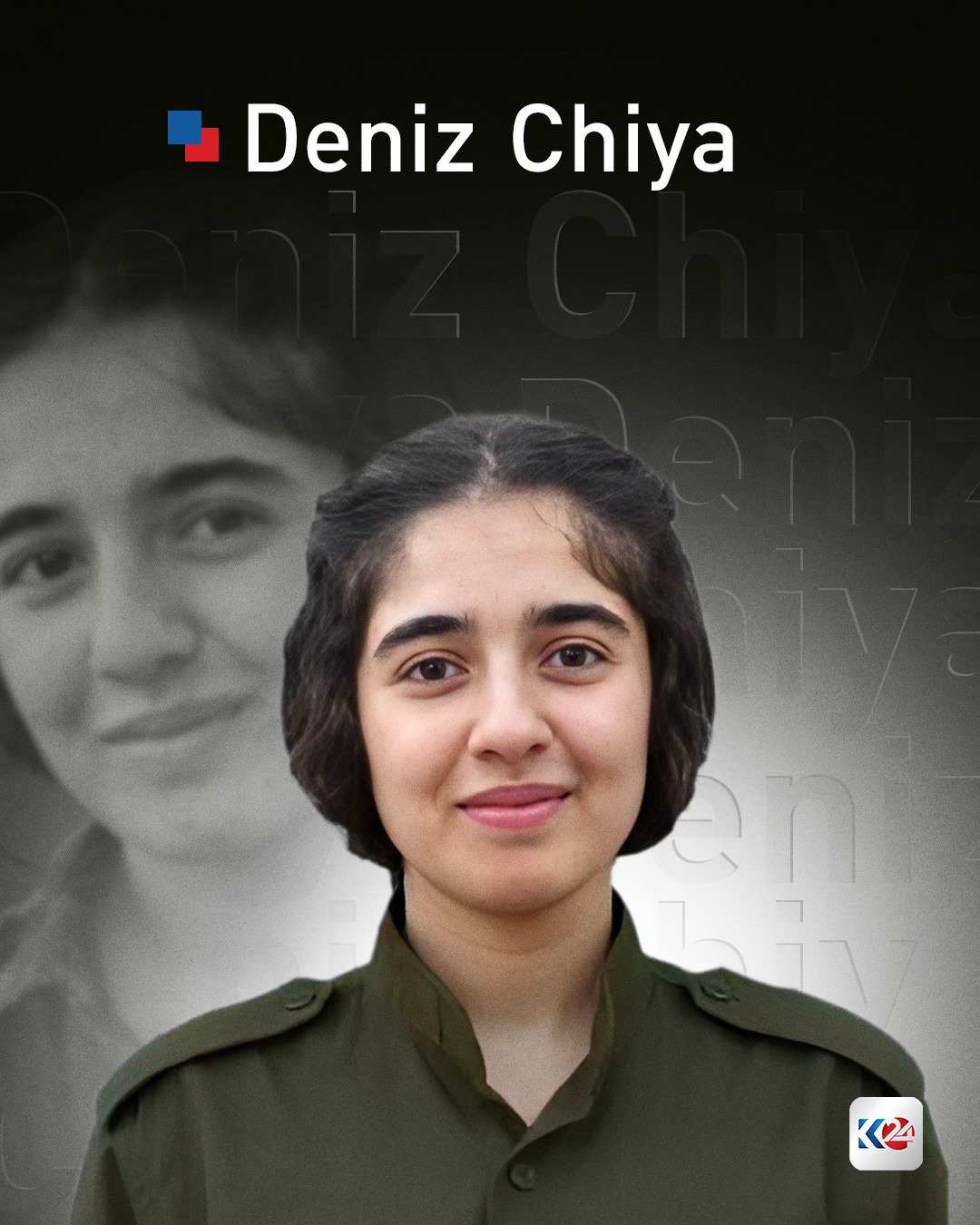
Ideology rarely begins by asking you to murder. It begins by asking you to stop noticing—to surrender the irritating habits of doubt, proportion, and individual moral judgment, and to accept instead a ready-made grammar in which cruelty can be conjugated as virtue. Once you grant it that first, modest victory, the rest is mechanics. Words are bent, then broken; victims are renamed into abstractions; and finally the human body itself becomes a billboard on which power writes its message. In the pages that follow, a Kurdish fighter named Deniz is not merely killed: she is staged—handled as a prop in an ideological ritual, her desecration filmed and sanctified by the shouted lethal liturgy of conquest.
I find myself haunted by two moments, two signals broadcast from the heart of a cursed landscape. The first is a video, a silent scream captured in pixels: the body of a Kurdish fighter, a young girl named Deniz, being thrown from a rooftop in Aleppo by a soldier of the Syrian state. The second is a sound, an anthem of defiant hope released a while ago from the southern city of Suwayda: a cinematic tribute by the artist Osama Attar simply titled Rojava. One is an act of visceral, imperial dehumanisation, a ritual of erasure performed for the camera. The other is an artistic cry for an unbreakable unity, a declaration that even across the empire’s imposed divides, hearts can beat as one. These two moments, thesis and antithesis, define the profound moral choice facing all peoples of the modern Middle East. In this essay, I would like to contemplate on these events—a murder and a song—to unmask the hidden empire that produced them and reveal a truth that transcends the fleeting chaos of headlines.
The Ritual of an Atrocity in Aleppo
To understand a war crime, one must look past the horror and examine its choreography. The specific details of an atrocity—how it is performed, by whom, and under what ideological banner—reveal the profane logic that powers it. The murder of Deniz in Aleppo was not merely a killing; it was a meticulously executed ideological ritual, designed to communicate a message of absolute subjugation.
The Unassailable Facts
In early January 2026, forces of the Syrian “transitional government” launched a major offensive to recapture the predominantly Kurdish districts of Sheikh Maqsoud and Ashrafieh in Aleppo. The assault triggered the mass displacement of an estimated 136,800 to 142,000 civilians and culminated in the withdrawal of Kurdish fighters.
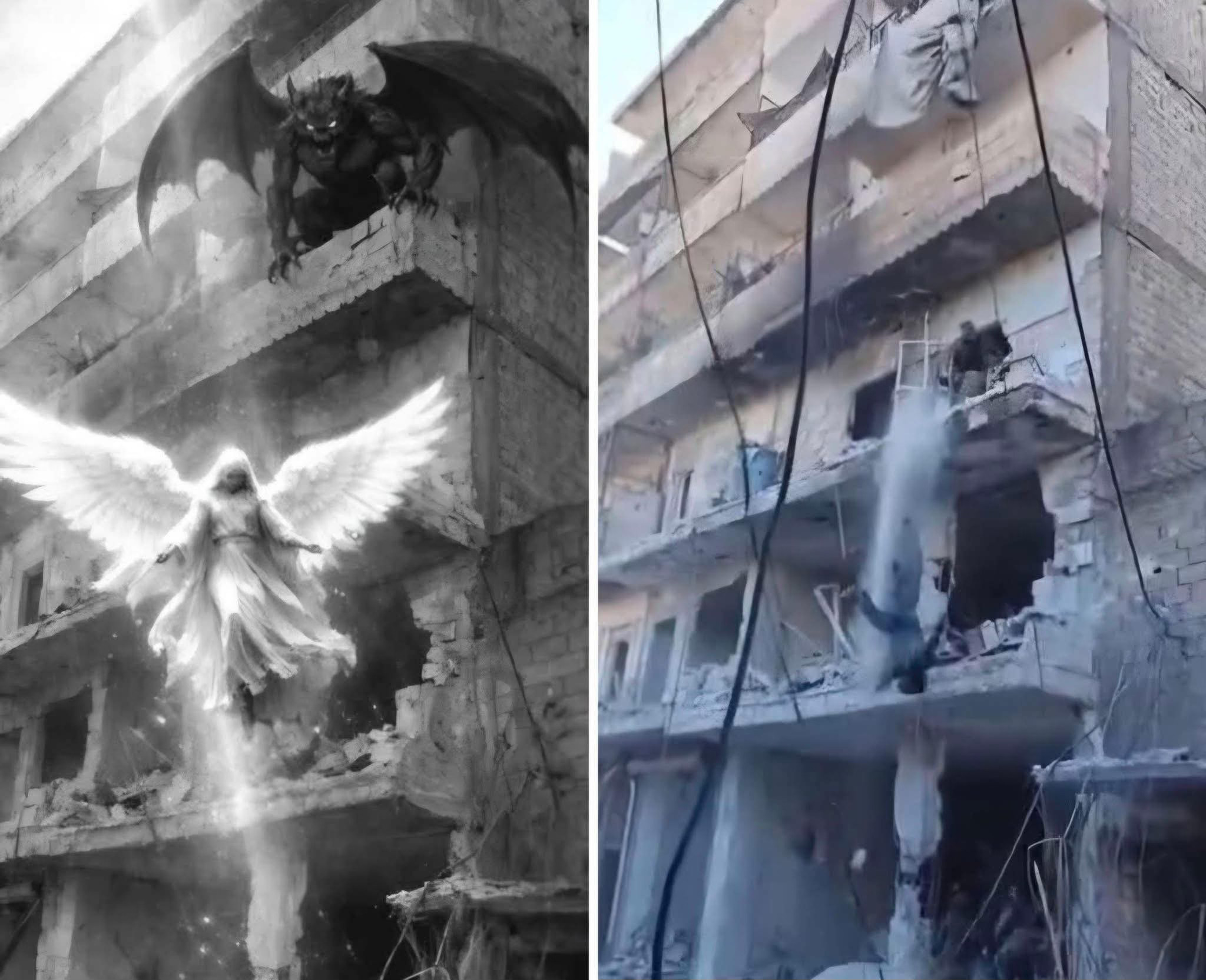
It was in the aftermath, on January 10, 2026, that the video emerged. The footage shows uniformed men inside a building desecrating the body of a female fighter, later identified as Deniz. As they hurl her from the rooftop to the street below, their shouts of “allāhu akbar” are clearly audible. The Syrian Network for Human Rights (SNHR) swiftly verified the video, identifying the perpetrators as members of the Syrian army and condemning the act as a grave violation of international humanitarian law, which demands the respectful treatment of the dead.
The Identity of the Imperial Agent
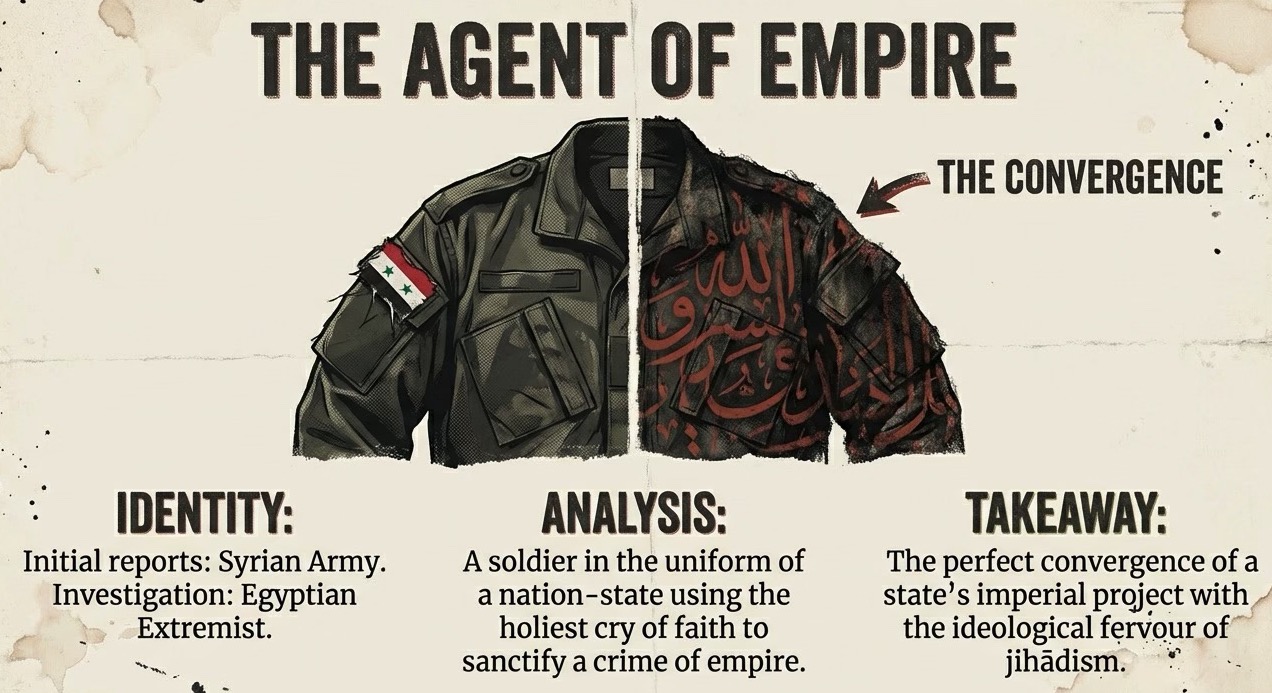
While initial reports identified the perpetrators as Syrian army personnel, subsequent investigations painted a more revealing picture. Multiple sources alleged that the man who threw Deniz’s body was not Syrian but a foreign fighter—an “Egyptian extremist.” This dual identity is not a contradiction; it is a critical revelation. It represents the perfect convergence of a state’s imperial project with the ideological fervour of jihādism. Here, a soldier in the uniform of a nation-state uses the holiest cry of his faith to sanctify a crime of empire.
This ritual on an Aleppo rooftop is not an aberration; it is the sacrament of an empire whose tenets we must now dissect.
A Cursed Landscape
To fully comprehend the horror that befell Deniz, we must move beyond the narrow confines of the Syrian conflict and apply a more powerful intellectual tool. In my article, A New Pattern for a Cursed Landscape, I argue that the modern history of the Middle East is not a story of post-colonial liberation but the enduring success of an insidious Arab Imperium that has mastered the art of projecting its own crimes onto its victims.
The Imperial Indictment
My central argument is that the “Arab World” functions as the most successful and insidious colonial empire of all time, built on conquest, suppression, and a masterful inversion of narrative. This empire has constructed its dominion upon the ruins of other civilizations and the bodies of subjugated peoples. The indictment I present is devastating in its scope:
- Ethnic Cleansing: The empire’s project of racist purgation is perfectly illustrated by the destruction of the 2,500-year-old Iraqi Jewry. A community that once constituted a third of Baghdad’s population has been systematically erased, now reduced to a mere handful of individuals.
- Slavery and Genocide: Sudan, whose very name means “Land of the Blacks,” served for centuries as the empire’s primary slave hub for black Africans. This legacy of dehumanisation finds its modern expression in the ongoing genocide against the Masalit people.
- Female Apartheid: The region’s true, functioning apartheid is not found where its critics typically allege, but in the systemic and suffocating oppression of women—an architecture of control that extends from the public square into the private home and even into the diaspora.
The Ideological Arsenal
This empire has wielded two primary ideological weapons to advance its project: secular pan-Arabism and its successor, Islamism. Both are totalitarian and imperial to their core. To prove the former, one need only look at Article 1 of the 1968 PLO Charter:
“Palestine is the homeland of the Arab Palestinian people; it is an indivisible part of the Arab homeland, and the Palestinian people are an integral part of the Arab nation.”
Here, Palestinian identity is rendered entirely instrumental—not the sovereign expression of a unique people, but a spearhead for a pan-national imperial project. When this secular vision faltered, Islamism arose as its successor, a “death cult” that provided another totalizing weapon for an empire seeking to reassert its dominance.
The Ultimate Weapon
The empire’s most potent weapon, however, is its hijacking of language. Invaders describe their conquest and plunder not as colonialism but as infitāh (opening). The vocabulary of human rights is systematically weaponised, with terms like “genocide” and “apartheid” used to accuse the empire’s victims of its own signature crimes. The 18th-century philosopher David Hume identified the root of this phenomenon in his reading of the Al Coran, concluding that a word like “justice” in that context held a tribal meaning—that which is beneficial to “true believers”—that is “utterly incompatible with civilised society.”
This linguistic corruption is not merely a political tool; it is the foundation of a cultural psychology of denial, a narrative best heard in the empire’s own anthems.
The Soundtrack
An empire sustains itself not merely with force, but with a potent cultural psychology—a narrative of perpetual victimhood that serves to mask its own relentless oppression. To understand this dynamic, we can deconstruct two pieces of music: one that has long served as the hymn of imperial denial, and a new one that represents the defiant truth of its subjects.
The Song of the Oppressor
Julia Boutros’s iconic anthem, “Where Are the Millions?”, is the quintessential expression of pan-Arab mythology. Its lyrics are a thunderous demand for a mythic, unified Arab people to awaken and confront their external foes. The song’s central questions presuppose the moral purity and inherent unity of its subject:
“Where is the Arab people? Where is Arab anger? Where is Arab honour?”
This myth, of course, completely erases the empire’s internal victims. To believe in the unified, righteous nation this song invokes, one must wilfully ignore the gassed Kurds, the suppressed Amazighs, and the brutalised black Africans of Sudan. The anthem is not a call for universal justice but the national hymn of an empire in profound and aggressive denial.
This official narrative has been met by a searing online parody, a howl from the margins titled “Where are the Pimps?”. It inverts the anthem’s grand rhetoric to expose a brutal reality, revealing the hypocrisy at the core of the imperial psyche. It is the soundtrack for a culture that sings of its honour while burying the victims of its cruelty.
The Anthem of Defiance
A direct cultural rebuttal to this imperial myth has recently emerged in the form of “Rojava | فجر روج آفا” (Dawn of Rojava), a cinematic anthem from Osama Attar. A Syrian producer, lyricist, and visual artist who handled every aspect of its creation, Attar has produced a modern, DIY act of resistance that stands in stark contrast to state-approved cultural production.
- Artist and Dedication: Attar explicitly dedicates the song from Suwayda, a Druze-majority region, to the people of Rojava and Kurds worldwide.
- Core Message: The anthem is a tribute to the resilience of the YPJ (Women’s Protection Units) and YPG (People’s Protection Units). It weaves a narrative of struggle against “darkness,” painting a vivid picture of heroes as “swords of light” who plant the “seeds of tomorrow’s green” in fields of bravery. It is a “tale of struggle, retold in every corner.”
- Symbolism: The title itself—Dawn of Rojava—evokes themes of renewal, hope, and rebirth rising from battle-scarred lands, a powerful counter-narrative to the empire’s project of death.
Its lyrics forge a new geography of allegiance, one based not on imperial identity but on shared struggle. A single line dismantles the entire premise of Boutros’s anthem:
“From Suwayda to Rojava, our hearts beat as one.”
Juxtaposing the Narratives
The chasm between the imperial narrative and the voice of its subjects can be starkly illustrated by contrasting the themes of “Where are the Millions?” with both its online parody and the sincere solidarity of Attar’s Rojava.
The Imperial Anthem (Where are the Millions?):
Invokes a mythic, unified Arab People.
Asks Where is Arab honour?
Erases the existence of internal victims.
Projects grievance outward against external foes.
The Voice of the Subject (Parody & Rojava):
Exposes a reality of internal oppression and division.
Inverts this to Where are the Pimps?
Sings of specific martyrs and fighters (YPJ/YPG).
Forges solidarity inward between oppressed groups.
This cultural schism reveals the fundamental moral choice that lies at the heart of this conflict, a choice between two irreconcilable creeds.
The Creed
When stripped of all political jargon, the conflict resolves into a stark moral contest. The events in Aleppo represent a clash between two fundamentally different ways of being human, what I call a Tale of Two Creeds: one an ideology of absolute dehumanisation, the other a spirit of defiant communal solidarity.
The Creed of Dehumanisation
The actions of the Egyptian fighter in Aleppo are the purest expression of this creed. His desecration of Deniz’s body is a direct echo of the ISIS fighter, quoted by Howard Bloom, who justified the repeated violation of his 12-year-old Yazidi captive by claiming it “pleases allāh.”
In both cases, the “other”—whether a Kurdish fighter or a Yazidi child—is reduced to a mere object for ideological gratification. The act of violation is reframed not as a sin but as a form of religious piety. The shout of allahu akbar as Deniz’s body was thrown from the rooftop was not incidental; it was the theological mechanism for the atrocity, the creed that transforms human beings into instruments and murder into an act of worship.
The Creed of Defiant Solidarity
Against this stands the creed embodied by Deniz, the YPJ, and their allies. This worldview is powerfully illustrated by the historical account of the Christian villagers of Bedyal during Saddam Hussein’s Anfal genocide. Rounded up for extermination alongside their Kurdish Muslim neighbours, the Christians were offered a chance to live if they would simply declare they were not part of the local Barzani tribe. Their response was an ultimate declaration of communal fidelity:
“No, we are Barzanis. Our life and our death are with the Barzanis.”
This choice—to prioritise shared human dignity over mere biological survival—is the ultimate rebuttal to the imperial creed of division. It finds an equally powerful expression in the act of communal healing performed by the Yazidi spiritual leader, the Baba Sheikh, who welcomed back all captured women without stigma, choosing communal survival over the social death that ISIS had intended to inflict.
These acts of fidelity—one in death, one in life—form the moral alternative to the imperial project. Osama Attar’s song is the modern artistic expression of this very creed, a declaration that in the face of tyranny, “our hearts beat as one.”
From a Rooftop in Aleppo, An Empire Unmasked
I return, finally, to that visceral image of Deniz’s fall. Viewed through this lens, her death ceases to be another casualty in a long war. It becomes what it was always intended to be:
a ritual of imperial subjugation, an act of jihād performed not for loving deity, but in the service of an empire’s ambition to erase all peoples who refuse to submit.
The perpetrator’s Syrian army uniform and his cry of “allāhu akbar” were not contradictory forces; they were the unified expression of state-sanctioned cleansing and its legitimising jihādist creed.
The intention of this obscene ritual was to throw a Kurdish woman, and by extension her people, into the abyss of forgotten history. Yet, in our digital age, this act of moral and linguistic inversion has itself been inverted. The digital documentation of the crime has turned the perpetrator’s sacred cry into an admission of profane cruelty. Her fall, intended as an act of erasure, has become an eternal indictment—an unerasable image that unmasks the true face of the empire for the entire world to see.


