Kurdistanî Azad Part I The Dream Before the States
By Ann-Catrin Emanuelsson & Khaled Salih
15 June 2026
Note:
Today we are releasing Part I — The Dream Before the States of Kurdistanî Azad. This opening part includes the Part I Introduction and three chapters:
• Chapter One: The Dream Called Kurdistan
• Chapter Two: Beside the Empires
• Chapter Three: The Irreversible Passage
(Note: The Author’s Prologue, Acknowledgments, and Abbreviations were already shared freely with everyone.)
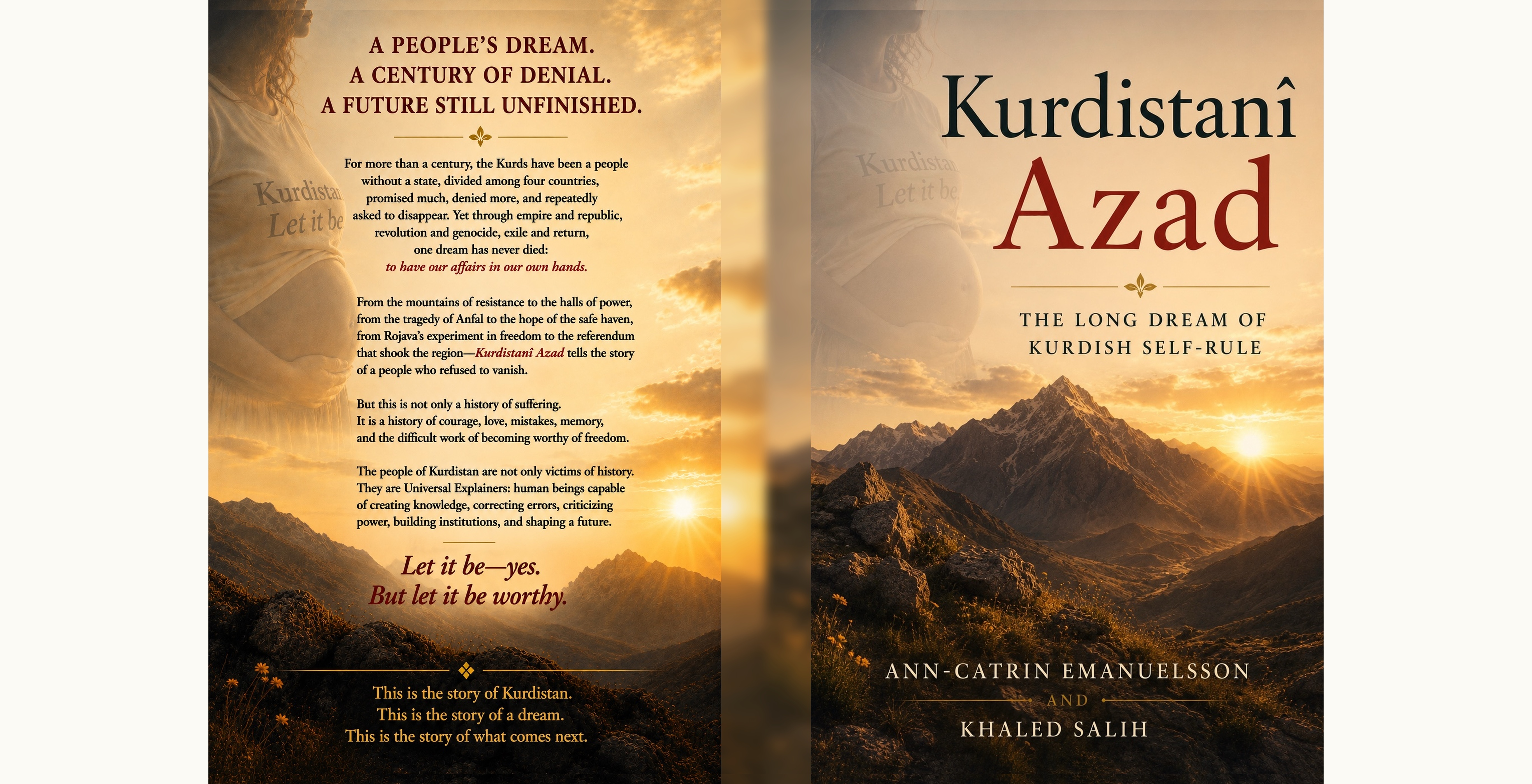
Part I begins from a guiding proposition: the Kurdish dream did not begin as a modern border dispute. It began from older, imperfect forms of lived self-rule that the modern state system later narrowed, hardened, and politicized. Before Kurdistan became a question for diplomats, border commissions, armies, and ministries, it was already a lived world — in mountains, villages, routes, dialects, religious networks, principalities, tribal confederations, cities, memories, and frontier bargains. Kurdistanî Azad begins with a name that carries both intimacy and politics: a child named Kurdistan by a father named Azad.
Thank you for supporting this deeper, long-form project.
Part I — The Dream Before the States
Part I Introduction
The Dream Before the States
Guiding proposition: The Kurdish dream did not begin as a modern border dispute. It began from older, imperfect forms of lived self-rule that the modern state system narrowed, hardened, and politicized.
Before Kurdistan became a question for diplomats, border commissions, armies, and ministries, it was already a lived world.
This introduction has one task: to show that the Kurdish dream preceded the states that later enclosed it, without turning the older Kurdish world into a myth of innocence.
It existed in mountains, villages, routes, dialects, religious networks, principalities, tribal confederations, cities, memories, and frontier bargains. It did not yet exist as a modern state. It did not have one parliament, one capital, one recognized border, or one seat among the nations. But it was not nothing. That is the given from which Part I begins. It was not an empty space waiting to be named by others. Kurdish life had forms of authority, belonging, protection, rivalry, and self-rule long before modern nationalism arrived.
This first part begins with a name: Kurdistanî Azad.
A child is named Kurdistan by a father named Azad. The phrase means both “Kurdistan of Azad” and “Free Kurdistan.” Because the Kurdistan in question is also Azad’s daughter, the title carries the book’s emotional and political key. Kurdistan is not introduced first as a map, a grievance, or a geopolitical problem. It is introduced as a daughter, a memory, a promise, and a question: under what conditions can a people have their affairs in their own hands?
To answer that question, we must begin before the modern states that now divide Kurdistan. We must look at the older Kurdish world beside the Ottoman and Persian empires, where self-rule was not yet a nationalist program, but often meant practical room for Kurdish rulers, sheikhs, tribes, and communities to survive through negotiation, distance, loyalty, rebellion, and local authority. That world was not democratic or innocent. It was often unequal, patriarchal, periodically violent, and fragmented. It should not be romanticized, but neither should it be judged as if it had been allowed the long, protected development of a modern constitutional order. Yet it contained something the modern states would later weaken, absorb, suppress, or destroy: Kurdish society’s capacity to govern parts of its own life through its own institutions, languages, memories, and authorities.
This is not a search for a Kurdish essence. It is not a claim that all Kurds shared one consciousness, one institution, one dialect, one class position, or one political program before modernity. It is a search for the historical conditions under which Kurdish life could govern parts of itself, lose that room, recover it, misuse it, and perhaps turn it into institutions worthy of a home.
Part I follows the passage from that older world into the modern one.
This post is for paid subscribers. Upgrade now to continue reading Part I and future book installments. Thank you for supporting this long-form project.


