Kurdish Governance: The Philosophy of Error Correction
By Khaled Salih
Introduction
The greatest driver of human progress, whether in science, philosophy, or governance, has never been blind faith in tradition or rigid adherence to authority. It has been the relentless willingness to detect errors and the courage to correct them. Every breakthrough in knowledge, every reform in society, and every improvement in individual life stems from this dynamic process of self-criticism and correction. To err is inevitable, but to expose errors and to act upon them is the essence of rational growth. David Deutsch captures this principle with unmatched clarity: error correction is not just one intellectual tool among many, but the very foundation of progress itself, the distinguishing mark of what he calls good philosophy.
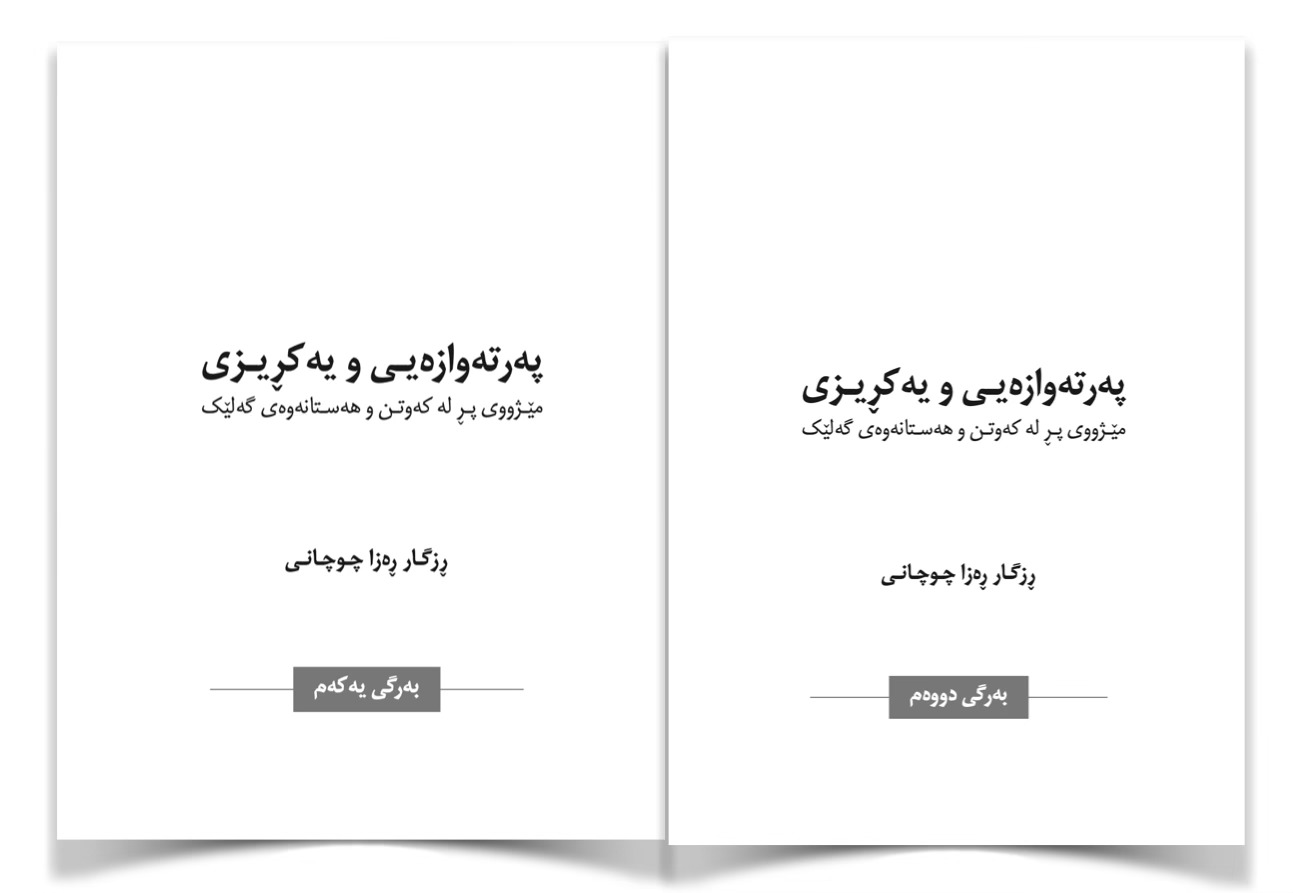
When viewed through this lens, history ceases to be merely a chronicle of victories and defeats; it becomes a laboratory of trial and error, where failure reveals pathways for future correction. It is precisely in this spirit that the two volumes Chochani 2024, vol 1 & 2, acquire their greatest significance. Far more than historical records, they stand as case studies in how a people—Kurdistan and its institutions, have grappled with their own errors, endured setbacks, and attempted reforms. To read them in the light of Deutsch’s philosophy is to uncover a deeper narrative: not of static identity or fate, but of an ongoing struggle to build a society capable of criticism, renewal, and improvement.
David Deutsch’s philosophy emphasises that the growth of knowledge is fundamentally dependent on the process of criticism, or error detection and correction. Deutsch posits that error correction is the “most important attitude of the mind” and the “most important characteristic of institutions in society.”
Based on this framework, Chochani’s work, which document historical and political processes in Kurdistan, reveal numerous elements of error detection and correction, often manifesting as explicit critique, institutional reform, or lessons drawn from historical failure.
1. Historical and Political Error Detection (Critique of Past Failures)
The central theme of book highlights a consistent historical failure, identifying specific internal errors that obstructed Kurdish progress. This diagnostic approach mirrors the first step in Deutsch’s “problem conjecture criticism” method.
Fragmentation as a foundational error. The very structure and discussion in the volumes revolve around Pertawazey w Yekrîzî (Fragmentation and Unity). Chochani detects that the fragmentation and disunity (pertewazebûn) of the Kurdish people were major internal historical factors.
Failed opportunities due to disunity. The failure of past opportunities, such as securing independence during international negotiations (like Sharif Pasha’s efforts), is directly attributed to disagreement and Kurdish dispersal. This fragmentation caused the Kurds to lose the greatest historical opportunity for self-determination.
Internal conflict as a setback. The destructive “civil war” (șerî nawxo) between major political parties is analysed as a period of profound error and harm. The author quotes a high-ranking official noting that the civil war caused immense damage and delayed the democratic experiment.
Causes of uprising failures. The text explicitly identifies the core reasons for the collapse of Kurdish principalities and the failure of later uprisings fragmentation, betrayal), and lack of unity. This historical analysis constitutes a major act of error detection.
2. Institutional Error Correction (Reform and Improvement)
The material heavily details deliberate efforts by the Kurdistan Regional Government (KRG) leaders to identify and correct systemic governmental and societal flaws, aligning with Deutsch’s view that institutions must have error-correcting characteristics.
Judicial System Critique. KRG leaders acknowledged deep-seated systemic errors, such as the political forces’ influence on the courts. Former Prime Minister Nechirvan Barzani emphasised that solving problems requires establishing a stable, effective, and competent judicial system and that hiding the reality of the problems does not solve the problems. This explicitly advocates for uncovering and correcting deep errors rather than settling into a fixed, unchanging worldview, a characteristic of Deutsch’s bad philosophy.
Anti-corruption and transparency. The KRG took concrete steps aimed at combating corruption and improving financial transparency (a political/economic error correction mechanism). They approved a strategy to confront corruption and implemented international auditing (using Deloitte and EY) of the oil and gas sector to ensure accountability and transparency. This use of external scrutiny demonstrates institutional dedication to detecting and correcting internal errors.
Fiscal correction through austerity. In response to the financial crisis triggered by Baghdad cutting the budget and the war with ISIS, the KRG adopted an austerity (tightening the belt) policy. This was a necessary and painful correction of fiscal policy necessitated by external pressures.
Social and legal reform. Recognising the societal error of violence against women, the government condemned it and demanded parliament amend laws to address the issue. This demonstrates an effort to detect and correct moral/legal errors.
Educational reform. There is a clear effort to correct shortcomings in the educational system. The book notes the need for comprehensive revision and reform of curricula from primary school to university to ensure modern standards are met.
3. Embracing Criticism (The Enlightenment Method)
Deutsch defines the Enlightenment Method as establishing a “tradition of criticism” instead of reliance on authority. Chochani shows that key KRG leaders have sought out and welcomed criticism, viewing it as essential for governance:
Welcoming public critique. Nechirvan Barzani, responding to a financial crisis, told religious scholars and teachers that the government would accept all their criticism and suggestions, indicating a deliberate posture of fallibilism.
Encouraging opposition. The growth of press freedom in the KRG led to the formation of opposition groups like the Goran Movement. This democratic outcome demonstrates a political sphere open to conjecture and criticism (new ideas/new theories).
Learning from policy flaws. When facing the severe financial crisis, the government continued discussions with various strata of society, making everyone a partner in the strategy to identify and discuss various way to overcome the crisis. This approach signifies treating the crisis as a problem requiring collective, critical feedback rather than dictatorial authority.
In summary, the two volumes documenting the history and governance of Kurdistan contain abundant evidence of error detection and correction, both in analysing past political failures (fragmentation, civil war) and in implementing institutional reforms (judicial critique, anti-corruption audits, and education reform). The explicit value placed on criticism by key leaders aligns well with David Deutsch’s criterion for what constitutes good Philosophy, a system committed to solving problems by embracing criticism.
Conclusion
The Kurdish historical and political experience, as documented in Chochani’s two volumes, demonstrates vividly that progress depends not on perfection but on fallibilism, the willingness to confront and correct errors. These volumes reveal a people repeatedly confronted by fragmentation, betrayal, and internal conflict, yet also striving to reform institutions, address corruption, and embrace criticism as a means of survival and growth. Each episode of failure becomes meaningful only when it is treated as a source of learning, not as a permanent defeat.
In this way, the Kurdish story reflects the very principle David Deutsch identifies as the engine of progress: error detection and error correction as the highest human activity. Just as science advances not by being right from the beginning but by weeding out mistakes, so too does a society advance when it accepts criticism, reforms its institutions, and treats its past as a guide to improvement rather than a prison. The enduring value of these two volumes lies in their contribution to this tradition of criticism, they not only document errors but also point toward correction. In doing so, they affirm that the path to Kurdish self-determination and stability is inseparable from the universal philosophy of error correction that has driven human progress in every field of life.
Reading the books carefully you can not avoid Nechirvan Barzani’s leading role primarily through his executive tenure, emphasising his distinct political philosophy centered on consensus and unity, particularly as the Prime Minister during the fifth, seventh, and eighth KRG cabinets. This leadership approach, rooted in his unique worldview, enabled these cabinets to manage and overcome internal political fragmentation and large-scale crises. Unlike earlier administrations (the first, second, and sixth cabinets) that faced severe internal conflict or breakdown due to relying on majority rule, Barzani’s administrations intentionally followed the principle of unity and treated consensus as the only condition for the success of Kurdistan. His commitment to institutional success was demonstrated by his consistent efforts to unify administrations, such as when he and his deputy were tasked with forming the government following the reunification of the dual administrations.
Nechirvan Barzani also displayed crucial leadership during threatening crises and transformative policy shifts. He spearheaded the independent oil and gas policy, establishing the necessary infrastructure for export and effectively placing Kurdistan on the global energy map for the first time in its history. When the KRG faced severe challenges, including the war with ISIS and budget cuts from Baghdad, he was central in steering the financial system, launching comprehensive financial reform plans. His crisis management capabilities were recognised even by political opponents, as one official described him as a capable captain steering the boat with determination. Furthermore, he placed a high value on governance reform, emphasising judicial stability, promoting women’s rights through legislative amendments and new institutions, and famously welcoming criticism, stating that the government would accept all suggestions during the financial crisis. His international stature was also notable, with leaders like the French President acknowledging his efforts toward peaceful resolution and commentators even suggesting he deserved a Nobel Peace Prize for his role in regional stability.
Sources:
David Deutsch, 1997, The Fabric of Reality: The Science of Parallel Universes—and Its Implications. London: Allen Lane The Penguin Press.
David Deutsch, 2011, The Beginning of Infinity: Explanations that Transform the World. New York, NY: Viking.
ڕزگار ڕەزا چوچانی, 2024, پەرتەوازەیی و یەکڕیزیی: مێژووی پڕ لە کەوتن و هەستانەوەی گەلێک. دوو بەرگ. دەزگای نوچە.
Rizgar Reza Chochani, 2024, Fragmentation and unity: A history full of a nation’s falls and resurrections. Volume 1 & 2. Dezgay Nûçe


