Judea Pearl’s Beautiful Mind at Work: Witness, Grief, and the Refusal to Surrender.
A Personal Reflection on Coexistence and Other Fighting Words
31 March 2026
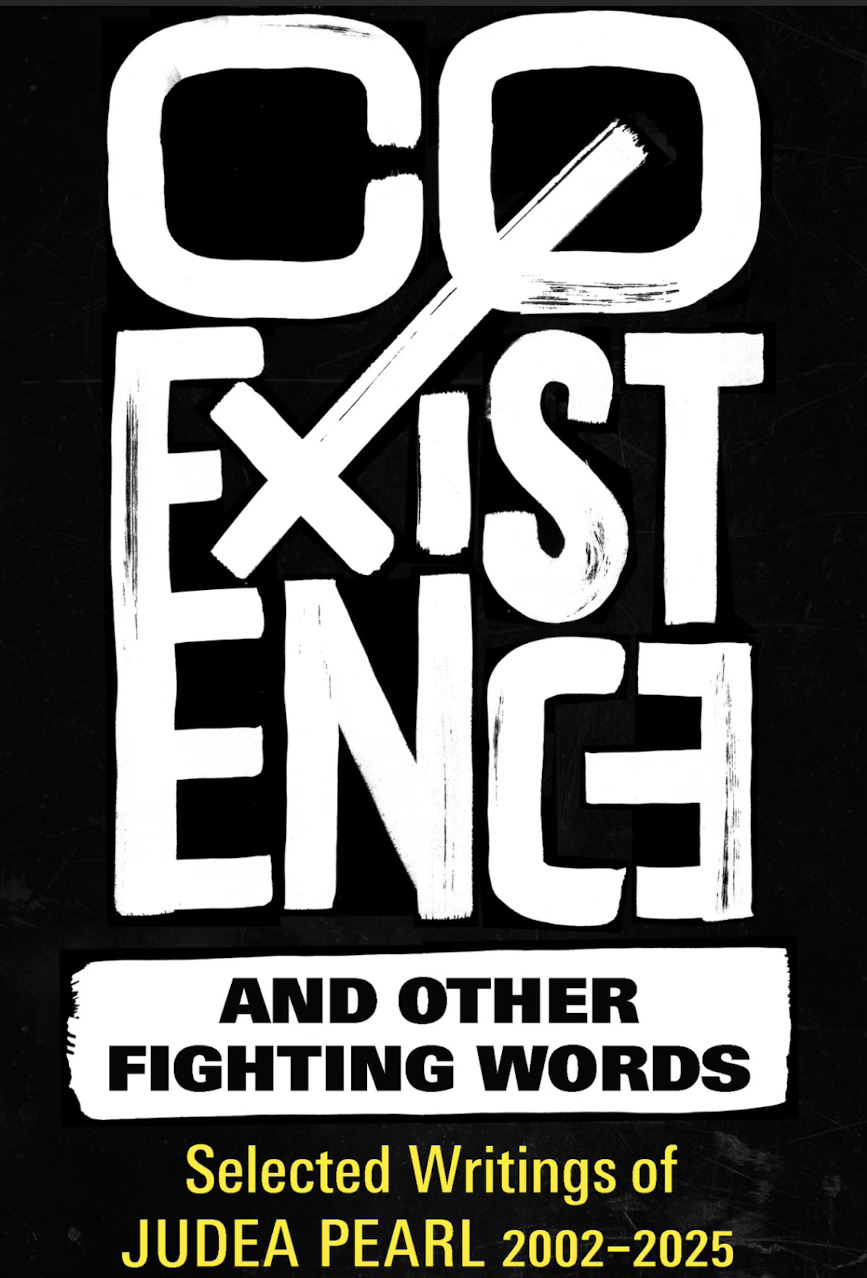
As outlined in my introduction, here is the first of my two reflections on Judea Pearl’s new book Coexistence and Other Fighting Words. Before we apply his mathematical calculus to the cybernetic frameworks of Hacking the Wetware, we must first ground this exploration in the profound, human core of his work.
While this first reflection honors the profound personal grief and moral clarity of a father’s witness, the defense of the Open Society requires systemic, structural rigor. In my next post, The Causal Architecture of Survival, we will shift from the emotional to the cybernetic, applying Pearl’s own Ladder of Causation to conduct a forensic autopsy of how the Anti-Rational Memeplex hacks the Western mind
A man with a beautiful mind does not merely think; he contends, remembers, and refuses to look away. In Judea Pearl, that mind finds its rarest expression: the austere precision of a computer scientist who pioneered the mathematics of artificial intelligence and causality, fused with the personal, unflinching moral urgency of a father whose world was shattered by the murder of his son, Daniel, in 2002. The result is not abstract philosophy or detached commentary, but something deeper: a sustained, decades-long act of intellectual and human witness.
Coexistence and Other Fighting Words gathers a selection of forty-five essays, speeches, and reflections written between 2002 and 2025. It spans from the immediate aftermath of personal tragedy to what Pearl describes as the ideological “madness of 2024–2025.” Yet it never feels like a mere anthology. It reads as the autobiography of a mind that will not surrender: to hatred, to confusion, to the “lazy conformity” of moral relativism, or to the comforting amnesia that lets civilizations drift toward moral collapse. Pearl writes with a clarity that borders on austerity, not the coldness of indifference, but the disciplined refusal to let language blur responsibility or soften truth. Definitions must hold. Distinctions must matter. As Pearl insists, drawing directly from his scientific methodology, we must precisely distinguish “facts from theories, data from models, definitions from assumptions, and, crucially, causes from effects.” In an age addicted to euphemism, his prose cuts like clean light through fog.
What gives the book its singular power is the fusion at its center. Pearl’s scientific training appears not as technical jargon, but as a rigorous method for exposing the intellectual shortcuts, like the “cycle of violence” platitude, that make terrorism easier to excuse and coexistence harder to imagine. Yet thought here is never bloodless. Running through every page is the living presence of Daniel Pearl: journalist, musician, seeker of dialogue, and victim of barbarism. In the book’s opening essay, “Hope from the Horror of My Son’s Murder,” written just six months after his son’s death, Pearl does not collapse into sentimentality. Instead, he transforms private grief into public purpose. Daniel becomes more than a beloved son; he emerges as an instantly recognized “icon of peace,” a “citizen of the world,” and a symbol of the stubborn human capacity for decency even in the face of evil. The movement from the intimate wound to the civilizational defense lends the entire collection its profound emotional depth and moral weight.
There is, unexpectedly, a quiet current of joy and hope beneath the fighting words. Pearl does not write as one resigned to inevitable decline. He writes as one still trying to persuade, still naming what is worth defending. He explicitly states that his goal is to convey “the miracle of the Jewish people, the heroic narrative of Israel’s establishment, and my certitude in the rightness of her struggle for peaceful coexistence.” He refuses despair not out of naïveté, but out of a hard-earned conviction that moral intelligibility can still be preserved, that the moral relativism he famously declared “died with Daniel Pearl in January 2002” must be actively fought. Words, when wielded with courage and clarity, can recover their weight and push back against the gathering darkness.
In the end, Coexistence and Other Fighting Words is the record of a beautiful mind at work: fierce yet wounded, learned yet deeply human, provocative yet never casual. It challenges its readers not merely to understand the age more clearly, but to defend the values that make human dignity and coexistence possible. Dr. Judea Pearl has given us something rare: a book that argues with its time, mourns it, and, against the odds, still tries to save what is best within it. In a world increasingly drawn to noise and forgetting, this is the voice of a man who remembers, who reasons, and who refuses to let the light go out.
A man with a beautiful mind does not merely think; he contends, remembers, and refuses to look away. In Judea Pearl, that mind finds its rarest expression: the austere precision of a scientist who pioneered the mathematics of causality and artificial intelligence, fused with the raw, unflinching moral urgency of a father whose world was shattered by the murder of his son, Daniel, in 2002. The result is not abstract philosophy or detached commentary, but something deeper: a sustained, decades-long act of intellectual and human witness.
Coexistence and Other Fighting Words gathers more than twenty years of essays, speeches, and reflections, from the immediate aftermath of personal tragedy to the convulsions of 2024–2025. Yet it never feels like a mere anthology. It reads as the autobiography of a mind that will not surrender: to hatred, to confusion, to the lazy relativism of slogans, or to the comforting amnesia that lets civilizations drift toward moral collapse. Pearl writes with a clarity that borders on austerity, not the coldness of indifference, but the disciplined refusal to let language blur responsibility or soften truth. Definitions must hold. Distinctions must matter. Causes cannot be confused with effects. In an age addicted to euphemism, his prose cuts like clean light through fog.
What gives the book its singular power is the fusion at its center. Pearl’s scientific training appears not as technical jargon, but as method: an insistence on intellectual honesty, on pressing arguments to their roots, on exposing the shortcuts that make violence easier to excuse and coexistence harder to imagine. Yet thought here is never bloodless. Running through every page is the living presence of Daniel Pearl, journalist, musician, seeker of dialogue, victim of barbarism. In the early essay written in the raw months after his son’s death, Pearl does not collapse into sentimentality. Instead, he transforms private grief into public purpose. Daniel becomes more than a beloved son; he emerges as a symbol of humane curiosity, of the belief that people can still talk across divides, of the stubborn human capacity for decency even in the face of evil. The movement from the intimate wound to the civilizational defense lends the entire collection its profound emotional depth and moral weight.
There is, unexpectedly, a quiet current of hope beneath the fighting words. Pearl does not write as one resigned to inevitable decline. He writes as one still trying to persuade, still naming what is worth defending: the miracle of the Jewish people, the heroic story of Israel’s founding, the fragile but necessary dream of peaceful coexistence. He refuses despair not out of naïveté, but out of a hard-earned conviction that moral intelligibility can still be preserved, that words, when wielded with courage and clarity, can recover their weight and push back against the gathering darkness.
In the end, Coexistence and Other Fighting Words is the record of a beautiful mind at work: fierce yet wounded, learned yet deeply human, provocative yet never casual. It challenges its readers not merely to understand the age more clearly, but to defend the values that make human dignity and coexistence possible. Judea Pearl has given us something rare, a book that argues with its time, mourns it, and, against the odds, still tries to save what is best within it. In a world increasingly drawn to noise and forgetting, this is the voice of a man who remembers, who reasons, and who refuses to let the light go out.



.jpg)