It’s all Israel’s fault
(And other Middle East fairy tales)
By Khaled Salih
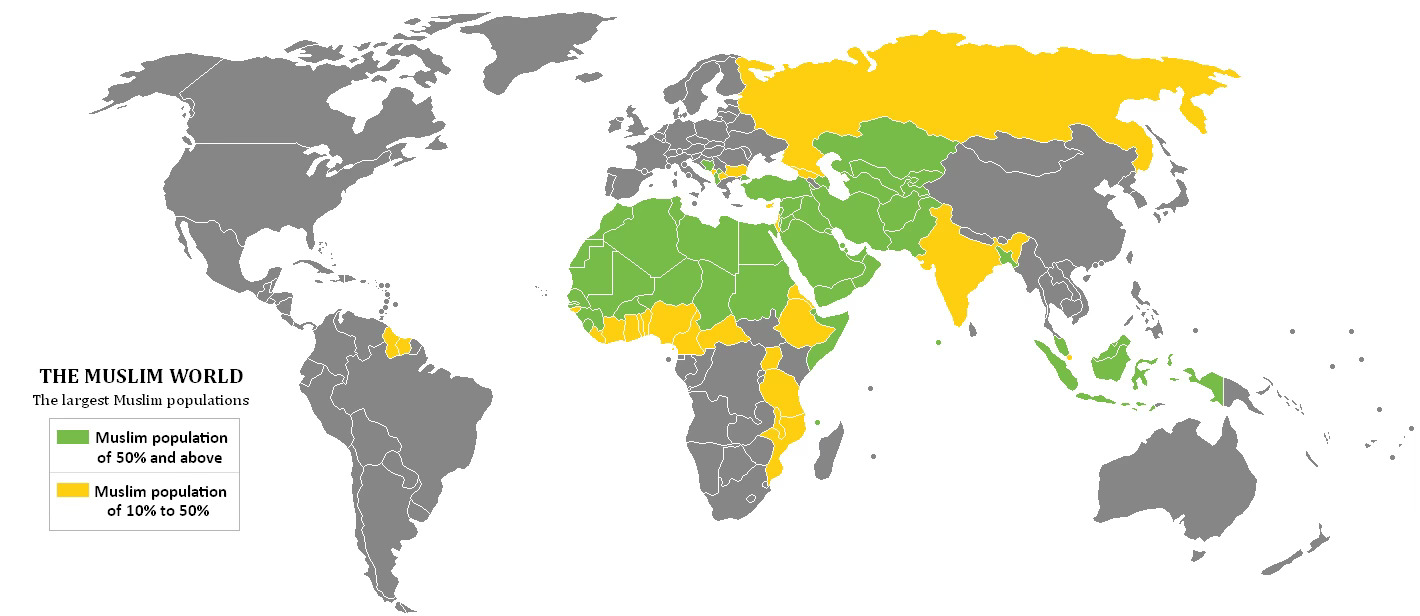
Try to locate Israel on the map!
On 18 August 2025, the official website of Ayatollah Ali Khamenei published an article titled “Building the dream of ‘Greater Israel’ on the ruins of Arab lands; Does Israel ensure security or undermine it?” [Khamenei 20250818] in which the core argument is that Israel:
- is inherently expansionist, and from its founding in 1948, Israel has pursued a long-term strategy of “Greater Israel,” an empire stretching from the Nile to the Euphrates;
- its existence rooted in occupation, as Israel was established by displacing Palestinians, seizing their lands, and continuing to expand through wars (1948, 1967, 1982) and settlements;
- has an endless appetite for Arab land, evident in annexing Palestinian territories, occupying parts of Lebanon, Syria, and Egypt, and expanding settlements; Israel allegedly proves it cannot coexist peacefully; and
- is a threat to regional security, because its nature is colonial and imperial, and normalisation with Israel only empowers aggression and undermines Arab security.
In short: Israel is portrayed as a colonial project, permanently bent on territorial expansion, empire-building, and destabilising the region.
Thus, in the telling of Ayatollah Khamenei’s office, Israel appears not as a normal state bound by the ordinary constraints of diplomacy and security, but as a uniquely dangerous project of conquest, forever driven by expansionism, forever incapable of peaceful coexistence, and forever destabilising the Arab world. This framing casts Zionism as an inherently colonial enterprise, placing Israel outside the community of legitimate nation-states and presenting its very existence as a perpetual threat.
Yet when accusations of this kind are made, it is important to pause and consider not only their historical claims but also their deeper psychological and political functions. Narratives of absolute guilt, expansion without limit, and essentialised hostility often tell us as much about those who advance them as about their intended target. It is in this context that the words of Russian Jewish novelist Vasily Grossman, the first journalist to witness the horrors of Treblinka, resonate with special force. He once wrote:
“Anti-Semitism is … a mirror for the failings of individuals, social structures, and State systems. Tell me what you accuse the Jews of — I’ll tell you what you’re guilty of.” [Watson 20250422; emphasis added]
The entire article rests on a quote from an Arabic article by al-Jazeera: “‘The war of 1948 is not yet over. This war represents only one round in a series of conflicts for which Israel must be fully prepared, in order to expand its borders in all directions.’ This statement appears in part of the documents belonging to the General Staff of the Israeli army, indicating that territorial expansion to realise the dream of ‘Greater Israel’ is not a transient policy but a fundamental strategy for the Zionist regime.” [emphasis added]
To start with, this statement is unverified and only appears in the Jazeera article, with no confirmation by any official document.
Historical inversion
The charge of unique Zionist expansionism is a parody of history. In reality, Islam spread through vast territorial conquests (7th–15th centuries), Arabising and Islamising entire regions (Levant, North Africa, Mesopotamia, Persia, Central Asia, Iberia). By contrast, Jews have never built empires or spread by conquest, as Judaism is non-proselytising, and Israel today is a tiny state (one Jewish state vs. ~50 Muslim-majority states). Historian Hugh Kennedy expresses this in an eloquent way:
In the year 632, Islam was confined to Arabic-speaking tribesmen living in Arabia and the desert margins of Syria and Iraq. Most of the population of Syria spoke Greek or Aramaic; most of those in Iraq, Persian or Aramaic; in Egypt they spoke Greek or Coptic; in Iran they spoke Pahlavi; in North Africa they spoke Latin, Greek or Berber. None of them were Muslims. In Egypt and North Africa, lands we now think of as clearly Islamic, there were no Muslims and effectively no Arabic speakers, and the same was true of Iran and Afghanistan. The scale and the speed of the transformation are astonishing; within a century of the Prophet’s death, all these lands, along with Spain, Portugal, Uzbekistan, Turkmenistan and southern Pakistan (Sind), were ruled by an Arabic-speaking Muslim elite, and in all of them the local population was beginning to convert to the new religion.” [Kennedy, 2007, p. 3]
The article’s focus on Israeli expansionism is highly selective and omits the far larger and more consequential history of Muslim/Arab expansionism, empire building, and colonialism. Just compare how many countries officially call themselves Arab and/or Muslim and contract that ONE. Historically, the reality is almost inverse: successive Muslim caliphates expanded to cover much of the known world, Arabising and Islamising countless lands in the process, while Jews never expanded in that manner and in fact often lived under Muslim (or Christian) imperial domains. Accusing Israel of seeking a “Greater Israel” empire (a project which, in practice, has been limited to Israel securing its immediate region) is parodic, given that the “Greater” empires that actually materialised in history were those of the Arab-Muslim caliphates. It’s a case of the pot calling the kettle black, ignoring whose conquests carved up the Middle East in the first place.
Language game
Recognising this imbalance of perspective is crucial, because it highlights how the narrative of Israeli “Greater Israel” expansionism functions less as a sober historical analysis and more as a rhetorical device. By projecting onto Israel the very patterns of conquest and empire-building that defined Arab and Muslim history, the article effectively engages in inversion and moral mirroring. This rhetorical move does not merely exaggerate Israel’s actions; it strategically reframes them in a way that casts Israel as the ultimate aggressor while concealing or erasing the broader historical record.
This is precisely where the power of language comes into play. The “Greater Israel” article does not rely solely on distorted historical claims, but on a carefully constructed discourse that deploys emotional triggers, binaries, and moral absolutes. Here it converges with known patterns of selective emphasis, generalisation, distortion, and deletion, all marshalled to drive the reader toward a predetermined conclusion. [The Duke Report, 202508]
Generalisations: The article frequently generalises the motivations and actions of the “Zionist regime.” Phrases like “The Zionist regime’s existence is rooted in occupation” or “the Zionists, who harbour the dream of establishing an empire” broadly categorise complex historical and political entities and events into a singular, negative essence. Similarly, describing actions as “the most severe crimes by the Zionists” applies an extreme label universally.
Distortions: The article presents historical events and slogans with a clear, negative interpretation as fact. For instance, the slogan “a land without a people for a people without a land” is presented as a “deceptive slogan" that “paved the way for the occupation.” This distorts the complexity of historical narratives into a simplified, conspiratorial cause-and-effect.
Deletions: The article deletes alternative perspectives, counter-arguments, or the nuanced historical and geopolitical context that might complicate its central thesis. For example, it does not delve into Israeli security concerns, diverse political viewpoints within Israel, or the complexities of international relations beyond the focus on “occupation” and “territorial expansion.” This forces the reader to make assumptions based on the presented, limited information.
This game is then followed by inserting several universal quantifiers in order to push the narrative to extremes: “The war of 1948 is not yet over”; “achieving this dream can only occur through the occupation”; “The land of Greater Israel must have extensive reach”; “Zionists’ insatiable desire... remains fully evident”; “Zionist regime envisions no limits in its expansion”; “The Zionists have not abandoned their goals. They have not retracted.”
These words frame the situation as absolute, unchanging, and extreme.
The article then uses specific patterns to link actions to outcomes and assign them “meaning.” Cause-effect is a known trick; by stating “achieving this [Zionist/Greater Israel] dream can only occur through the occupation,” directly links the “dream” to the outcome of “occupation.” Similarly, “to compel them to align with Tel Aviv, it is necessary to crush them underfoot” establishes a direct causal relationship.
As a whole, the article uses “word magic” to create a specific, rigid “knowing" about the “Zionist regime,” presenting it as inherently aggressive and deceitful through pervasive generalisations, distortions, universal quantifiers, pretended clear cause-effect, and binary choices.
Moreover, the text consistently attributes all Israeli actions and historical events, from the 1948 war to current West Bank expansion, to the singular, overarching “fundamental strategy” of “Greater Israel.” This aligns with Gad Saad’s concept of “Six Degrees of Faux-Causality,” where a complex phenomenon is simplified and attributed to a single, predetermined culprit or cause (in this case, an insatiable expansionist dream). The title itself, “Greater Israel: A Strategy of Endless Occupation,” demonstrates this preconceived, unsubstantiated causal chains. [Saad 2021]
For the Islamic Republic in Iran, a tiny Jewish minority seems to constitute a major geopolitical and psychological trauma. At the end, the best way to deal with this issue might be to quote Babylonbee’s crazy take.
After decades of debate, “experts” have finally cracked the Middle East puzzle: the source of all the region’s chaos is the tiny 0.3% that isn’t a dictatorship. Yes, forget the 99.7% run by tyrants and terror groups; apparently, it’s that sliver of non-despotic land that keeps ruining everything.
“‘It’s definitely all Israel's fault,’ said analyst Ibrahim Hamzi of the Institute for Blaming Jews in Jordan. ‘We have looked closely at all of the evidence accumulated over the last century and have come to the conclusion that none of the issues that arise in the Middle East can be blamed on the multiple Islamic dictatorships that have caused oppression, rape, murder, and terrorism around the world. Yes, the West lives in fear of Islamic extremists carrying out deadly attacks on heavily populated areas, but that’s not the problem. No, it’s Israel. Totally Israel.’
At publishing time, an impartial coalition of Middle Eastern countries that are Islamic dictatorships presented a solution to solve tensions in the region by wiping Israel off the map.”
References
Babylonbee 20250818, “Problems in Middle East blamed on the 0.3% of it that isn’t an Islamic dictatorship,” https://babylonbee.com/news/problems-in-the-middle-east-blamed-on-the-03-of-it-that-isnt-an-islamic-dictatorship
The Duke Report, 20250807, “A user’s guide to neuro-linguistic defence. Defending yourself from magic words,”

Hughe Kennedy, 2007, The Great Arab Conquests: How the spread of Islam changed the world we live in. Boston, Massachusetts: Da Capo Press, page 3.
Ali Khamenei, 20250818, “Building the dream of ‘Greater Israel’ on the ruins of Arab lands; Does Israel ensure security or undermine it?” https://english.khamenei.ir/news/11854/Building-the-dream-of-Greater-Israel-on-the-ruins-of-Arab-lands
Gad Saad, 2021, The parasitic mind. How infectious ideas are killing common sense. Washington, DC: Regency Publishing.
Mike Watson, 20250411, “Douglas Murray on a matter of life vs. death,” https://www.hudson.org/defense-strategy/douglas-murray-matter-life-vs-death-mike-watson



