Forget Palestine, stupid!
The weaponisation of Palestinianism as a global crusade against Jewish sovereignty
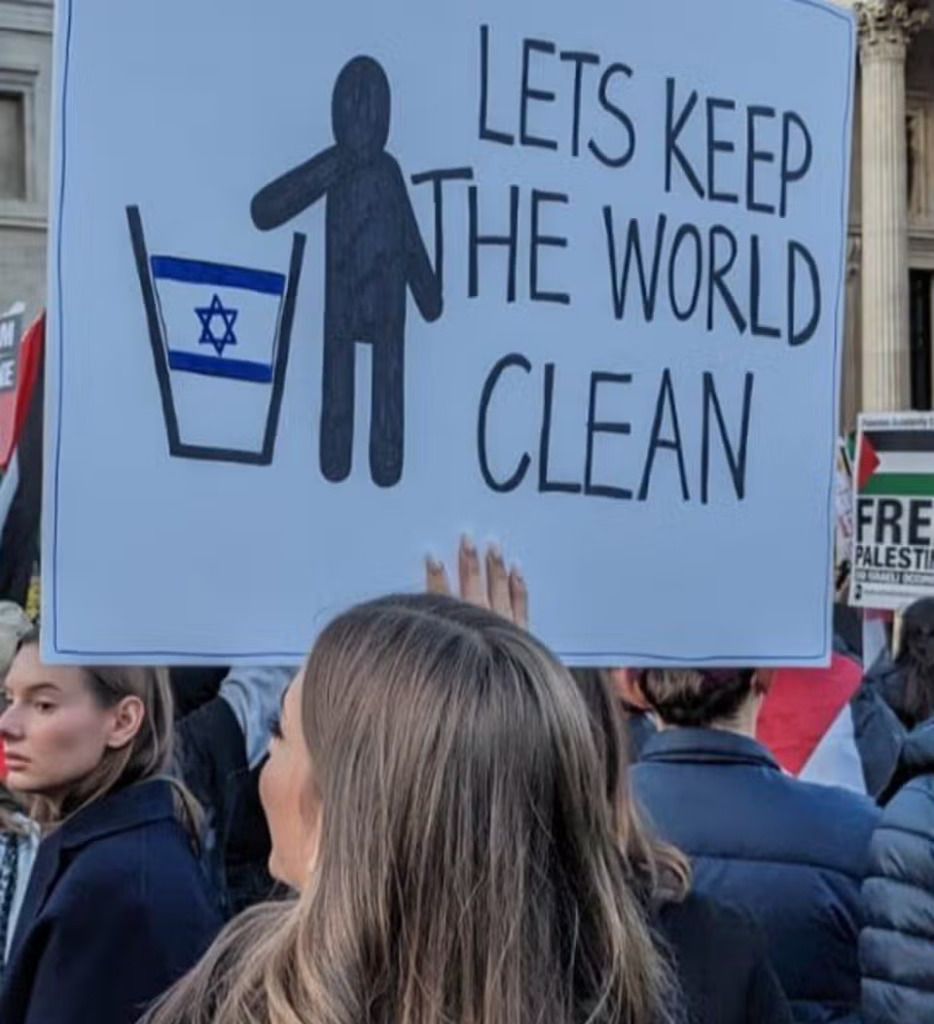
In modern times, few conflicts have been as distorted, manipulated, and weaponized as the Israeli-Palestinian dispute. What could have been a negotiable issue of land and coexistence has been transformed into a global ideological campaign, one that casts Palestinians not as a people deserving peace and prosperity but as a permanent symbol of grievance against Israel. This ideology, which Dr. Einat Wilf terms “Palestinianism,” reduces Palestinian identity to the rejection of Jewish sovereignty, turning a human tragedy into a strategic battering ram aimed at delegitimising and dismantling the world’s only Jewish state. Western democracies, the United Nations, Muslim-majority governments, traditional media agencies and academic institutions and elites have all become complicit in this crusade, perpetuating a conflict they claim to want resolved. Th
Start writing today. Use the button below to create a Substack of your own
is article explores how Palestinianism has been weaponised, why it persists, and what must change for peace to emerge.
The Global Double Standard
To grasp the uniqueness of the Palestinian case, consider global displacement and refugee patterns.
The Greco-Turkish War (1919–1922) and its aftermath caused one of the largest refugee crises of the 20th century, displacing about 1.5 million people. Most were Greek Orthodox Christians fleeing or expelled from Anatolia, with an additional 355,000 Muslims later forced out of Greece. This mass movement was formalized by the 1923 Convention Concerning the Exchange of Greek and Turkish Populations, which legally mandated a compulsory, permanent population exchange based on religion. Approximately 1.2 million Greeks were relocated to Greece (including ~190,000 via the formal exchange), and around 400,000 Muslims were sent to Turkey, excluding exempt groups like the Muslims of Western Thrace and the Greeks of Istanbul. Backed by the League of Nations, this treaty aimed to resolve ethnic tensions by creating religiously homogeneous nation-states, but at the cost of uprooting communities, and creating long-term trauma for millions.
The 1947 Partition of British India resulted in one of the largest mass migrations in human history, displacing an estimated 14 to 18 million people along religious lines. Hindus and Sikhs migrated to India, while Muslims moved to Pakistan. This upheaval was accompanied by horrific communal violence, with death toll estimates ranging from 200,000 to 2 million, and widespread reports of abductions and sexual violence. The Partition displaced millions, yet both groups were resettled within their new states.
Between 1948 and the 1970s, nearly 850,000 Jews fled or were expelled from Arab lands, finding new homes in Israel and elsewhere. In the 1990s, ethnic cleansing in the Balkans created vast refugee flows.
In each case, the “international community” prioritized resettlement, integration, and healing.
Palestinians, however, were given a different script. Rather than being integrated into host countries like Lebanon, Syria, or Jordan—where generations have been born and raised—they have been kept as “refugees” indefinitely. This was not a humanitarian oversight but a deliberate political choice. The global consensus, led by Arab states of the time and endorsed by the United Nations, insisted that Palestinians must not move on, lest their grievance against Israel lose its potency. Unlike any other refugee group, their displacement is not a problem to solve but a condition to maintain.
This double standard is ideological. The notion of a “right of return” is not about restoring individuals to their ancestral homes but about flooding Israel demographically to end its Jewish character. No other refugee population has been weaponized in this way. No other group has a dedicated UN agency, the United Nations Relief and Works Agency (UNRWA), tasked with preserving their statelessness across generations. UNRWA’s schools, funded by Western taxpayers, glorify “martyrs,” erase Israel from maps, and teach children that their purpose is resistance, not coexistence. This is not justice—it is calculated cruelty masquerading as solidarity.
The United Nations: Architect of Perpetual Conflict
UNRWA stands as a stark contrast to the UN High Commissioner for Refugees (UNHCR), which resettles displaced persons worldwide. While UNHCR seeks to end refugee status through integration, UNRWA entrenches it, defining descendants of 1948 refugees as refugees themselves. This hereditary status, unique to Palestinians, ensures that the “refugee problem” grows exponentially, fueling the narrative of eternal victimhood. UNRWA’s parallel world of schools, clinics, and media indoctrinates generations with the idea that “return” to Haifa or Tel Aviv—not Ramallah or Gaza—is their only path forward. This vision is not about building a Palestinian state but about erasing a Jewish one.
Investigations have exposed UNRWA’s role in radicalization. Textbooks funded by European governments promote violence, teachers express antisemitic views, and facilities have been linked to Hamas activities. Many of the October 7, 2023, attackers, who killed over 1,200 Israelis, were educated in UNRWA schools. Yet international funding continues, with only token reforms demanded. By sustaining this system, the UN does not alleviate Palestinian suffering—it perpetuates it, ensuring that peace remains elusive.
Hostage-Taking and Psychological Warfare
The October 7 massacre introduced a new dimension to Palestinianism: psychological blackmail through hostage-taking. Hamas’s seizure of over 250 civilians, including infants and the elderly, was not merely a bargaining tactic but a calculated effort to force Israel into impossible moral dilemmas. By demanding the release of hundreds of convicted terrorists in exchange, Hamas exploits global pressure on Israel to concede, inverting morality: kidnappers are shielded, while defenders are condemned.
This is not just a military strategy but a psychological assault on Israeli society, designed to fracture public resolve, sow division, and elicit international sympathy for Hamas under the guise of “pragmatic negotiations.” The prolonged captivity of hostages amplifies this trauma, yet the global response is predictably muted. The United Nations does not prioritize their release. Human rights organizations downplay the atrocities or remain silent. The pressure falls on Israel—to restrain, to apologize, to negotiate with those who reject its existence.
The Hypocrisy of Selective Outrage
The international community’s selective outrage is glaring. Russia’s bombing of Ukrainian cities, China’s internment of millions of Uyghurs, and Syria’s use of chemical weapons against its own people provoke little more than symbolic protests. Conversely, when Israel targets Hamas operatives embedded in civilian areas, it is branded genocidal. This asymmetry is not rooted in genuine concern for Palestinians but in the utility of Palestinianism as a global guilt valve. Condemning Israel costs nothing and earns moral currency, allowing people to “stand with the oppressed” without reflecting over cause and effect.
In Europe, this hypocrisy is particularly stark. Countries that expelled or murdered their Jewish populations during the Holocaust now champion Palestinianism to launder their historical guilt. Supporting the Palestinian cause allows them to claim moral superiority while sidestepping the reality that Israel’s existence is partly a consequence of their own past crimes. Even traditional allies like Australia, Canada, and the UK are increasingly swayed by populist slogans and placard slogans, demanding Israeli restraint while ignoring Hamas’s genocidal charter or Palestinian rejectionism.
Postcolonialism and Repackaged Antisemitism
At the core of Palestinianism lies an ideological fusion: postcolonial theory merged with antisemitism, repackaged as anti-Zionism. In this framework, Jews—despite their indignity, historical persecution, and minority status—are cast as “white colonialists,” while Palestinians are portrayed as noble victims. This crude binary ignores history, theology, and geopolitics, reducing a complex conflict to a simplistic morality play with Israel as the villain.
This narrative thrives in Western universities, where anti-Zionism is not just tolerated but celebrated. Students earn degrees equating Zionism with racism; professors gain tenure promoting Israel as an apartheid state; student unions pass resolutions calling for its dissolution. The placard strategy—slogans like “Zionism is genocide” or “Free Palestine”—requires no evidence, only repetition. Nuanced rebuttals, grounded in historical context or moral complexity, are drowned out in this lopsided battle of images versus reality.
Dr. Wilf warns of the totalitarian nature of this ideology. Like communism or fascism, Palestinianism brooks no dissent. You are either with “justice” or against it, and if justice demands the end of the Jewish state, so be it. This absolutism stifles debate and fuels radicalization, both among Palestinians and their international supporters.
The Silent Jewish Exodus
Where anti-Zionism dominates, Jewish life erodes. In Iran and Venezuela, once-vibrant Jewish communities have dwindled through attrition, fear, and alienation. In Europe and North America, Jewish students face hostility on campuses, synagogues are vandalized, and cultural events are shut down. Jews who support Israel are told they are “not real Jews,” while those who denounce Israel are tokenized as proof that “even Jews oppose Zionism.” This echoes medieval public disputations, where Jews were coerced into renouncing their identity for safety or status. Today’s “as-a-Jew” voices are not admired for their ethics but exploited for their utility.
Muslim Governments: Leveraging Palestinian Suffering
Arab states have long kept Palestinians stateless as a deliberate policy. Lebanon, Syria, and Jordan denied them citizenship, employment, and mobility, maintaining refugee camps as political leverage. These regimes used Palestinian suffering to deflect from their own failures, blaming Israel while offering no path to integration. Iran, Qatar, and Turkey continue this strategy, funding Hamas and Hezbollah, hosting their leaders, or invoking Jerusalem to distract from domestic repression. These governments do not seek Palestinian prosperity but perpetuate Palestinianism as a tool against Israel and the West.
The Illusion of Peace Negotiations
Dr. Wilf’s intellectual journey—from a believer in the two-state solution to a critic of Palestinianism—mirrors Israel’s own experience. Leaders like Yitzhak Rabin and Ehud Barak offered historic concessions, including nearly all of the West Bank, Gaza, and East Jerusalem as a Palestinian capital. Each time, these offers were rejected, not with counterproposals but with violence: the Second Intifada, rocket barrages, and terror campaigns. The issue was not the terms but the premise of coexistence itself. As British Foreign Minister Ernest Bevin noted in 1947, the conflict is “irreconcilable”: one side seeks self-determination; the other cannot tolerate it on any terms.
Palestinianism’s tenets—perpetual refugee status, a “right of return” to Israel proper, a vision of one land “from the river to the sea,” and a unified front of rejectionism—leave no room for compromise. This is not a movement aiming at building a Palestinian state but obsessed with abolishing Israel in a suicidal mission. Every failure is reframed as martyrdom, every rejection of peace is honored, and the ideology is given endless chances to try again.
The Path Forward: Defeating Ideology, Not People
The path to peace lies not in more concessions but in moral clarity. Palestinianism must be defeated—not by harming Palestinians but by liberating them from an ideology that binds them to eternal victimhood and violence. This requires the international community to stop indulging rejectionism and start holding Palestinian leaders accountable for their choices.
The West must cease funding UNRWA’s indoctrination and demand reforms that prioritize integration over radicalization. Universities must foster critical thinking, not sloganeering. Media outlets must report facts, not narratives. Muslim-majority states must offer Palestinians citizenship and dignity, not leverage. And the global community must treat Israel as an equal and legitimate partner—not above reproach, but not uniquely vilified for its existence and needs to survive.
Only when Palestinians are told the truth—that peace requires accepting Israel’s existence—can a new identity emerge, one based on dignity and state-building, not destruction. Historical parallels offer hope: Germany and Japan rebuilt only after their radical ideologies were defeated through war, shame, and transformation. Palestinians have never been forced—or allowed—to reach that point. After their massive blunder on October 7th 2023, Palestinians and their abusers must embrace defeat once for all.
Conclusion: A Test of Moral Courage
Israel’s struggle is a civilizational test. It asks whether a small democratic nation, born from the ashes of programs and genocide, has the right to exist in peace. It challenges the world to see trash slogans, reject hypocrisy, and uphold truth over propaganda. Palestinianism thrives because too many—well-meaning and malevolent alike—find it useful. But indulging this ideology ensures the conflict’s perpetuity, harming Palestinians as much as Israelis.


