“Don’t forget to keep living”
A review of While Israel Slept: An Indictment of Systemic Failures
By Khaled Salih
Like most professionals engaged with Middle Eastern affairs, I vividly recall where I was and how I reacted on October 7, 2023: early morning at Vienna airport, en route to Erbil, Kurdistan. The news felt monumental and unprecedented. The sheer volume of rockets launched from Gaza into Israel signaled a profound strategic shift. Upon landing, I tuned into al-Jazeera Arabic, a mouthpiece for groups like Ikhwan and Hamas, and for anti‑Western, anti‑democratic narratives. It repeatedly aired a disturbing segment throughout the day: Ismail Haniyeh, watching al-Jazeera in Doha, Qatar, as the network broadcast live footage of Gazans committing atrocities in Israel. Surrounded by Hamas members, he and those around him celebrated the violence, framing it as a divine triumph through Muslim prayers. Since that day, like many others concerned with war, genocide, and human suffering, I have grappled with the question of how and why Hamas, alongside other Palestinian armed groups and civilians, orchestrated such a coordinated invasion and pogrom. Several works have sought to address these questions, including Douglas Murray’s 2024 book, The Dinah Project’s 2025 report, and the APPG’s 2025 Parliamentary Commission Report.
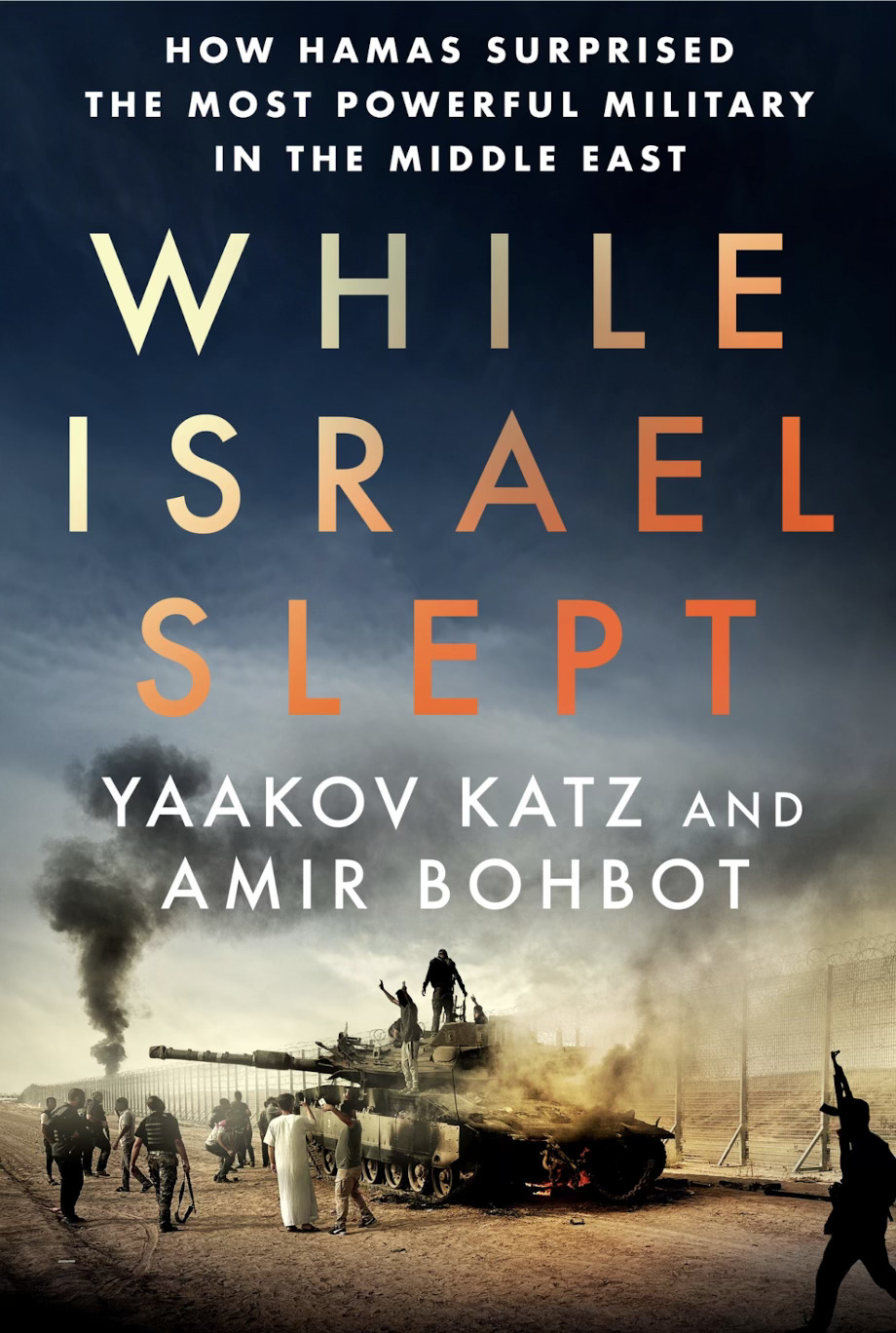
Building on these efforts to understand the events of that day, a recent contribution by two prominent Israeli journalists, Yaakov Katz and Amir Bohbot, offers a detailed and chilling account of the horrors of October 7, further illuminating the complexities of this tragedy.
Curtesy of k-larevue
While Israel Slept: How Hamas Surprised the Most Powerful Military in the Middle East by Yaakov Katz and Amir Bohbot is not merely a journalistic account of a catastrophic event; it is a searing indictment of systemic failures that led to a human tragedy of unprecedented proportions for the Jewish people and the State of Israel. This book painstakingly dissects the intelligence blunders, strategic miscalculations, and profound complacency that allowed Hamas, often dismissed as a minor threat, to execute the most devastating attacks in Israel’s seventy‑six‑year history on October 7, 2023. It is a narrative that compels remembrance of the Israeli victims, honors the suffering of survivors and their families, and acknowledges the ultimate sacrifice of soldiers killed in the brutal aftermath. The authors present a powerful, memorable, and engaging review of Israel’s journey into a “strategic slumber,” revealing how a nation seemingly at the pinnacle of military and intelligence prowess could be caught so tragically off guard.
The title itself, While Israel Slept, encapsulates the central thesis: Israel was lulled into a false sense of security, tragically underestimating an enemy that openly declared its genocidal intentions. The consequences, as the book powerfully demonstrates, were profound, reshaping not only Israel but also the Middle East and, arguably, the world.
The day of horror
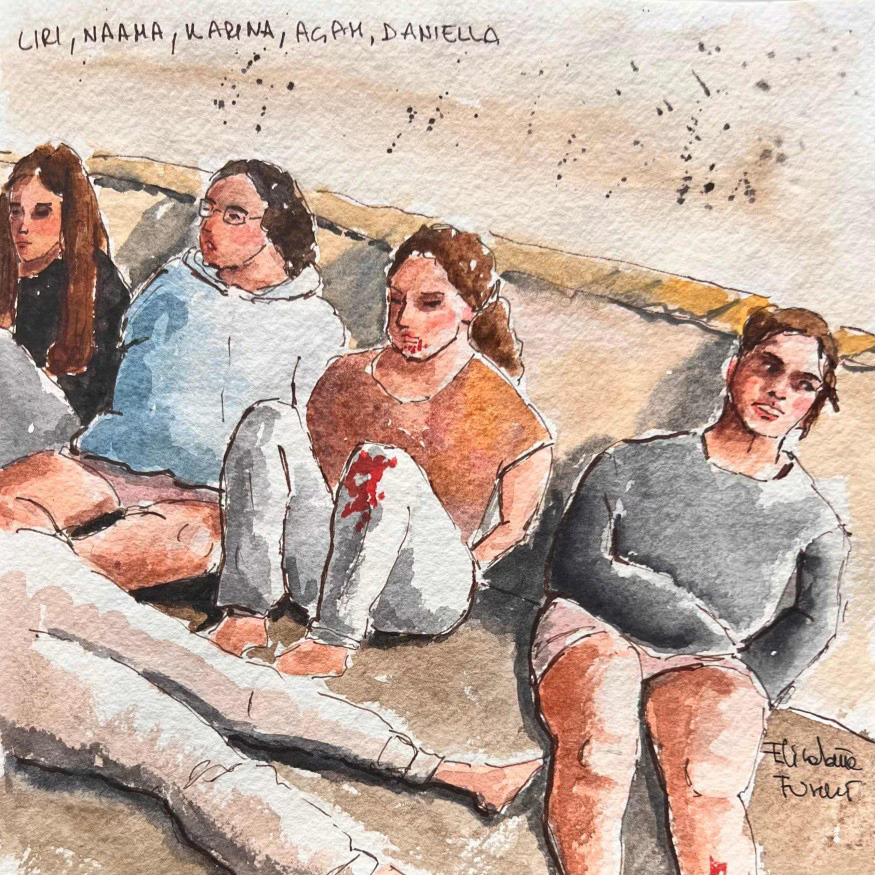
The book plunges the reader immediately into the unimaginable horror of October 7, 2023, a date etched forever into the memory of Israel and the Jewish people. It begins with the chilling scene of female Israeli soldiers, the tatzpitaniyot (observers), bound with plastic zip handcuffs, many still in pajamas, their faces blood‑stained. These young women, “just nineteen and twenty years old,” were the “eyes of the army,” tasked with monitoring every inch of the Israeli‑Gaza border from their base at Nahal Oz. Their role, created in the early 2000s, required superior visual acuity and observational skills, predominantly assigned to female soldiers. Yet, on this fateful morning, their expertise proved futile against a deeply entrenched strategic blindness.
At 6:29 a.m., the deceptive calm was shattered by missile sirens, initially dismissed as a distraction. Roni Eshel, one of the tatzpitaniyot, issued urgent broadcasts: “Four people are running to the fence… Two armed people are running at the fence.” Moments later, the dreaded code phrase “Turkish horsemen” signaled a border infiltration. “One has crossed fence and is armed,” she said, her urgency escalating. Within minutes, “terrorists blowing holes in the fence all along the border” cut electricity to cameras, rendering the observers blind. Eshel’s final broadcast, “They have blown up the hourglass [IDF code for the fence]. Three men are currently on Burma [IDF code for the road next to the security fence situated in Israeli territory]. They are armed,” foreshadowed the full‑scale invasion.
This was not a mere skirmish. As hundreds of rockets rained down, “thousands of Palestinians, including hundreds of Hamas’s elite Nukhba fighters, were blowing holes in the border barrier on their way to commit an unprecedented massacre inside Israel.” Roni Eshel and fifteen of her fellow soldiers were brutally murdered. Daniel Perez, a 22‑year‑old armored corps officer, fought valiantly in his Merkava Mk 4 tank for an hour before being overrun and killed, his body seized by Hamas.
The stories of the tatzpitaniyot are particularly heartbreaking. Unarmed, they had gathered in a “safe area” while Hamas fighters “shot anyone who was in their way, killing more than fifty soldiers in the small outpost.” The text messages sent by these young women to their families are a testament to the sheer terror and helplessness they faced. Liri Albag, texting in the family WhatsApp group, confirmed the infiltration, met with a family member’s disbelief: “That is not funny.” Her desperate reply: “I am not kidding… They have penetrated the base and are shooting. I have not been hit.” Daniela Gilboa’s plea to her mother, “Mom, pray for us… Please, just pray mom. This is not the time for questions,” echoes the raw fear. Karina Ariev’s final words to her sister, Sasha, amidst gunfire: “If I don’t survive, still be happy with your life and take care of mom and dad. Don’t forget to keep living,” are a gut‑wrenching farewell.
The captured footage from Hamas bodycams, released months later, revealed IDF soldiers “stricken with terror,” their faces “bloody and swollen,” as terrorists yelled, “You dogs, we will step on you!” and threatened, “Our brothers died because of you. We will shoot you all.” One terrorist chillingly remarked, “Here are the women who can get pregnant,” and another, “You are so beautiful,” highlighting the dehumanizing and sexually charged violence.
Beyond the bases, “Hamas terrorists had blown dozens of openings in the border fence and infiltrated almost all of the neighboring communities,” including cities like Sderot and Ofakim. “Everywhere they went, they raped, murdered, and abducted. No one was immune.” The Nova Music Festival became a scene of unspeakable carnage, with “more than 360 people” slaughtered. Kibbutz Nahal Oz, a symbol of “Israel’s pioneering spirit, of its resilience in the face of adversity,” celebrating its seventieth anniversary, was brutally attacked. This echoed a tragic incident from 1956, when Roi Rotberg, a security officer at the kibbutz, was ambushed and killed by Arabs, his mutilated body dragged into Gaza. Moshe Dayan’s eulogy then, “Not from the Arabs of Gaza must we demand the blood of Roi, but from ourselves… How our eyes are closed to the reality of our fate, unwilling to see the destiny of our generation in its full cruelty,” eerily foretold the blindness of October 7, 2023.
The scale of the massacre was horrifying: more than 1,200 people were killed that day and another 251 were taken hostage by Hamas. Israeli President Isaac Herzog called it the single day that the most Jews were killed since the Holocaust. This human tragedy, the authors stress, was not supposed to be possible for a state with “the mighty IDF, one of the best‑trained and technologically advanced militaries in the world” and “two of the world’s most advanced intelligence agencies.” Yet, Israel was taken completely by surprise.
The how: an anatomy of failure
The book argues that October 7 was the culmination of “three tactical failures and one massive, and almost unprecedented, strategic failure”: intelligence blindness, the collapse of defensive measures, the unpreparedness of forces, and an overarching “conceptzia” that dismissed Hamas’s true intentions.
1. The conceptzia. The fundamental strategic failure was the conceptzia—the deeply ingrained belief within Israel’s political, military, and intelligence leadership that “Hamas had been deterred and wanted quiet.” This prism colored all intelligence, causing anything contradictory to be “ignored or reinterpreted.” The Abraham Accords and the prospect of Saudi normalization fueled this optimism, suggesting that the “Palestinian cause had fallen off the world’s agenda.” This belief persisted despite clear warnings.
Yahya Sinwar, the ruthless Hamas leader, was openly training fighters, publishing documents, and making speeches calling for Israel’s destruction. Yet, the Israeli intelligence community “preferred to ignore what it was seeing and hearing.” Sinwar’s 2023 rally speech promising to “come to you, [allāh] willing, in a roaring flood… with endless rockets… with a limitless flood of soldiers… with millions of our people” was dismissed, though the attack was indeed named al‑Aqsa flood.
Tatzpitaniyot repeatedly filed reports and warnings about “suspicious activity” along the border, even witnessing Hamas fighters “train for an assault against Nahal Oz on an exact scaled model of their own position” and rehearsing attacks against Merkava tanks. These critical observations were “ignored” by commanders, who told the young women “everything was fine.” Such information usually went up the chain of command, but this time, it did not penetrate the prevailing conceptzia.
As early as 2016, then‑Defense Minister Avigdor Lieberman issued a “Top Secret” report, warning of the “grave mistake” of delaying a “preemptive strike” against Hamas beyond July 2017. He explicitly predicted that Hamas intended to bring the next conflict onto Israeli soil, deploying “significant and well‑trained forces to capture an Israeli town, or perhaps several, and take numerous hostages—a move… that would shatter Israeli morale.” This prophetic document, corroborated by later intelligence, was tragically ignored.
2. Intelligence blindness. A failure to connect the dots. Israel possessed a “mountain of information” but failed to “connect it into a comprehensive picture.” Key intelligence pieces were either dismissed, misinterpreted, or simply “stuck” within the bureaucratic channels.
In November 2023, the “Jericho Walls” booklet, prepared by Aman (Hebrew acronym for the Tel Aviv headquarters of Military Intelligence) in 2022, surfaced, detailing “Hamas’s meticulous planning for an invasion of Israel.” This document, an almost exact summary of what had happened on October 7, outlined a “systematic assault aimed at overwhelming Israeli defenses and raiding towns and key military bases.” Despite its existence, it was “dismissed as nothing more than a prop.”
Just three months before the invasion, a veteran Unit 8200 analyst warned that Hamas was preparing for war, noting that their training was different than in the past and involved “special religious decrees to be extraordinarily violent.” Her reports were “dismissed” by superiors. Her frustrated email, sent just days before the attack, included a quote from Freud: “Before you diagnose yourself with depression or low self‑esteem, first make sure that you are not, in fact, just surrounded by assholes.” This pointed accusation to her superiors went unheeded.
On October 6, multiple warning signs emerged. A crucial system designed to identify anomalies in Gaza crashed repeatedly, potentially due to a “sophisticated cyberattack.” At 10 p.m., Shin Bet received an alert about “dozens of senior Hamas military operatives in Gaza” activating mobile devices with Israeli SIM cards, a known tactic for communication after crossing the border. However, this was downplayed as a likely “annual test.” The IDF chief of staff, Lieutenant General Halevi, cautioned against “tipping off Hamas,” which prevented Southern Command from taking defensive measures. Shin Bet chief Ronen Bar’s instincts were on high alert, even dispatching his elite “Tequila” unit to the border, but the prevailing intelligence still leaned toward the “conclusion that Hamas was running a drill.” Ultimately, “no one thought that anything big was about to happen.” This collective failure to synthesize available intelligence into an accurate assessment proved catastrophic.
3. Collapse of defensive measures. Israel had invested “over $1 billion” in an “iron wall,” an underground barrier and high fence along the Gaza border, equipped with “sensors, cameras, and remote‑controlled heavy guns.” This was believed to be impenetrable, leading to the fatal assumption that “the only way Hamas could cross the border was by tunnel.” On October 7, “not a single terrorist used a tunnel” to enter Israel, instead “blowing holes in the border barrier” at “sixty different locations.” This technological overreliance created a dangerous blind spot.
For years, Israel focused almost exclusively on cross‑border tunnels, neglecting the vast “underground city” Hamas was building beneath Gaza. This “invisible, extensive underground Gaza” became a terror dungeon for 251 hostages. The discovery of “the Monster” tunnel near the Erez crossing—“two miles long, seventy yards deep, and up to six yards at its widest,” large enough for a jeep to pass through, and undetected for so long—epitomized this failure. Hamas even documented IDF units along the border and military bases, demonstrating their superior intelligence gathering on Israeli defenses.
4. Forces unprepared, outnumbered, and outgunned. On October 7, the Israeli forces along the border were “outnumbered and outgunned.” Years of defense policy focusing on technology and avoiding ground incursions had left the military ill‑equipped for a massive, multi‑front ground invasion.
Believing the border was secure, the IDF approved a “downsizing of the security force deployed there by a battalion, which is approximately one thousand soldiers.” General Yisrael Shomer, living in a kibbutz assaulted by Hamas, left his M16 rifle on base because “he did not think that he would need his M16.” This highlights the deep‑seated belief that “a Hamas invasion was impossible.”
Defense Minister Yoav Gallant, though experienced, was surprised by the attack, as all intelligence briefings had concluded the “situation was under control.” The initial response was “complete chaos,” with bases offline and no clear operational picture. General Rosenfeld, Gaza Division commander, pleaded, “Send the entire IDF to the Gaza Division,” but his call for help “did not translate into action as quickly as it should have.” Commanders like Colonel Yonatan Steinberg were killed rushing to the border without knowing the full scale of the enemy forces.
The why
The book delves deeper, seeking the why behind these failures, tracing them back to intentions, ideologies, and ambitions of Israeli decision‑makers.
1. The containment trap and reluctance for preemptive action. A recurring theme is Israel’s “willingness to contain threats and refrain from preemptive action that could lead to a wider war.” This policy, driven by a “desire for peace and quiet,” led to watching Hezbollah amass “over 150,000” rockets and consistently “stopping short of going all the way and toppling Hamas” in Gaza operations.
The Hollywood ruse. An example cited is the 2019 incident where the IDF staged fake casualties on the Lebanon border to avoid escalation, leading to politicians “in love with acts of deception” believing this policy could “keep Israel safe.” This short‑term success blinded them to the long‑term danger of allowing enemy buildup.
Fear of Gaza. The memory of previous protracted conflicts in Gaza (e.g., Operation Protective Edge in 2014, with 68 soldiers killed) fueled a deep‑seated “fear of descending into a Palestinian death trap.” This aversion to ground operations, coupled with the delegitimization of IDF ground forces by “senior military and government officials,” emboldened Hamas to think Israel would always restrain itself. Even Prime Minister Netanyahu, a Sayeret Matkal veteran specializing in covert operations, had long been hesitant to employ military force.
2. Blackmail. The Qatari money and the idea of Hamas as an “asset.” Perhaps the most shocking revelation is how Israel’s leadership, sustained by successive governments, allowed Qatari funds to flow into Gaza, effectively “paying blackmail to a terrorist group.” The book argues that a cross‑party Israeli strategy—funded by Qatari cash and propped up by faith in technology—bred complacency about Hamas and helped set the stage for October 7. The bet on cash‑for‑quiet, for years, allowed recurring Qatari payments—about $30 million in cash at a time—into Gaza. The wager: if Hamas had salaries and assets to lose, it would choose calm over war. Calling it a “fairy tale,” the authors note that Hamas openly promised mass murder, abductions, and sexual violence while Israel reinterpreted those threats as bargaining tactics.
3. Political interference and internal division. The book critically examines the role of political leadership in the failures. Netanyahu’s decision‑making style, preferring “smaller, more exclusive cadres,” and his “significant influence of politics on everything” are highlighted.
Despite “at least a dozen different cases” where Shin Bet and IDF prepared plans to eliminate Hamas leadership, prime ministers often “refused to advance the plans, fearing that they would lead to an all‑out war” or due to “political considerations.” The failed 2003 “flower” mission, where top Hamas leaders (Yassin, Deif, Haniyeh, al‑Ghoul) were gathered in one building but were spared due to a fear of civilian casualties and an intelligence miscalculation, is a stark example of a “once‑in‑a‑lifetime opportunity” blown.
The controversial judicial overhaul initiated by Netanyahu’s government in 2023 “torn apart” Israel, leading to massive protests and reservists threatening to stop service. This internal division was seen by Hamas, Hezbollah, and Iran as a “severe, unprecedented crisis that threatens its cohesion and weakens it,” an “invitation for an enemy to attack.” This is the opportunity Israel “unwittingly handed to Hamas.”
Profound Consequences
The human cost of these failures is the tragic core of While Israel Slept. The book ensures that the abstract concepts of strategic and intelligence failures are always grounded in the individual lives shattered.
The numbers—over 1,200 murdered, 251 abducted—are staggering. But it’s the personal stories that truly convey the horror: “People were being shot in their beds. Others were locked in their safe rooms as Hamas terrorists were trying to break down the doors.” The video showing captured female soldiers, bloody and terrified, pleading in English while terrorists mocked them and discussed their fertility, is a chilling reminder of the barbarism. The documents found on Hamas terrorists, including maps of kibbutzim highlighting dining rooms where residents were to be gathered for abduction, and “religious rulings—fatwas—so they could justify the barbaric tactics of rape, abuse of bodies, and more,” reveal a calculated evil aimed at a pogrom “in the worst way possible.”
The soldiers who responded heroically faced “total chaos.” Lieutenant Colonel Ziv Boanish, whose unit reconquered Kibbutz Nahal Oz after a grueling fifteen‑hour battle, felt the burden of responsibility acutely. His soldiers encountered homes that were “war zones,” with “bodies dragged on the floor inside pools of blood.” The desperate cry of a survivor, “Where were you? What took you so long?” symbolizes the profound sense of abandonment felt by victims. Boanish later recounts the horror of fighting Hamas terrorists emerging from tunnels, wearing looted IDF helmets and uniforms, struggling to distinguish friend from foe. He speaks of seeing “our people were massacred inside their own homes. Short of the word ‘Holocaust,’ nothing else comes close to describing the pogrom, the atrocities we witnessed against Jews in those houses.” The mental toll on soldiers, with officers seen “huddling in a corner crying or holding back tears,” underscores the deep trauma.
October 7 pushed Israel into “a regional war that spread to Lebanon and Iran,” a “new era of warfare.” The comparisons to the 1973 Yom Kippur War, another surprise attack that “shattered the nation’s confidence and traumatized its citizens,” are highly relevant. However, unlike in 1973, a decisive victory against Hamas still seemed “far away” by mid‑2025.
The book is a stark reminder that the failure of October 7 was not merely a military or intelligence mishap; it was a human tragedy that reshaped the destiny of the Jewish people and the geopolitical landscape of the Middle East. The complacency, the strategic blindness, the political opportunism—all contributed to a catastrophic lapse that allowed an openly genocidal enemy to unleash unspeakable horror. The authors conclude with a plea for vigilance and unity, recognizing that Israel’s greatest threat may not be external enemies but “the danger that lies within it—a threat born of division and self‑inflicted harm.”
The authors are unflinching in their criticism, yet deeply empathetic in their portrayal of the human cost. It is a call to awaken, to learn, and to ensure that the lessons of October 7 are never forgotten, so that such a tragedy, with its profound consequences for the Jews, for Israel, and for the Middle East, can never, ever happen again. Let’s honor Karina Ariev’s words to her family, to her Jewish people, and to those who value life, dignity, and human spirit: “Don’t forget to keep living.”
Sources:
Yaakov Katz and Amir Bohbot, 2025, While Israel Slept: How Hamas Surprised the Most Powerful Military in the Middle East . New York: St. Martin’s Press
Ruth Halperin-Kaddari, Nava Ben-Or, and Sharon Zagagi-Pinhas, 2025, A Quest for Justice: October 7 and Beyond. The Dinah Project Report www.thedinahproject.org
Douglas Murray, 2024, On Democracies and Death Cults: Israel and the Future of Civilization. New York, NY: Broadside Books.
APPG for UK-Israel, 2025, 7 October Parliamentary Commission Report. Chaired by Lord Roberts of Belgravia. 7octparliamentarycommission.co.uk


