Doctrine in Action: Validation of the 2025 National Security Strategy
22 December 2025
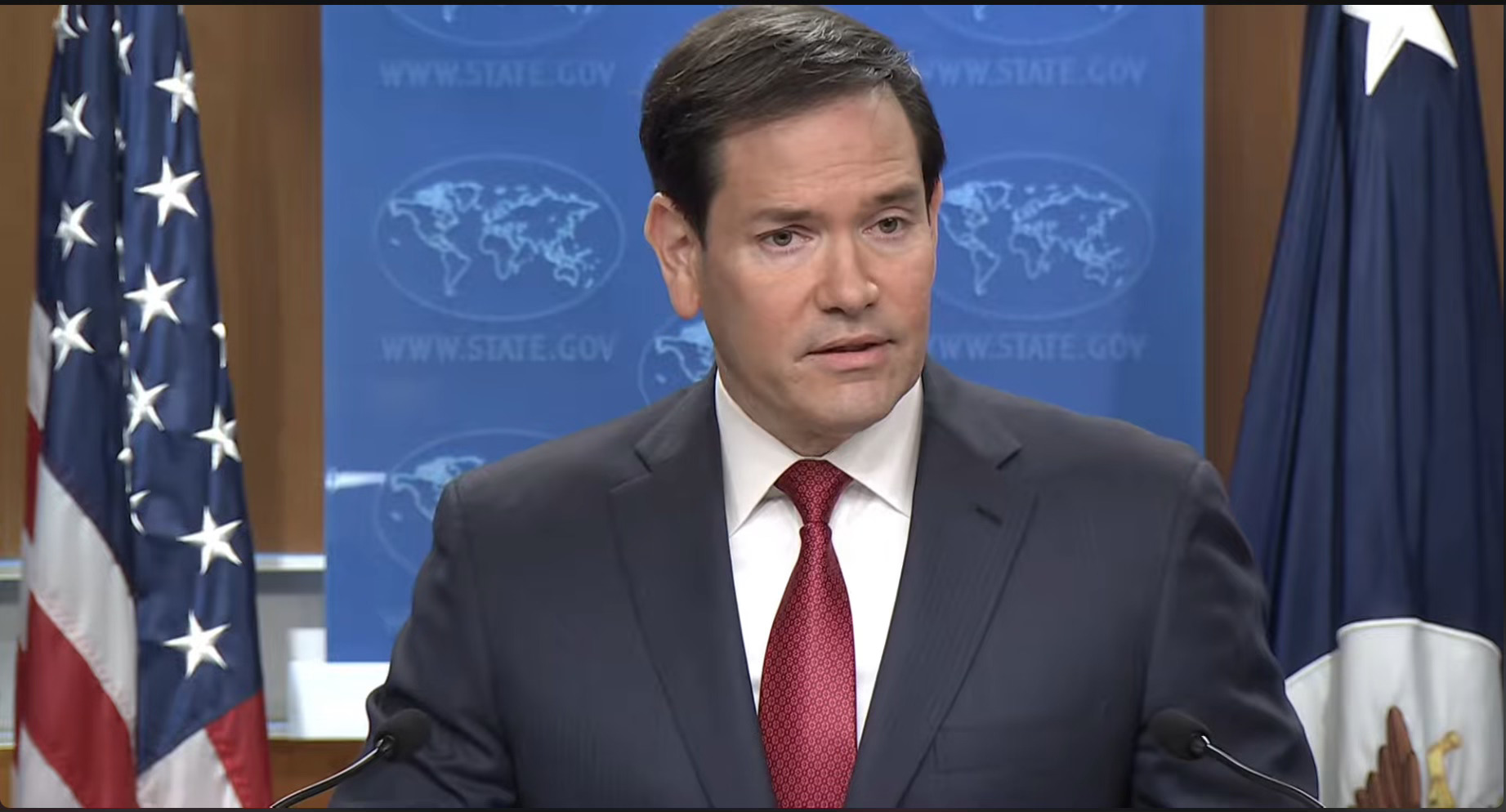
Secretary of State Marco Rubio Remarks to the Press
From Strategic Text to Action
This essay picks up the thread where my recent analysis of the 2025 National Security Strategy left off. There, I argued that the NSS did not conjure a new world into being, but merely gave official sanction to one that already existed. Here, I push the argument further—and into more unsettling territory. The worldview identified is no longer a matter of doctrine or aspiration; it has crossed the threshold into action. What once appeared as abstract strategy is now becoming the everyday operating logic of American policy, applied openly, confidently, and without disguise.
The thesis of this essay is that Secretary of State Marco Rubio’s recent, unusually long, public remarks provide a direct and comprehensive real-world validation of the fundamental geopolitical shifts underway. His statements, far from being a collection of disparate policy positions, represent a coherent and methodical application of the new strategy. To demonstrate this alignment, I shall begin with key arguments—the recalibration around the national interest, the prioritisation of the Western Hemisphere, the reordering of global relationships, and the application of “Flexible Realism”—and substantiate each with direct evidence from Secretary Rubio’s own words. The profound congruence between the strategic text and its diplomatic moves affirms that a new, enduring era of American foreign policy is decisively underway, starting with its most foundational principle.
The Complete Recalibration
The most fundamental premise of the 2025 NSS is that it codifies a pre-existing reality rather than inventing a new one. It is an acknowledgement that the global tectonic plates have already shifted, rendering old assumptions obsolete. Scrutinising how Secretary Rubio’s own words confirm this foundational shift, we can establish the primacy of the national interest as the unshakeable core of American foreign policy.
Viewing the NSS a codification of a new reality, I find its perfect echo in Secretary Rubio’s opening statement that U.S. foreign policy required a “complete recalibration.” The reason, Rubio explains, is that “the world has dramatically changed,” and the United States had been operating on assumptions about a “world that no longer existed.” This is not the language of innovation but of recognition; it is a direct admission that the policy document merely formalises a change that has already occurred.
This recalibration is built upon the principle of “national interest,” which Rubio places at the “core” of the new foreign policy. His precise definition validates the argument for a return to a rational, interest-based approach, stripped of the ideological crusades of the past. The national interest is no longer an abstract concept but a clear metric: policies that make America “safer or stronger or more prosperous.” This unsentimental framework necessitates a disciplined approach to global engagement, which Rubio outlines through the mechanism of prioritisation. This insistence on prioritisation confirms that the era of America’s willingness “to shoulder forever global burdens” is definitively over. Resources, time, and attention are finite and will now be allocated according to a strict hierarchy of interests. This logic of recalibration finds its most significant geographical application in the strategic pivot towards America’s own neighbourhood.
Fortress America in Practice
The strategic contraction of “Fortress America”—where the primary directive is the security of the homeland—is not merely an abstract concept within the 2025 NSS. It is a tangible policy priority being actively executed, with the Western Hemisphere designated as the central theatre of American interest. Secretary Rubio’s remarks reveal a dual-track strategy: building a cooperative hemispheric security architecture while isolating and confronting those who refuse to participate. This approach translates the “Trump Corollary to the Monroe Doctrine” into decisive action.
Rubio immediately reorients American strategic focus away from distant conflicts and towards immediate, proximate threats by declaring that the “single most serious threat to the United States from the Western Hemisphere is from transnational terrorist criminal groups.” To counter this, he outlines a growing coalition of cooperating states, listing “Mexico... Guatemala, Costa Rica, Panama... Ecuador... Trinidad... Jamaica... the Dominican Republic,” and others as key partners in a shared security effort. This cooperative framework is the positive dimension of the new doctrine.
It is within this context that the U.S. stance on Venezuela becomes clear. The intense focus on the Maduro regime is not just a reaction to an isolated threat, but the direct consequence of its refusal to participate in this hemispheric security architecture. As Rubio explains, Venezuela is the defiant outlier.
“There’s one place that doesn’t cooperate, and it’s the illegitimate regime in Venezuela. Not only do they not cooperate with us, they openly cooperate with terrorist and criminal elements. For example, they invite Hizbollah and Iran to operate from their territory.”
— Secretary Marco Rubio
By explicitly positioning Venezuela as a state that not only shuns cooperation but actively partners with America’s enemies, Rubio justifies an intense focus on regional security, backed by “the elements of American power.” This is the practical application of “Fortress America”: a strategic concentration of power in America’s immediate sphere of influence to build partnerships and neutralise those who threaten the country by inviting hostile actors into the hemisphere. This clear prioritisation of the homeland necessitates a corresponding re-evaluation of commitments in other, more distant parts of the world.
The New Realities of Europe, Russia, and China
A foreign policy centred on the national interest and hemispheric security must, by necessity, re-evaluate long-standing alliances and rivalries. Secretary Rubio’s remarks on Europe, Russia, and China confirm the pragmatic and unsentimental worldview as the core of the 2025 NSS. The era of ideological alliances and unconditional guarantees is over, replaced by a transactional approach based on current geopolitical realities.
Europe’s New Bargain
It is now clear that the NSS codifies the end of the old transatlantic bargain, where America indefinitely underwrote the security of a prosperous Europe. Secretary Rubio’s remarks demonstrate the diplomatic craft required to deliver this difficult message. His firm but non-confrontational language—stating that the administration is asking NATO partners “to improve their own capabilities”—is the perfect vehicle for implementing the “Hague Commitment.” The message is clear: the United States will remain in the alliance, but its European partners, who are no longer “poor and weak,” must now bear a far greater share of the burden for their own defence. This tactical diplomacy softens the delivery of a profound strategic shift.
Russia as a Regional Problem
The NSS, as noted, reflects Russia’s diminished stature, treating it as a strategic problem to be managed rather than an existential peer competitor. Secretary Rubio’s characterisation of the conflict in Ukraine perfectly aligns with this assessment. He states plainly, “it’s not our war. It’s a war in another continent.” This deliberate framing positions the United States not as a direct protagonist but as an “indispensable” external mediator seeking to end a conflict. This stance substantiates previous analysis that Washington no longer views Russia as a global threat demanding a continent-wide American military response, but as a regional power whose conflicts must be contained, not adopted.
China as a Managed Competitor
As geopolitical analyst George Friedman argues, the new U.S. strategy towards China is one of pragmatic management: “Win the Economic Future, Prevent Military Confrontation.” Secretary Rubio’s description of the U.S.-China relationship mirrors this doctrine squarely. He acknowledges that China “is and it will continue to be a rich and powerful country” and that the U.S. must therefore “find opportunities to work together” while managing inevitable “points of tension.” This is the language of realism, not crusade. It accepts China’s power as a fact and seeks to establish a stable, manageable relationship focused on advancing American economic interests while deterring military conflict—the exact dual-track approach outline in my previous argument. This overarching pragmatism finds its most nuanced application in the complex geopolitical landscape of the Middle East.
A Middle East Strategy of Stability Over Ideology
The principle of “Flexible Realism,” which I believe to be a core tenet of the new strategy, advocates for engaging with the world as it is, not as one wishes it to be, in the service of American interests. This marks the official termination of post-Cold War ideological crusades and nation-building. U.S. policy in the Middle East, as articulated by Secretary Rubio, serves as a powerful case study for this new doctrine. The approach is defined by a laser-like focus on containing direct threats to U.S. interests and fostering stability, without resorting to transformative, open-ended interventions.
Gaza and the Israeli-Palestinian Conflict
The U.S. strategy for Gaza post-ceasefire is a masterclass in this pragmatic approach. The overarching goal, as described by Rubio, is not to impose a grand ideological solution but to create the conditions for long-term, practical stability. He identifies the core prerequisite for peace with stark realism: the disarmament of Hamas.
“Who is going to invest in a peace, who is going to invest in rebuilding a place, that’s going to get destroyed again in a future war? So that’s why disarmament is so critical.”
— Secretary Marco Rubio
This logic is entirely interest-based. Without security, there can be no investment, and without investment, there can be no stability. The proposed solution avoids direct American entanglement. Instead, the U.S. seeks to empower local and regional actors through the establishment of a “Board of Peace,” a “Palestinian technocratic organization” for governance, and a multinational “stabilisation force.” This approach is designed to foster local ownership and prevent the kind of prolonged American nation-building that the new doctrine explicitly rejects.
Containing Iranian Influence
The administration’s policy towards Iran and its proxies further demonstrates a consistent, threat-based realism. A key feature of “Flexible Realism” is that it is not geographically siloed but threat-based; it confronts hostile networks as single, global problems. Rubio identifies Hezbollah as a group seeking to “act as a direct Iranian proxy” and clarifies that the goal is a “strong Lebanese Government that can actually control the country,” thereby neutralising the threat. This is a policy of containment and empowerment, not invasion or regime change.
Crucially, Rubio connects the threat of Iran in the Middle East directly to the security of the American homeland, noting that in Venezuela:
“We have a regime that’s illegitimate; that cooperates with Iran, that cooperates with Hizbollah; that cooperates with narcotrafficking and narcoterrorist organizations…”
— Secretary Marco Rubio
This demonstrates a globally consistent doctrine that confronts the Iranian threat network wherever its tendrils appear, from Lebanon to Latin America. It is a targeted response to tangible dangers, not a boundless quest to remake the world. This consistent application of threat-based realism, from the Gaza ceasefire to the containment of Iran’s global network, provides the final and most compelling validation of Salih’s thesis.
An Irreversible Doctrine Confirmed
Secretary of State Marco Rubio’s public remarks are not a series of disconnected policies but a coherent and systematic application of the strategic doctrine laid out in the 2025 National Security Strategy. The alignment between the document and the diplomatic practice articulated by Rubio is not coincidental; it is confirmatory. It proves that the NSS is the definitive blueprint for a new era of American foreign policy, an era defined by pragmatic realism and a disciplined focus on the national interest.
The evidence is conclusive. Rubio’s call for a “complete recalibration” based on a changed world as a doctrine that codifies a new reality. The intense prioritisation of “transnational terrorist criminal groups” in the Western Hemisphere is the real-world execution of the “Fortress America” concept. The transactional re-evaluation of commitments to Europe, the management of Russia as a regional power, and the pragmatic economic competition with China all reflect the unsentimental reordering of global relationships. Finally, the focus on stability over ideology in the Middle East, particularly in Gaza and with Iran, is a clear application of “Flexible Realism.”
The profound alignment between the strategic document and its real-world execution confirms allows for a bold conclusion: This is an irreversible shift. It is not a temporary adjustment based on the proclivities of a single administration but the formalisation of deep, structural changes in the global order. It represents the established and enduring foundation of American foreign policy for the foreseeable future.
References:
Khaled Salih, 20251215, “An Inevitable Strategy: The 2025 US National Security Document.” https://khaledsalih.substack.com/p/an-inevitable-strategy-the-2025-us
—, 20251026, “Rubio is the Signal, Ignore the Noise.” https://khaledsalih.substack.com/p/rubio-is-signal-ignore-the-noise
U.S. Department of State, 20251219, “Secretary of State Marco Rubio Remarks to the Press.” https://www.state.gov/releases/2025/12/secretary-of-state-marco-rubio-remarks-to-the-press-6/


