An Inevitable Strategy: The 2025 US National Security Document
15 December 2025
The Codification of a New Reality
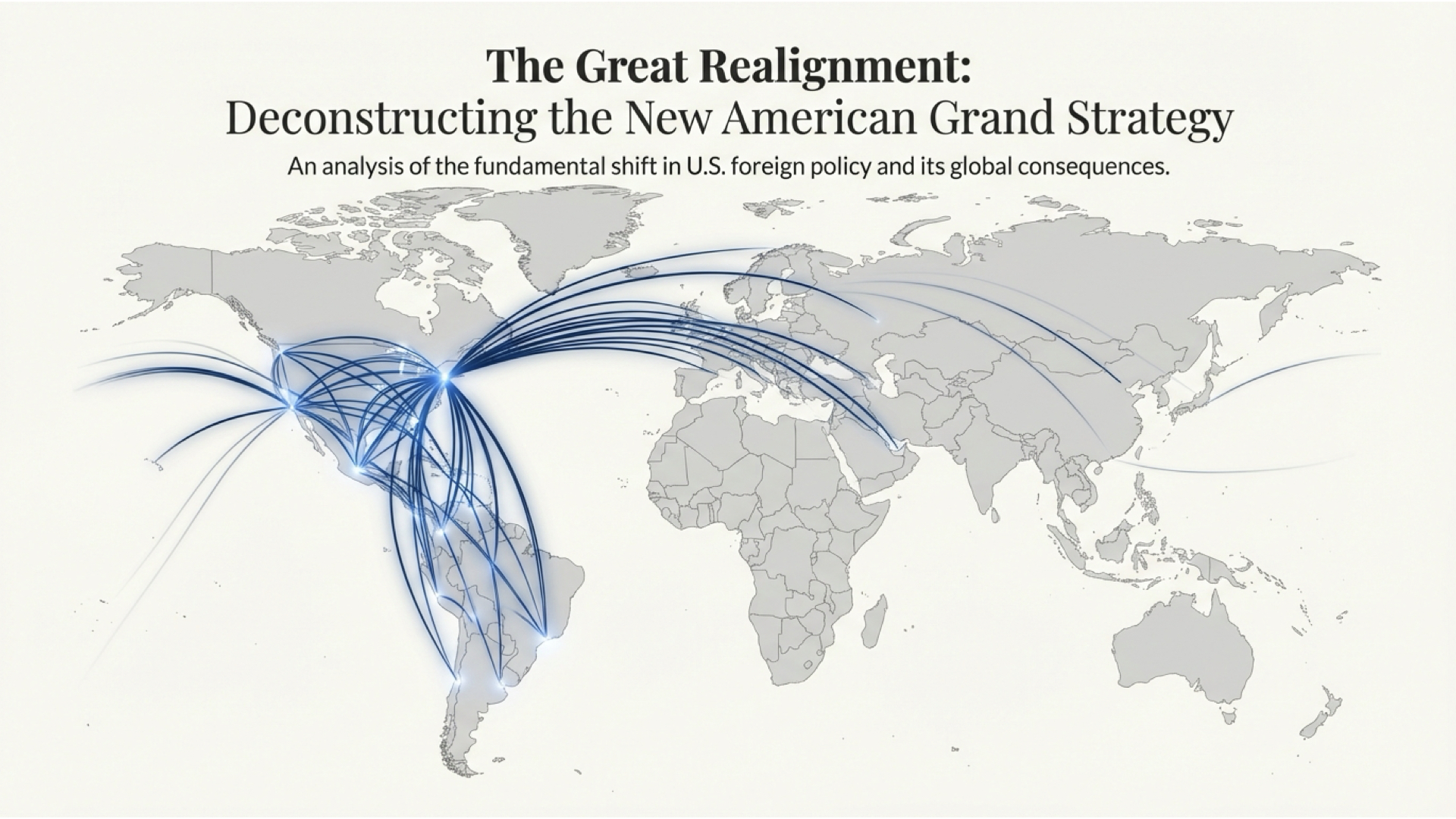
Geopolitics is not concerned with sentiment, but with the immutable realities of geography, power, and interest. We should not consider the 2025 National Security Strategy as a future-oriented political sentiment, but as the formal codification of a global power shift that has been decades in the making. My purpose here is to cut through the rhetorical noise and highlight the systematic, and indeed inevitable, logic that underpins it.
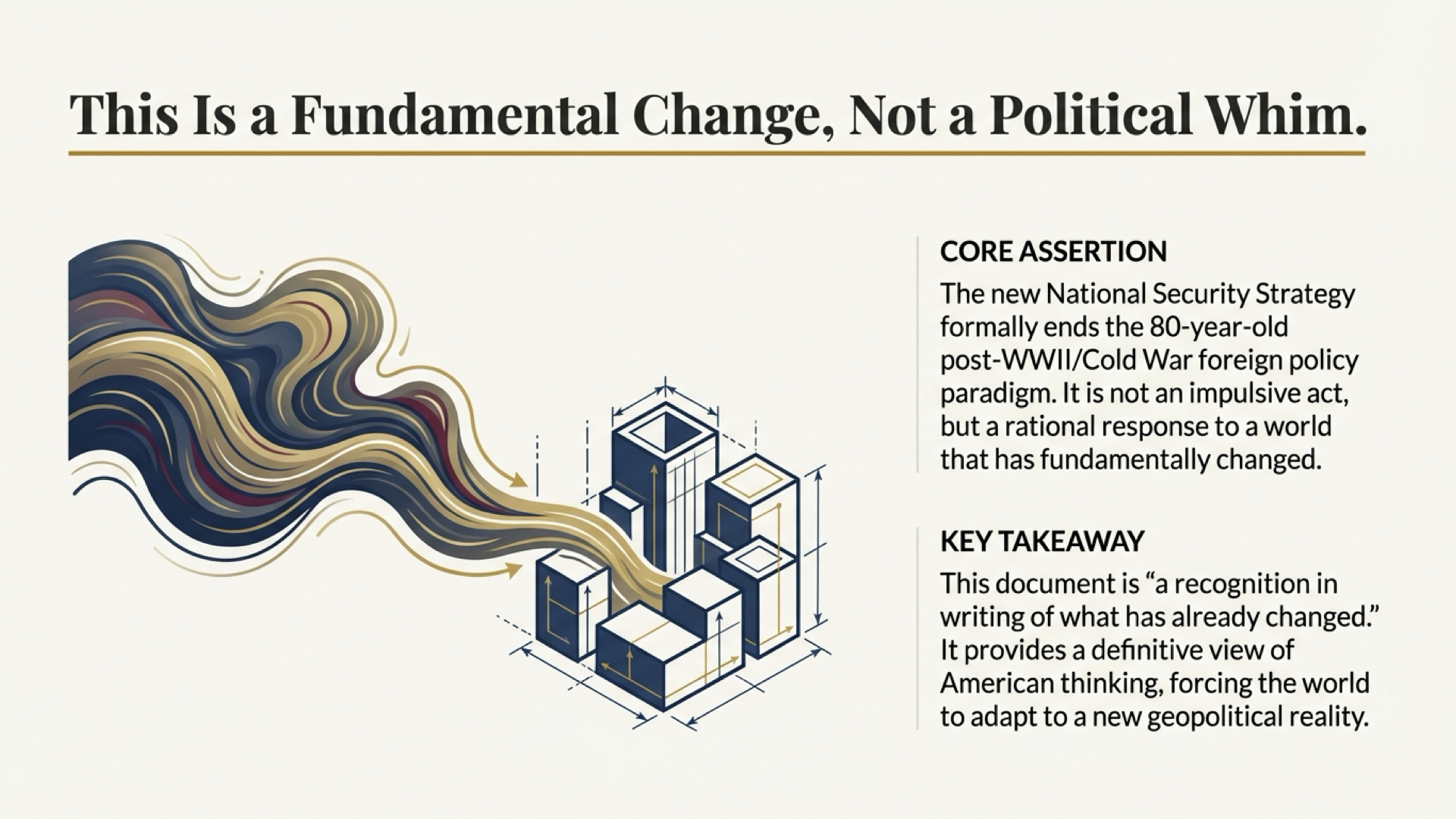
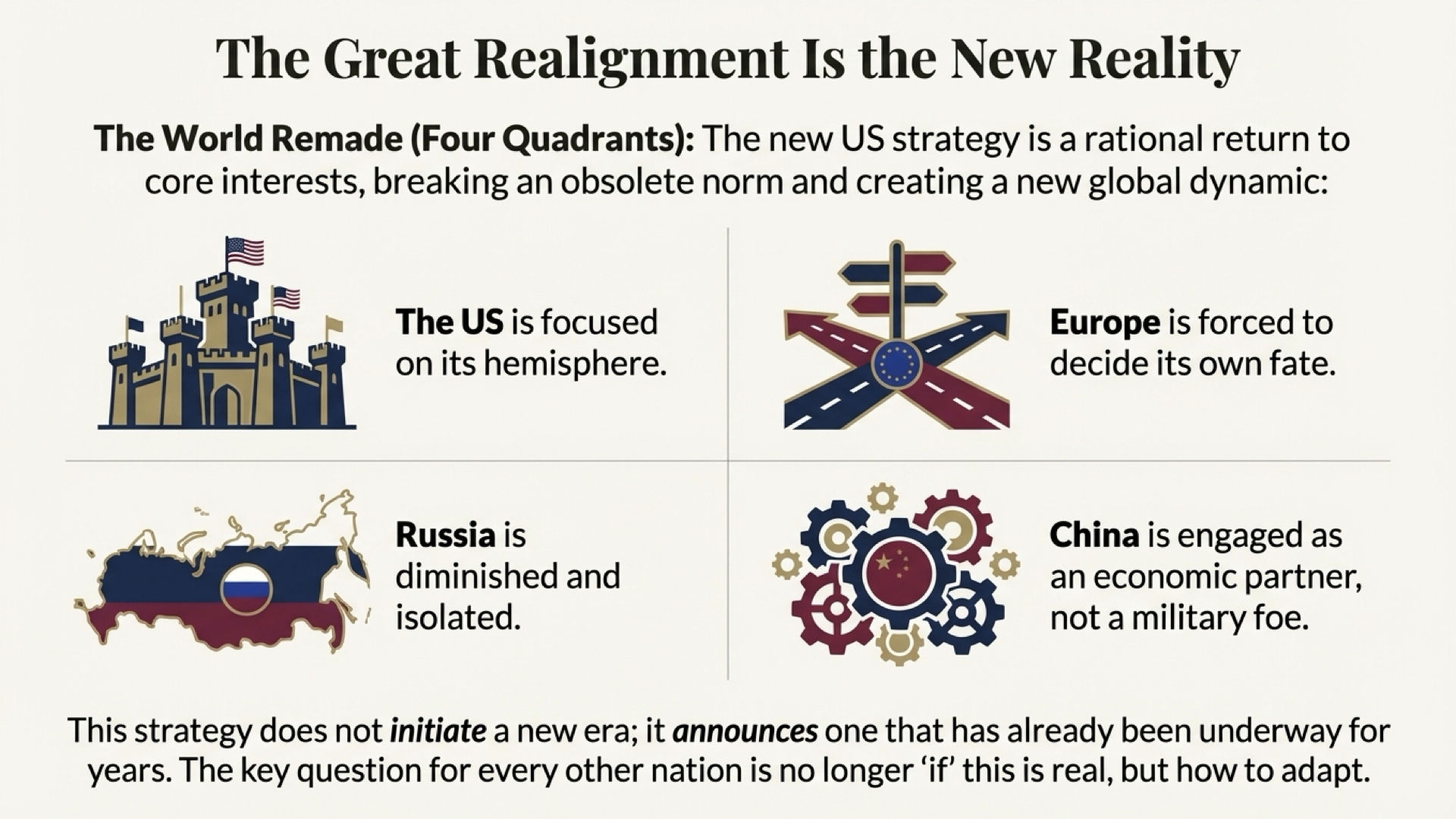
The 2025 NSS is widely misinterpreted. Commentators view it as a mere aberration statement, a reflection of a particular administration’s worldview. This is a profound misreading of its historical significance. Its true function is that of a formal declaration, a codification of a geopolitical reality that has been methodically emerging since the collapse of the Soviet Union. The strategy does not create a new world; it acknowledges the one that already exists.
Indeed, this acknowledgement manifests as a retreat into what former intelligence analyst Scott Ritter identifies as “Fortress America.” It is a strategic contraction where the primary directive becomes the security of the Western Hemisphere, relegating all other global commitments to secondary or tertiary status. As Ritter presciently noted months prior to the document’s release, this is the operationalising of a specific hierarchy: first, the homeland; second, the economic management of China; and third—and distinctly last—Europe.
My central thesis is this: the text is not the cause of a fundamental change in American strategy, but its long-overdue effect. It is, as George Fridman states, a “recognition in writing of what has already changed.” The document’s own introductory critique of past strategies is telling. It dismisses them as “laundry lists of wishes” that “badly miscalculated America’s willingness to shoulder forever global burdens.” This is not mere political language; it is the White House’s official acknowledgement that the 80-year post-war anomaly—an era defined by American preoccupation with the Eastern Hemisphere—is over.
In the following, I shall use George Friedman’s geopolitical reading of the NSS thematically to demonstrate its geopolitical logic. I shall examine its core pillars: the recalibration of relationships with a diminished Russia and a prosperous but dependent Europe; the pragmatic and rational approach to China; and the foundational return to a Western-Hemisphere focus. Each pillar, I shall argue, is a rational and necessary response to the final obsolescence of the Cold War order and the return of a more traditional, interest-based American foreign policy.
The End of the Post-War Order
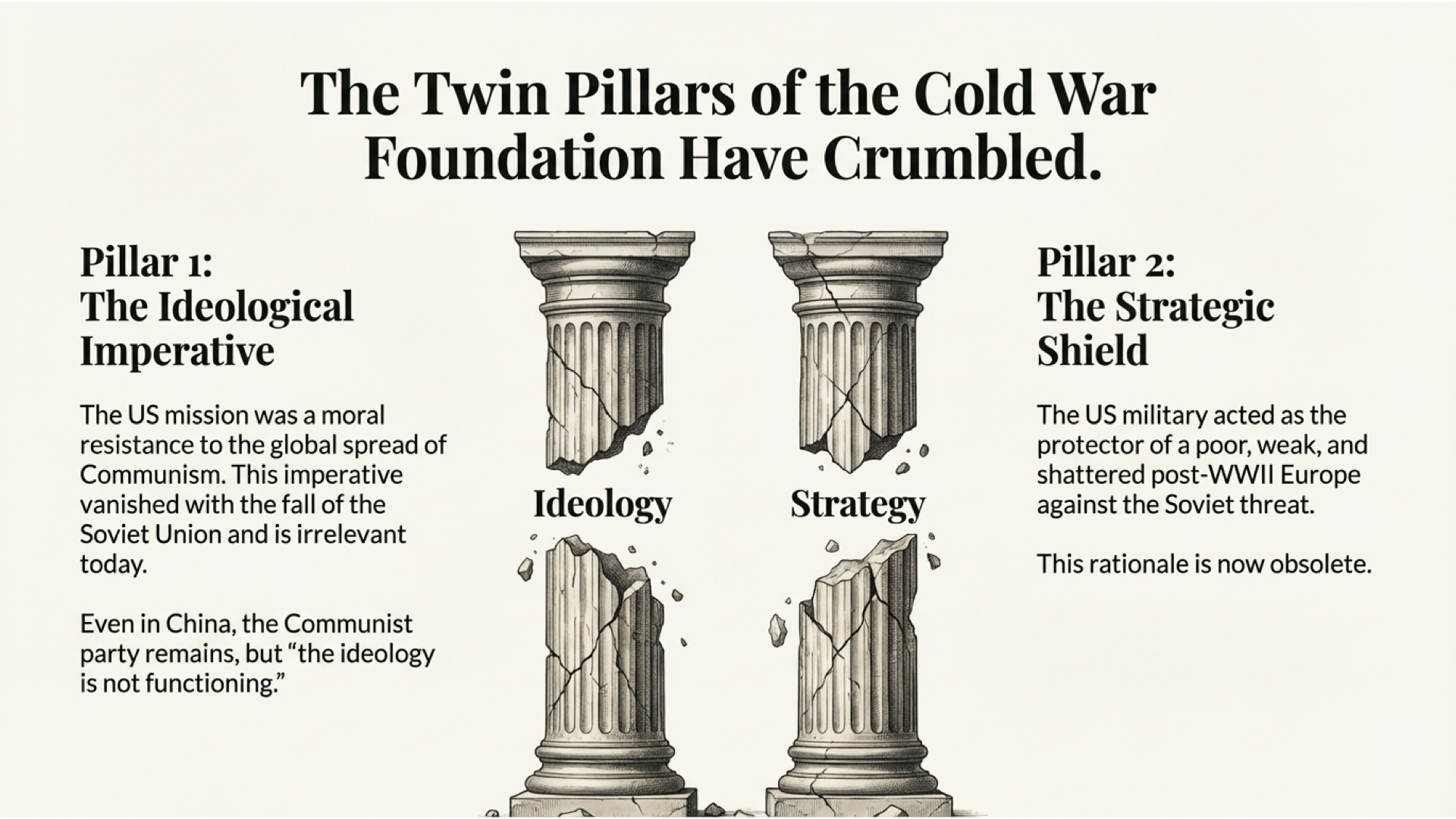
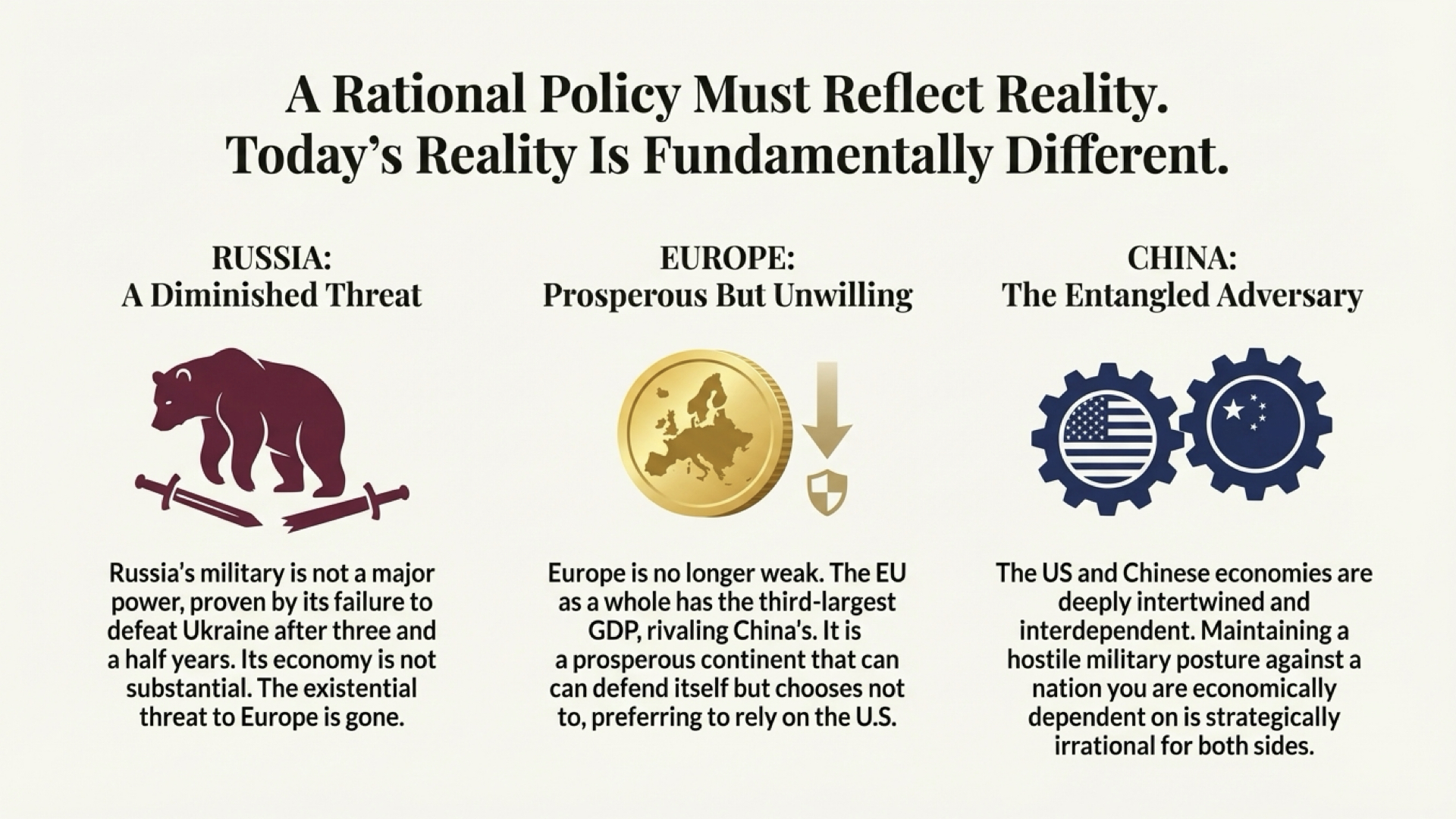
The strategic order of the past 80 years was built upon two foundational premises, both of which are now defunct. The first was the ideological and military containment of the Soviet Union, a mission that animated American foreign policy across the globe. The second, and inextricably linked, premise was the necessity of protecting a weak, shattered, and economically vital Europe from this Soviet threat. The entire architecture of NATO, the Marshall Plan, and the stationing of hundreds of thousands of American troops was predicated on a self-destructive Europe that was “poor and weak” and a Russia that was an existential menace. This is no longer the world we inhabit.
Russia’s Diminished Stature
Russia’s performance in Ukraine has been a clarifying moment for global strategy. It has demonstrated conclusively that nuclear-Russia could not defeat Ukraine even after years of conflict, and therefore the threat to Europe is seen as minimal. The 2025 NSS reflects this new reality through its relative lack of focus on Russia as an existential peer competitor, a stark contrast to every major strategic doctrine of the Cold War. The 2025 NSS is concerned with re-establishing “strategic stability with Russia,” not with containing a world-sweeping ideology. This shift validates a strategic decision evident even under the previous Biden administration, which sent weapons to Ukraine but no American forces fighting the Russian occupation. The American assessment is clear: Russia is no longer a threat that demands a continent-wide American military guarantee for Europe at the cost of American blood.
This realignment spells the inevitable end of the Zelenskyy government in Kyiv. Ritter’s analysis suggests that without the “blank cheque” of American aid—which this Strategy definitively cancels—the political and economic reality of Ukraine collapses. By aligning himself with a European bloc that Washington has declared an economic competitor and a strategic burden, the Ukrainian leadership has placed itself on the wrong side of the new American doctrine. The Strategy suggests a cold abandonment: the US will not finance a proxy war that inhibits the higher priority of economic stabilisation with the East.
Europe’s Self-Inflicted Predicament
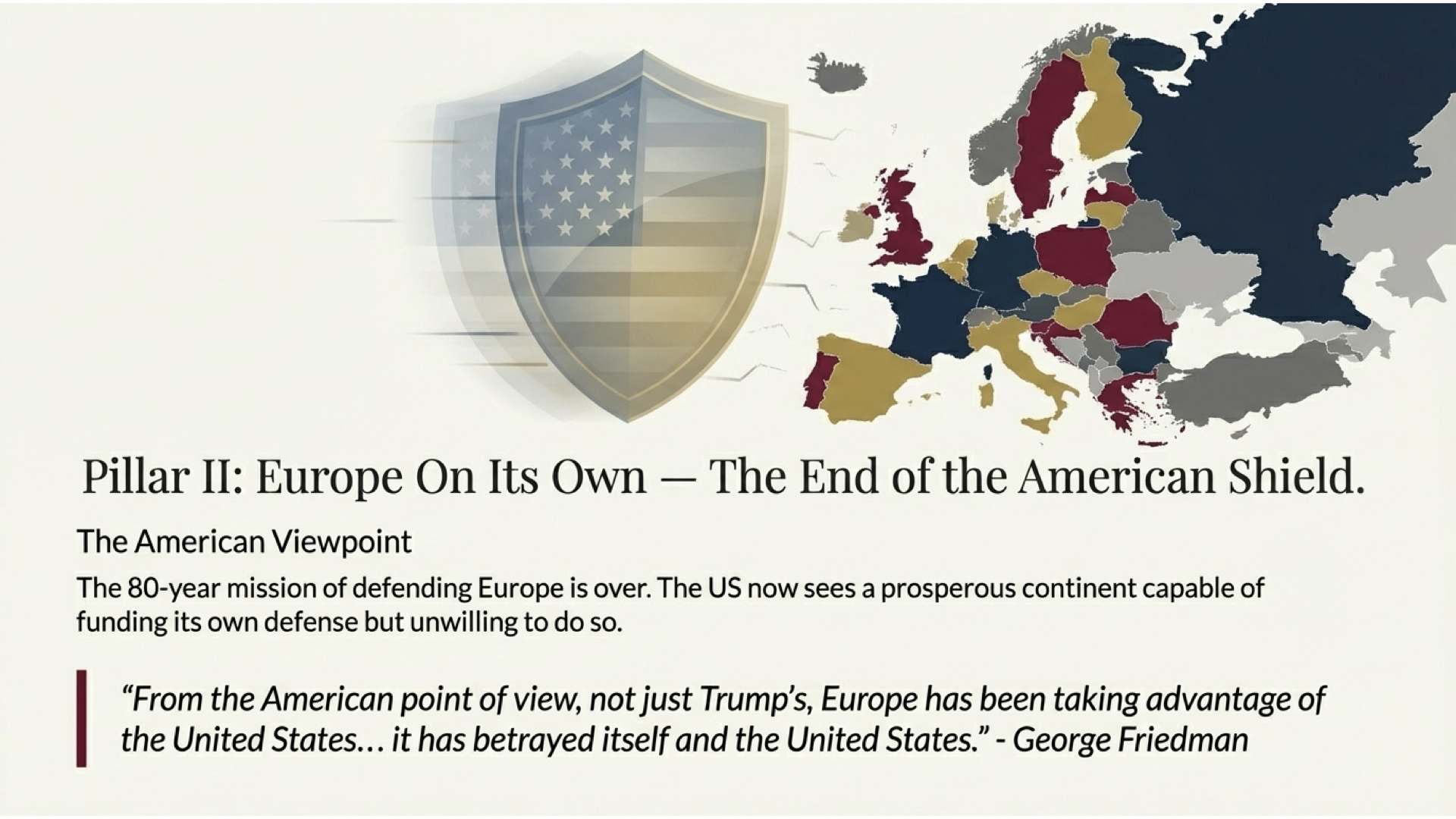
The second premise—a weak Europe—has also been rendered obsolete, though this is a reality European leaders have struggled to accept. The continent is no longer poor and weak as it was in 1945, after decades of conflicts and two world wars. The European Union, taken as a whole, represents the third largest economy in the world, very close to China’s. It is a prosperous, technologically advanced bloc. The NSS’s demands for burden-sharing are therefore a direct and cold response to what Washington now perceives as a fundamental European betrayal. For 80 years, America underwrote European security, allowing the continent to rebuild its societies, welfare states and prosperity. The expectation that this arrangement should continue indefinitely, now that Europe can and should defend itself, is seen as a strategic and moral abdication of responsibility.
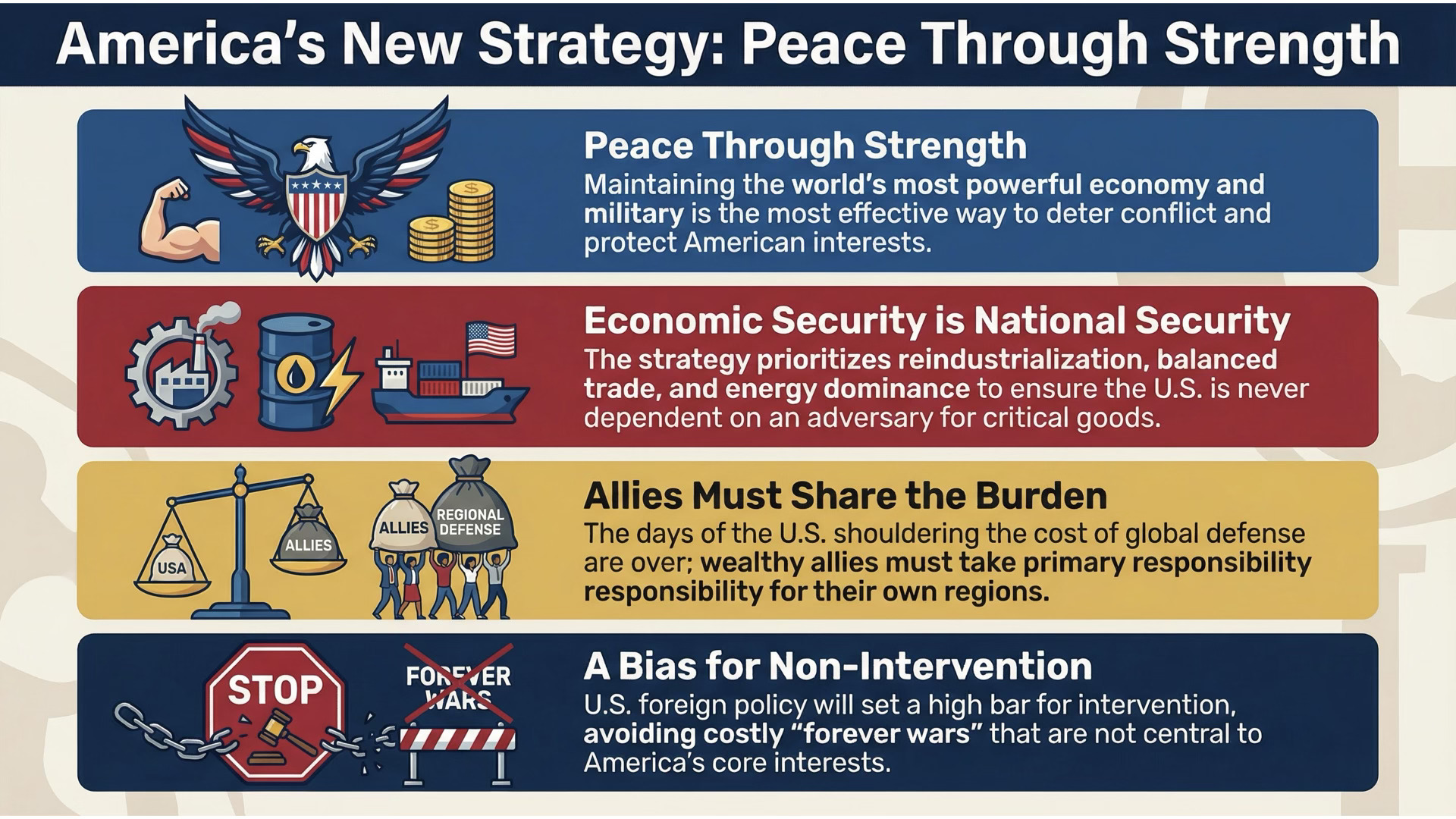
The NSS codifies this sentiment with unsparing clarity. It calls for allies to “spend far more of their national Gross Domestic Product (GDP) on their own defence” and institutionalises this demand through the “Hague Commitment, which pledges NATO countries to spend 5 percent of GDP on defence.” This is not a negotiating tactic; it is the formal end of the old transatlantic bargain.
However, we must strip away the diplomatic veneer of this “Hague Commitment.” As Ritter argues, this demand is the precursor to the cessation of collective defence. The White House document makes clear that the US will no longer automatically underwrite European security, effectively nullifying Article 5 in practice, if not in theory. The US is moving towards what Ritter describes as a bilateral security model—opting out of collective logistical and infrastructure support—where Washington picks and chooses specific partners (such as Poland) while leaving the rest of the bloc to wither. The 5 per cent threshold is not an invitation to step up; it is an eviction notice.
An Existential Choice for Europe
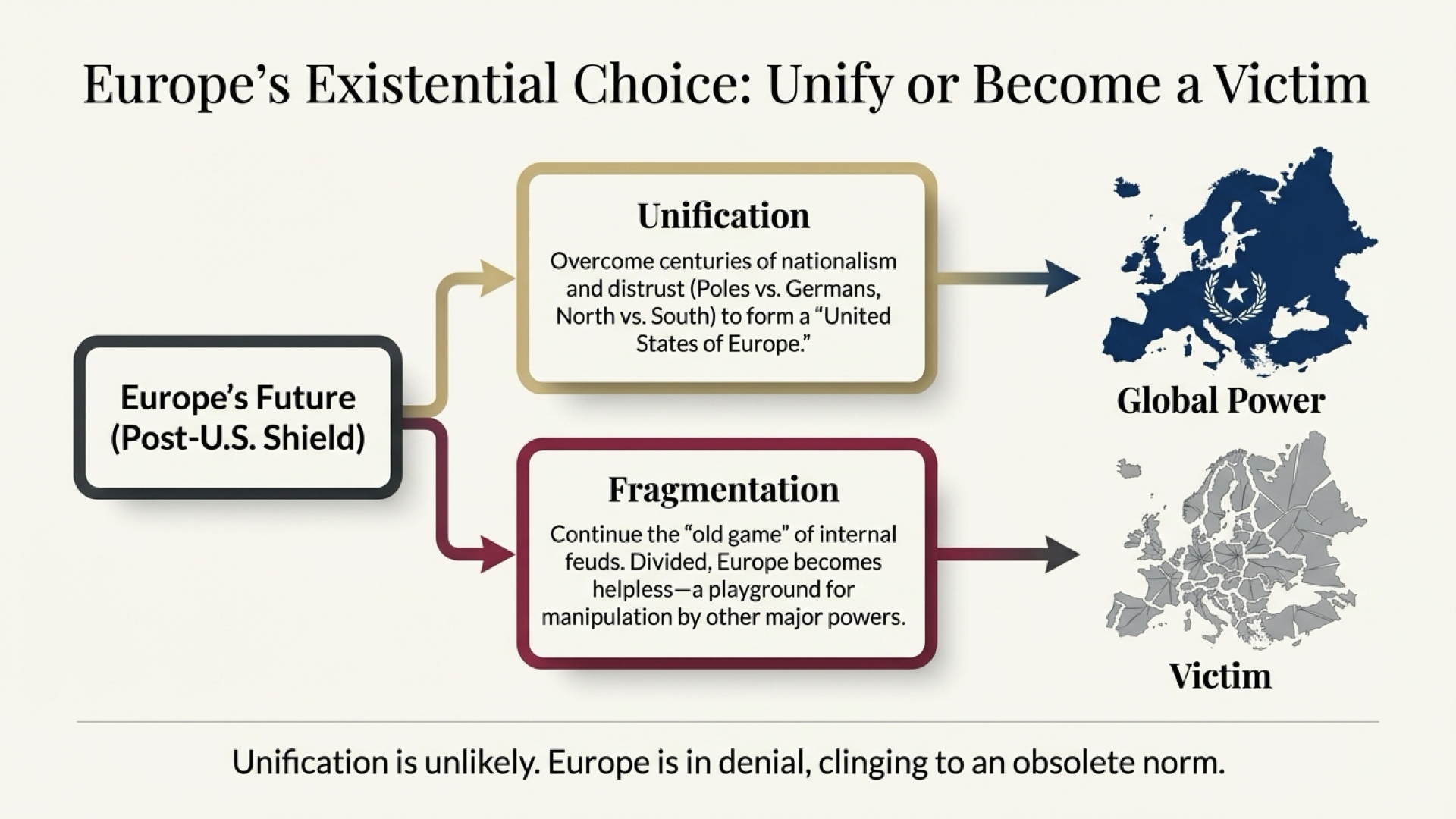
By withdrawing its unconditional security guarantee, the NSS is forcing an existential choice upon Europe. It must now either unite to become a major power in its own right or, as a “fragmented continent,” become a “victim” to be “manipulated and played by the other powers.” The latter is the more likely outcome. Europe’s fatal weakness is its own nature; its nations “cherish their divisions,” their deep-seated historical antagonisms and distrusts, which makes the sacrifice of sovereignty required for true unity a near impossibility.
Furthermore, the rift is not merely born of indifference, but of active hostility. The US administration has fundamentally reclassified the European Union—as distinct from individual European nations—as an adversarial entity. Ritter notes that the White House views the EU’s supranational structure as “fundamentally anti-American,” an organisation that belittles US sovereignty while demanding US protection. The National Security Strategy’s explicit mention of “cultivating resistance” to Europe’s current trajectory confirms Ritter’s assessment: the US is no longer a passive observer of European decline but may actively facilitate the political collapse of EU structures it deems hostile to American interests. The “civilisational erasure” the document warns of is laid at the feet of Brussels, and Washington has signalled it will no longer bankroll it.The NSS states its goal is to enable “Europe to stand on its own feet” and pointedly critiques its loss of “civilisational self-confidence.” This is the official American policy that creates this stark choice. The era of American protectionism is over, and Europe must now decide its own fate.
This dissolution of the old, European-centric order naturally pivots American focus to the new great power dynamic of the 21st century. Nowhere is this danger more acute than for Germany. As Berlin contemplates re-militarisation to compensate for American withdrawal, Ritter issues a stark reminder of Article 53 of the United Nations Charter. This provision, a relic of the Second World War, technically permits enforcement action against former “enemy states” that pursue aggressive policies. A Germany that seeks to confront Russia without the American nuclear umbrella does not just risk military defeat; it invites a legitimacy crisis that Russia—now viewed by the US as a potential “partner in stability”—may ruthlessly exploit.
The New Great Power Axis
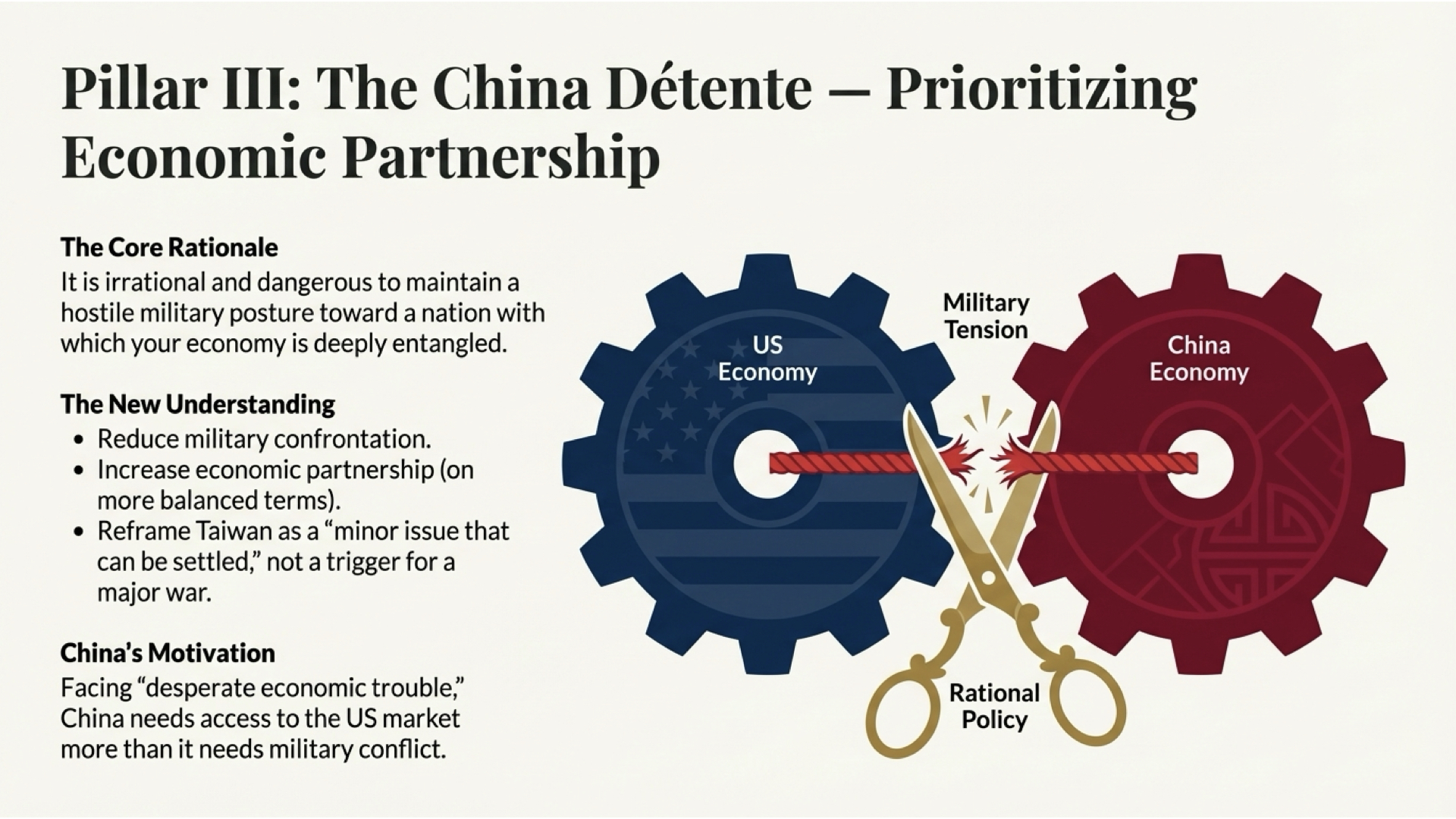
The relationship between the United States and China is the central, most complex dynamic of our time. Unlike the US-Soviet rivalry, which was almost purely military and ideological, the US-China relationship is defined by deep, intricate economic codependency. For decades, this created a dangerous paradox: the two powers maintained “potentially hostile military relationships” while their economies became ever more “entangled with each other.” This was an inherently irrational and unsustainable position.
Friedman’s core argument has always been that “You cannot be economically dependent on a country you might be going to war with.” The 2025 NSS is the formal recognition of this logic. The very title of its Asia strategy chapter encapsulates this new, rational framework perfectly: “Win the Economic Future, Prevent Military Confrontation.” It is a strategy built not on ideological crusade but on pragmatic self-interest, and it is made effective by one crucial piece of American leverage: China is in desperate economic trouble. As Friedman has assessed, China has a “serious economic problem that they can only solve with the United States.” This vulnerability is what forces Beijing to the negotiating table and makes Washington’s rational framework so potent.
A Dual-Track Approach
The NSS breaks down this strategy into two complementary tracks: economic rebalancing and military de-escalation.
On economic competition, the strategy’s focus is on realism, not destruction. The text details a plan to “counteract predatory economic practices,” protect intellectual property, and rebalance trade. The stated goal is a trade relationship that is “balanced and focused on non-sensitive factors.” This is not a declaration of economic war. It is a rational move by the United States to secure its own industrial base and economic health after decades of a dangerously unbalanced relationship. It seeks stability, not collapse, because the latter would harm America as well.
On military de-escalation, the NSS affirms that a “favourable conventional military balance remains an essential component” for deterrence, particularly regarding Taiwan. However, this is framed as a tool to prevent war, not to seek it. This policy aligns perfectly with Friedman’s assessment that both Washington and Beijing have reached a tacit understanding that a direct military conflict is irrational. Issues like Taiwan, while sensitive, are a “minor issue that can be settled in various ways... it’s not worth a war.” The NSS seeks to maintain a military posture that makes this conclusion permanent for both sides.
We must, however, treat the document’s call for “conventional military overmatch” with Ritter’s skepticism. While the Strategy positions conventional deterrence as an alternative to nuclear threats, the industrial reality dictates otherwise. The current disparity between Chinese and American shipbuilding capacity makes a true conventional overmatch in the Pacific a logistical impossibility in the short term. Therefore, the military rhetoric serves primarily as leverage for the economic negotiation. As Ritter guesses, this situation will be “resolved economically,” because a trade war is impractical and a kinetic war is suicidal.
The Strategic Isolation of Russia
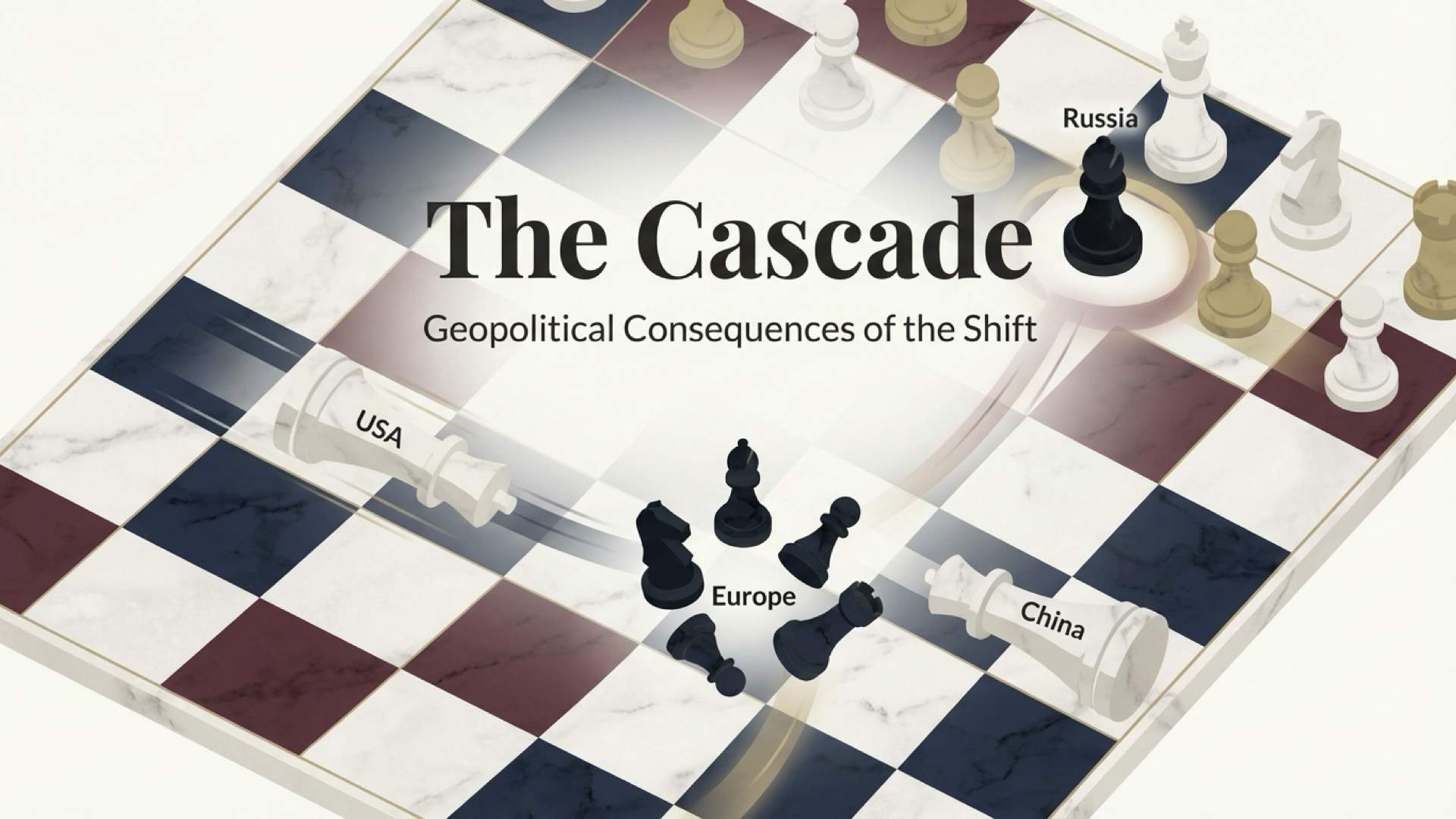
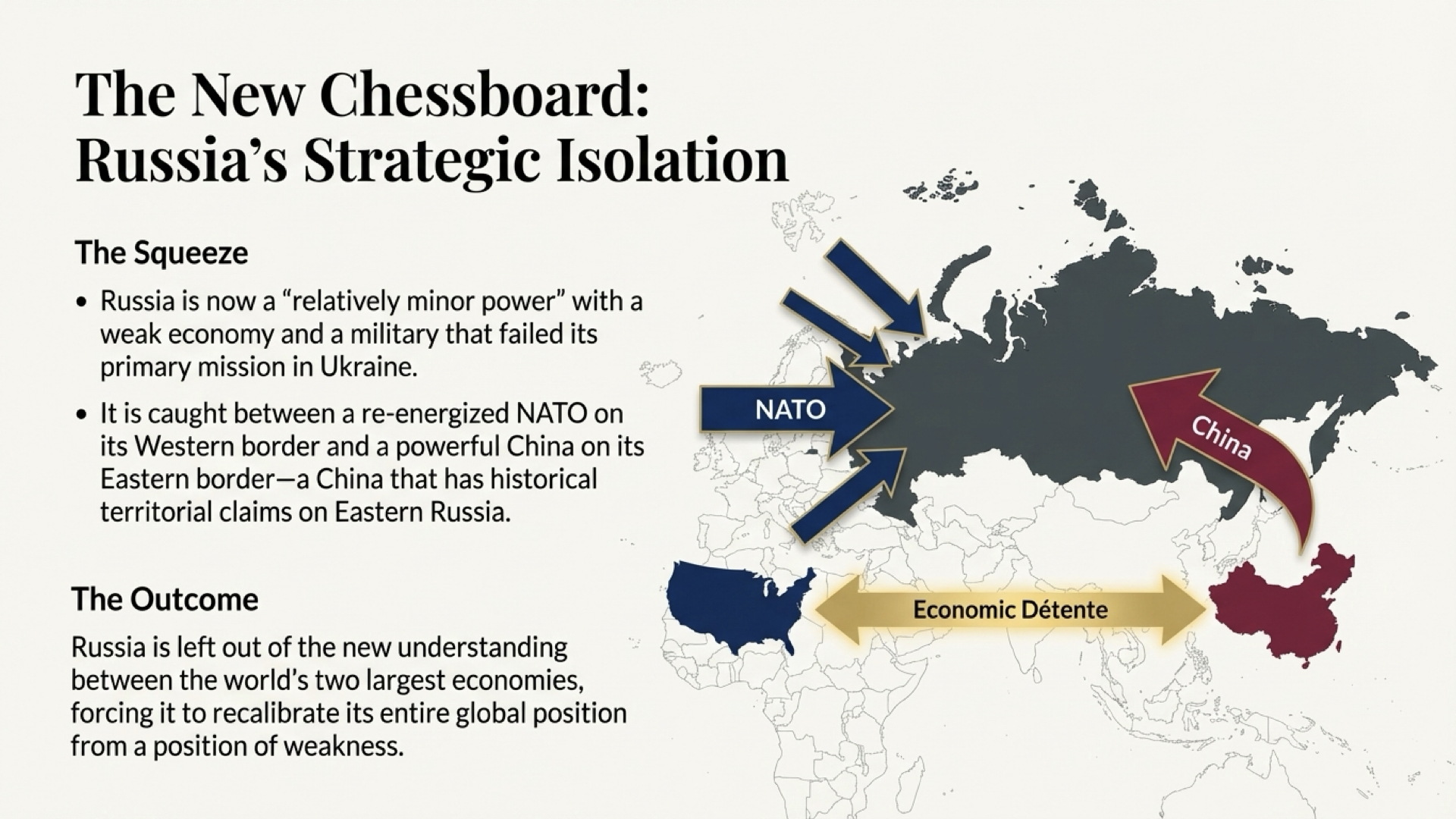
This pursuit of a stable US-China entente has profound geopolitical consequences, most notably for Russia. An American-Chinese understanding, built on mutual economic interest and military restraint, puts “tremendous pressure on Russia.” Moscow is left strategically isolated. As Friedman rightly diagnoses, Russia is now “neither a significant military power... nor is it a significant economic power.” The NSS, by prioritising a stable and functional relationship with Beijing, is a masterstroke of geopolitics. It fundamentally alters Russia’s global position without firing a shot, leaving it a secondary power with diminishing leverage.
This new calibration of global power dynamics is guided by a return to the foundational principles of American statecraft.
Returning to First Principles
The term “America First” is not, as its critics claim, a slogan for isolationism. It is a descriptor for a rational foreign policy grounded in national interest and the immutable facts of geography. It represents a return to the historic American norm that existed before the “anomaly” of the 20th century, an era that dragged the United States into three European wars (two hot and one cold). This NSS marks the official restoration of that norm.
A Renewed Focus on the Western Hemisphere
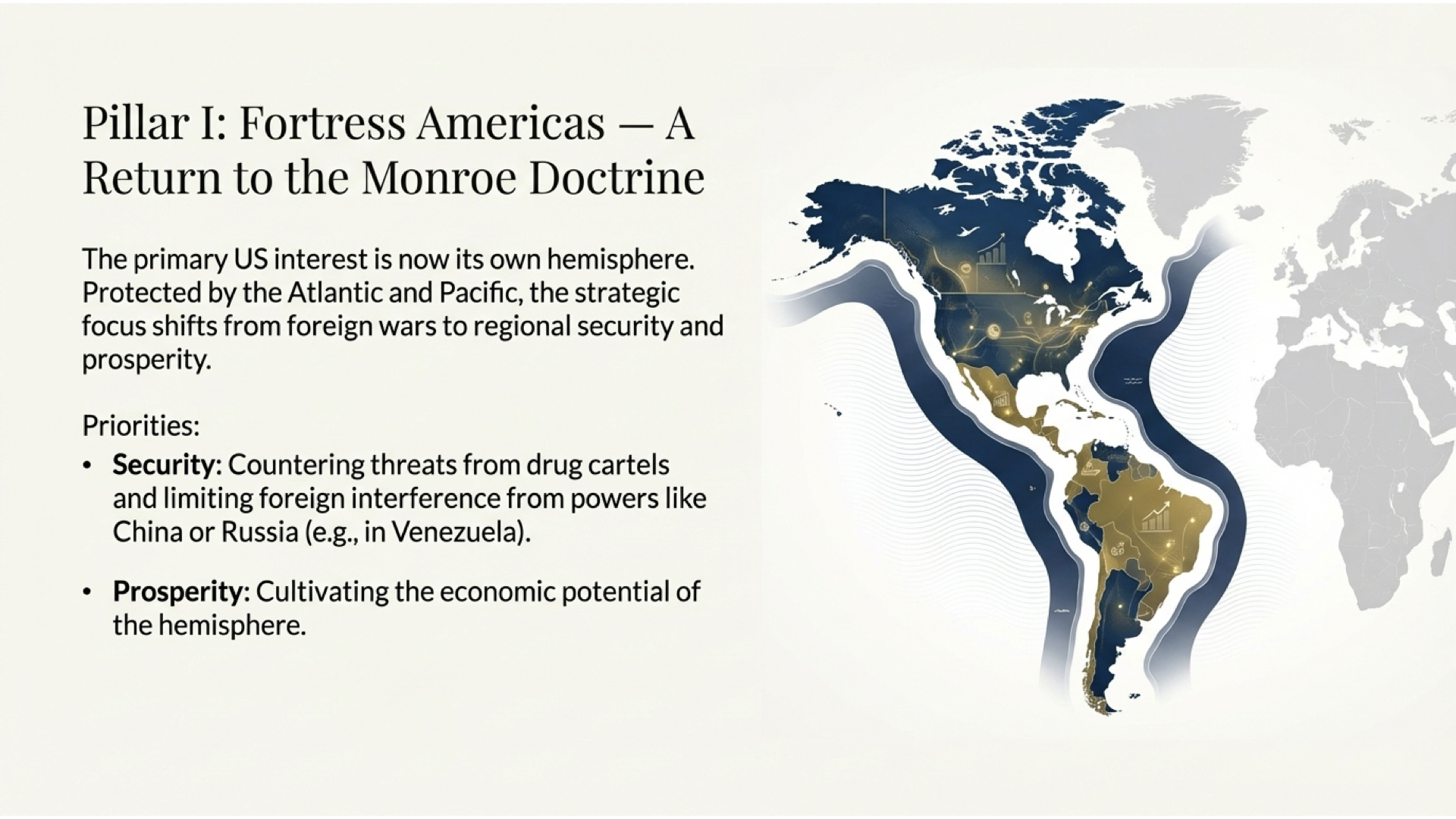
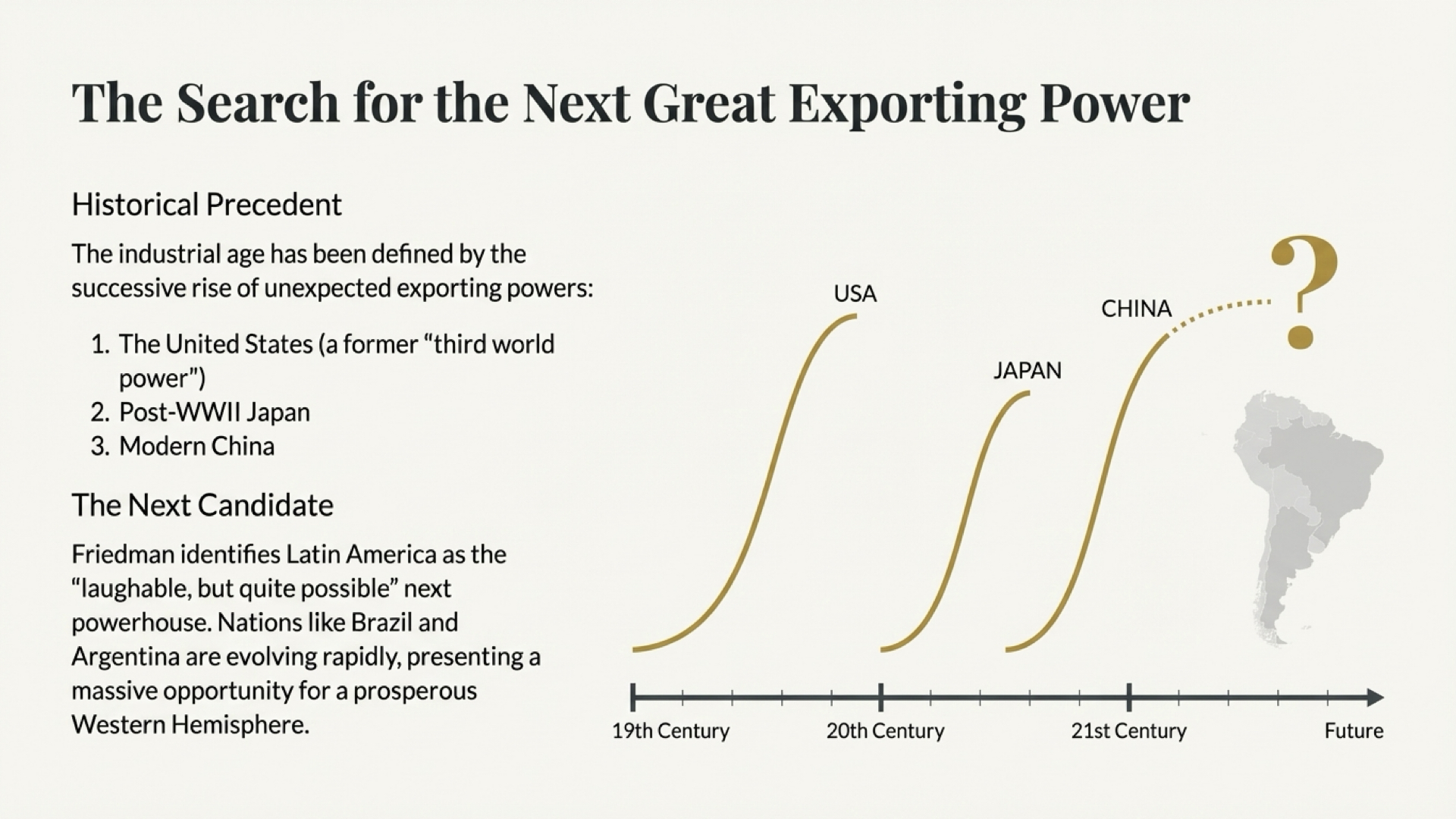
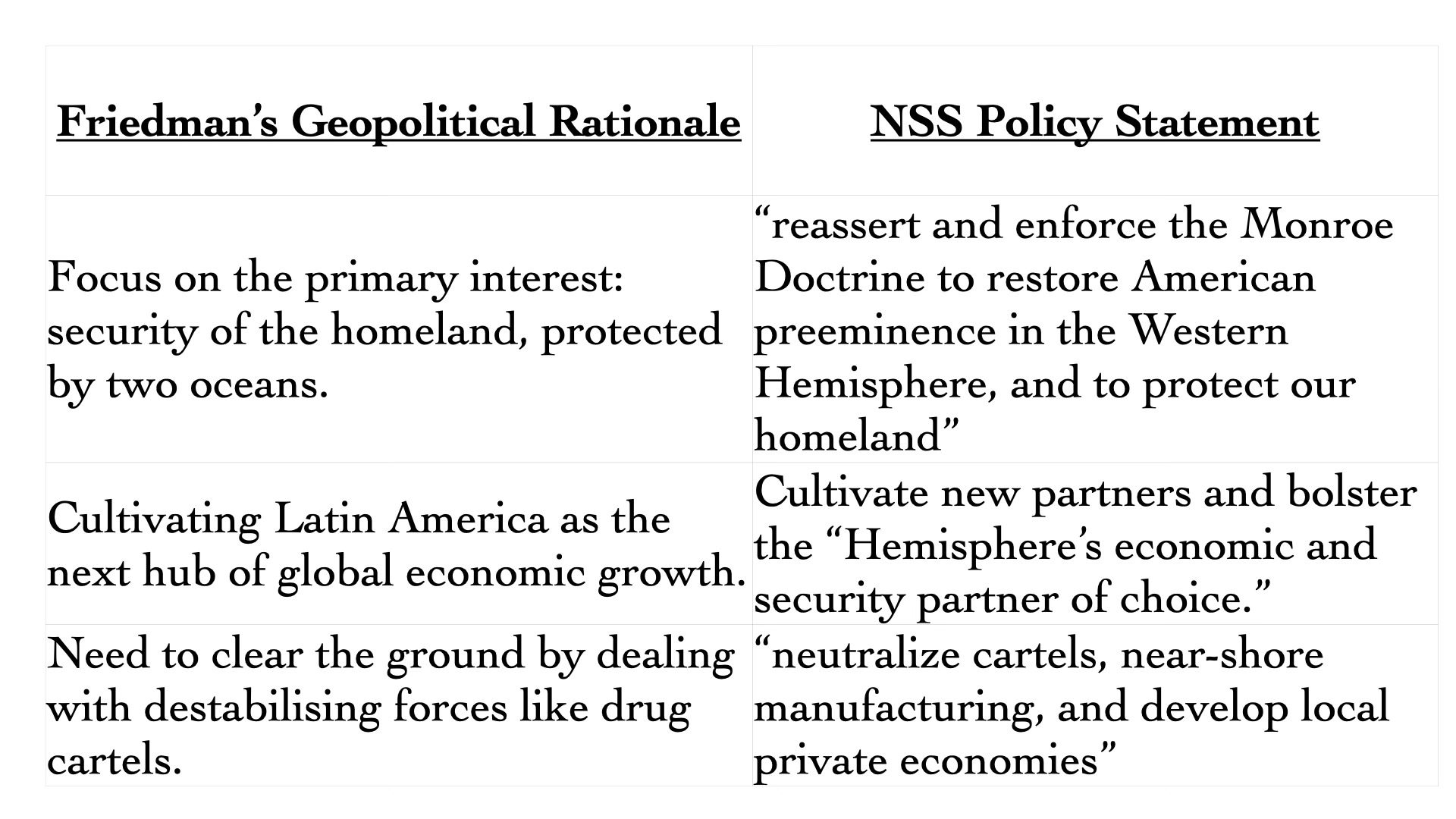
The strategy’s most significant geographic pivot is its declaration of a “Trump Corollary to the Monroe Doctrine.” This is the logical endpoint of a policy that re-directs America should not to concern itself any longer with the Eastern Hemisphere, but with the Western Hemisphere. This is not merely a defensive posture to keep rivals out; it is a proactive economic strategy to cultivate the next global economic engine within America’s own sphere of influence. In this context, Latin America possesses the potential to become the “next great exporting power.” The NSS, therefore, is an effort to clear the ground and prepare for a future where American prosperity is increasingly tied to its own hemisphere, not a declining Europe.
The document’s goals for the hemisphere align precisely with this geostrategic rationale:
The Principle of “Flexible Realism”
Tied to this geographic refocus is an ideological one. The NSS enshrines the principle of “Flexible Realism,” stating that the US will maintain “good relations with countries whose governing systems and societies differ from ours.” This is a pivotal statement.
It officially terminates the post-Cold War era of ideological crusades and nation-building.
Yet, “Flexible Realism” should not be mistaken for pacifism. Ritter provides a chilling addendum: while the US may retreat from nation-building in the Middle East, it reserves the right to engage in political action within the West. The classification of certain European leaders—specifically those in Berlin, Paris, and London who oppose this new American trajectory—as liabilities suggests that US intelligence and diplomatic assets may be deployed to “collapse” governments that refuse to align with the new Washington consensus. The Strategy acts as a warning: align with the new American interest, or face the full weight of US soft and hard power aimed at political removal.
The logic is simple and powerful: the ideological imperative of blocking communism is gone. With the disappearance of that existential threat, American foreign policy is liberated to return to its natural, interest-based foundation. It no longer needs to divide the world into ideological camps; it can now deal with the world as it is.
This return to first principles does not represent a retreat from the world, but a sustainable and logical path forward for American grand strategy.
An Irreversible Shift in the Global Tectonic Plates
The 2025 National Security Strategy is not a fleeting political statement. It is the formalisation of deep, structural changes in the international system that have been underway for more than 30 years. It is an acknowledgement of a weakened Russia, a prosperous but strategically dependent Europe, and a complex but manageable relationship with China. The strategy simply confirmed what has been going on for years in the United States since the fall of the Soviet Union.
Because these underlying geopolitical realities are “permanent,” the strategy itself is irreversible. Future administrations, constrained by the same facts, may alter the rhetoric but cannot, and will not, undo the fundamental shift. The norm is obsolete, and this document is Washington’s formal admission of that truth.
The true genius of this document, therefore, is not in what it creates, but in what it accepts. It accepts the end of an historical anomaly and the return to a more traditional international order. In doing so, it forces the world—and especially a Europe still mired in “denial”—to abandon the fantasy of the 20th-century order and confront the more complex, multipolar, and interest-driven reality of the 21st.
References:
Glenn Diesen, 20251209, “Scott Ritter: The U.S. Now Considers the EU an Enemy.” www.youtube.com/watch?v=m_tHqXt44sU
Geopolitical Futures, 20251211, “George Friedman on Why Trump’s New National “Security Strategy is Here to Stay.” www.youtube.com/watch?v=UhnmixSnmSI&t=1793s
The White House, November 2025, National Security Strategy of the United States of America.
Note:
For your benefits, I would like to share these visual to make the text more accessible.