A Monument to Atrocity: A Review of The Palgrave Handbook of Kurdish Genocide
25 December 2025
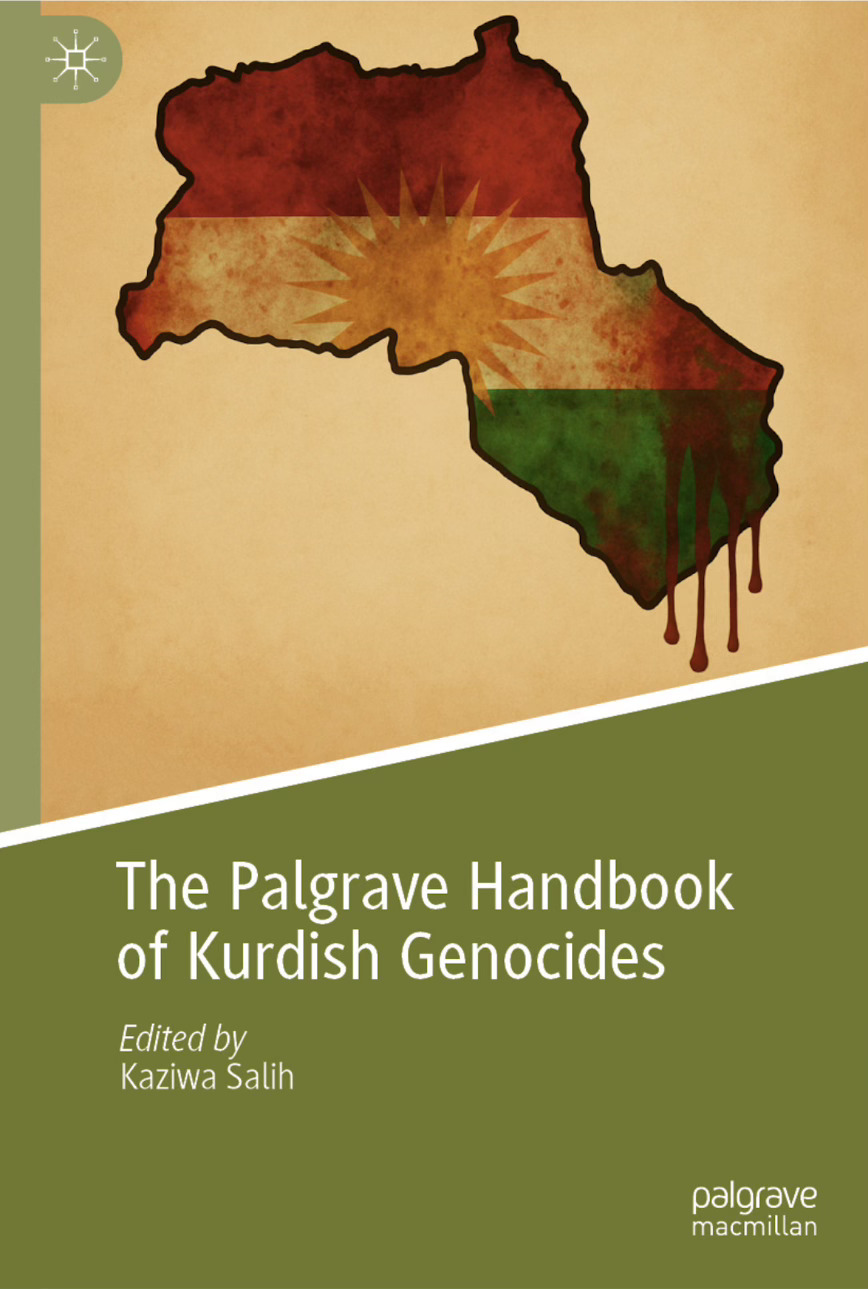
Kaziwa Salih, (ed.), 2025, The Palgrave Handbook of Kurdish Genocides. Cham: Palgrave Macmillan
Archive Against Erasure
In the study of systematic atrocity, silence is not merely an absence of data; it is an active component of the crime itself. The Palgrave Handbook of Kurdish Genocide is, therefore, more than an encyclopaedia—it is a monumental act of reclamation, a direct challenge to the state-sponsored erasure that has defined the Kurdish experience for over a century. In its exhaustive, multi-authored chapters, it meticulously documents a history of violence that has been largely ignored, denied, or actively suppressed by the very states responsible for its perpetration. It is, without question, an indispensable archive that fills a cavernous silence within mainstream genocide studies. However, while its content stands as a courageous act of defiance, this review will critically examine the paradoxical relationship between its horrific subject matter and its highly formalised, academic presentation. The purpose is not to diminish the Handbook’s monumental achievement, but to contemplate on how the conventions of academic discourse shape our engagement with profound human tragedy.
To undertake this analysis, I shall employ three primary theoretical lenses. First, I would like to assess the Handbook’s explanatory power through the epistemological framework of Good Explanations’—those which are precise, constrained by evidence, and therefore ‘hard-to-vary’. This provides a standard by which to measure the intellectual rigour of its various contributions. Second, I will analyse the very form and language of the Handbook through the socio-organisational theory of Functional Stupidity, which interrogates how organisational norms, including those of academia, can discourage broad critical reflection in favour of procedural focus and conformity. And third, I will utilise the Evolutionary Behavioural framework of Dr. Gad Saad. This lens identifies ‘Idea Pathogens’—parasitic patterns of postmodern thought that obscure biological reality—to critique how the Handbook frames its findings.”
By applying these frameworks, I shall organise my review in three parts. Part I: Affirm the Handbook’s unassailable core value as an archive, detailing the breadth of genocidal mechanisms it catalogues. Part II: Apply the epistemological test, evaluating how successfully its chapters construct hard-to-vary explanations for the atrocities they describe. Finally, Part II: Analyse the sociological paradox of its academic form, examining how its language and structure function within the conventions of its field. Ultimately, I shall argue that the Handbook exists in a state of productive tension: its content is an act of radical criticism, whilst its form often adheres to conventions that can, paradoxically, limit the very scope of that critique.
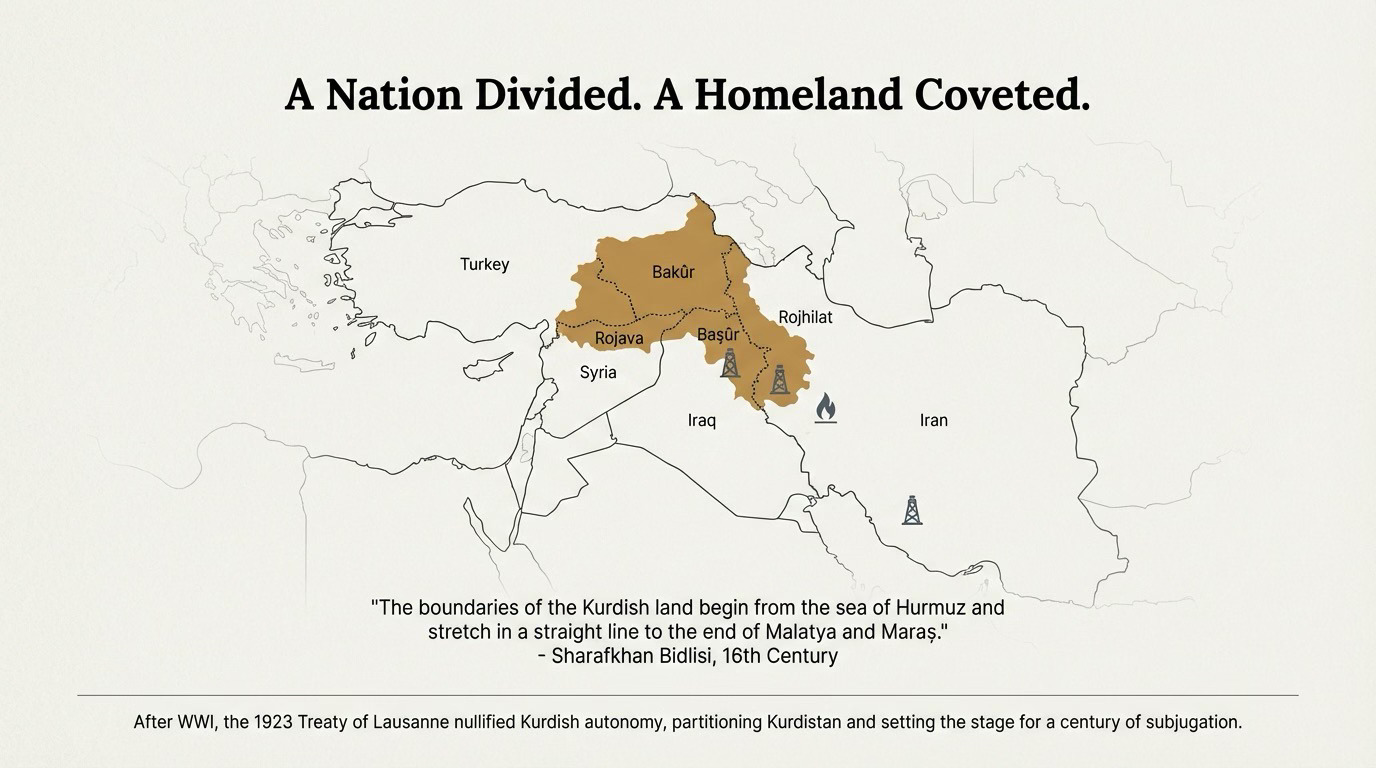
Part I: The Unassailable Core
Before any critique of academic character can be offered, the sheer substantive weight of the Handbook must be acknowledged as a monumental act of historical reclamation. For a people whose suffering has been systematically denied, the act of documentation is the foundational act of resistance. The book’s primary, and perhaps most crucial, function is to serve as an exhaustive archive of atrocities that have been strategically omitted from mainstream historical and political discourse. It forces a reckoning with a history of violence that has been allowed to fester in the shadows of state-sponsored denial. This work is, first and foremost, an act of bearing witness.
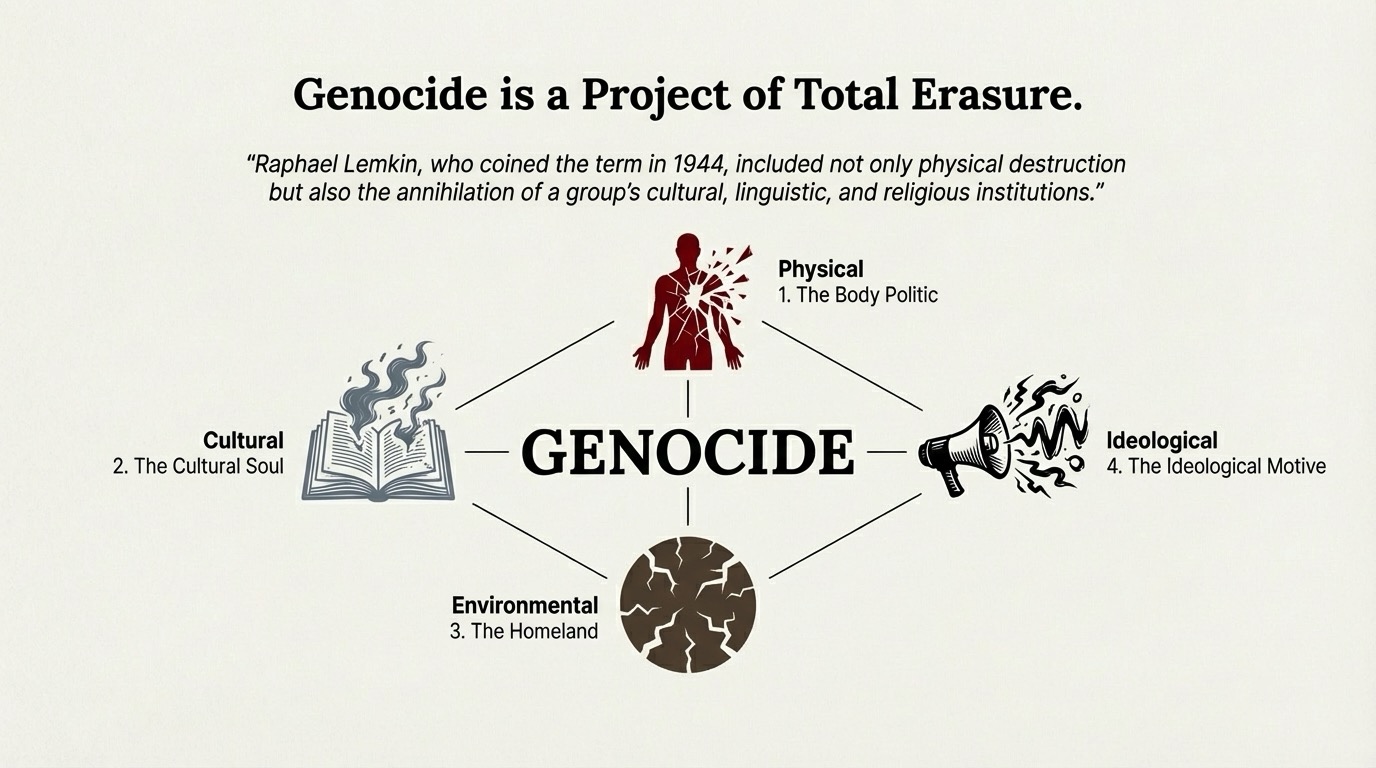
The Handbook’s comprehensive scope is its greatest strength. Across its many chapters, it synthesises a breathtaking range of genocidal acts, demonstrating that the violence against the Kurds was not a series of isolated incidents but a continuous, multi-faceted project of elimination pursued by multiple state actors. The mechanisms of this project, as detailed in the Handbook, are chilling in their variety and systematic application. They include, but are not limited to:
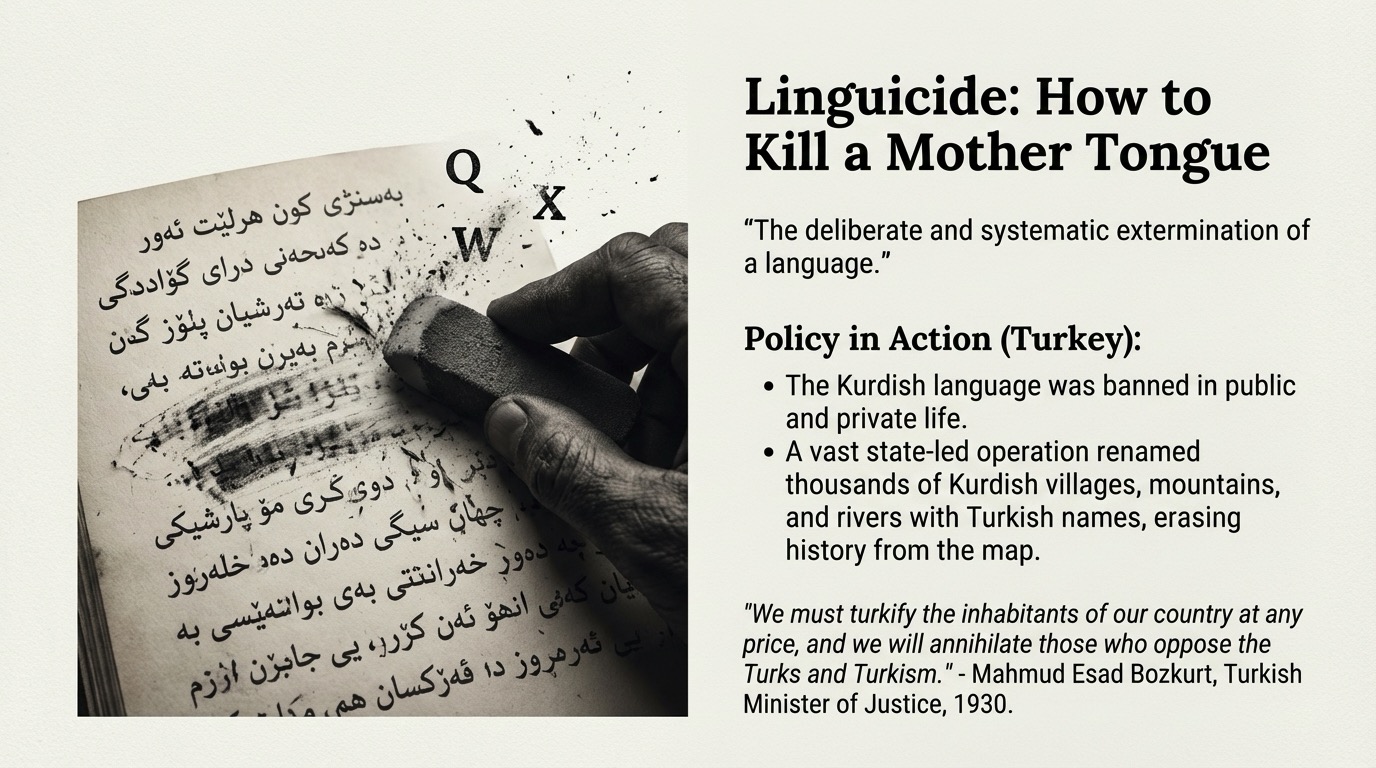
- Linguicide: The deliberate policy of killing a language as a means of erasing a people. Chapter 9 details how the Turkish state, rooted in a “Turkish racist nationalism,” has systematically criminalised the Kurdish language. This has been achieved through banning its use in education, administration, and public life, all part of a sustained effort to enforce ethnolinguistic homogeneity and deny Kurdish identity itself.
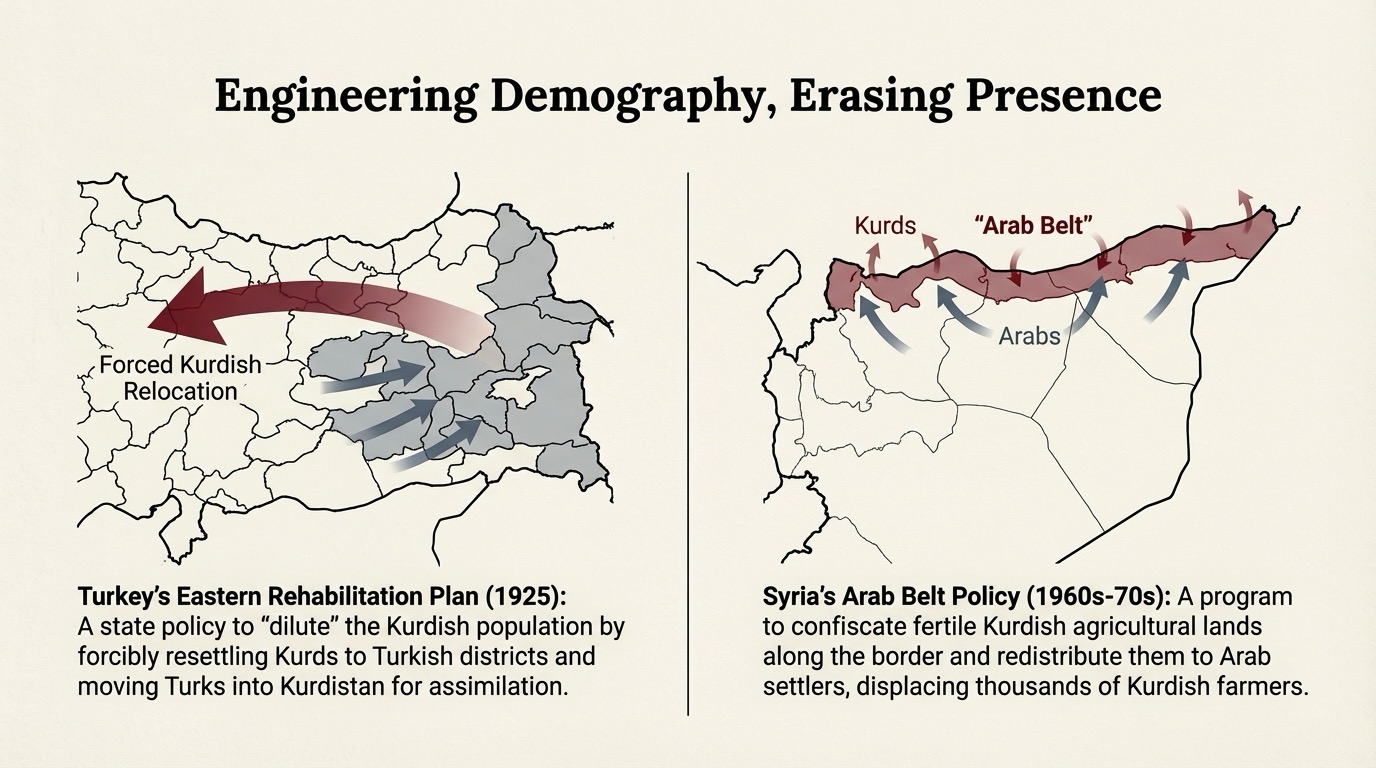
- Forced Displacement and Demographic Engineering: A recurring strategy to dispossess Kurds of their ancestral lands and replace them with politically loyal populations. This is exemplified by the Ba‘thist regime’s creation of an Arab Belt (al-hizām al-‘arabī) in Syria, a policy designed to expropriate Kurds from their lands along the Turkish border and resettle the area with Arabs, thereby fracturing Kurdish territorial continuity and control.
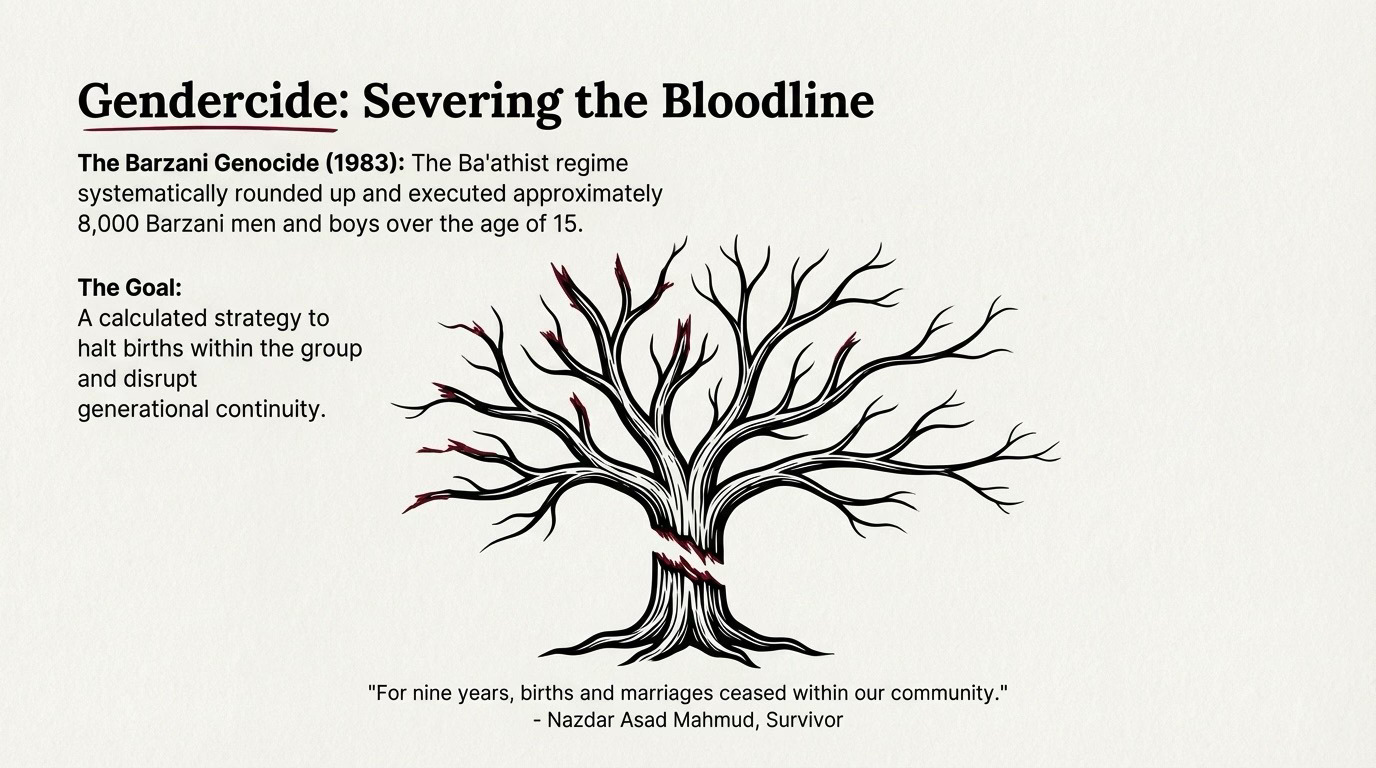
- Gendercide: The systematic targeting of a specific gender to destroy a community’s social fabric and future. The 1983 Barzani genocide is presented as a clear case of this, where the Ba‘thist regime targeted and eliminated approximately 8,000 Barzani men and boys. This act was designed not only to kill individuals but to cripple the community by removing its patriarchal leadership and ensuring its demographic collapse.
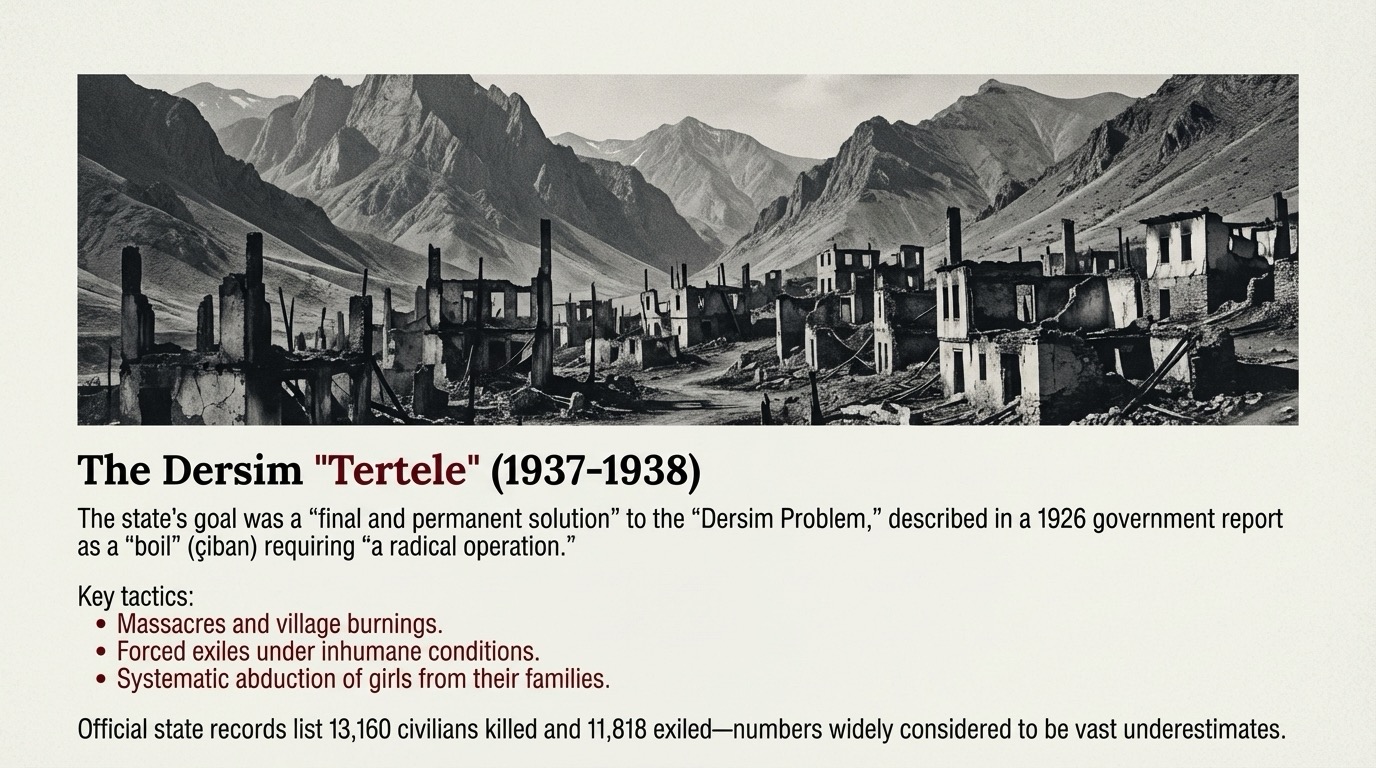
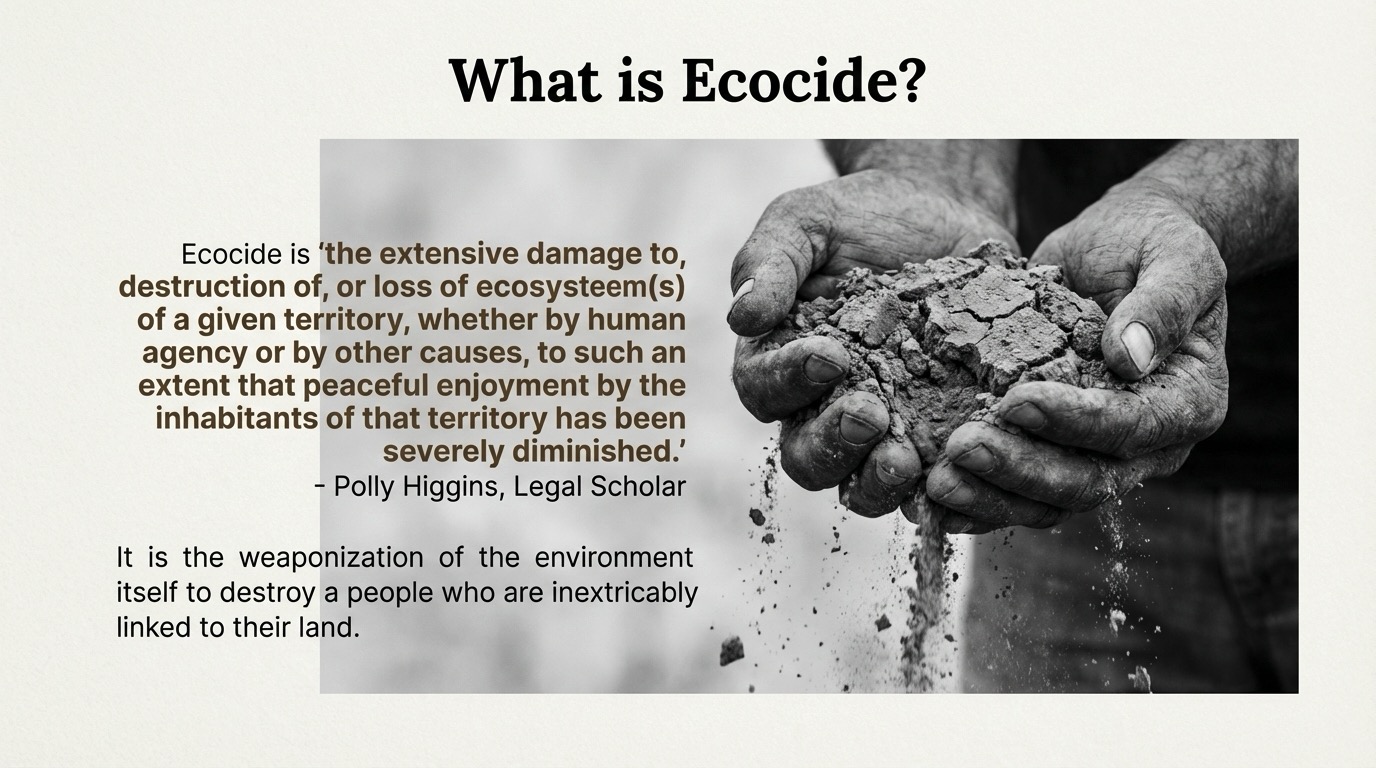
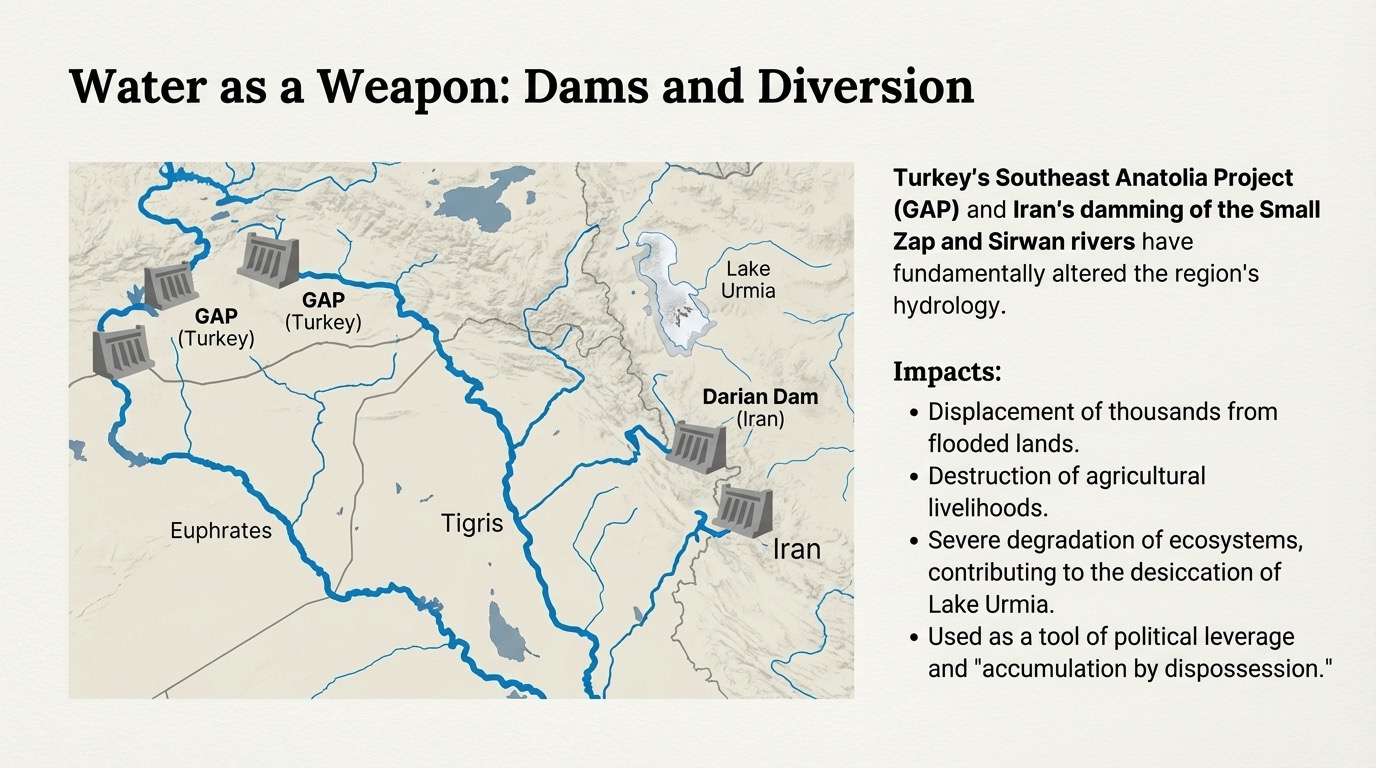
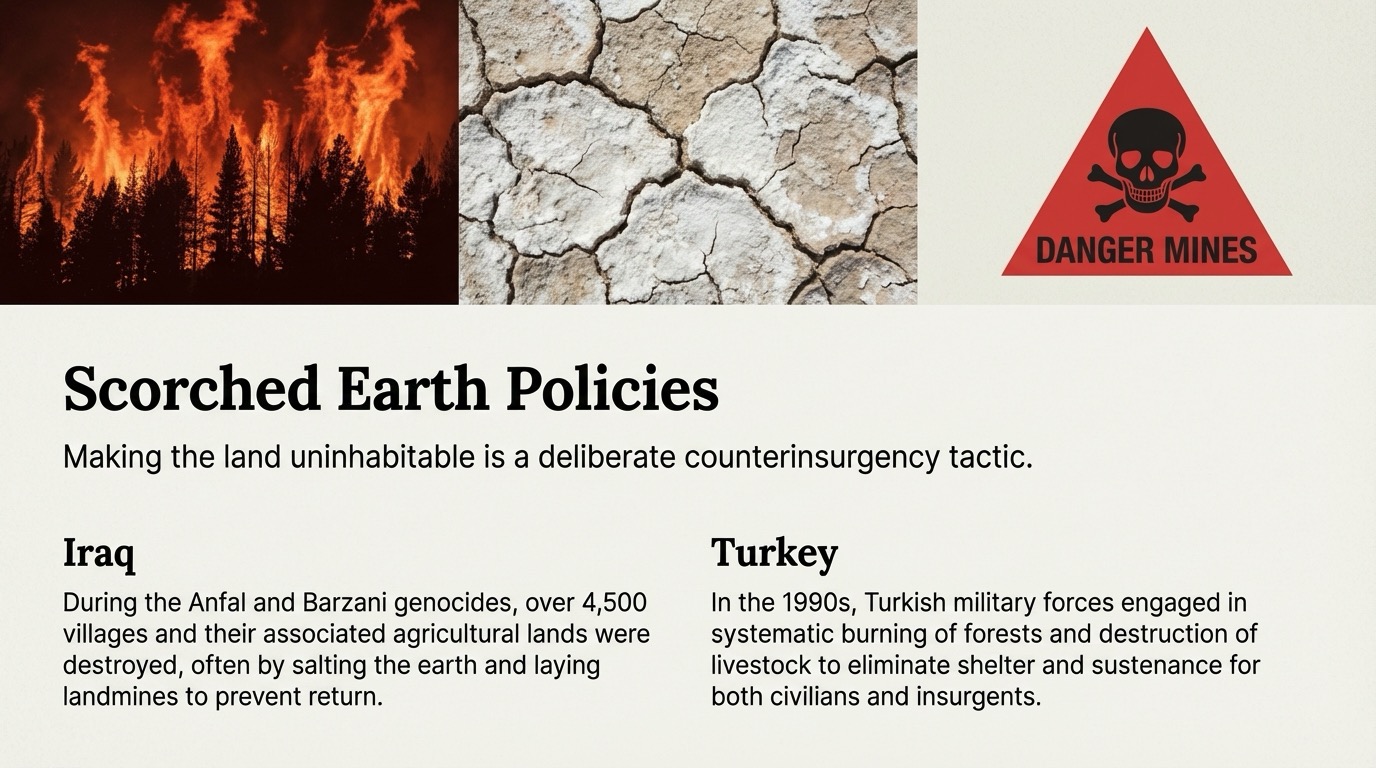
- Ecocide: The weaponisation of the environment to render a homeland uninhabitable. The Handbook documents how dam construction has been strategically used to submerge culturally significant Kurdish Alevi sacred sites, severing communities from their spiritual geography. Furthermore, it details how Turkish military operations in Dersim included the deliberate setting of forest fires, a scorched-earth policy aimed at destroying the natural environment that sustained Kurdish life and resistance.
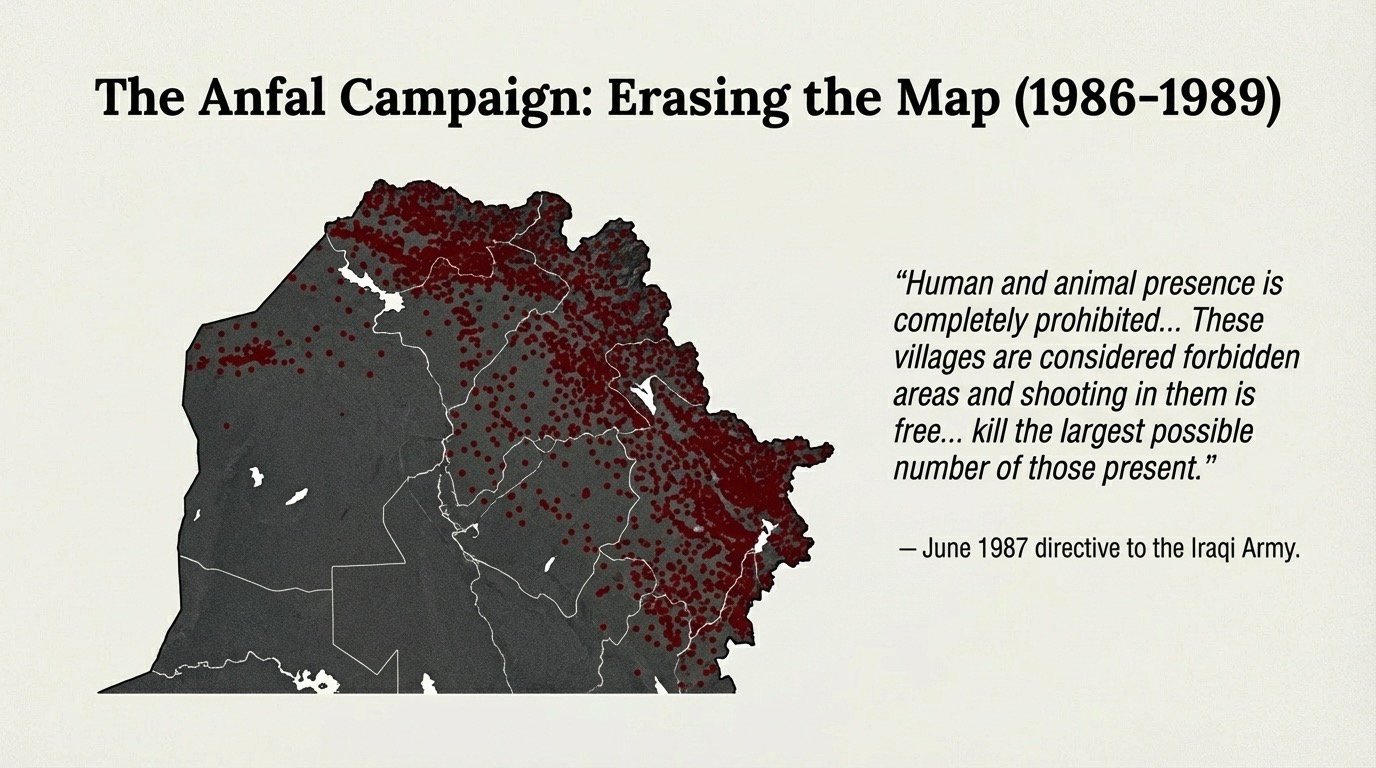
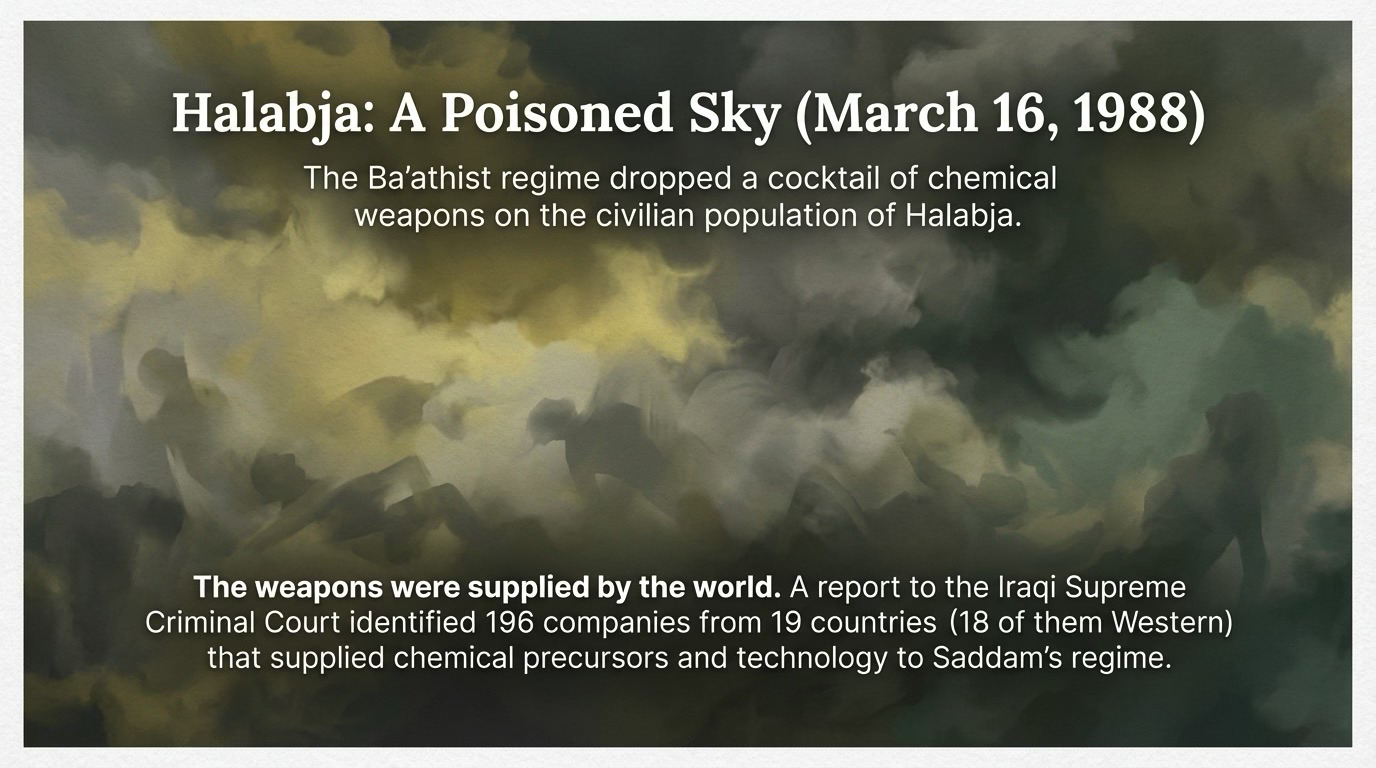
- Chemical Warfare: The deployment of weapons of mass destruction against civilian populations. The most infamous example documented is the attack on Halabja in 1988, part of the wider anfāl campaign, where the Ba‘thist regime used a cocktail of chemical agents to murder over 5,000 civilians in a single day, an act of unconscionable terror.
While these definitions are academically robust, applying Saad’s framework reveals a potential risk of ‘Concept Creep’—the expansion of harm definitions until they lose specificity. By categorising the suppression of language (Linguicide) or environmental damage (Ecocide) alongside physical extermination, the Handbook risks engaging in the “Homeostasis of Victimology.” This does not negate the suffering, but it equates the suppression of liberty with the destruction of biology. From an evolutionary perspective, distinct inter-group competitions for resources (tribalism) are here reframed through a Social Constructivist lens, potentially obscuring the raw, biological reality of the violence.”
To ground this academic summary in the stark reality of these events, one need only turn to the harrowing details documented within. The chapter on the Iranian regime’s necropolitics recounts the aftermath of the extrajudicial execution of two Kurdish brothers. Their own brother, Abdullah Mostafa Soltani, describes what their mother was told by a representative of the state:
He told her that 5,000 tomans had to be paid for the bullets used to shoot them and that she needed to buy two envelopes of sweets for the execution team before she could take the bodies.
This unflinching documentation solidifies the Handbook’s unquestionable value as a historical record, before we proceed to a necessary critique of its academic methodology.
Part II: The Epistemological Test
Having established the Handbook’s vital role as an archive, we must now assess its function as a work of analysis. All rational inquiry, as the physicist David Deutsch argues, should be concerned with the creation of Good Explanations. A Good Explanation is not merely plausible; it must be hard-to-vary. Its details are so tightly constrained by the reality of the problem it solves that any significant alteration would render it incoherent. In contrast, a Bad Explanation is easy-to-vary, its components can be trivially altered to fit new evidence without fundamentally changing the core idea—much like an ancient myth being modified to account for a new discovery. This section evaluates how well the Handbook’s chapters meet this demanding standard of rigorous explanation.
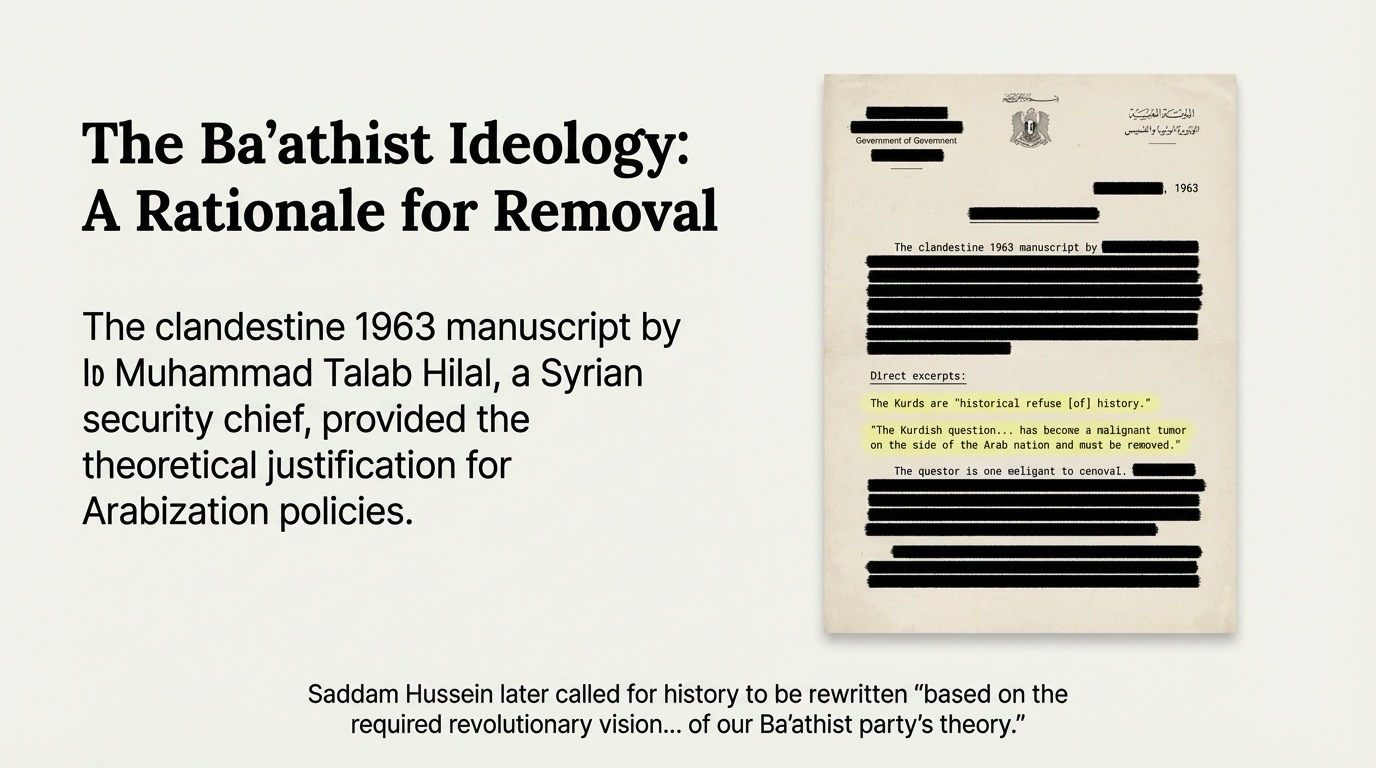
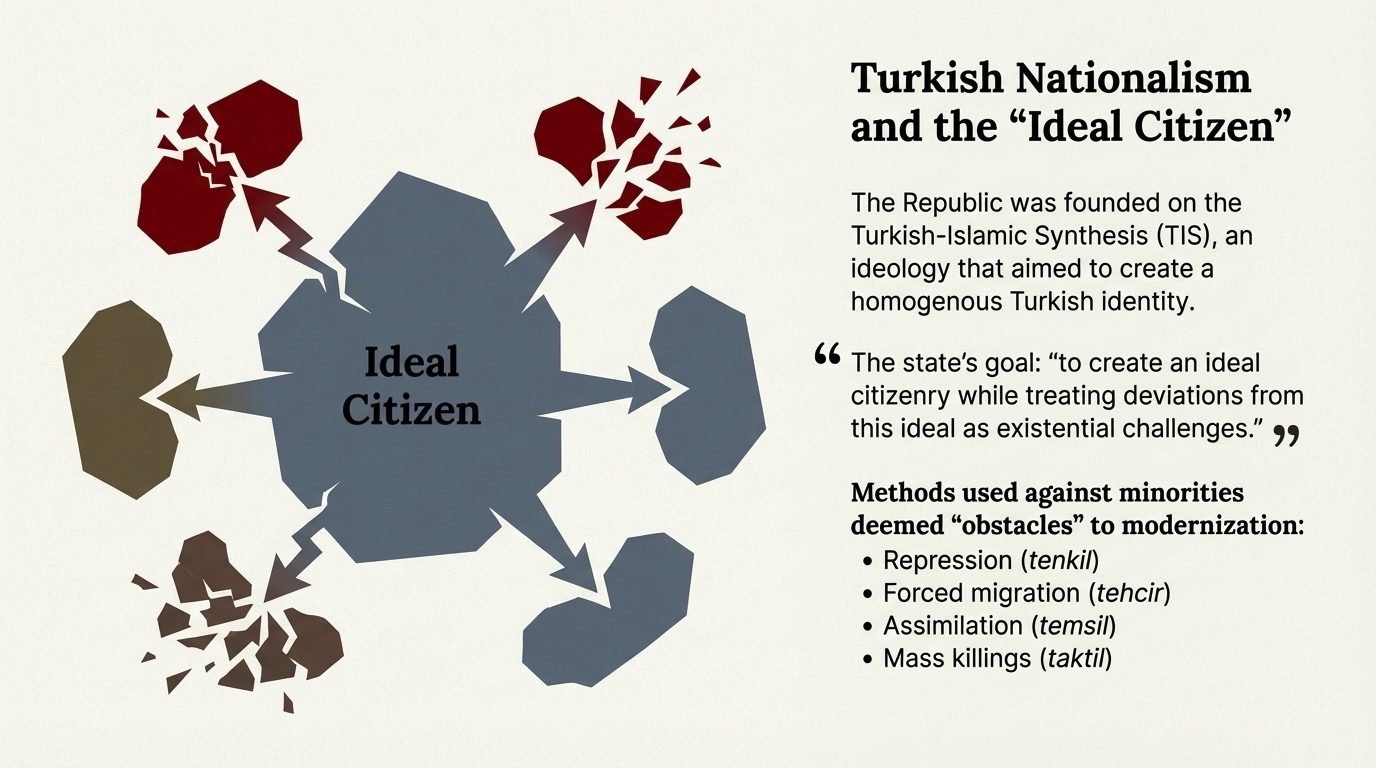
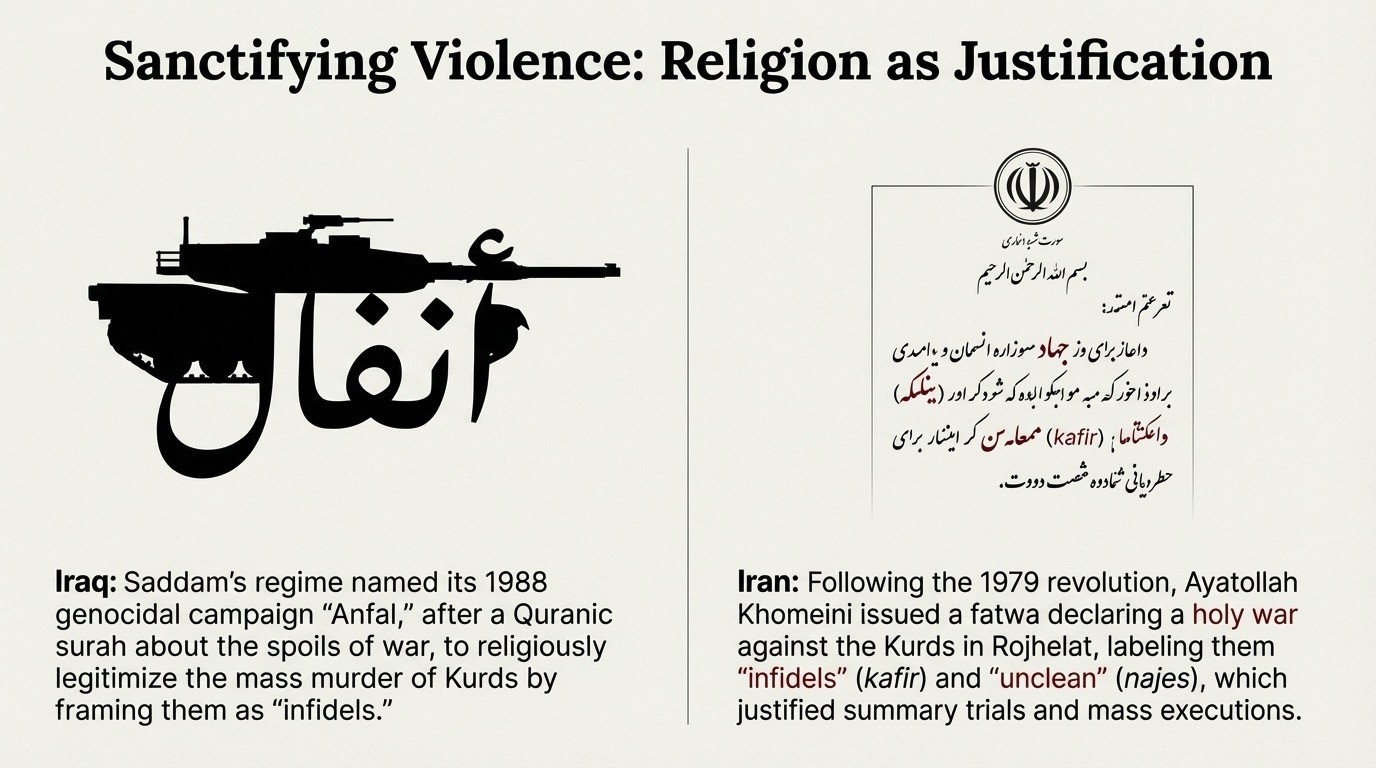
Several chapters offer compelling, hard-to-vary analyses. Chapter 16, for instance, explores how Ba‘thist ideology legitimised genocide not as an unfortunate byproduct of war, but as a core ideological principle. The authors root their analysis in the party’s foundational texts, demonstrating how violence was woven into its very DNA. The Ba‘th Party’s constitution, for example, explicitly states that its goals “cannot be achieved except through the coup and struggle.” This is not a post-hoc rationalisation but a predictive framework embedded in the party’s own doctrine. Crucially, this is where the Handbook aligns with Saad’s Truth Ideal. Unlike many Western academic texts that suffer from political correctness, the authors explicitly identify the “Turkish-Islamic Synthesis” and religious fatwas as the drivers of atrocity. They do not shy away from the “ugliness of religious dogma.” By grounding the violence in the specific religious and nationalist ideologies of the perpetrators—rather than vague socio-economic factors—the Handbook provides a hard-to-vary explanation that respects the causal power of ideas. The explanation is hard-to-vary because it is constrained by the specific, documented language of the perpetrators themselves. It presents Ba‘thist violence as the logical outcome of its foundational, anti-rational memes.
However, the epistemological strength of the Handbook is not uniform. In other areas, the analysis tends more towards a collection of variable possibilities than a single, constrained explanation. Consider the discussion surrounding the Yezidi genocide in 2014 and the critical failure of the Peshmerga forces to protect the community in Sinjar. The authors present several potential explanations for the withdrawal: it could be interpreted as “a strategic failure and lack of military preparedness,” a pragmatic decision based on “broader political and military calculations,” or, citing another study, the result of “a combination of a lack of military preparedness and poor morale, organization, and leadership within the Peshmerga ranks and the KDP’s mistrust of the local Yezidi population.” While each of these factors is plausible, the analysis remains a catalogue of competing hypotheses. It successfully documents the tragedy but does not synthesise the evidence into a single, hard-to-vary explanation where the component parts are locked in a necessary relationship with one another.
Here, the text exhibits symptoms of what Saad terms Ostrich Parasitic Syndrome—a detachment from reality caused by over-theorisation. Instead of analysing the withdrawal through clear evolutionary incentives (coalitional self-preservation), the Handbook retreats into Subaltern Studies and Lacanian-Zižekian frameworks. As Saad argues, referencing Lacan in the context of genocide is a form of “intellectual terrorism”—using impenetrable prose to feign depth. These theories function as Idea Pathogens, complicating the simple, tragic reality: the failure in Sinjar was not a failure of discourse, but a brutal calculation of tribal survival.
In this sense, the Handbook’s epistemological achievement is mixed. It is overwhelmingly successful in its primary task: documenting the What of the Kurdish genocide and identifying the corrosive, anti-rational ideologies that drove it. Yet, in explaining the Why and How of specific events, the quality of its explanations varies. While some chapters build powerful, constrained arguments, others leave the reader with a set of plausible but ultimately variable interpretations. This variation provides a natural transition to an analysis of the academic style in which these explanations are presented.
Part III: The Sociological Paradox
This final analytical section examines the form of the Handbook itself through the lens of Mats Alvesson and André Spicer’s theory of Functional Stupidity. This is not, to be clear, a comment on the intelligence of the authors, who are undoubtedly experts in their fields. Rather, Functional Stupidity describes a social phenomenon within organisations—including academic ones—where there is a refusal of “critical reflection.” It is the practice of discouraging complex questions in favour of a narrow focus on procedure and conformity. This framework allows us to analyse the strange, detached language of genocide studies not as an intellectual failure, but as a feature of the academic “organisation” and its internal logic. Crucially, it may also function as a necessary, if flawed, sanity-preserving mechanism. The detached language and specialised structure can provide an essential emotional buffer for researchers and readers confronting unimaginable horror, elevating this critique from a simple procedural observation to an exploration of the ethical paradoxes of studying atrocity.
This sociological paradox can be analysed through several interconnected concepts identified by Alvesson and Spicer. It is not three separate flaws, but a self-reinforcing cycle. The academic drive for image over substance creates an “economy of persuasion” where signalling expertise is paramount. The Handbook’s extensive use of acronyms (ICTY, SOHR, UNDRIP), dense prose, and theoretical jargon creates an “aura” of seriousness that legitimises the work within its field, much as a consultancy firm labels itself “knowledge-intensive” to impress clients. As Alvesson and Spicer note:
Wielding the K word can turn a boring job filling in spreadsheets into a much smarter-sounding career in ‘data analysis’.
This academic signalling is indistinguishable from what Saad calls The Parasitic Mind. The heavy reliance on terms like “necropolitics” and “intersectionality” serves as a costly signal of elite membership rather than an attempt at clarity. The Handbook’s form suggests that to be taken seriously, one must adopt the “obscurantist gibberish” of the current university ecosystem. This is not merely Functional Stupidity; it is an infection of the discipline by ‘faux-profundity’, where simple truths about human cruelty are dressed in the complex drag of critical theory.”
In a similar vein, academic jargon frames visceral human horror in a detached, “smarter” way, insulating both author and reader from its raw moral force. This drive for a legitimate image incentivises imitation and thoughtless herd-following. Organisations often adopt practices not because they are demonstrably the best, but because, as Alvesson and Spicer observe, “everyone else is doing it,” such as when companies adopted Total Quality Management (TQM) as a fashionable trend. Is the language of genocide studies always the most effective tool, or is it partly chosen because it is the accepted currency of the field? It is a striking omission that a text so obsessed with the nuances of language—dedicating entire sections to Linguicide and the criminalisation of the Kurdish tongue—fails to interrogate the semantics of its own title. In standard English usage, an adjective often denotes the agent or origin (e.g., German aggression), yet Kurdish Genocide’relies on an assumed convention to denote victimhood. By leaving this linguistic ambiguity unaddressed, the authors miss an opportunity to distinguish between a genocide characterised by Kurdishness and a genocide perpetrated against it. This reflects a form of academic conformity where the established label is adopted without the critical reflection or hard-to-vary precision that the subject demands. This conformity ensures peer acceptance but can discourage the invention of new descriptive language better suited to the unique horrors being described.
This process, in turn, fuels over-specialisation. The very structure of the Handbook, with its dozens of highly specialised chapters, reflects an academic trend where specialists produce narrow, jargon-heavy work that signals expertise. Alvesson and Spicer borrow the German term Fachidioten—“professional idiots”—to describe this phenomenon:
They know a lot about a specific issue, but are clueless beyond their very narrow domain.
Each chapter provides invaluable depth, yet this hyper-specialisation raises a critical question: does this structure risk creating “boxed-in thinking”? Does it hinder a holistic understanding of the Kurdish genocide as a single, continuous phenomenon that transcends the borders of Turkey, Iraq, Iran, and Syria? While the academic framing secures the Handbook’s legitimacy, by adhering to conventions that can be described as a form of Functional Stupidity, it may simultaneously reduce its accessibility and blunt the raw moral reflection required to fully comprehend the horrors it so meticulously documents.
A Monument of Essential, if Flawed, Construction
The Palgrave Handbook of Kurdish Genocide is an indispensable and courageous work of historical documentation. Its primary achievement—to collect, catalogue, and present overwhelming evidence of a century of genocidal violence—is an act of profound intellectual and moral defiance against state-sponsored erasure. For this alone, it stands as a landmark text.
And yet, as this review has argued, the Handbook embodies a central paradox. Its content is a testament to the necessity of critical thinking in the face of anti-rational ideologies, but its form often defaults to academic conventions that, as Alvesson and Spicer suggest, can function to limit that very same critical reflection. It is a work that succeeds in documenting the biological reality of tribal violence, even as it struggles against the ‘parasitic’ academic frameworks used to describe it. Its laudable pursuit of rigorous explanation meets the ‘hard-to-vary’ standard in some chapters more successfully than others, and its sociological form—specialised, jargon-heavy, and conformist—risks sacrificing broader accessibility for internal legitimacy.
Ultimately, however, the critique of its form does not undermine the essential value of its substance. The academic scaffolding, while perhaps overly ornate and at times restrictive, provides the very structure necessary to protect and present a truth that has for too long been denied. By meticulously documenting the atrocities, the Handbook provides the unassailable, ‘hard-to-vary’ evidence that is the prerequisite for any meaningful analysis. It is this foundation of fact that enables the very “tradition of criticism” that is so desperately needed. The monument has been built, its foundations secured by unassailable fact. It is now the urgent task of scholars, policymakers, and citizens to ensure its harrowing lessons are heard far beyond the quiet halls of the academy.
Sources:
Mats Alvesson & André Spicer, 2016, The stupidity paradox: The power and pitfalls of functional stupidity at work. London: PROFILE BOOKS LTD.
David Deutsch, 2011, The Beginning of Infinity: Explanations that Transform the World. New York, New York: VIKING (Published by the Penguin Group).
Gad Saad, 2021, The Parasitic Mind: How Infectious Ideas Are Killing Common Sense. Washington, DC: Regnery Publishing, A Division of Salem Media Group.
Kaziwa Salih, (ed.), 2025, The Palgrave Handbook of Kurdish Genocides. Cham: Palgrave Macmillan
Visuals